

After the flood, many people may think that the first thing to do is to clean the house, wash away the mud, or repair damaged walls and paint. However, there is another important problem that should not be overlooked, which is “moisture and mold.” Even though the water has receded, the walls, floors, ceilings, furniture, and various materials inside the house may still retain moisture. Especially during the first 24–48 hours after the water has receded, this is a critical period to quickly clean and dry the materials that have been wet to reduce the chances of mold growth. Therefore, the restoration and repair of a house after a flood should not wait until black or green mold stains are clearly visible before starting to address the issue. Instead, it is essential to manage water, mud, moisture, and at-risk surfaces as soon as possible after the water has receded.
Why are the first 24–48 hours after the water recedes so important?
Mold naturally exists in the environment in the form of tiny spores. When these spores land on a moist surface and are in a suitable environment, mold can begin to grow. After a flood, there are many points inside the house that are conducive to mold growth, whether it be water-retaining walls and floors, damp ceilings and gypsum boards, wooden furniture, carpets, mattresses, as well as areas that are poorly ventilated and unable to dissipate moisture.
Public health guidelines recommend that we quickly clean and dry the house, including the materials that have been wet, within 24–48 hours after the flood to reduce the chances of mold growth. However, 24–48 hours does not mean that all types of mold will appear immediately or at the same time but is a critical period during which moisture should be managed before mold problems escalate.
How does mold occur after a flood?
The occurrence of mold after a flood does not happen immediately when water touches the walls, but is a process where “moisture” is a key factor.
- Flooding and standing water
- Materials absorb water and retain moisture
- The environment becomes suitable for mold growth
- Mold begins to grow on surfaces
- Stains and musty odors develop
- Spores can spread to other areas

Stage 1: Water recedes, but moisture remains
Even though the visible water has left the house, it does not mean that the house will dry immediately. Walls, floors, wood, ceilings, and various materials can absorb water and retain moisture inside. This is why some houses may appear dry from the outside, but after a while, peeling paint, discoloration, or mold stains may appear.
Stage 2: The environment becomes suitable for mold
When surfaces have high moisture levels, combined with poor air circulation, naturally occurring mold spores can thrive on suitable materials. Reducing moisture and drying the area as quickly as possible is therefore one of the key aspects of caring for a house after a flood.
Stage 3: Signs of mold begin to appear
As the problem begins to develop, homeowners may notice black spots, green spots, various stains, musty odors, damp walls, peeling paint, or flaking paint. Sometimes mold may not be in easily visible locations but may be hidden behind cabinets, under floors, beneath carpets, behind wallpaper, ceilings, or materials that still have accumulated moisture.
Stage 4: Fungal Spread
When fungi grow, spores can spread through the air and settle in other areas. If the new area still has suitable moisture, problems may continue to occur. Therefore, the removal of fungi should not only focus on visible black stains but also address the root cause of moisture simultaneously.
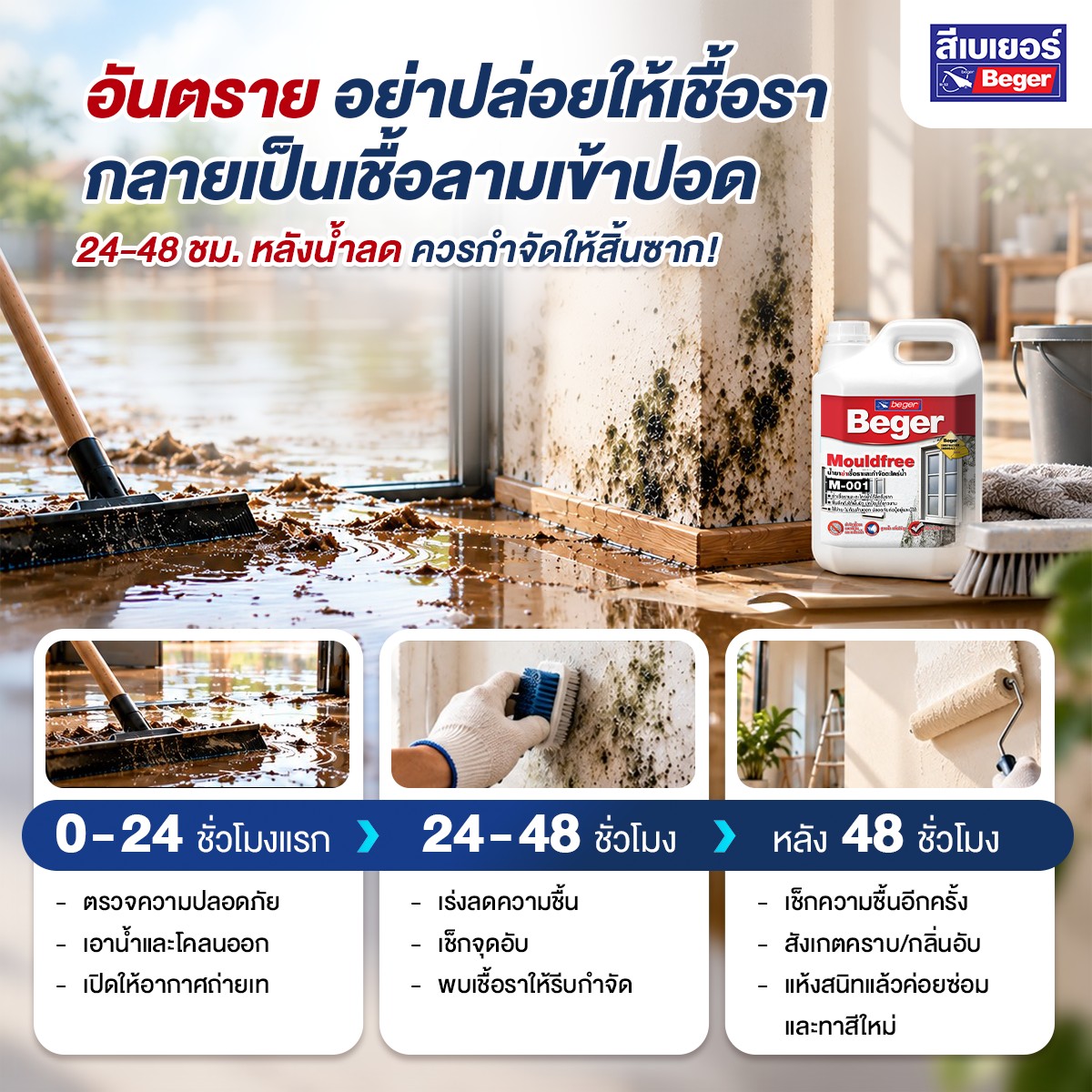
Danger: Do not let fungal spores enter the respiratory system.
Fungi after flooding not only affect walls, paint, or interior materials of the house but can also impact the health of the residents. When fungi grow on surfaces, they can release tiny spores that spread in the air and enter the body through breathing. Inhaling fungi or fungal spores may cause some individuals to experience nasal congestion, throat irritation, coughing, wheezing, eye irritation, or respiratory system irritation. Meanwhile, those with asthma or fungal allergies may have exacerbated symptoms when exposed to a large amount of fungi.
Can fungi “enter the lungs”?
The term “fungi enter the lungs” commonly used should be accurately explained that when we breathe in an area with fungi, fungal spores can be inhaled into the respiratory system and lungs. However, it does not mean that everyone who inhales spores will develop a lung infection. Generally, most people can come into contact with or breathe in fungal spores without developing severe infections. However, those with compromised immune systems, chronic lung diseases, or those on immunosuppressive medications are at a higher risk of lung infections than the general population, and while invasive infections are rare, they can be severe. If you want to understand the causes of fungi growing on walls, you can read more at the article on fungal stains on paint: causes and solutions, as this issue is often directly related to accumulated moisture and inadequate ventilation.
Who should be particularly cautious of fungi after flooding?
Individuals who should avoid contact with areas with a lot of fungi include those with asthma, chronic lung diseases, fungal allergies, and those with low immunity, especially in areas after flooding that still have issues with damp walls or moisture accumulation within materials, as these are environments conducive to fungal growth.
Therefore, if a house has just been through flooding and starts to show black stains, green stains, musty odors, or walls that still have accumulated moisture, one should not wait for the fungi to spread widely but should promptly reduce moisture, clean, and properly remove the fungi, especially in the first 24–48 hours after the water recedes, which is a critical period for drying out wet areas and materials to reduce the chances of fungal growth. Begercotht
If it is found that the walls have both fungi, peeling paint, bulging, or damage from being submerged, one should inspect and repair the house after flooding in a step-by-step manner before starting to repaint, to prevent moisture and fungal issues from recurring. Begercotht
What should be done in the first 24–48 hours after the water recedes?
The important thing after the water recedes is not to rush to paint or repair the walls immediately but to properly prioritize the restoration of the house. If you want to assess the overall condition of the house, you can use a post-flood house inspection checklist to survey the damage in each part before starting repairs.
1. Check safety before entering the house.
Check the electrical system, structure, and areas that may still have standing water. If the electrical system has previously been flooded, a technician or expert should inspect it before resuming use.
2. Remove water, mud, and dirt.
Quickly remove the dirt that came with the flooding from the area and separate wet materials or items from the dry area. If the walls have a lot of dirt and mud stains, you can study methods for removing mud stains from plaster walls after flooding before starting to repair the walls.
3. Accelerate moisture release
Open doors and windows to allow for air circulation. If the electrical system has been checked and is confirmed to be safe for use, ventilation or dehumidifying equipment may be used to help dry the area more quickly.
4. Identify mold risk points
Do not check only the easily visible walls. You should inspect areas behind cabinets, under furniture, corners of the room, walls that have previously been flooded, wall joints, under floors, as well as areas with unusual musty odors.
5. Don’t paint over it yet.
If the wall is still damp or has mold, painting over it immediately does not address the root cause. You should clean, remove the mold, and allow the surface to dry according to the system before starting repairs or repainting.
How to eliminate mold on walls after flooding?
When mold is found on walls after flooding, it is important not to only address the visible stains but also to reduce moisture and manage mold on the surfaces simultaneously. For suitable surfaces, you can use Beger MouldFree M-001 Fungicide and Algae Remover It is part of the surface preparation process before repair and repainting. It can be used on various surfaces such as concrete, cement, fiberboard, wood, brick, and natural stone.
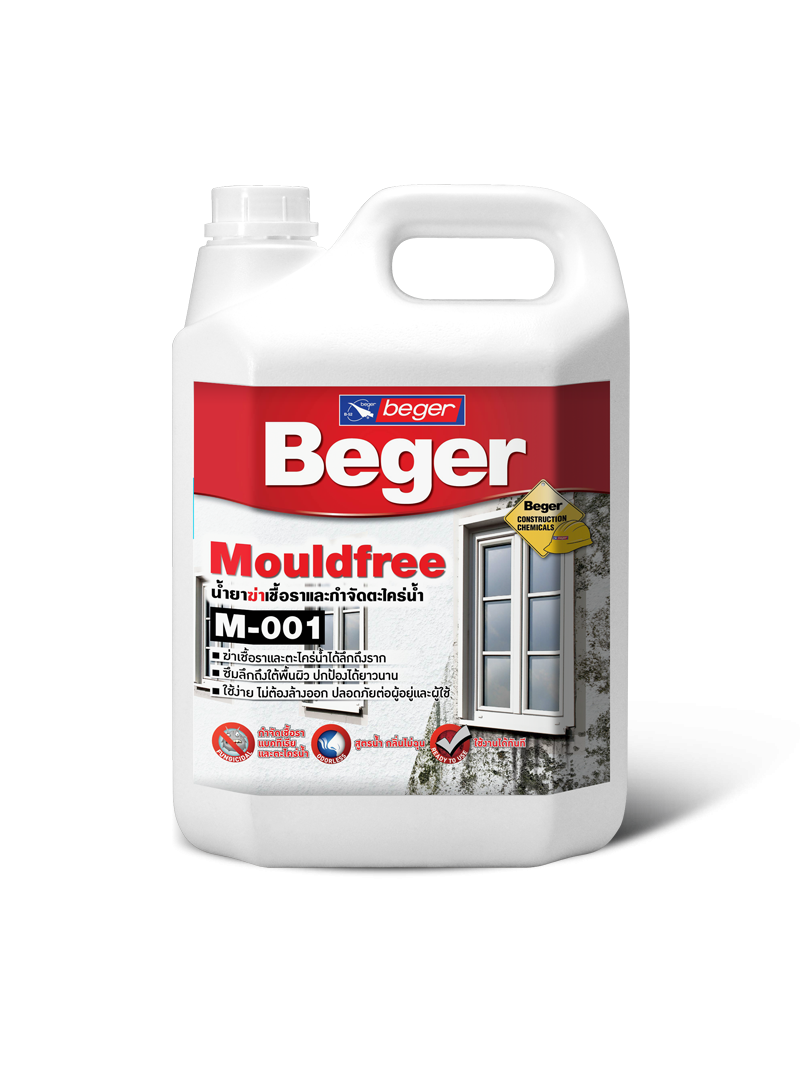
How to eliminate mold with Beger MouldFree M-001
Step 1: Scrub away mold and clean the surface.
Clean or spray wash surfaces with mold and slime stains using clean water to remove stains and dirt from the surface. Then allow the surface to dry completely for at least 24 hours.
Step 2: Apply Beger MouldFree M-001
Mix Beger MouldFree M-001 in a ratio of 1 part to 4 parts clean water. Apply or roll it on thoroughly in one coat. Then, allow it to dry for at least 3 hours without rinsing. The coverage rate is approximately 7.5–8.0 square meters per liter per coat.
You can view more details about How to eliminate mold with Beger MouldFree M-001 Before use
Step 3: Check the surface before starting the paint system.
After dealing with mold, you should not rush to paint immediately if the wall still has accumulated moisture. You should check the causes of moisture, such as leaks, cracks, or seepage, and allow the surface to dry appropriately before proceeding to the priming and topcoating steps.
Mold after flooding should not be addressed by simply painting over it.
One common misconception after a flood is that when homeowners see stains or peeling paint on the walls, they may want to repaint immediately to restore the house’s appearance. However, if there is still moisture underneath the paint film, Moisture or Mold The previous problem may return. The appropriate restoration sequence should start with safety checks, followed by cleaning, reducing moisture, detecting and eliminating mold, allowing surfaces to dry, repairing surfaces, and then starting the primer and topcoat system.
If other issues are found, such as peeling paint, blistering, or rust, you can study methods for repairing and addressing paint problems after flooding to choose the appropriate repair method for each type of damage.
Checklist for the first 48 hours after the water recedes
Period 0–24 hours
Check safety before entering the house, remove standing water, mud, and dirt, open the area for ventilation, and separate wet materials from dry areas.
Period 24–48 hours
Accelerate moisture reduction, check walls, floors, corners, behind furniture, and areas with musty odors. If mold is found, begin cleaning and eliminating it properly.
After 48 hours
Monitor moisture and observe whether stains or musty odors return before starting to repair walls, apply primer, and repaint.
For homes with multiple areas of damage, you can refer to the Beger guide for home care during the rainy season and post-flood restoration to plan overall home repairs.
Frequently Asked Questions about Mold After Flooding (FAQ)
Q1: How many hours after flooding does mold start to grow?
A1: There is no definitive time frame in which all types of mold will start to grow simultaneously. However, if a house or items are wet, the CDC recommends cleaning and drying them within 24–48 hours to reduce the chances of mold growth. Therefore, 24–48 hours should be viewed as a critical period for controlling moisture rather than identifying a specific number of hours after which mold will occur.
Q2: Should I clean the house immediately after the water recedes?
A2: You should start when it is safe to enter the area by checking for risks from electrical systems, structural integrity, standing water, and contaminants first. Then, quickly remove dirt and reduce moisture inside the house.
Q3: What does mold look like after flooding?
A3: It may appear as spots or stains that are black, green, brown, white, or other colors, and there may be an unusual musty odor. Sometimes mold may be in areas that are not visible, such as behind furniture, under floors, or behind surface materials.
Q4: Can I paint over mold after wiping it off?
A4: You should not rush to paint over it if the surface is still damp or if the cause of the moisture has not been addressed. Mold should be eliminated, the surface allowed to dry, and the surface prepared according to the system before repainting.
Q5: Is mold after flooding harmful to health?
A5: Mold can cause irritation, nasal congestion, coughing, wheezing, or trigger symptoms in those with asthma and mold allergies. Individuals with weakened immune systems or chronic lung diseases should be especially cautious.
Q6: Does Beger MouldFree M-001 need to be rinsed off?
A6: After applying Beger MouldFree M-001, there is no need to rinse with water. It should be allowed to dry for at least 3 hours, and follow the product’s usage instructions before proceeding to the next painting stage.
After the water recedes, do not wait to see mold before starting to address the issue.
The receding water does not mean that the moisture inside the house has disappeared as well, because walls, floors, and various materials can still retain moisture. The first 24–48 hours after the water recedes is a crucial period for accelerating cleaning, ventilating moisture, and drying wet materials to reduce the chances of mold growth. If mold is found, both the source of moisture and the mold stains should be addressed properly before entering the repair and repainting phase. Beger MouldFree M-001 can be used as part of the mold removal process and surface preparation to make the home ready for systematic restoration after flooding.