
How often should you paint your house? There is no fixed number, but generally, exterior walls should be repainted every 5–10 years, interior walls every 5–7 years, exterior wood every 2–4 years, and metal work every 3–5 years. Homes that use premium-grade paint and are applied correctly from the start will last much longer than these averages. For example, some high-grade building paints, such as BegerCool DiamondShield 18, the manufacturer claims that the paint film can withstand the weather conditions in Thailand for over 18 years. A more accurate method than counting years is to look for “signs on the walls,” which can be observed with the naked eye.
How often should you paint your house? By surface type
The short answer is that each surface has a different lifespan because they are exposed to sunlight, water, and abrasion differently.
How often should you paint your house? By surface type
The short answer is that each surface has a different lifespan because they are exposed to sunlight, water, and abrasion differently.
| Surface | General repaint cycle | Factors that shorten lifespan |
|---|---|---|
| Exterior plaster walls | 5–10 years | West sunlight, rain splash, and no eaves |
| Interior plaster walls | 5–7 years | Kitchens, bathrooms, or homes with small children |
| Interior ceilings | 7–10 years | Leaks from the roof and accumulated moisture |
| Exterior wood | 2–4 years | Wood expands and contracts with moisture and direct rain exposure |
| Steel work | 3–5 years | Rust, salt spray, and standing water |
| Roofs and terraces | 5–10 years | Full sun exposure and standing water during the rainy season |
The above figures are average values for standard grade paint. If premium grade paint is used with the correct primer system, the repainting cycle can be extended significantly. Read more at Tips for Choosing Durable House Paint
Why do different walls of the same house deteriorate at different times?
Because the amount of sunlight each side receives varies significantly. The west-facing wall receives the strongest afternoon sun, so it often fades and develops chalking 2–3 years before other sides. In contrast, the north-facing wall, which receives less sun but dries slowly, tends to have more issues with mold and algae. Repainting only the sides that have deteriorated first is a cost-effective option, but one must accept that the shades may differ slightly from the sides that have not been painted yet. To reduce the problem of the sun-exposed wall deteriorating quickly, choosing heat-reflective house paint can help slow down the degradation of the paint film.
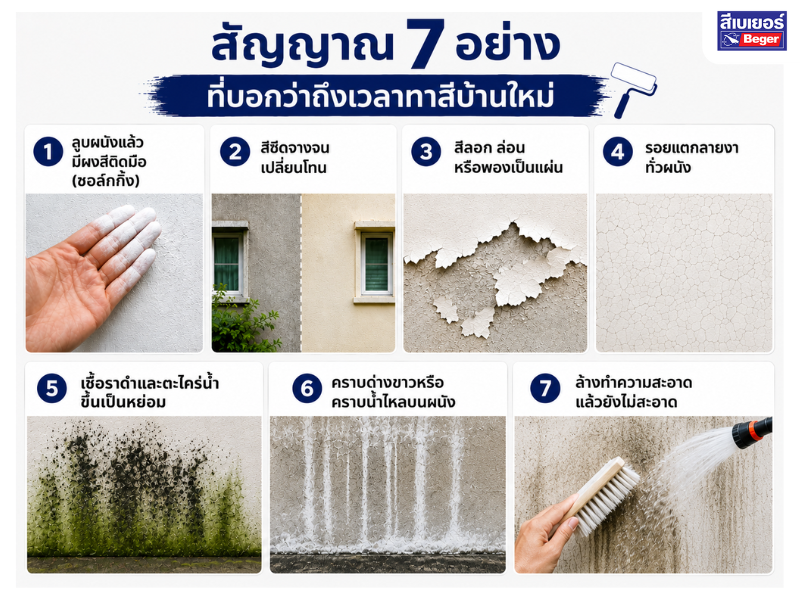
7 Signs That Indicate It’s Time to Repaint Your House
If your house exhibits 2 or more of the symptoms on this list, it means it’s time to plan for a repaint, without waiting for the annual cycle.
1. Rubbing the wall leaves color dust on your hand (chalking)
Chalking is when the paint film deteriorates due to UV rays, causing the paint to break down into fine powder on the surface. The easiest way to check is to rub your palm against the dry wall. If there is a noticeable white powder on your hand, it means the paint film has lost its protective properties, and this is the most direct sign among the 7.
Important Note: Do not repaint over walls with chalking without cleaning them first, as the color dust will create a barrier preventing the new paint from adhering, causing the new paint to peel within a few months.
2. The color has faded to the point of changing tone
A color that was once dark gray has turned light gray, or a cream color has taken on a yellow hue, is the result of pigments being damaged by UV rays. Darker shades and red-yellow tones fade faster than lighter shades. If the difference is clearly noticeable between the shaded and unshaded areas, it is time for a repaint.
3. The paint is peeling, flaking, or bubbling
This symptom indicates that the problem is not just with the paint film, but there is moisture or alkali from the cement pushing up from behind the wall. Simply repainting will not solve the problem; the source of the moisture must always be identified first. See the troubleshooting methods categorized by symptoms at the collection of building paint problem solutions.
4. Cracks all over the wall
Fine cracks resembling spider webs occur when the paint film loses flexibility and cannot keep up with the expansion and contraction of the wall. If the cracks are still shallow and only affect the paint layer, they can be sanded and repainted. However, if the cracks are deep and reach the plaster, repairs must be made first.
5. Black mold and algae appear in patches
This is commonly found on north-facing walls, walls at the back of the house shaded by trees, and areas under eaves that dry slowly. If the area is washed and the mold returns within a few months, it means the paint film has lost its mold resistance and needs to be treated and repainted, not just washed.
6. White stains or water streaks on walls
White stains resembling salt (Efflorescence) are alkalis from cement brought to the surface by moisture. They are a sign that water is seeping into the structure and are often found alongside leaks from roofs or ceilings. The waterproofing system of the roof and ceiling should be checked as well, because repainting without fixing the leaks is just a temporary solution.
7. Cleaned but still not clean
If the wall remains dull after washing with water and a soft brush, it means the stains have penetrated into the porous paint film and are no longer surface stains. In this case, repainting is more worthwhile than continuing to try to clean it.
Can you paint over old paint? What should you check?
You can paint over it if the original paint is still well-adhered and is of the same formula, but you must check these 4 points first every time.
- Test adhesion Use tape to stick it on and pull it off quickly. If the original paint comes off with the tape, it must be scraped off first; you cannot paint over it.
- Check for chalking If rubbing produces powder, it must be washed with clean water and allowed to dry completely first.
- Check the original paint formula Water-based paint over oil-based paint without the appropriate primer will not adhere. If unsure of the original formula, test a small area first.
- Check wall moisture If there have recently been leaks or flooding, you must wait for it to dry and address the root cause first.
Once all 4 points are passed, you can see the steps for actual painting in “6 Steps to Paint Your House Like a Professional.”
What causes house paint to not last as long as it should?
The main reasons are not related to the paint itself but to the steps taken before painting.
- Skipping primer Primer is the layer that prevents alkalis from the cement from damaging the paint film. Skipping this layer can cause the paint to deteriorate several years earlier.
- Painting on walls that are not dry enough New plaster should cure for at least 21–28 days before painting.
- One coat application A paint film thinner than the specifications will not provide the durability that the manufacturer tested.
- Using the wrong type of paint on the surface For example, using interior paint on exterior walls, which are not designed to withstand UV.
- Not cleaning the surface before painting Dust, grease, and mildew left on the surface immediately reduce adhesion.
If you are planning a budget for repainting, consider reading how to calculate the amount of paint and the cost of painting a house, or use a paint quantity calculator tool to estimate the number of cans you need to buy.
Plan for a longer interval before the next painting.
This painting will determine how many years until you need to paint again. The three factors that have the most significant impact are:
- Choose the grade of paint based on the difficulty of the location. Walls facing west and walls without eaves should use the highest grade that the budget allows, while indoor walls can use a lower grade.
- Use a primer suitable for the type of surface. New plaster, old plaster, and fresh plaster require different primers.
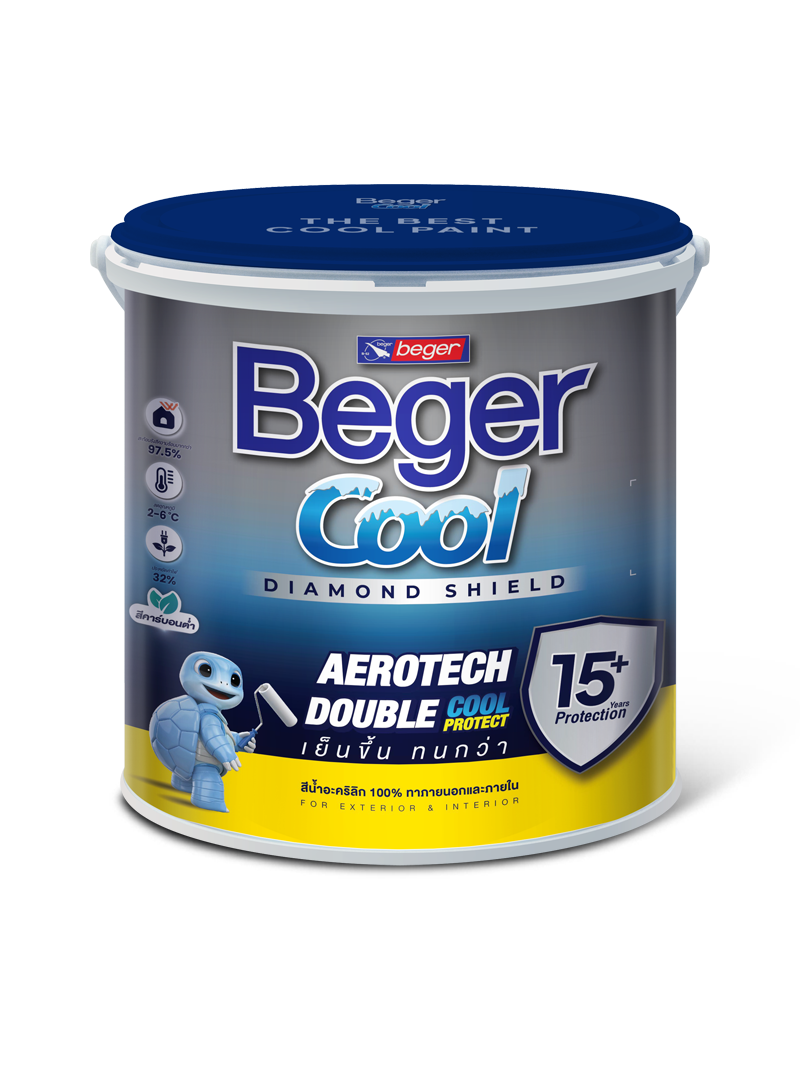
- Choose paint that reduces heat load on the walls. A heat-reflective paint film will accumulate less heat, which helps prolong the lifespan of the film. Read the principles at BegerCool with ceramic cooling technology.
Recommended products
FAQ Frequently asked questions about how often to repaint a house.
Q1: How often should a house be painted?
A1: Exterior walls should generally be repainted every 5–10 years, and interior walls every 5–7 years. However, it is better to rely on the signs on the walls rather than the number of years, especially signs of chalking and peeling paint.
Q2: What does it mean if there is white powder on my hand after rubbing the wall?
A2: This is chalking, which occurs when the paint film deteriorates from UV rays and breaks down into powder. It is a sign that the paint has expired its protective ability and the powder must be completely washed off before repainting.
Q3: Can I paint over old paint without scraping it off?
A3: You can paint over it if the original paint is still well-adhered, shows no chalking, is not peeling, and is a compatible formula. The easiest way to check is to use tape to stick it on and pull it off. If the original paint comes off with the tape, you need to scrape it off first.
Q4: Can I paint only certain sides of the house?
A4: Yes, and it is a practical way to save money because west-facing walls often deteriorate 2–3 years earlier than other sides. However, be prepared for the fact that the shade of the newly painted side will be slightly brighter than the original side.
Q5: Can interior and exterior paint be used interchangeably?
A5: No, because interior paint is not designed to withstand UV rays and rain. Using it outdoors will cause it to fade and deteriorate much faster than normal.
Q6: How long should a new house wait before the first paint job?
A6: New plaster walls should cure for at least 21–28 days, and moisture levels should be measured to be within the manufacturer’s specified range before applying primer.
Summary
The practical answer to the question of how often to paint a house is to look at the walls rather than the calendar. Exterior walls generally have a cycle of 5–10 years, but if you see chalking, peeling paint, or recurring mold before that cycle, that’s when you should take action. The duration of this paint job will always depend on three factors: the grade of paint chosen, the correct primer system, and the preparation of the surface to be clean and completely dry before painting. If you’re unsure which paint line your house should use, consult a Beger color expert for free or read more about 5 ways to choose the right paint for your home.