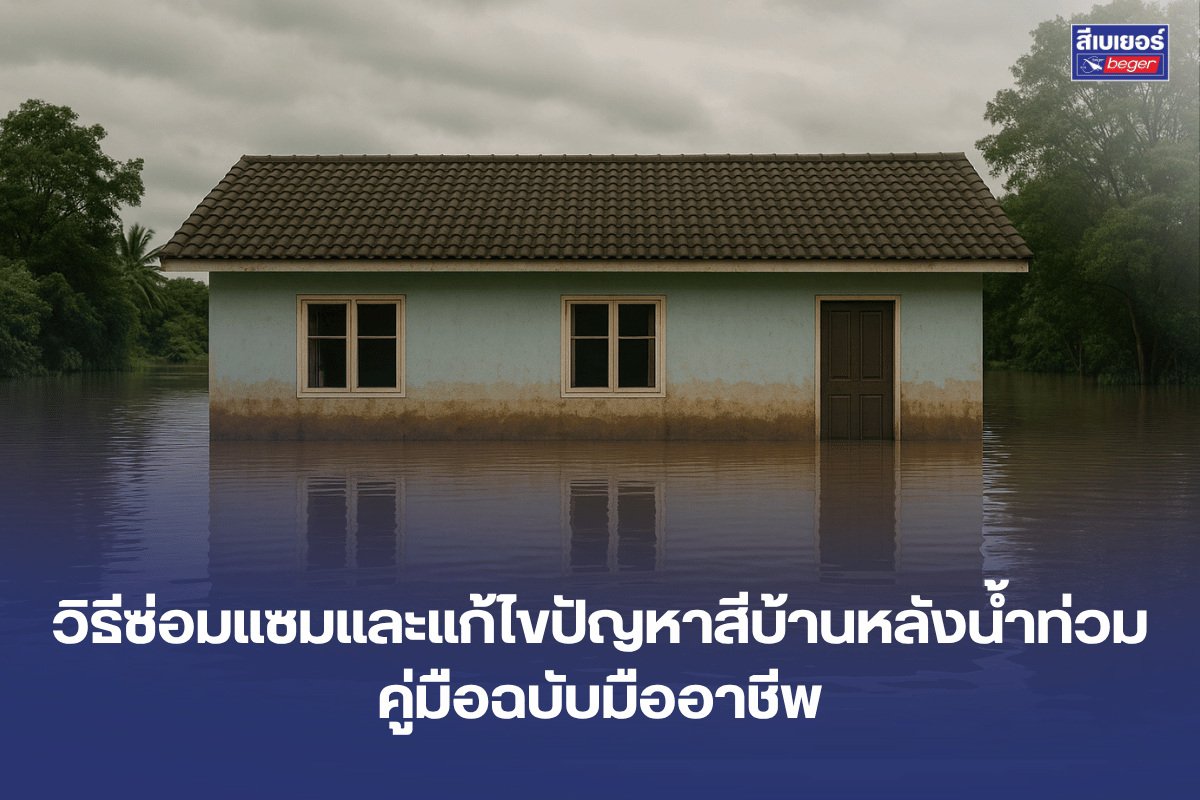
Flooding In addition to causing economic and social impacts, it also directly affects “homes,” which are the primary residences of everyone, particularly in terms of “surface and color of the house,” which often suffer significant damage after the water recedes, such as peeling paint, blisters, mold, or rust on structural steel.
This article will help you understand the four major problems that homeowners face after flooding, along with methods for repairing homes after flooding properly, to restore the house to be strong, clean, and beautiful as before.
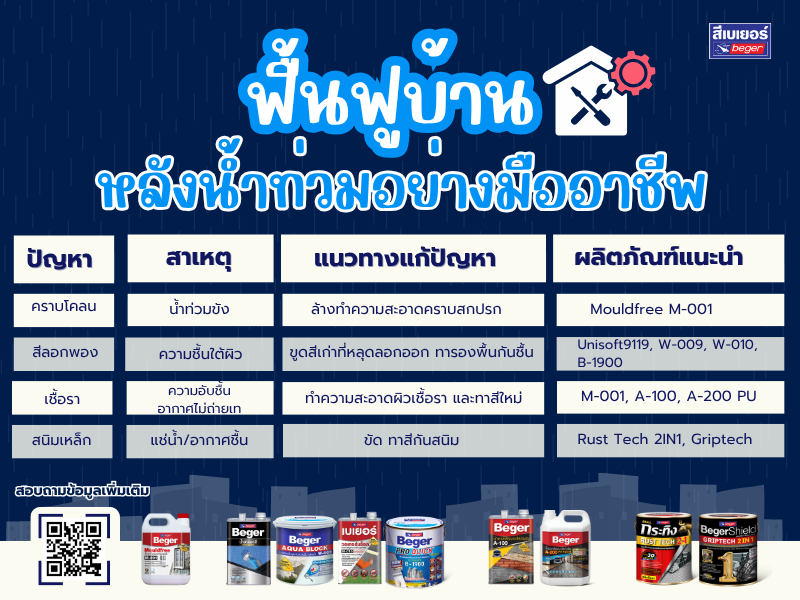
1. Addressing water stains and accumulated mud
Problem:
After the water recedes, walls, floors, and ceilings are often covered with mud stains, water stains, and dried sediment, which can make surfaces dirty, have a musty smell, and be a breeding ground for germs.
Solution:
- Wash the surfaces with clean water using a stiff-bristle brush.
- Use a disinfectant to kill mold embedded in deep crevices.
- Ensure proper ventilation.
- For walls, wait for at least 3-5 days to dry before starting any painting or repainting work.
Recommended product:
Beger Mouldfree M-001: A mold and slime disinfectant that can eliminate germs down to the root while helping to prevent their return.
2. Fixing peeling and blistering paint
Problem:
Moisture seeping into the wall surface can push the paint layer to peel off or blister. Old paint can no longer adhere to the wall, and painting over blistered old paint may exacerbate the problem.
Solution:
- Scrape off all peeling or blistered paint.
- Wash the wall surface with water and allow it to dry completely.
- Use a moisture-resistant primer to block moisture from within.
- New paint with good adhesion properties, moisture-resistant
Recommended products:
- Beger Unisoft 9119: High-quality paint remover, easy to strip without damaging the surface
- Beger Aqua Block W-009: Water-based moisture barrier primer, no strong odor, suitable for interior walls
- Beger Water Block W-010: Penetrates up to 35%, suitable for foundations or water-retaining walls
- Beger Pro Quick Primer B-1900: Quick-drying water-based primer for urgent jobs
3. Solve problems with mold, algae, and musty odors
Problem:
When moisture accumulates, mold and algae can grow rapidly within 48 hours and can spread on surfaces, paint, walls, or ceilings, causing black-green stains, unpleasant odors, and health issues such as allergies or asthma
Solution:
- Use a targeted disinfectant by spraying and leaving it as per instructions
- Scrub with a brush to remove stains
- Allow to dry before repainting
- Use a primer and topcoat with mold-resistant properties for future protection
Recommended products:
- Beger Mouldfree M-001: Mold-killing formula down to the roots, suitable for both exterior and interior use
- Beger A-100 Water Repellent Gloss/ A-200 PU Hybrid: Clear moisture-repellent coating, prevents mold on walls/floors
4. Addressing Rust and Structural Issues
Problem:
Steel structures, such as fences, doors, windows, or reinforcement structures, often develop rust after being submerged in water, affecting the strength and safety of the home.
Solution:
- Use a wire brush or rust removal tool to clean the steel surface.
- Apply a rust-inhibiting primer or a 2-in-1 protective coating.
- Choose a paint that is sun-resistant, water-resistant, and suitable for outdoor use.
Recommended Products:
- Bull Rust Tech 2IN1: A primer and topcoat in one for general steel structures.
- BegerShield Griptech 2IN1: High Gloss Hybrid steel coating that provides 4 times rust protection, dries quickly, and does not require a primer.
Restoring a home after flooding to make it beautiful and safe must start with addressing the root problems and selecting products suitable for each surface type.
Choose quality products from Beger for professional home repairs.