
If you are going to paint wood, whether it’s wooden floors, wooden walls, built-in wooden furniture, or decorative items in the house, and you are hesitating about which to choose wood paint, wood stain, polyurethane, wood oil, or lacquer is most suitable for the job, resistant to sun and rain, and provides good value for long-term use, this article will help clarify the picture, including pros and cons, differences, and how to choose the right type to suit the type of wood and the nature of the work
Because even though the names are similar, the properties, usage, lifespan, and results after application differ significantly. If the wrong type is chosen, problems may arise, such as easy peeling paint, sticky wooden floors, or quickly dull wood surfaces that do not withstand the sun as expected.
Let’s look at the updated wood paint selection guide for 2026 that both craftsmen, homeowners, and wood designers should not overlook.
Here’s the most comprehensive wood paint selection guide for 2026 that craftsmen, homeowners, and designers should not miss!
Choose to read by topic of interest
>> Wood Paint <<
>> Wood Stain <<
>> Polyurethane Wood Paint <<
>> Wood Oil <<
>> How to Use Wood Paint Like a Professional Carpenter <<
>> 5 Precautions When Painting Wood <<
>> Tips for Buying Wood Paint <<
>> Summary: How to Choose Wood Paint, Which Model to Buy <<
What is wood paint?
Wood Coating is a type of paint specifically designed for application on all types of wood surfaces, both real and artificial. It can be divided into two main groups:
- Transparent (Wood Stain) helps showcase the natural wood grain, making the wood fibers visible.
- Opaque (General Wood Paint) is used to cover the original wood grain and change the wood color to desired tones.
In residential buildings, opaque wood paint can help modernize the home, adjust the wood wall tones to match the decoration style, and protect the wood from sun and rain, prolonging its condition.
The image below is an example of using opaque wood paint on residential buildings, which enhances beauty, withstands sun and rain, and helps maintain the original condition of the wood for a longer time.
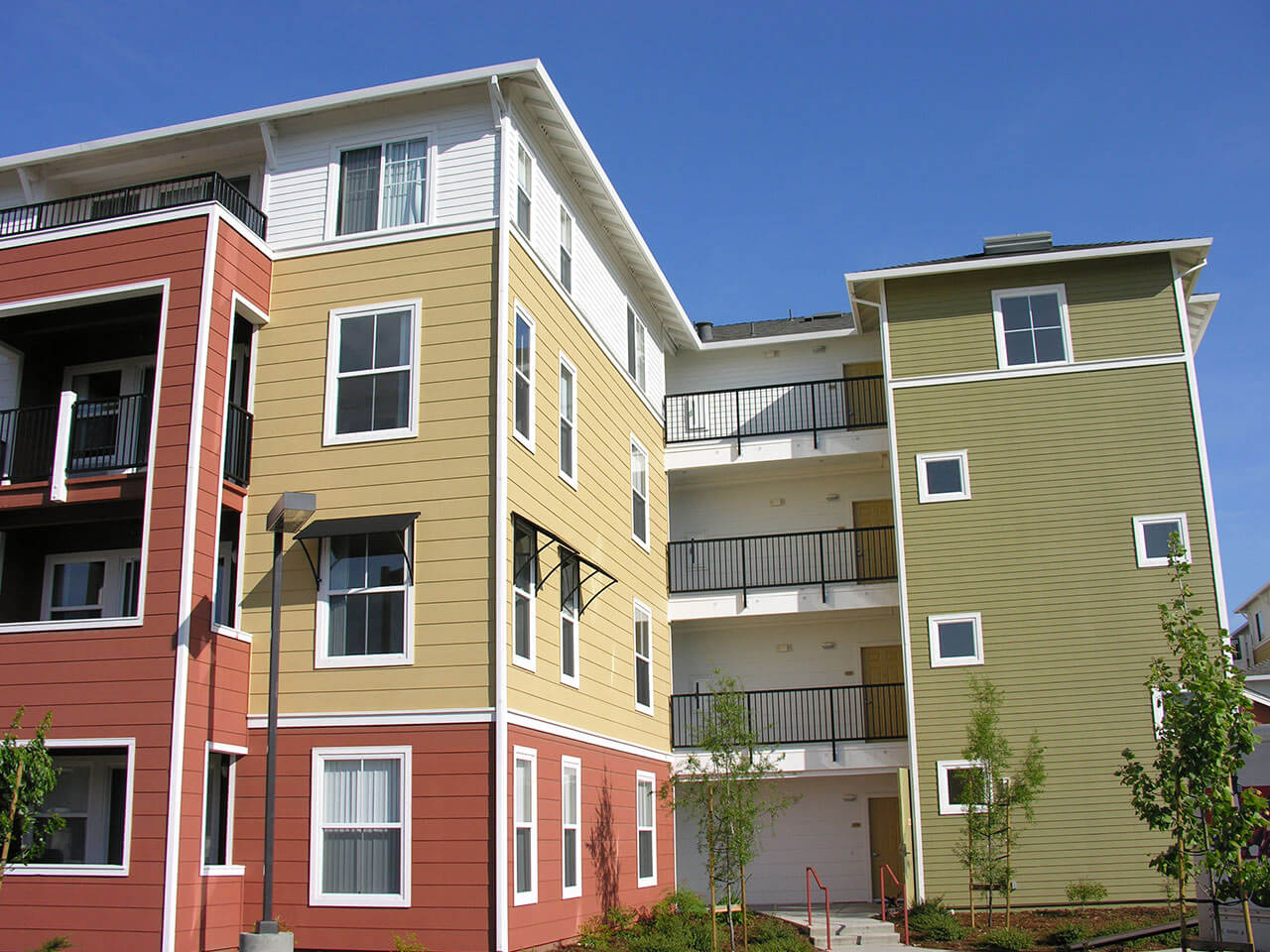
Opaque wood paint (Solid Wood Paint)
Generally, opaque wood paint usually refers to Alkyd Oil Paint which is a long-standing paint system known for its excellent surface coverage, effectively concealing wood marks, and providing a reasonably durable paint film, making it suitable for wood projects that require color changes or new surface characteristics.
However, Alkyd Oil Paint has significant limitations, such as
- a rather strong odor due to the need for thinner,
- and a long drying time of about 6–8 hours per coat.
Currently, new innovative paints have been developed to address the issues of traditional oil paints, making them easier to use, such as water-based wood paint. and acrylic oil paint that offers higher durability, mild odor, quick drying, and is safer for users than before
|
|
|
|
| water-based wood paint | acrylic oil paint | alkyd oil paint |
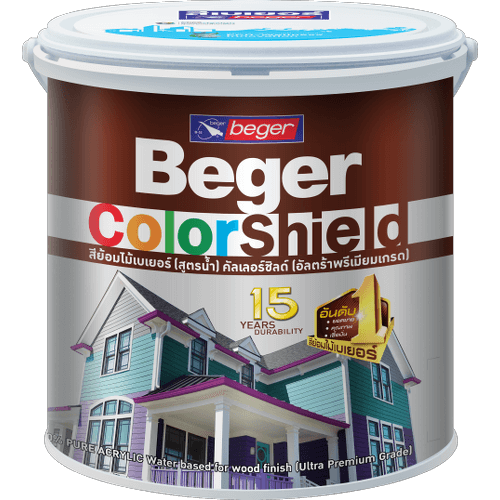
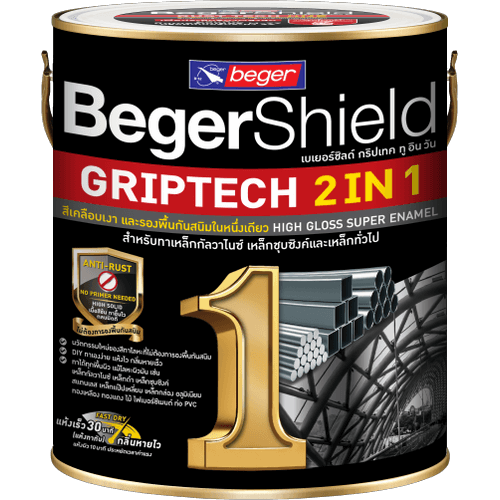
1. Water-based wood paint – suitable for modern homes that require convenience and safety
water-based wood paint such as Beger ColorShield opaque water-based wood paint provides a semi-gloss, semi-matte finish, protecting beautiful wood from sun and rain for over 15 years, which is three times more durable than regular oil paint
The highlights are
- very mild odor, allowing comfortable use indoors
- quick drying, efficient work
- can choose from over 1,300 shades, whether it be white wood paint, brown wood paint, or other shades as desired
suitable for both exterior and interior work, especially for residential homes that require a durable, beautiful, and safe opaque finish
2. Acrylic oil paint – strong film, versatile use
acrylic oil paint such as BegerShield Griptech 2In1 is another option that offers high flexibility in use, as it can be applied to almost any surface, such as
- Wood
- Cement
- Iron
It has the property of drying within 1 hour and provides a strong, durable color film, suitable for work that requires greater resistance to weather conditions or impact. The color shades are available in both glossy and matte finishes, with over 13 shades to choose from.
Wood dye is what?
Wood Stain or what many people know as “Woodstain” is a translucent color developed to showcase the natural wood grain, especially for wooden work that aims to emphasize the beauty of the wood fibers, such as Wooden slatted walls, wooden ceilings, wooden eaves, wooden screens, or doors and windows. for example
In 2026, wood dyes have been significantly developed, both in terms of
- Ability to Hold tightly
- meaning Sun-resistant – UV-resistant
- Moisture and mold prevention
- Flexibility that prevents the paint film from peeling off.
including options for both Water-based wood dye and Oil-based wood stain Each formula is designed to accommodate different environments and tasks, which will be compared in the following content.
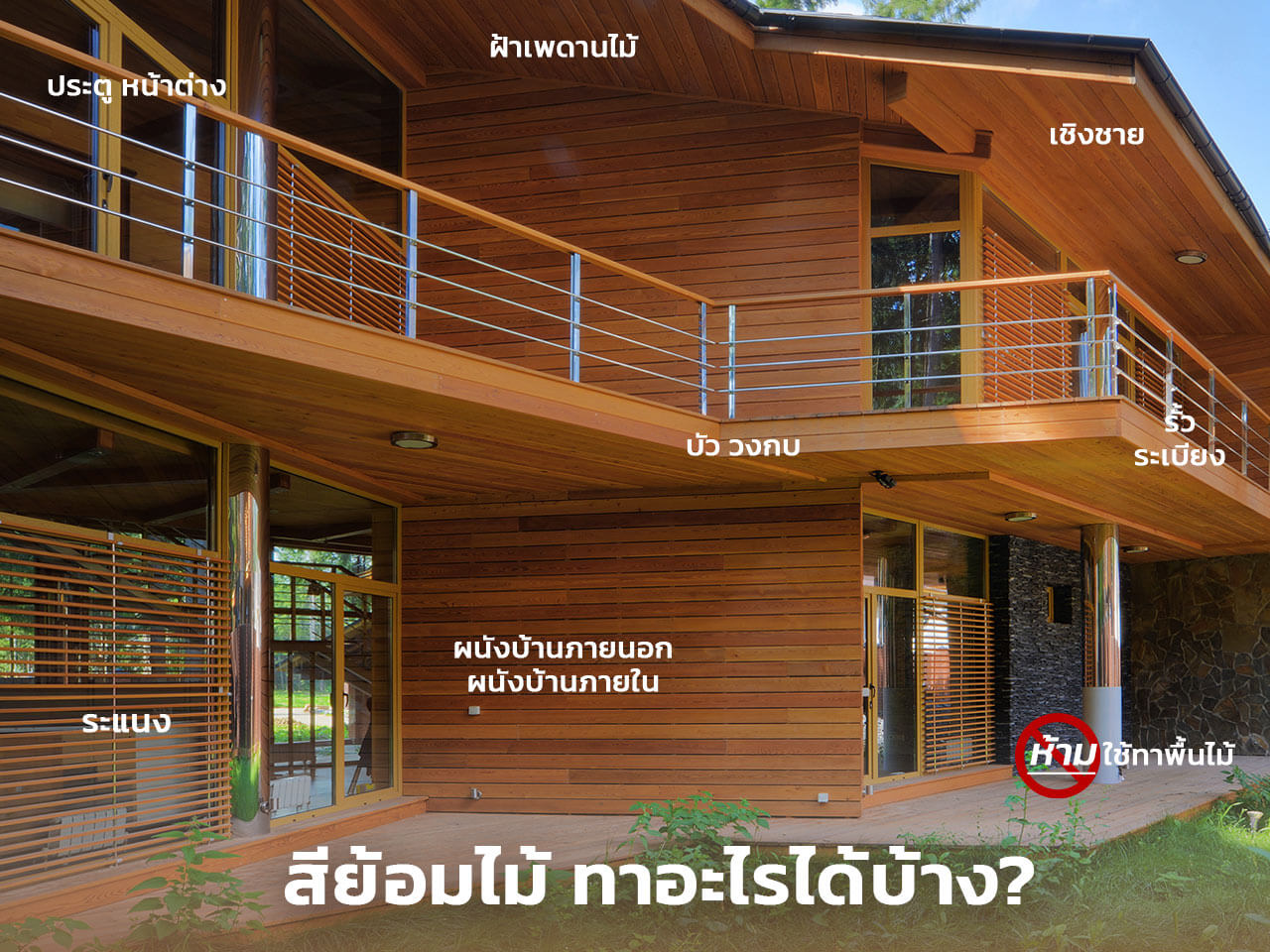
The sample image above shows that wood stains can be used on various wooden parts of the house, such as exterior/interior wooden walls, wooden ceiling beams, eaves, doors, windows, moldings, and wooden fences.
Wood stains not only enhance the beauty of the surface but also help protect against damage from UV rays, fungi, moisture, and wood-eating insects effectively. Most products available today are divided into two types: oil-based wood stains and water-based wood stains.
Precautions : Do not! Apply wood stains to floors under any circumstances. The paint film is highly flexible and penetrates deeply, making it unsuitable for foot traffic, which can lead to sticky floors and easy staining.
Do not! Apply wood stains to floors under any circumstances, as it may cause sticky floor issues. Use specific floor paints instead, such as Beger DeckStain Beger SuperDeck or polyurethane-based paints, such as Beger Polyurethane 1K Supreme and so on.
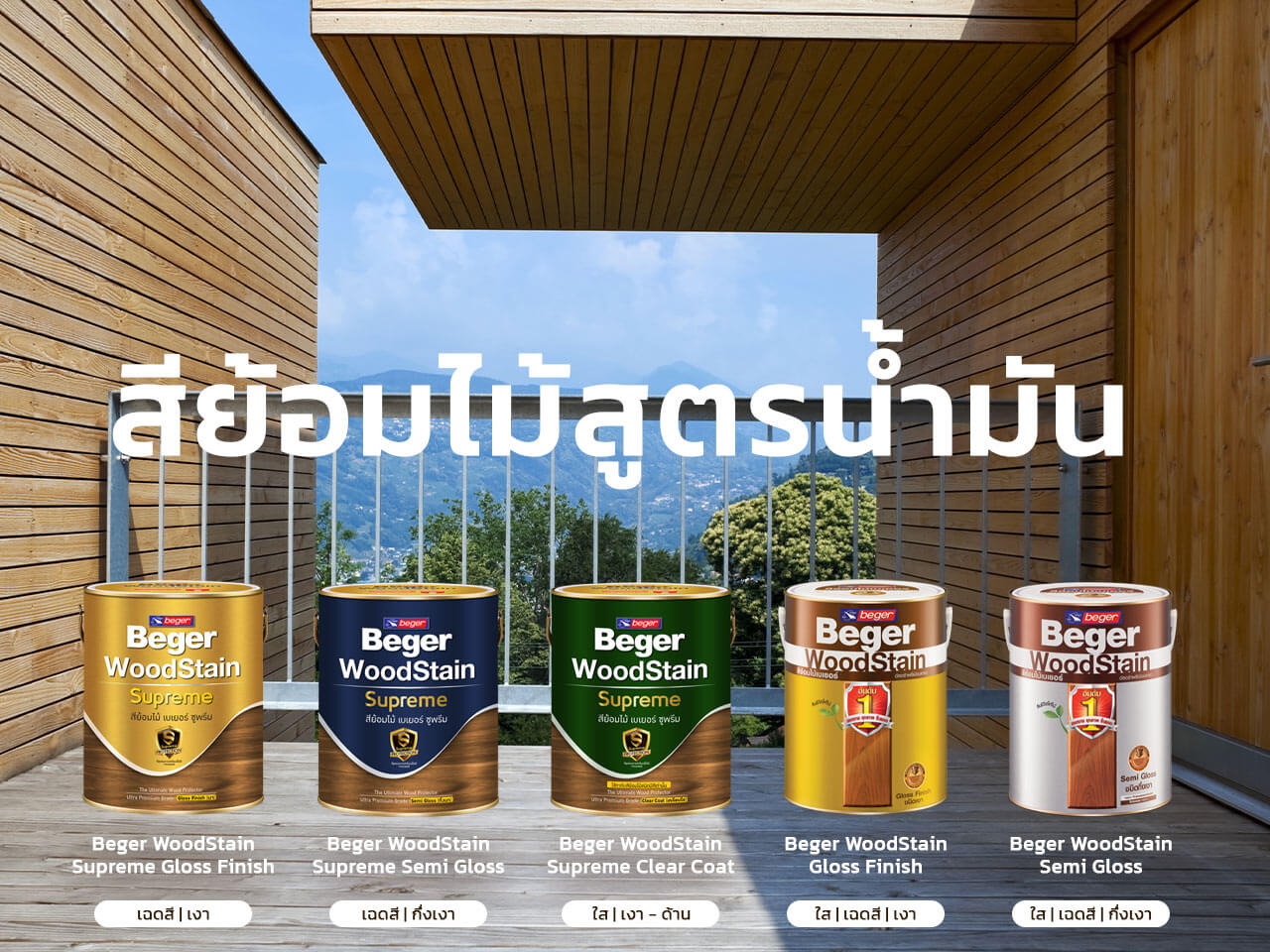
Oil-based wood stains
are made from alkyd resin. This formula is suitable for outdoor woodwork that needs protection from weather conditions, resistant to sun and rain, as the molecules of the paint can penetrate deeply into the wood best, are highly flexible, and will have a high gloss finish.
Examples of oil-based wood stains | Beger WoodStain Supreme Gloss (gloss), Beger WoodStain Supreme Semi Gloss (semi-gloss), Beger WoodStain Supreme Clear Coat (clear-gloss-matte)., Beger WoodStain Gloss (Clear-Color-Gloss), Beger WoodStain Semi Gloss (Clear-Color-Satin) The product, Behr Supreme wood stain, will be the highest grade color.
Water-based wood stain
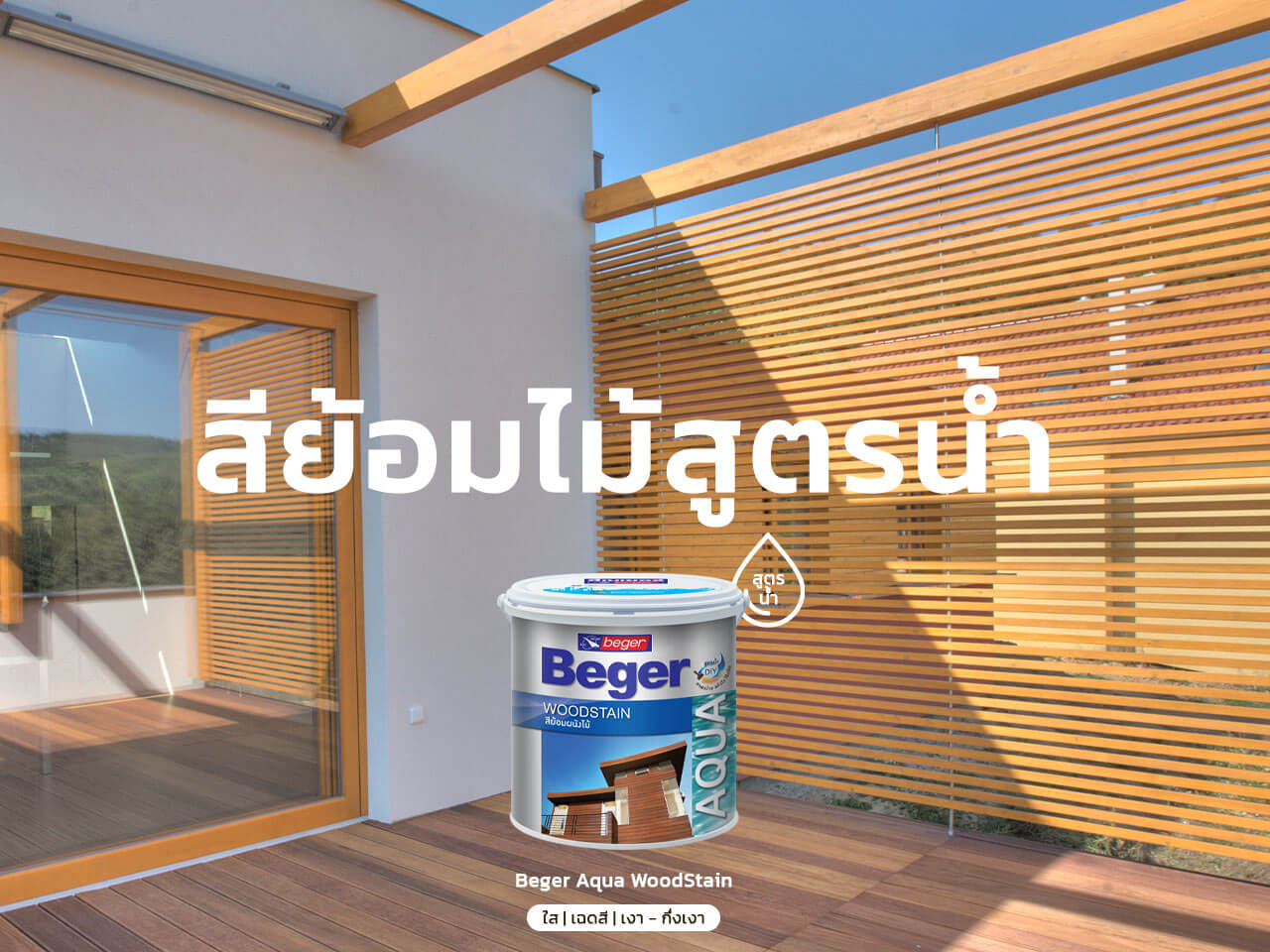
For those who do not like the smell of paint and want to finish quickly and move in, this should meet the needs better because the special feature is that the color is made from acrylic resin, which has a very mild scent, making it suitable for applying on wood inside the house, or it can also be used for outdoor wood.
Examples of water-based wood stains | Beger Aqua WoodStain
What is wood polyurethane?
Wood polyurethane is a strong surface coating material made from polyurethane, which has been developed to protect wood from scratches, impacts, moisture, heat, and everyday chemicals, especially in high-use areas such as wooden floors, furniture, dining tables, or wooden stairs.
Polyurethane provides a coating film with a high gloss finish or a matte finish and comes in both 1K polyurethane for general users and 2K polyurethane for professional work that requires exceptional durability.
Currently, polyurethane is becoming more popular for interior work and is starting to be applied to exterior work that has good protection against sunlight or rain, such as wooden balconies under eaves.
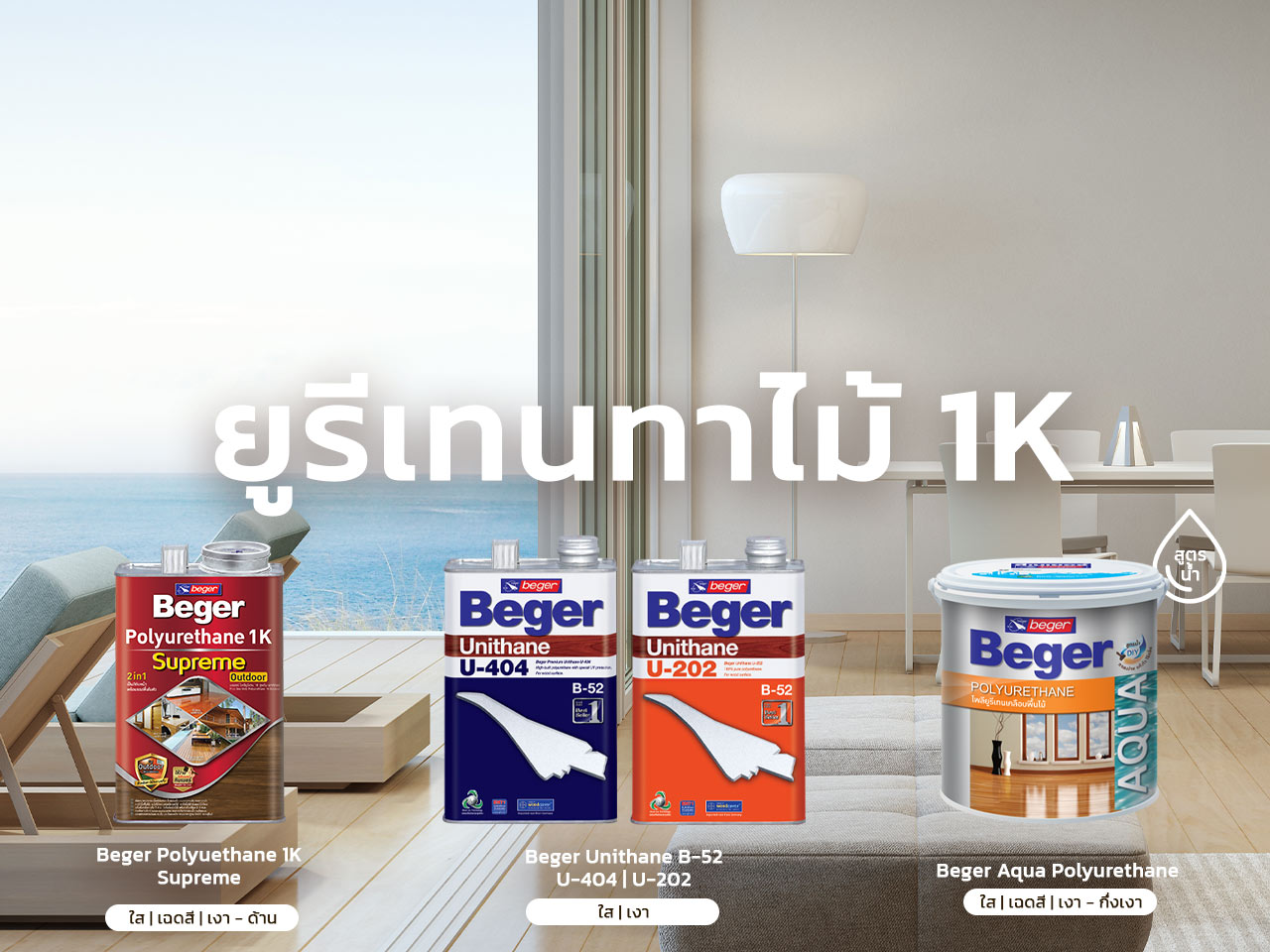
1-component polyurethane (Polyurethane 1K)
is a traditional type of polyurethane that has been used for a long time. The glossy type provides a very high gloss finish, and due to its translucent nature, it comes in both colored and clear types, allowing the wood grain to be clearly visible, such as Behr Unithane B-52, the best-selling product from Behr.
Examples of 1K wood polyurethane | Beger Polyurethane 1K Supreme Outdoor (Interior and Exterior), Beger Unithane B-52 (Interior), Beger Aqua Polyurethane (Water-based)
Polyurethane wood coating system 2 components (Polyurethane 2K)
The 2-component polyurethane system was developed from the single-component type and mixed with fast-drying agents. This type of polyurethane consists of Part A and a container of Part B. The method of use requires mixing the two parts in the specified ratio before application. It is available in both clear and tinted versions. Examples of 2K wood polyurethane | Beger Polyurethane 2K Supreme (clear), Beger B-5000 Polyurethane 2K (clear), Beger B-5000 Polyurethane 2K Colour (tinted)
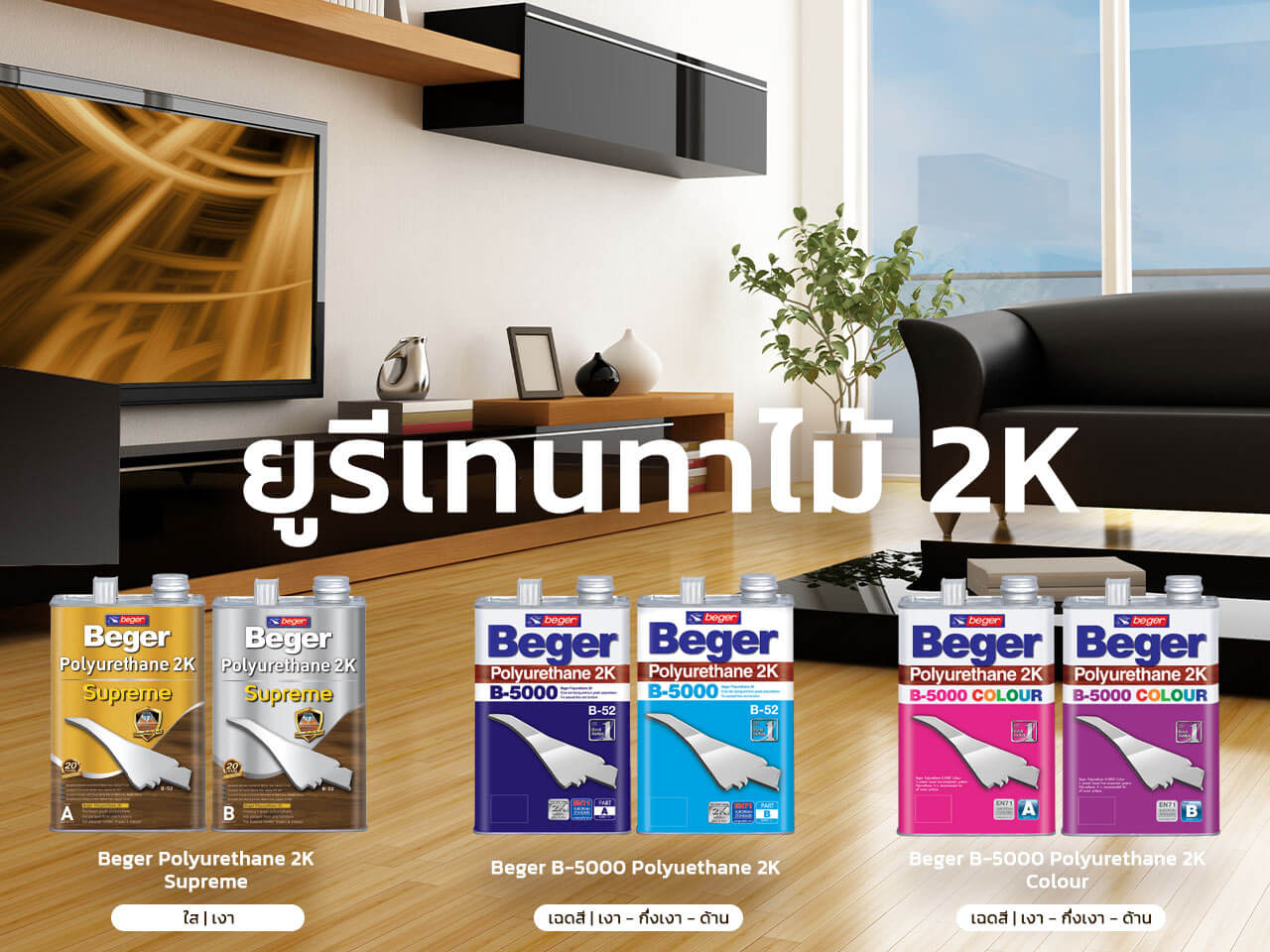
For applying the 2-component polyurethane, a high level of expertise is necessary, as the mixing ratio must be precise, the thickness of the application must be determined, and the drying time must be appropriate. Common problems include incorrect mixing ratios leading to slow drying or applying a second coat while the first is still wet, resulting in an uneven surface.
Although it is stated that polyurethane is not suitable for outdoor use, there are some types of polyurethane that can be used outdoors, such as Beger Polyurethane 1K Supreme Outdoor, which can withstand sunlight and rain very well, along with the strong properties of being a complete polyurethane. This product can be used both outdoors and indoors, on floors, walls, and furniture.
What is wood oil?
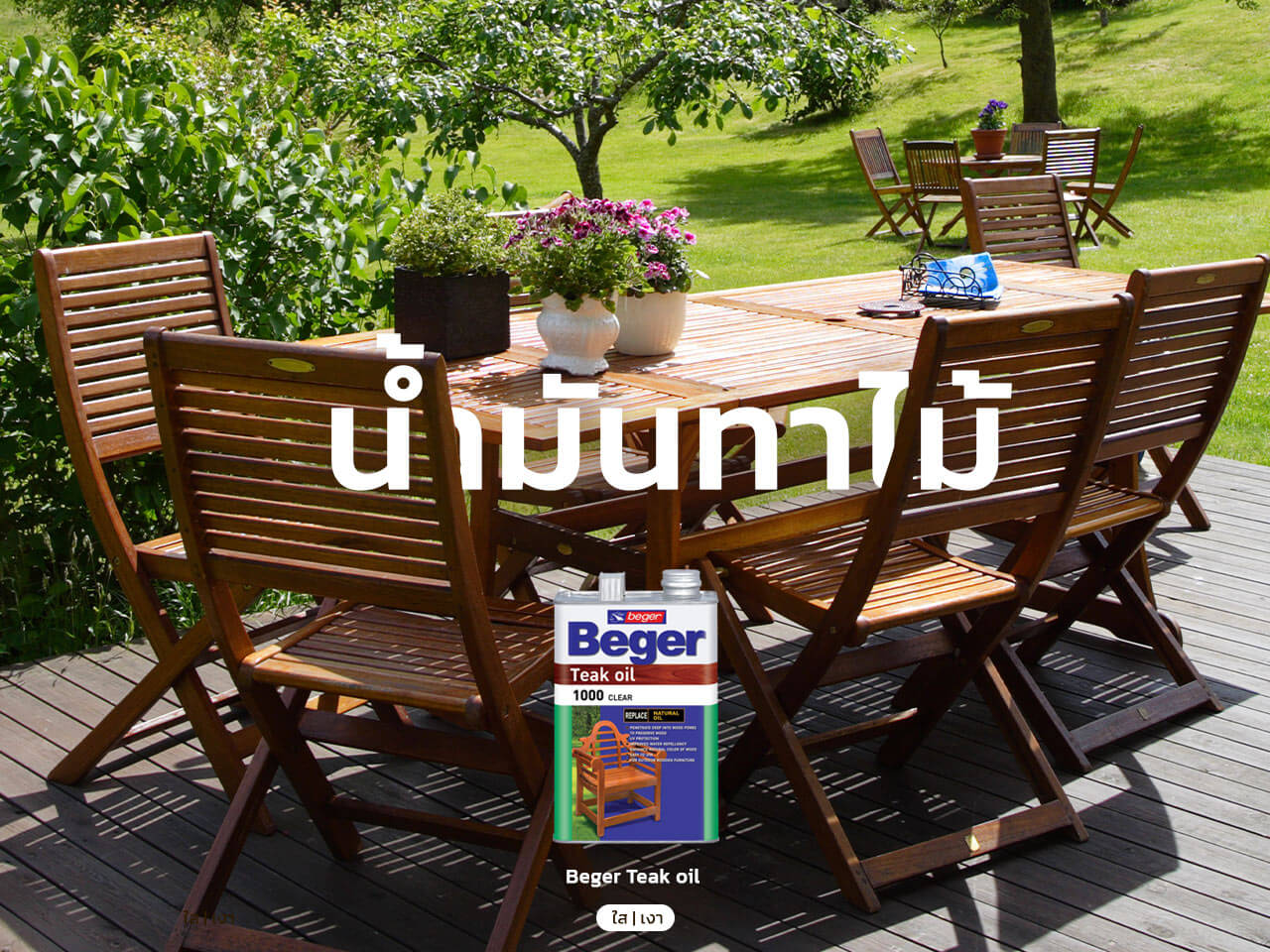
Wood oil (Wood Oil) is a maintenance product for wood that helps restore and extend the natural lifespan of wood by penetrating deep into the wood grain to prevent drying, cracking, or rotting from weather conditions such as intense sunlight or rain. Wood oil typically has a thin, clear texture and does not create a thick film on the wood surface, making it suitable for those who want to showcase the natural wood grain, such as teak, meranti, or redwood. It is commonly used for outdoor wooden furniture such as wooden tables, outdoor chairs, wooden trellises, or wooden pavilions that are regularly exposed to sunlight and moisture.
Examples of wood oil | Beger Teak Oil
What is lacquer?
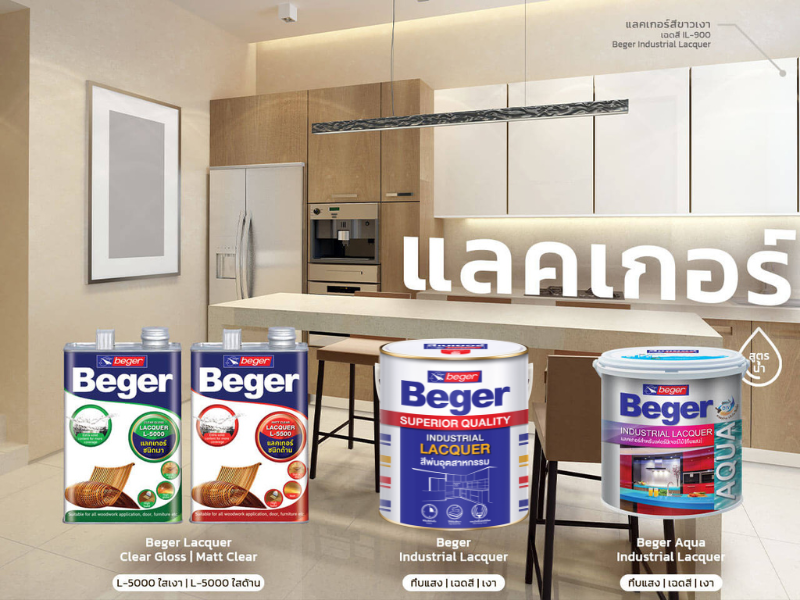
Lacquer (Lacquer) is a transparent wood coating material made from nitrocellulose mixed with resin. It has outstanding properties regarding glossiness, wood surface protection, and easy cleaning, making it suitable for indoor furniture such as tables, cabinets, doors, or various built-in pieces, providing a thin coating film that enhances the luxury of the wood while resisting moisture and light scratches. Lacquer is available in both glossy clear (Glossy), Matt and Semi Gloss which can be applied by both spraying and brushing, depending on the nature of the work. Additionally, there is water-based lacquer which has a milder smell and is safer for users.
Examples of lacquer | Beger Lacquer (translucent), Beger Industrial Lacquer (opaque), Beger Aqua Industrial Lacquer (opaque)
What is the difference between lacquer and polyurethane?
Lacquer dries much faster with a surface drying time of only 5-10 minutes and can be recoated in just 30 minutes. Furthermore, if higher durability is desired, polyurethane will provide a thicker, harder, and more durable film.
How to use woodwork paint like a professional carpenter
Different types of woodwork paint have similar usage principles, but they differ in application techniques, ratios, and types of solvents. Generally, the steps are as follows:
1. Surface preparation
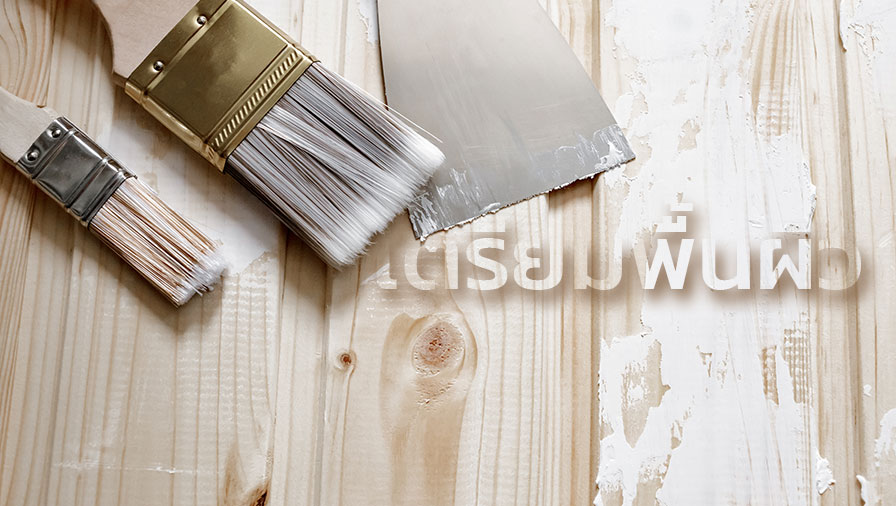
Before applying new paint, it is always necessary to prepare the surface first so that the new paint can adhere and penetrate well.
- If you want to paint new wood that has sap or natural oils, you should use Beger thinner M-77 to wipe off the wood sap first and let it dry.
- In the case of wood that has been previously painted, the old paint must be stripped off first. You may use Beger Unisoft 9119 paint remover Then sand down to the wood surface and clean off all dust from the surface.
- In cases where the wood has holes or cracks, it is recommended to fill them properly first with Beger Wood Filler
|
|
|
|
| Beger Thinner M-77 | Beger Unisoft 9119 | Beger Wood Filler |
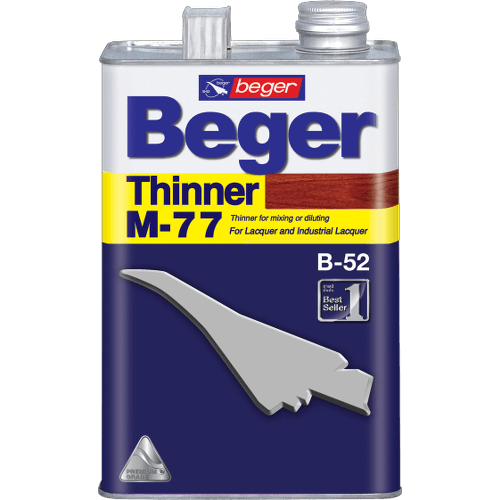
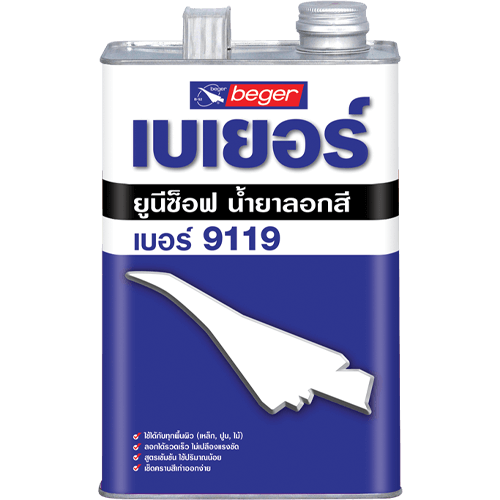
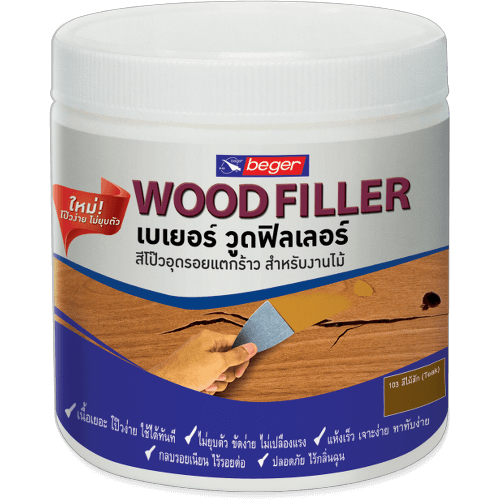
2. Wood Priming
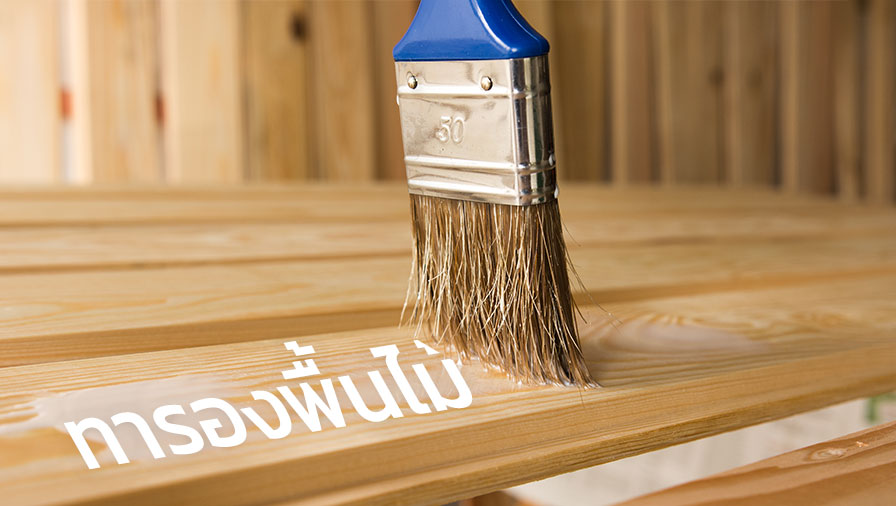
Sometimes, if the wood we want to paint has no issues, it is not necessary to apply a wood primer; just preparing the surface is enough to paint the wood. However, in some cases, especially when painting old wood, it may be necessary to apply a wood primer to condition the wood and prevent certain wood problems, such as termite issues, wood-eating insects, resin problems, and wood splinters. This includes certain types of paint, such as opaque wood paint, which will allow for easier application of the topcoat.
- Apply primer with Beger Dry-Treat termite repellent (water-based) or Beger Dry-Treat termite repellent (oil-based) once, with a recommendation to cover all six sides of the wood for maximum protection.
- In cases of rubbery wood, such as red wood or teak, after cleaning with thinner, it is recommended to apply a rubber-sealing primer Beger Wood Sealer B-2000 once.
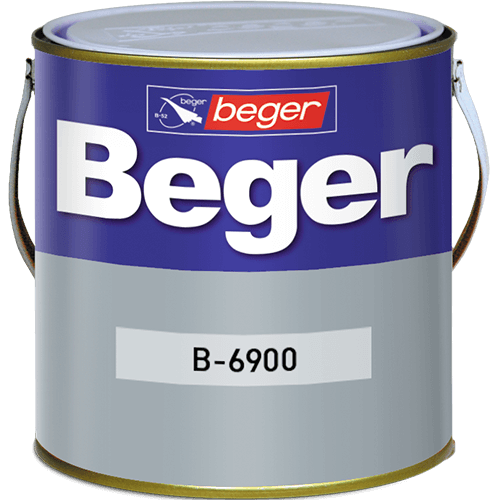
- For softwoods, such as pine, it is recommended to prime with a wood preservative Beger B-6900 to prevent mold and wood-eating insects, once.
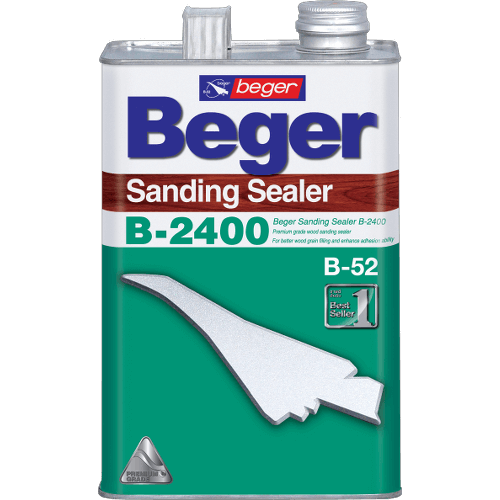
- In cases where there are wood splinters making the surface uneven, it is recommended to use a primer to fill the splinters Beger Sanding Sealer B-2400 once, let it dry, and then sand down the uneven areas.
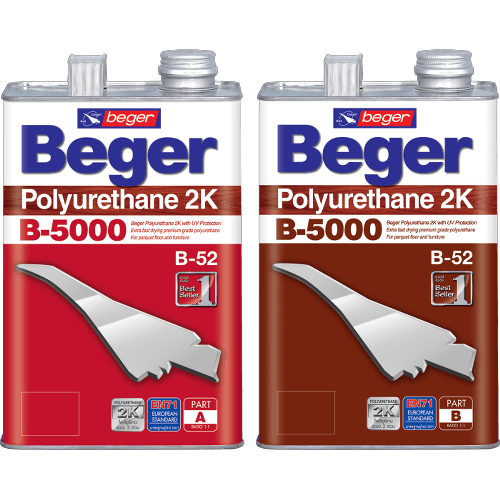
- For 2K polyurethane, it is recommended to apply a primer to fill the splinters. Beger Sanding Sealer B-5000/599 (2K)
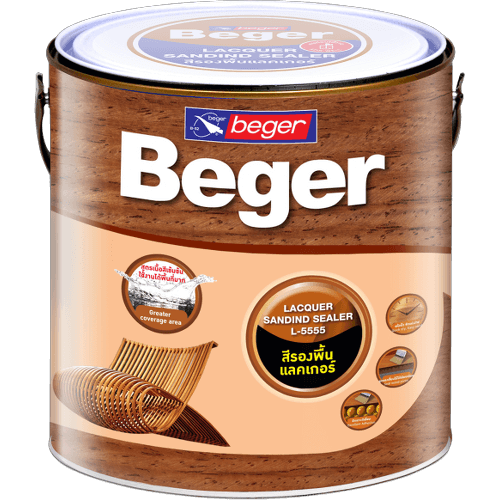
- In cases of using transparent lacquer wood paint, it may be applied or sprayed with L-5555 lacquer primer to fill the splinters. 1-2 coats, and if it is opaque lacquer, applying a primer will help save topcoat paint. It is recommended to apply or spray with gray primer IL-999 for 1-2 coats.
|
|
|
|
|
| BegerDrite oil-based paint |
BegerDrite water-based paint |
Beger Wood Sealer B-2000 |
Beger Industrial Lacquer |
|
|
|
|
|
| Beger B-6900 | Beger Sanding Sealer B-2400 | Beger Sanding Sealer B-5000/599 (2K) | Beger L-5555 |
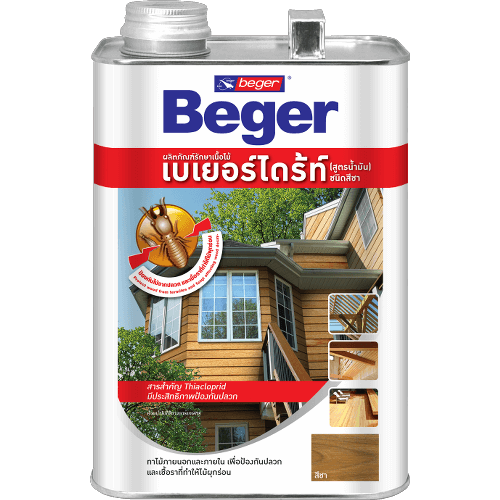
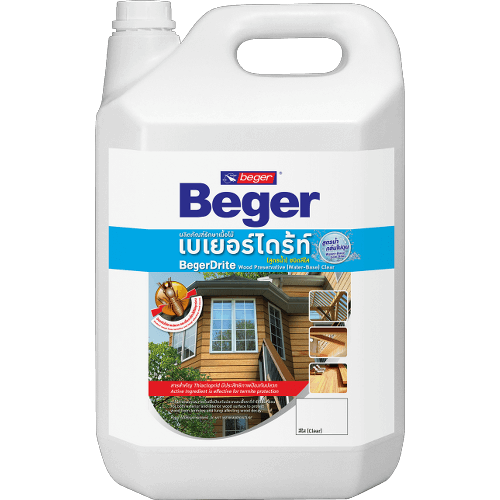
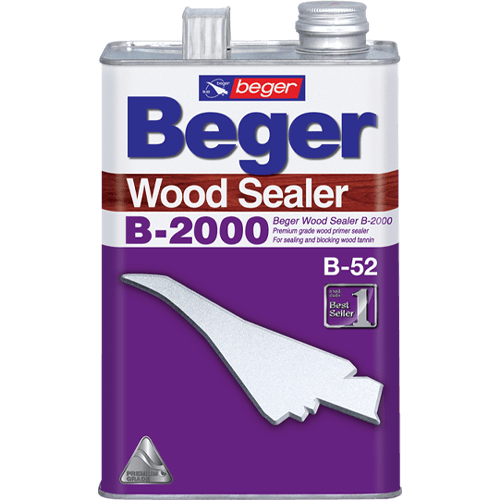
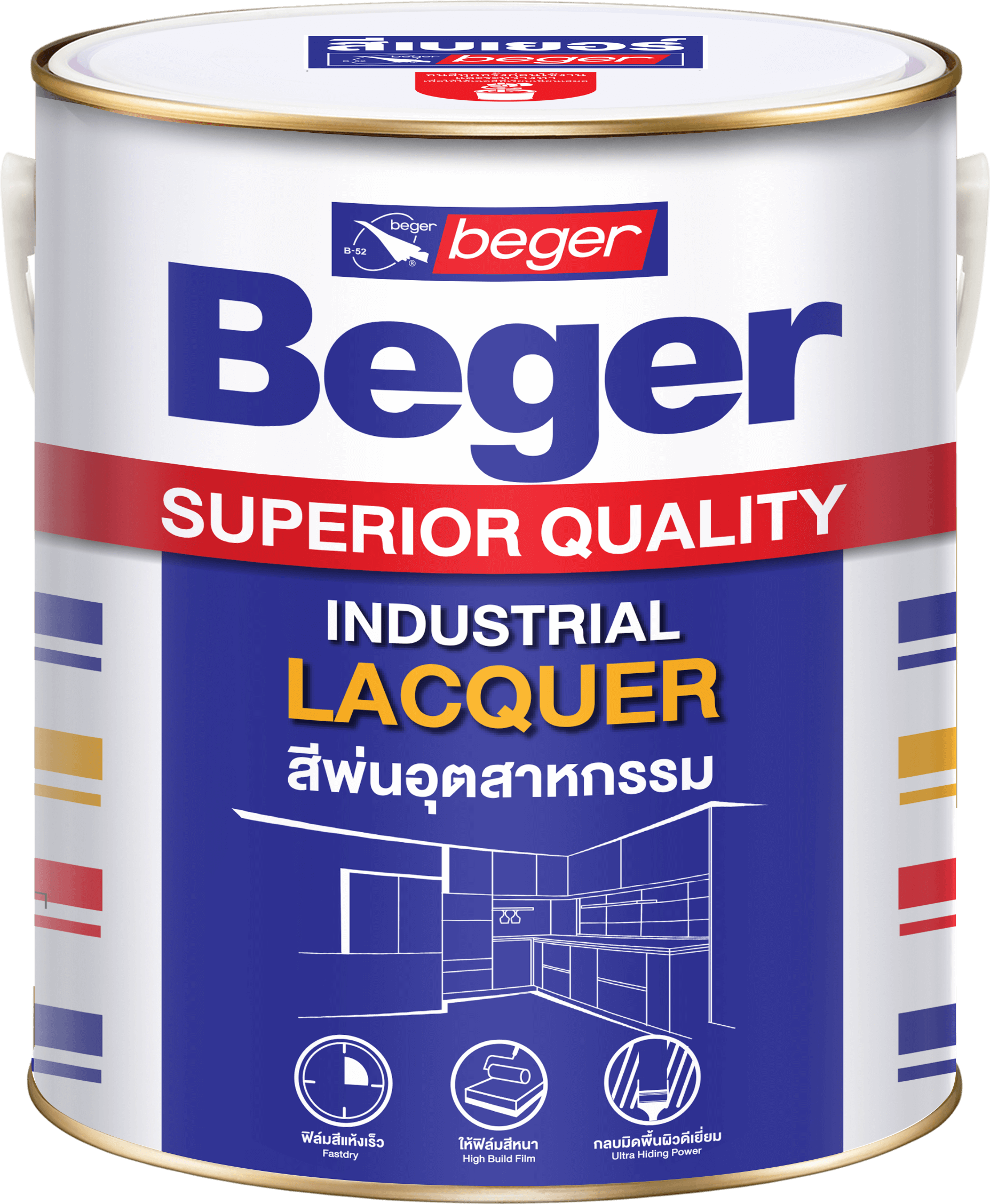
3. Topcoat, wood paint
Once the surface is prepared and the primer is applied according to the type of wood, you can apply the topcoat immediately.
- Wood paint Opaque type Can be applied directly, or may be mixed with clean water 10-15%, applying 2-3 coats with a drying time of about 2 hours between each coat.
- Wood stain Oil-based formula Can be applied directly, or in the case of outdoor application, may be mixed with thinner about 15-20%. If it is a water-based wood stain, it can also be applied directly or mixed with clean water 0-10%, applying 2-3 coats. After each coat, use sandpaper to lightly sand, then clean off the dust, except for the last coat.
- 1K polyurethane Can be applied directly or mixed with thinner according to the ratio in the manual, applying 3-4 coats. Before each coat, use sandpaper to lightly sand, then clean off the dust, except for the last coat.
- 2K polyurethane Mix product Part A, Part B, and thinner according to the ratio in the manual, then apply 3-4 coats. Before each coat, use sandpaper to lightly sand, then clean off the dust, except for the last coat.
- Water-based polyurethane Can be applied directly or mixed with clean water 0-10%, applying 3-4 coats. Before each coat, use sandpaper to lightly sand, then clean off the dust, except for the last coat.
- Wood oil Can be applied directly without mixing any solvents and should be applied in 2 coats.
- Lacquer Mix thinner in the ratio of paint : thinner 1:1.5-2 and spray 2-3 coats.
Dos and Don’ts in Wood Painting
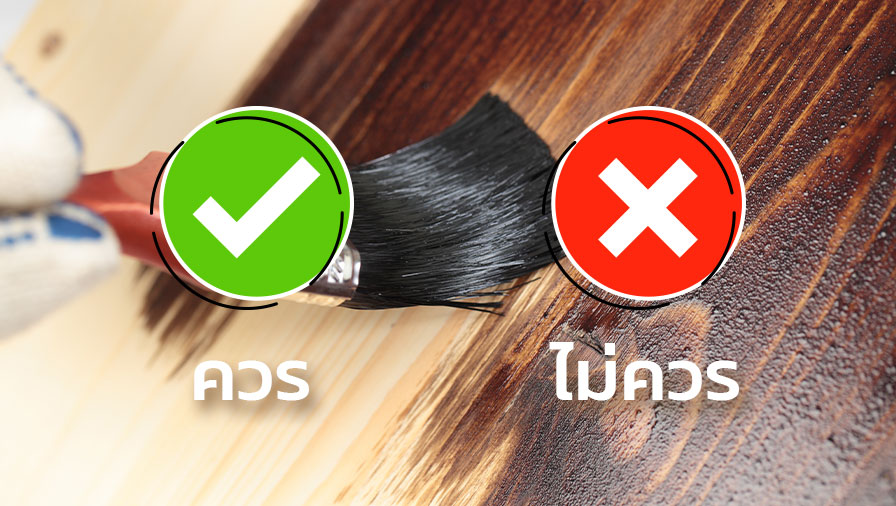
Generally, different types of wood paints are considered products that require a considerable level of expertise, from the mixing process to the application process. Therefore, it is essential to study the usage methods of each type of wood paint thoroughly and be aware of the precautions before starting to use them to avoid potential issues with woodwork.
- You should use thinner from the same brand as the wood paint, and only the model specified in the user manual or catalog. Using other thinners may reduce the gloss of the film, cause the paint not to adhere as it should, and may lead to other problems since even if they are the same thinner, they may have different components.
- Mix thinner or clean water only according to the ratio specified in the manual. Overmixing may dilute the shade or prevent the film from drying.
- Make sure that the paint applied is completely dry before proceeding to the next coat. You can check the drying time for re-coating in the user manual of each product to avoid issues like wrinkling or stickiness.
- Do not use wood stain on floors as it may cause problems.Sticky floors
- Do not apply polyurethane over wood stain that is not fully dry, as it may cause the polyurethane to eat into the original paint film, damaging it and causing blistering.
Recommendations for Choosing Wood Paint
1. Clearly communicate your needs to the store or sales staff to get the product that best meets your usage requirements.
- What type of wood do you want to paint? (What kind of wood, solid wood, or engineered wood) Since some types of wood are resinous or have grain, it is necessary to use wood grain cleaner or filler to prepare the surface before painting.
- What do you want to paint, and where? For example, painting walls, floors, or furniture, exterior or interior of the house. If possible, specify the exact location, such as for painting outdoor slats, etc.
- What kind of paint film and shade do you want? For example, you might want a semi-gloss finish that showcases the wood grain, in a mahogany shade, etc. Some stores may have actual shade samples, which will make decision-making easier.
- Do you have any concerns or want any additional properties? For example, you might want a low-odor product or one that dries quickly, etc.
Example I want a teak wood paint for the interior walls of the house. I want a glossy film, a color that resembles teak, and I want it to be durable.
If you want to order online, you can message the woodwork experts at BEGER for product recommendations for free. Here
2. Check the products before leaving the store and keep the receipt safe.
Don’t forget to check the size and the shade to ensure it matches what you want before leaving the store, so you won’t have to waste time changing it. And importantly, keep the purchase receipt as well.
Summary: How to choose wood paint?
I’ve talked so much that I’m starting to get dizzy. BEGER has created a summary table for choosing the right type of wood paint that matches the job and the surface. You can refer to the table below.
| Properties | Wood paint | Wood stain | Polyurethane | Wood oil | Lacquer |
| Main usage area |
Vertical woodwork both outdoors and indoors, such as wooden walls, house siding, frames, doors, windows, eaves, lattice, or fences, etc. |
Vertical woodwork both outdoors and indoors such as wooden walls, house siding, frames, doors, windows, eaves, lattice, or fences, etc. Except for wood floor stain (DeckStain), which can be used for flooring. |