
Bangkok has 379 heat risk areas. Reducing urban heat starts with the surfaces around us.

Reducing heat in cities is achievable when people, places, and organizations collaborate. Experts indicate that changing urban surfaces can lower temperatures by up to 2°C.
Cool Roof smart specifications that can be measured in real value support ESG and Green Finance.

“Cool Roof is not just a roof, but a smart specification that can be measured with Paint CO₂Cal, transforming energy savings and carbon reduction into data that supports ESG goals, green buildings, and Green Finance.”
Hot roof, soaring electricity bills? Cool Roof buildings reduce heat and save on electricity costs.
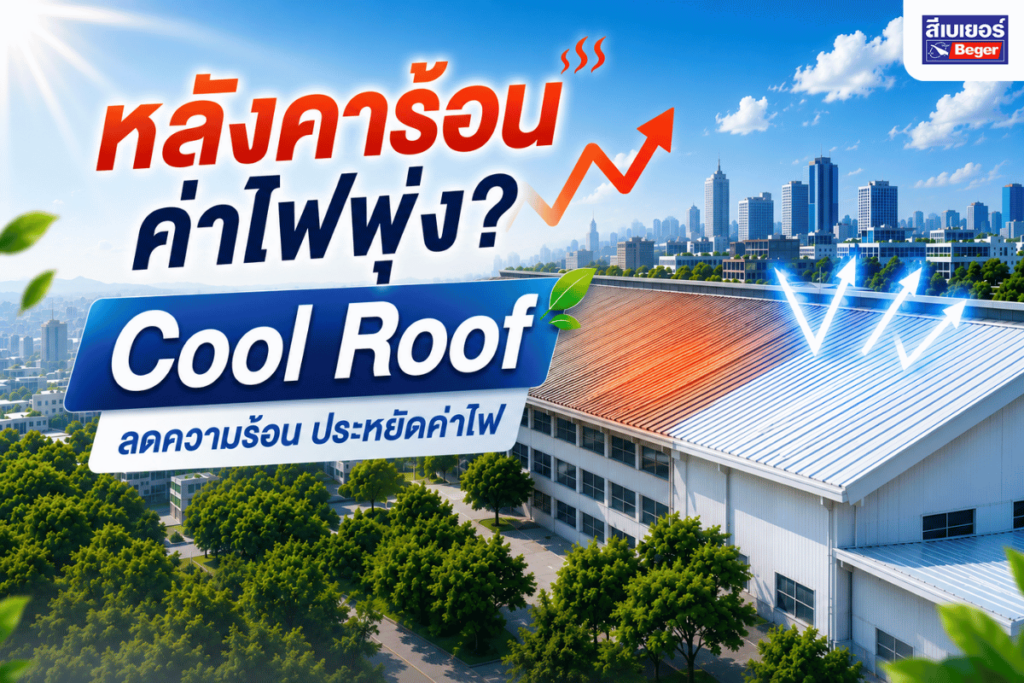
Hot roofs make air conditioning work harder and electricity bills soar? Cool Roof buildings have been proven to reduce surface temperature by 9.9°C, lower indoor temperature by 3°C, and save air conditioning costs by up to 33%, along with tips on how to choose.
Heat stroke and the Urban Heat Island (UHI) Crisis are real and have claimed the lives of Thai people.

Heat stroke (sunstroke) is what? Symptoms, first aid, and statistics on fatalities in Thailand, along with government measures, the Heat Index from GISTDA, and ways to reduce urban heat at the source with Cool Roof.