
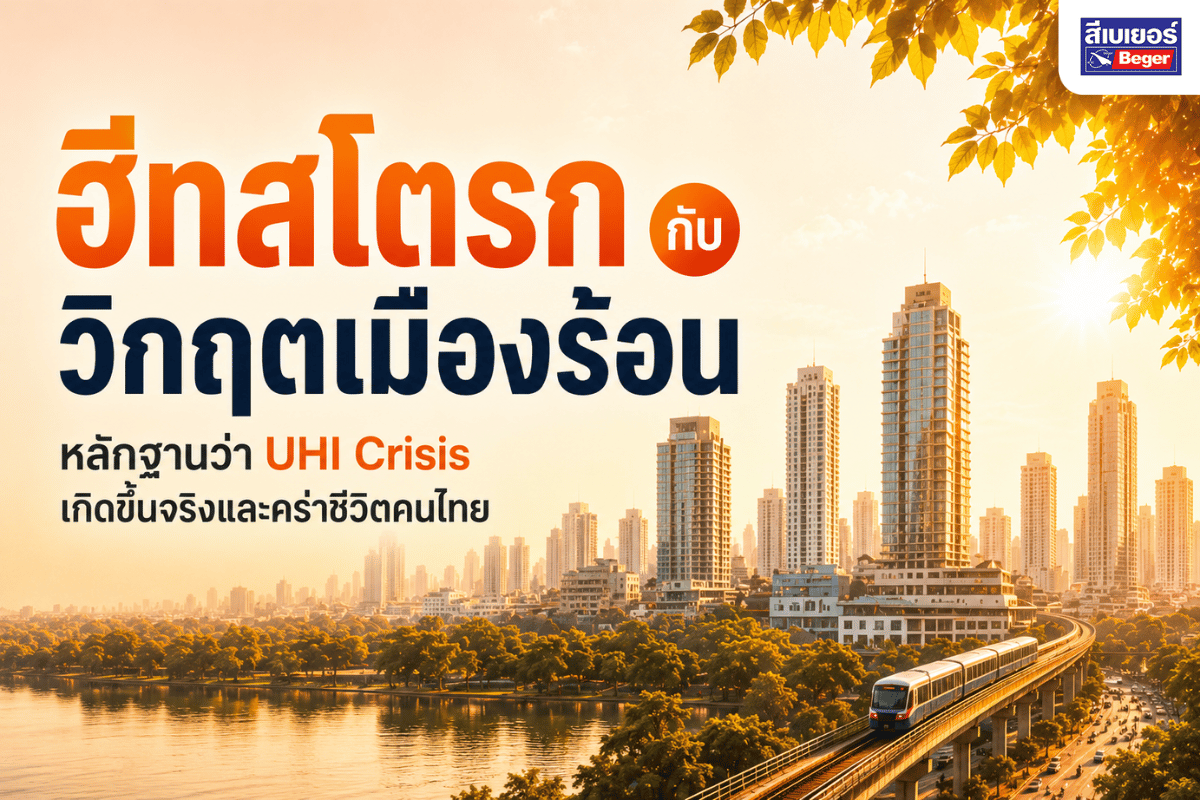
From the previous article, we discussed Cool Roofs as “public health infrastructure,” not just a matter of energy savings. This article will prove why that is the case, because the urban heat we are talking about in the Urban Heat Island (UHI) Crisis does not only create discomfort but actually takes lives of Thai people every year. Heat stroke or sunstroke is the clearest evidence that this crisis is severe and already happening.
What are Heat Stress and Heat Stroke? How are they different?
Before understanding the severity, we need to clarify these two terms.
- Heat Stress: The initial stage where the body begins to struggle with the heat, showing symptoms of fatigue, excessive sweating, headache, and cramps. This is a warning sign.
- Heat Stroke (Heat Stroke / Sunstroke / Heat Illness): An emergency condition when body temperature exceeds 40°C, leading to system failure. Symptoms include high fever, dry skin, confusion, convulsions, loss of consciousness, and can be life-threatening within a few hours if not treated.
In simple terms, Heat Stress is a warning sign, while heat stroke is a critical condition that requires immediate cooling of the body and urgent hospital care.
Numbers that prove the UHI Crisis is indeed severe
Urban heat is not just a feeling but can be measured by the number of actual death statistics each year.
| Year | Deaths from heat stroke (cases) |
|---|---|
| 2023 | 37 |
| 2024 | 61–63 |
| 2025 | 21 |
| Cumulative 2019–2024 | 212 cases (average 27 cases/year) |
The year 2567 saw an exceptionally high number of deaths during a period when the world was fully affected by the El Niño phenomenon, causing temperatures in Southeast Asia to rise significantly above normal. The groups most affected were outdoor workers, the elderly, and those with pre-existing health conditions, with the northeastern region recording the highest proportion of fatalities.
Why do “cities” increase risk when actual temperatures do not match what the body feels?
The heart of the issue is the “Heat Index,” which is not just a temperature reading. On days when the actual temperature is 39–41°C but with high humidity of 60–70%, the body perceives the heat as if it were in conditions hotter than 50°C because sweat evaporates less effectively. GISTDA therefore uses the criterion that if the Heat Index exceeds 52°C, it is considered a “very dangerous” level that poses a risk of heat stroke even for healthy individuals.
And this is where cities make everything worse, as we explain in the urban heat island crisis. Satellite data from GISTDA indicates that urban areas with concrete, asphalt surfaces, and dense roofing are significant heat accumulation sources of the Urban Heat Island effect, causing city dwellers to face higher and longer-lasting Heat Index values than rural areas.
Laboratory evidence: How much does heat actually affect our bodies?
To illustrate, tests were conducted comparing two houses painted in different colors. It was found that the house painted in a standard color had an indoor temperature of up to 38.0°C, while the house painted with Beger heat-reflective paint was at 34.4°C, or about 3.6°C cooler.
What is even more shocking is the direct effect on the body. Measurements taken from volunteers in the hot house for just 10 minutes (in collaboration with DMS and Paolo Hospital) revealed that
- 71% had an increased heart rate,
- 57% had decreased blood pressure,
- 100% had increased skin temperature.
These figures show that heat in residences immediately affects the cardiovascular system, not just causing discomfort, and reducing heat in homes is therefore a direct health issue.
Government measures to prevent Heat Stroke and Heat Stress
The Thai government is becoming more aware of heat hazards and has established multiple layers of measures.
Heat Health Warning System
The Ministry of Public Health, in collaboration with the Meteorological Department, the Department of Climate Change and Environmental Quality, and GISTDA, has developed a warning system using the Heat Index, categorizing risk levels into 4 colors.
| Level | Heat Index Value | Risk |
|---|---|---|
| Green | 27–32.9°C | Monitor |
| Yellow | 33–41.9°C | Beginning to risk Heat Exhaustion |
| Orange | 42–51.9°C | High risk of Heat Stroke |
| Red | ≥ 52°C | Severe danger |
Recommended measures when entering the orange-red zone
- Public: Avoid outdoor activities from 11:00 AM to 3:00 PM. Drink water regularly, avoid alcohol, and monitor the elderly, children, and those with chronic illnesses.
- Schools: Reduce or cancel outdoor activities, suspend flag-raising activities during extreme heat, and increase shaded rest areas and drinking water stations.
- Businesses: Adjust working hours, increase break times, and provide Cooling Areas for employees.
Heat Safe Zone cooling rest areas
The state is beginning to promote the concept of Heat Safe Zones, such as public air-conditioned rooms, parks, and community service centers, where the public can find nearby cooling rest areas through the LifeDee app from the Department of Health and GISTDA.
Role of GISTDA: Urban Heat Warning Satellite
GISTDA is one of the key agencies developing the Heat Health Warning System (HHWS) in collaboration with the Department of Health, the Meteorological Department, and WHO by integrating three data sources: Heat Index values, Satellite Data from Landsat, and Urban Heat Mapping to provide advance warnings for Heat Stress and Heat Stroke risks.
Additionally, the Life Dee app allows the public to check hourly Heat Index values, receive alerts when PM2.5 or heat exceeds safe levels, and find nearby hospitals. The visibility of urban heat maps also confirms that areas with dense roofing and hard surfaces are the hottest spots.
Root cause solution: Reduce urban heat with Cool Roof.
Most government measures are about “immediate response,” but addressing the root cause is about cooling the city from the start, as discussed in the article on reflective roofs. Research has found that Cool Roofs not only help reduce electricity bills but also
- reduce Heat Stress and Heat Stroke
- reduce heat-related mortality (Heat-related Mortality)
- reduce the urban heat island phenomenon (Urban Heat Island)
- reduce the peak electricity demand of the city (Peak Electricity Demand)
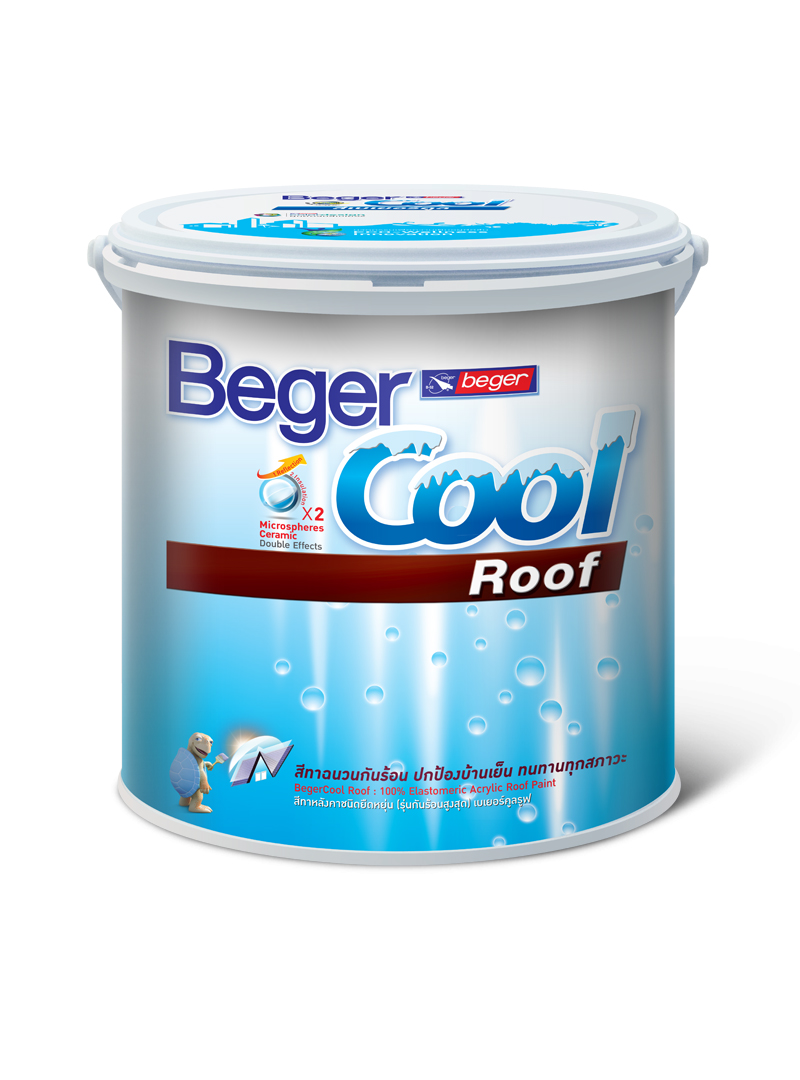
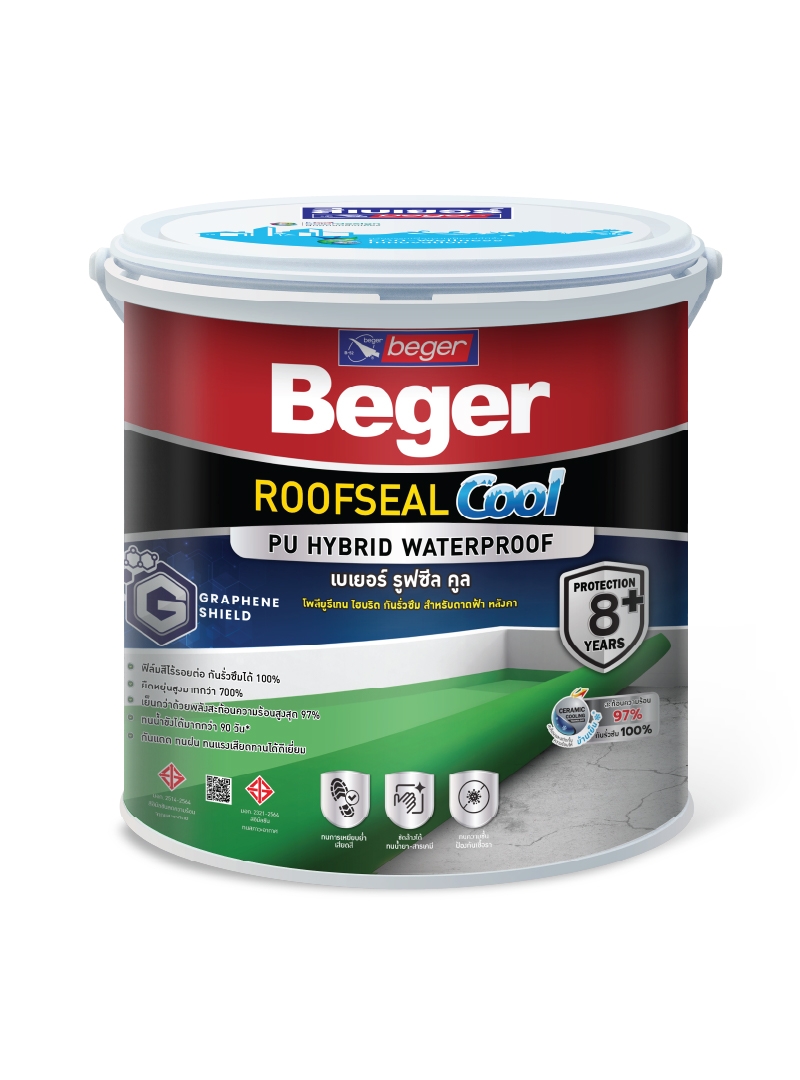
Changing roofs to be reflective, such as BegerCool Roof for sloped roofs or Beger RoofSeal Cool for rooftops, is therefore an investment in health that can start from our own homes.
Product Recommendations
|
BegerCool Roof |
Beger ROOFSEAL Cool |
FAQ Frequently Asked Questions about Heat Stroke
Q1: How is heat stroke different from regular fainting?
A1: Heat stroke is a condition where body temperature exceeds 40°C, leading to organ failure, which is much more severe than regular fainting, and it is an emergency that requires immediate cooling of the body and transport to the hospital.
Q2: How to provide first aid for heat stroke?
A2: Move the patient to a shaded or cool room, have them lie down with their legs elevated, loosen their clothing, and apply a damp cloth or ice pack to the neck, armpits, and groin, along with using a fan to help dissipate heat, then immediately call emergency number 1669.
Q3: Where can I check the Heat Index?
A3: You can check via the LifeDee app from the Department of Health and GISTDA, which displays hourly heat index values and alerts when they reach dangerous levels.
Q4: Is it true that urban residents are at higher risk of heat stroke than rural residents?
A3: There is a tendency for this in many areas because the urban heat island phenomenon causes the Heat Index in cities to be higher and last longer, especially in areas with dense concrete and roofs that accumulate and release heat throughout the day and night.
Summary
Heat stroke is undeniable evidence that the urban heat island crisis is real and severe.
- Thai people have died from heat accumulation, totaling 212 cases from 2019 to 2024.
- Cities filled with concrete and heat-absorbing roofs further increase the Heat Index and risk.
- The government has an alert system and Heat Safe Zones to help manage immediate situations, but addressing the root cause means cooling down the city.
Creating roofs that reflect heat is thus both a health protection measure and a way to reduce the city’s heat simultaneously. In the next article, we will delve into how buildings and cities designed to cope with heat should be.
If someone shows symptoms of heat stroke, they can call the emergency medical hotline 1669 at any time, 24 hours a day.