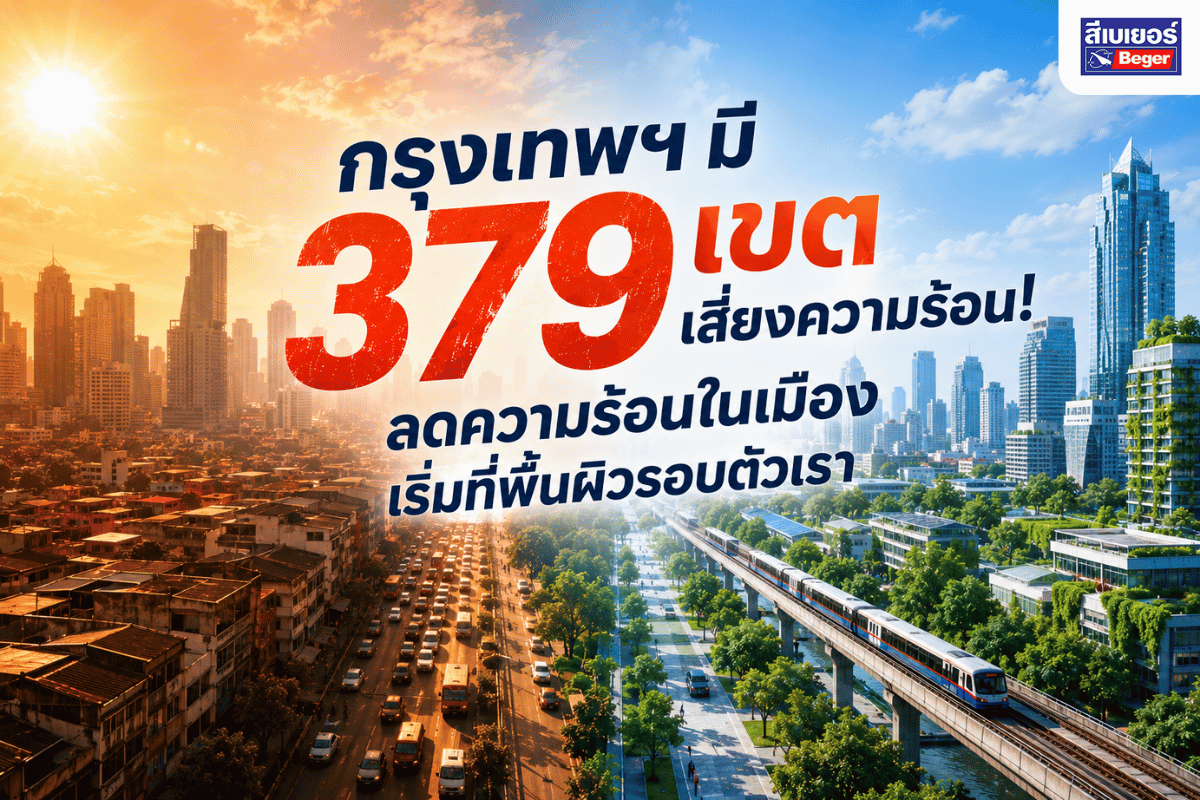
Reducing heat in cities is indeed possible when “people, places, and organizations” collaborate to transform urban surfaces to reflect heat instead of retaining it. Experts indicate that changing urban surfaces (cool surface) can lower temperatures by up to 2°C, and research has found that for every 1°C decrease in city temperature, approximately 17 billion baht can be saved in electricity costs annually. This is the essence of the “Let’s Cool Bangkok” initiative, which invites all sectors to take action together. This issue is close to home and urgent, as Bangkok has heat risk areas spread throughout the city. Therefore, taking action is not the responsibility of any one individual, but of everyone.
How hot is Bangkok getting, and where are the risks?
Bangkok is facing increasingly severe heat from the urban heat island phenomenon, with up to 379 heat risk zones across the city. This data indicates that heat is not evenly distributed but is concentrated in areas where people live their daily lives. Most of the risk areas are public spaces, including construction sites, parks, motorcycle taxi stands, markets, sports fields, and densely populated communities (source: Nation Thailand). All of these are places where people must confront heat directly every day. World Bank Report also points in the same direction, stating that urban heat is a problem affecting the quality of life for Bangkok residents, and managing urban surfaces is one of the key solutions to make the city more livable. Policy-level approaches to address urban heat have also been analyzed in the World Bank report, aiming to cool down and enhance the livability of Bangkok.
How effective is changing urban surfaces in reducing temperatures?
Transforming urban surfaces to reflect heat (cool surface) is a measurable and effective method for reducing urban heat. The simple principle is that dark surfaces such as roofs, roads, and concrete pavements absorb heat and release it back into the city, while surfaces that reflect heat help reduce that accumulation.
Two interesting figures are as follows:
| Data | Figures | Meaning |
|---|---|---|
| Experts indicate | a temperature reduction of up to 2°C | from changing urban surfaces to reflect heat. |
| Research has found | that every 1°C decrease can save approximately 17 billion baht/year |
City temperature and electricity costs are directly linked. |
This information aligns with international studies, as the World Bank has produced a report analyzing systematic approaches to reduce urban heat to make Bangkok more livable. One of the easiest and most impactful surfaces to change is the “roof,” which we have already proven through actual tests that Cool Roof can effectively reduce heat and save electricity. When this same principle is applied at the city level, the combined results become even more powerful.
|
|
|


Why should one square meter of roof serve more than one purpose?
Every square meter of roof should do more than just protect from sun and rain. In increasingly hot cities, the roof is the largest heat-absorbing surface of a building. Choosing a roof that performs multiple functions simultaneously is therefore valuable and creates the most positive impact.
- Protect from rain and weather, as a basic function that every roof must fulfill.
- Reduce heat entering the building with surfaces that reflect heat instead of retaining it.
- Reduce the cooling load, allowing the air conditioning system to operate more lightly and use less energy.
- Reduce carbon emissions from building use, as the less energy consumed, the lower the carbon emissions throughout the building’s lifespan.
- Help mitigate the urban heat island (UHI) effect when used widely throughout the city.
When each square meter of roof fulfills all its functions, the result is not just the cooling of a single building, but an overall reduction in heat for the entire city. This is why choosing a good roofing surface is the most powerful starting point for reducing urban heat.
Who can start reducing heat in the city? People, places, organizations.
Reducing urban heat is not the responsibility of just one person, but a collaboration of three main groups under the concept of Let’s Cool Bangkok: people, places, and institutions. Each group can start taking action immediately in their own way.
- People Start from their own residences, such as making their homes cooler and safer according to How to transform your home into a Cool Zone. Taking care of small details by each individual contributes to the larger result for the city.
- Places: Public spaces and various buildings can adjust roof surfaces and pavements to reflect heat, especially in areas at risk of heat, to lower temperatures for those using the space.
- Organizations: Agencies and businesses can link heat reduction to sustainability goals, with measurable data also supporting ESG and Green Finance objectives of projects.
When all three groups act together, a temperature reduction of 1–2°C across the city is not far-fetched, and the benefits in terms of health and energy costs are worth starting.
|
|
|


From the problem of a hot city to collective action.
The Cool Roof, Smart Choice campaign reaches its conclusion by transforming “understanding” into “action.” Throughout the journey, we have seen the complete picture of the urban heat problem, starting from the root causes of urban heat and the impacts on Thai people’s lives. Then, we took action at the household level with Cool Zones, elevated to real testing results at the building level, leading to data that supports ESG and Green Finance, culminating in a collective power for the entire city. The important lesson is that a cooler city does not come from a single individual but from everyone changing the surfaces around them in the same direction.
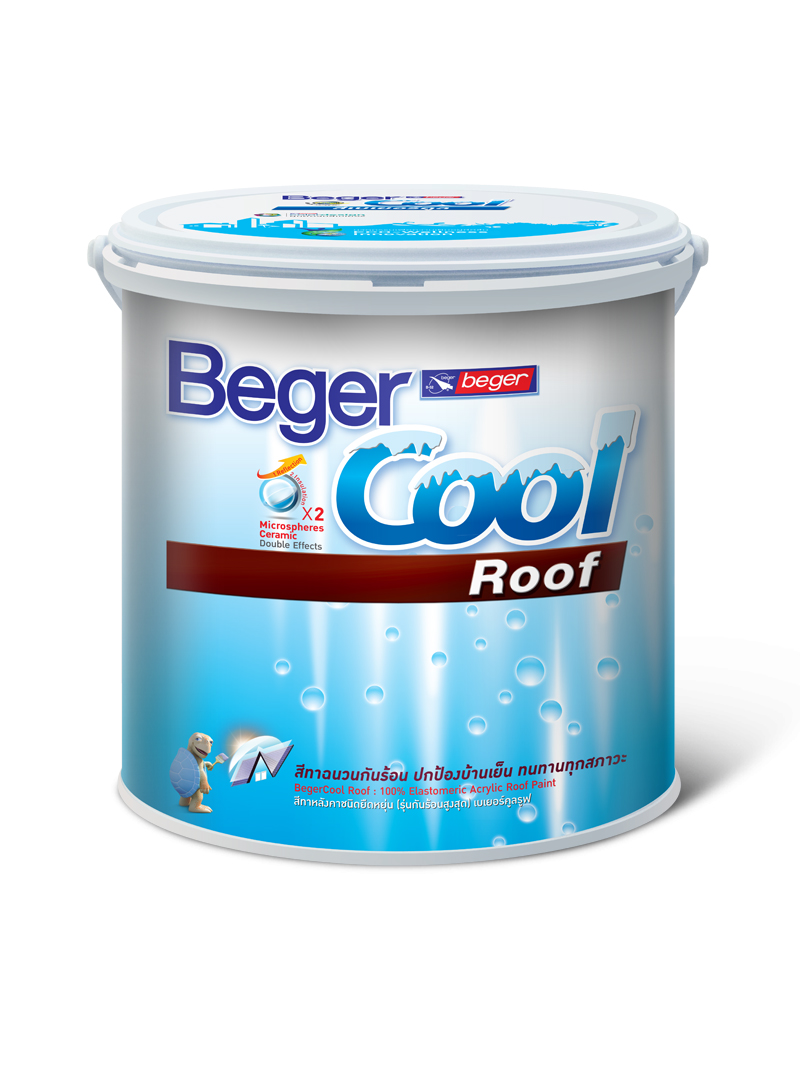
Product Recommendations
FAQ Frequently Asked Questions about reducing heat in the city.
Q1: How can urban heat be reduced?
A1: The most effective and measurable way is to change urban surfaces to reflect heat, such as roofs and public space pavements. Experts indicate that this can help reduce temperatures by up to 2°C when done on a large scale.
Q2: How much can a 1°C reduction in city temperature save on electricity costs?
A2: Research has found that for every 1°C that a city cools down, it can save about 17 billion baht per year on electricity costs, reflecting that city temperature is directly related to energy costs.
Q3: How many heat risk areas are there in Bangkok?
A3: Bangkok has 379 heat risk zones throughout the city, mostly located in public areas such as construction sites, parks, motorcycle taxi stands, markets, sports fields, and densely populated communities.
Q4: How can the general public help reduce heat in the city?
A4: It can start from one’s own residence, such as changing roofs or sun-exposed surfaces to reflect heat, and adjusting homes to be cooler and safer. Small efforts from each individual, when combined, will create a significant impact for the entire city.
Reducing urban heat is a collective mission that can begin immediately from the surfaces around us, whether it’s the roofs of houses, buildings, or public areas. Changing urban surfaces can reduce temperatures by up to 2°C, and every 1°C decrease also means savings of up to 17 billion baht per year in cities with as many as 379 heat risk zones. Let’s Cool Bangkok is an invitation for people, places, and organizations to take action together, starting from small points that you can manage, and let the power of collaboration cool down the entire city. If you want to see the overall picture.