
Cool Roof ESG refers to the use of heat-reflective roofing as a “smart specification” that transforms energy savings and carbon reduction into measurable data with tools like Beger’s Paint CO₂Cal which can save energy by up to 32%This data set enables building projects to support ESG goals and green building standards with evidence, while also providing justification for accessing Green Finance which can lower interest rates by up to 2.25%in a market moving towards sustainability. For architects, engineers, and developers, this is important because the choice of material specifications today is no longer measured solely by price and aesthetics, but by “can it prove its value with data?”
How is Cool Roof a “smart specification”?
Cool Roof is a smart specification because it is a one-time decision that provides continuous returns throughout the building’s lifespan, not just an ordinary roofing material. For those who must sign off on specifications, whether they are architects, engineers, developers, or contractors, choosing Cool Roof from the design phase has clear impacts in three areas:
- Reducing heat entering the building because the roof surface reflects and dissipates heat instead of retaining it and transferring it into the building.
- Reducing the load on cooling systems which allows for more efficient air conditioning system designs and lighter operation.
- Reducing long-term operational costs because lower energy costs accumulate as value over the building’s lifespan.
In project language, this means Better specs. Better building value. or “better specifications lead to better building value” because when the roof is cooler, the building improves as a whole, from energy efficiency to asset value. The turning point of this era is that choosing good specifications must be proven with numbers, not just saying “it should be good.” We have already proven the issues of heat and energy costs with actual test results in the article Hot roofs, soaring electricity bills? Cool Roof buildings reduce heat and save on electricity
What is Paint CO₂Cal and how does it help measure the value of specification choices?
Paint CO₂Cal is Beger’s tool that helps convert the choice of Cool Roof into measurable project outcomes. Its core is to transform the phrase “should save” into actual numbers that can be referenced and reported.
When the Cool Roof specification is chosen for a project, this tool helps assess the value in three dimensions:
- Energy the amount of energy saved. Up to 32%Used to create energy performance reports for buildings
- Carbon Reduced CO₂ emissions used for carbon reporting and greenhouse gas reduction targets
- Cost The value of savings used to calculate project viability and worth, such as real assessment examples that help save electricity costs up to 9,013 baht per year, or 18.5% (calculated from Thailand’s electricity rate of 4.7 baht per unit)
The real benefit is the journey “from specification selection to measurable results” when technical decisions are translated into tangible numbers, allowing the design team and project owners to communicate value to executives, investors, and evaluators more clearly, without relying solely on feelings.
|
|
|


How data from Cool Roof supports ESG, green buildings, and well-being
The measurable data from Paint CO₂Cal serves as numerical evidence supporting both ESG goals and green building standards, as both frameworks require verifiable data, not just vague descriptions. If you are not familiar with this framework, it is recommended to read more about The role and importance of the ESG concept today Components
- Reduce energy consumption This data directly supports the environmental (E) dimension of ESG and aligns with energy criteria based on green building construction principles.
- Reduce carbon impact Used in organizational carbon reporting and greenhouse gas reduction targets, which is an effort that all sectors must contribute to (read more: Clarifying why we need to work together to reduce carbon)
- Support green building and well-being goals This data is used to prepare documents for certification of green building standards, such as TREES from the Thai Green Building Institute (TGBI) or LEED from the U.S. Green Building Council (USGBC) at the international level including the WELL Building Standard, which focuses on the well-being of building users.
Smarter buildings start with smarter data or “smarter buildings start with smarter data.” Having numbers from the specification selection stage is therefore the foundation for implementing ESG and green buildings with verifiable evidence.
Why energy and carbon data help with Green Finance
Green Finance refers to funding or loans that support projects that demonstrate environmental benefits, and this is where data from Cool Roof adds tangible value to projects because green loans can help reduce interest rates by up to 2.25% compared to conventional loans. In a market moving towards sustainability, measurable energy and carbon data add value to projects in three ways
- Establishing ESG readiness because projects have performance data available for reporting and auditing from the outset
- Supporting Green Finance because there is numerical evidence to support applications for green loans or financial instruments
- Increasing long-term asset value because high-performance buildings have lower operating costs and are more attractive to tenants and investors
This is the meaning of Smart for projects. Smart for business. That is good for projects today and good for business in the long term. Choosing a measurable Cool Roof is not just a technical decision but a strategic financial decision that looks ahead to future asset value
|
|
|


From hot cities to measurable buildings
Cool Roof, Smart Choice starts from problems that everyone can feel to becoming an asset that truly creates value. This pathway illustrates how Cool Roof meets the needs from the city level, health level, home level, to the business level. Everything starts from the urban heat island phenomenon that Bangkok is facing followed by the impact on people’s lives in heat strokes and the urban heat crisis that claims lives in Thailand Then, taking action at the household level with ways to transform homes into Cool Zones and elevating to prove real results at the building level where Cool Roof helps reduce heat and save electricity costs, turning those results into measurable data for professionals
Product Introduction
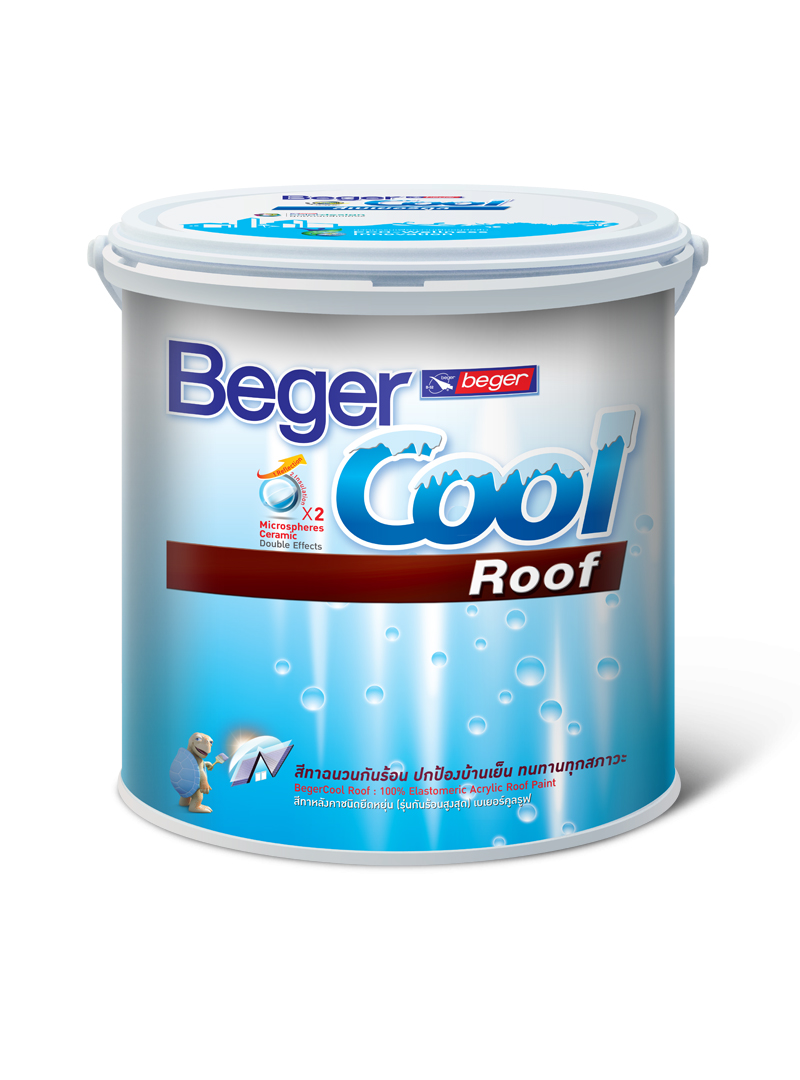
FAQ Frequently Asked Questions about Cool Roof
Q1: What is Paint CO₂Cal?
A1: Paint CO₂Cal is a tool from Beger that helps translate the choice of products like Cool Roof into measurable project outcome data, covering both energy savings up to 32%the amount of CO₂ reduced, and the value of cost savings
Q2: How does Cool Roof contribute to ESG?
A2: The performance data measured from the selection of Cool Roof serves as numerical evidence supporting the environmental (E) dimension of ESG, particularly in reducing energy consumption and carbon emissions. This can be used in corporate sustainability reporting.
Q3: Can Cool Roof help in obtaining green building certification?
A3: It can provide supporting information, as green building standards such as TREES (TGBI), LEED (USGBC), and WELL require evidence of energy performance, carbon reduction and the well-being of building occupants. The scoring or certification depends on the criteria of each standard and the overall components of the project, so it is advisable to check with a certified assessor.
Q4: How is Green Finance related to the selection of construction materials?
A4: Green Finance is a funding source for projects that can demonstrate environmental benefits. The energy and carbon data measured from the selection of materials like Cool Roof helps to create supporting evidence and enhance the project’s value when applying for green financial instruments which can lower interest rates by up to 2.25%.
Q5: Why is the selection of material specifications important for building sustainability?
A5: Cool Roof, from a professional perspective, is an intelligent specification that offers more than just heat reduction. When paired with tools like Paint CO₂Cal, it transforms technical decisions into measurable data, supporting ESG goals, green building standards, and providing justification for Green Finance, thus increasing project value in a market that prioritizes sustainability more each year.
Choosing measurable materials is therefore a crucial step in modern construction. To see the overall journey, it is recommended to read from the root causes of urban heat to the actual building-level test results to understand why Cool Roof is the Smart Choice that encompasses people, buildings, and business.