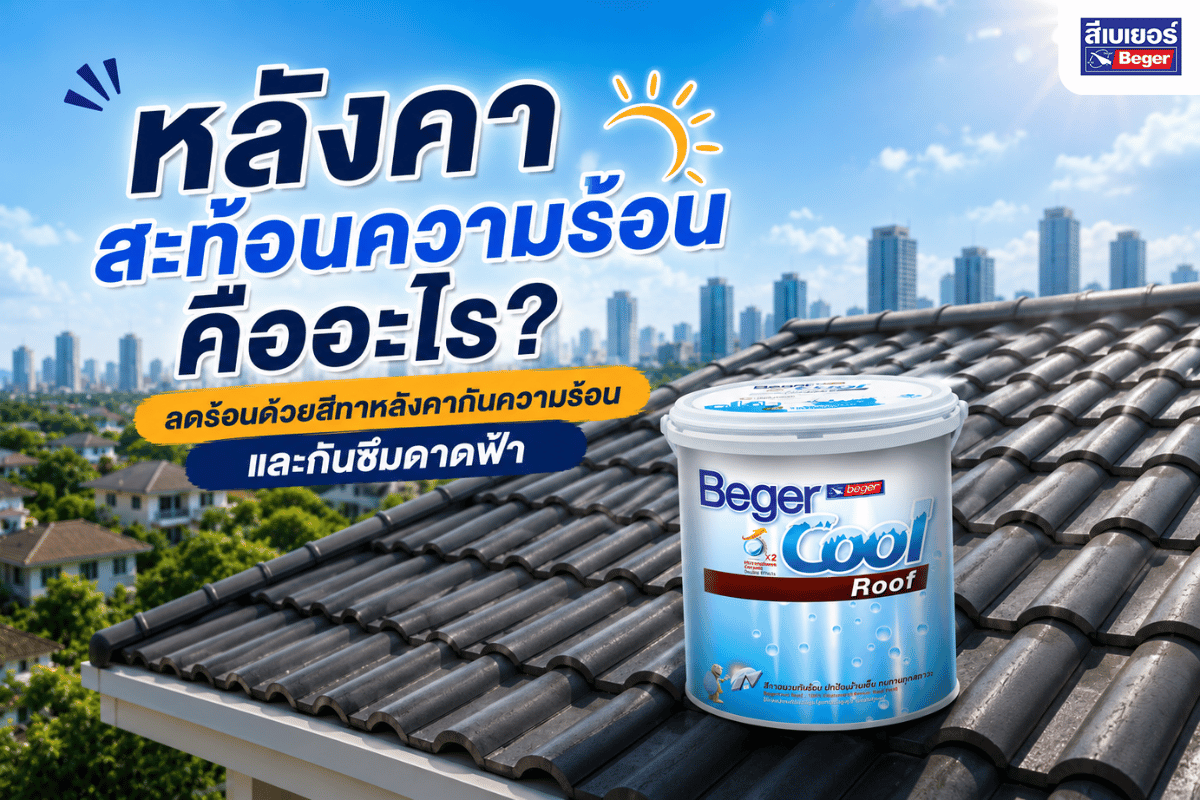
From the previous article on the Urban Heat Island phenomenon (Thailand UHI Crisis), we have seen that Bangkok ranks among the hottest cities in the world, and the accumulated heat in the city affects health, electricity costs, and quality of life. The next question is, where can we start addressing this issue most easily? The answer is right above our heads: the “roof.” This article will introduce you to Cool Roofs, covering their working principles, how to choose heat-reflective roof paint, and how to solve rooftop leakage issues with a heat-reflective waterproofing system.
What is a Cool Roof?
A Cool Roof is a roof surface designed to reflect sunlight and absorb less heat. Instead of trapping heat like conventional roofs, the key lies in “reflecting” the sun’s rays before they become heat accumulated in the building.
The clearest example is light colors. Studies have found that a clean white roof that reflects about 80% of sunlight can have a surface temperature cooler than a gray roof that reflects only 20% by as much as 30°C. For this reason, painting roofs with heat-reflective paint is considered one of the easiest, fastest, and most cost-effective ways to cope with rising heat.
Why is the “roof” the most important point?
The roof is the first surface of a house that receives full sunlight throughout the day. A typical dark-colored roof can heat up to 60–80°C during the day and gradually releases heat back into the atmosphere at night. This is one of the main causes of the Urban Heat Island phenomenon and makes “cities unwilling to cool down at night.”
Considering the vast area of rooftops across the city, changing a conventional roof to a Cool Roof not only benefits a single house but also helps reduce the accumulated heat of the entire city simultaneously.
How does a Cool Roof work? The REI principle
The effectiveness of a Cool Roof comes from three working steps known as the REI principle.
- Reflection: Reflects thermal radiation from sunlight before it is absorbed.
- Emission: Releases residual heat from the roof surface quickly.
- Insulation: Reduces the amount of heat transmitted into the building.
The result is that less heat enters the house, and the heat that remains in the city decreases as well.
Dark colors can also be cool with TSR technology.
The old belief was that only white paint could reflect heat, but in reality, about half of sunlight is in the form of invisible infrared radiation. We can enhance heat reflection for dark shades with special pigments.
The heat-reflective roof paint using TSR (Total Solar Reflectance) technology from BegerCool allows dark shades to reflect heat better. Testing showed that a typical dark-colored surface measured 73.6°C, while the same shade from BegerCool measured only 61.5°C, or 12.1°C cooler. This means you can choose your favorite house color without sacrificing heat.
Choose heat-reflective roof paint and waterproofing systems suitable for each roof type.
Each type of roof has different requirements, so selecting the right products is crucial.
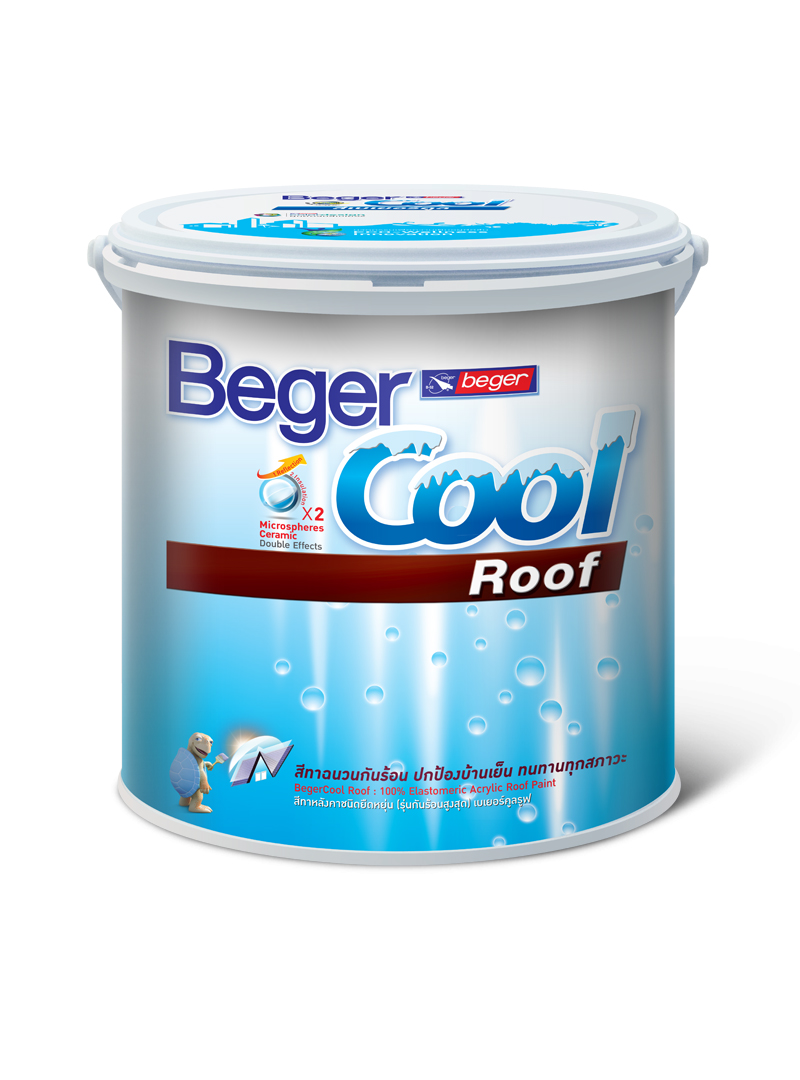
Sloped Roofs (Tiles/Metal Sheets) BegerCool Roof
For sloped roofs, the heat-reflective roof paint such as BegerCool Roof is a flexible acrylic paint applied over the roof surface to reflect heat and help cool the house down. It is suitable for common tile and metal sheet roofs, improving heat reflection without the need to replace the existing roof.
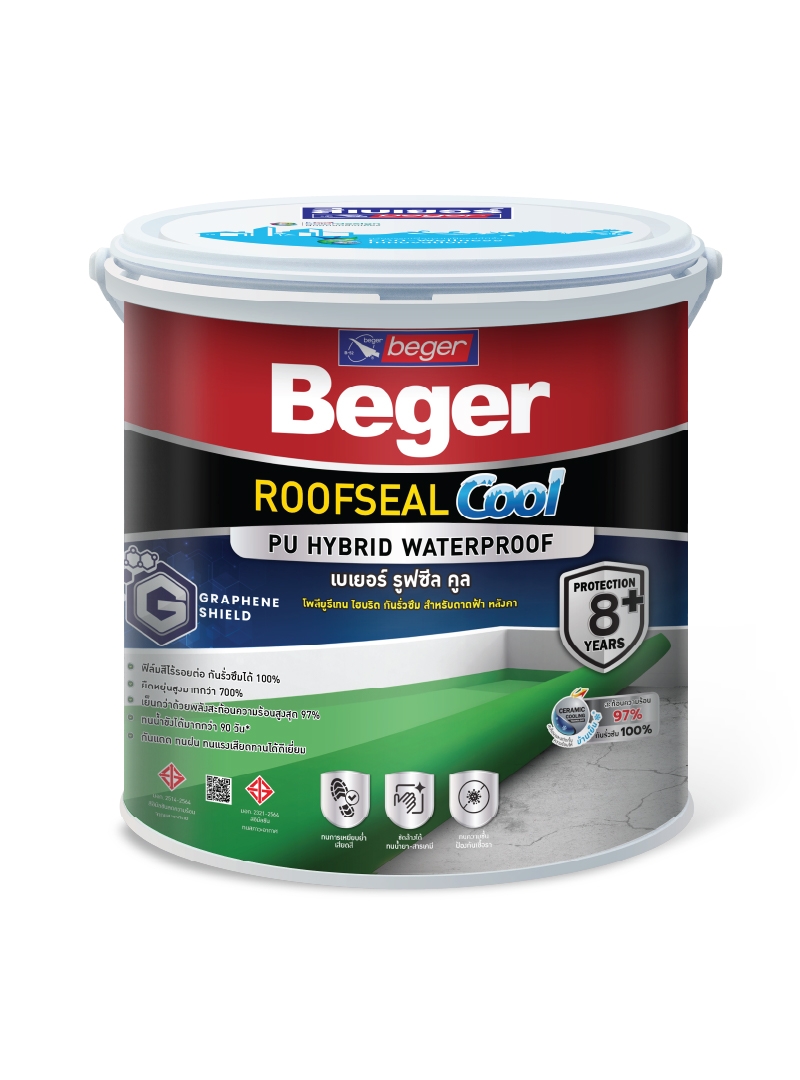
Beger RoofSeal Cool: Waterproofing and Heat Reflecting Roof Coating
Flat roofs face two challenges at the same time: “heat” and “leakage risk.” Being flat surfaces that receive full sunlight and often have standing water during the rainy season, when a roof leaks, water seeps into the structure, leading to subsequent damage.
Beger RoofSeal Cool is a PU Hybrid waterproofing solution that serves dual purposes: waterproofing and heat reflection. It helps prevent roof leaks for a long time while simultaneously reducing the surface temperature of the roof, making it suitable for flat roofs, concrete roofs, and especially flat roof areas. Choosing a waterproofing system that also reflects heat helps address both water leakage and heat issues at the same time.
No matter which option you choose, heat-reflecting roofs help keep homes cooler, reduce the load on air conditioning, lower electricity bills, and enhance comfort.
More than just saving electricity, heat-reflecting roofs are about health.
Global thinking is shifting the perspective on Cool Roofs from merely being a method to “save electricity” to becoming “Public Health Infrastructure.”
As discussed in the article on the urban heat island crisis, urban heat directly threatens the health of vulnerable groups. A study in the United Kingdom found that installing heat-reflecting roofs throughout the city could reduce heat-related deaths by about 18%. Thus, cooling roofs is not just about electricity costs; it is about protecting lives in urban areas.
Product Recommendations
|
BegerCool Roof |
Beger ROOFSEAL Cool |
FAQ: Frequently Asked Questions about Heat Reflecting Roofs
Q1: Does heat-resistant roof paint really help reduce temperature?
A1: Yes, it does. Heat-resistant roof paint helps reflect sunlight, cooling the roof surface and reducing heat entering the home, resulting in a cooler interior and savings on air conditioning costs.
Q2: Can dark-colored roofs or houses use heat-reflecting roofs?
A2: Yes, with TSR technology, dark shades can reflect infrared rays better, making them cooler than regular dark colors without needing to change to white.
Q3: If the roof is already leaking, can I fix it while installing a heat-reflecting roof?
A3: Yes, the PU Hybrid waterproofing system like Beger RoofSeal Cool can solve both leaking issues and reflect heat in one product. However, if the existing surface is severely damaged, it should be repaired and prepared properly before applying the waterproofing system.
Q4: How long do heat-reflecting roofs last?
A4: It depends on the product and the roof condition. Generally, the surface should be kept clean to maintain light reflection efficiency, and products designed for durability in hot and humid weather should be chosen.
Summary
Heat-reflecting roofs are the easiest starting solution to address urban heat, as discussed since the first article.
- Dark roofs can reach temperatures of 60–80°C and are one of the causes of UHI.
- Heat-reflective roof paint and TSR technology help even dark colors stay cooler.
- For sloped roofs, choose BegerCool Roof; for waterproofing and heat resistance on flat roofs, choose Beger RoofSeal Cool.
Choose a heat-reflective roofing solution suitable for your home, and start making a change from your own roof. In the next article, we will delve into Heat Stroke and Heat Stress, health threats from heat that are closer than you think.