

In the context of today’s business world, “carbon” is not just an environmental issue but is becoming a strategic variable that affects the competitiveness of organizations, buildings, and real estate development projects. The concept of “carbon reduction score” is thus playing an increasingly important role, both in terms of legislation, trade, investment, and energy-efficient building design. This article will explain the meaning of carbon emissions scores, the relevant assessment systems, and connect how the selection of appropriate materials and technologies, such as high-performance reflective heat solutions, can concretely support carbon reduction goals.
1. What is a carbon reduction score?
The term “score” in this context refers to the assessment systems and standards used to measure greenhouse gas emissions and energy performance of organizations or buildings, covering both organizational and project levels.
1.1 Carbon Footprint
The calculation of greenhouse gas emissions from an organization’s activities is divided into
- Scope 1: Direct emissions
- Scope 2: Indirect emissions from electricity use
- Scope 3: Indirect emissions from the supply chain
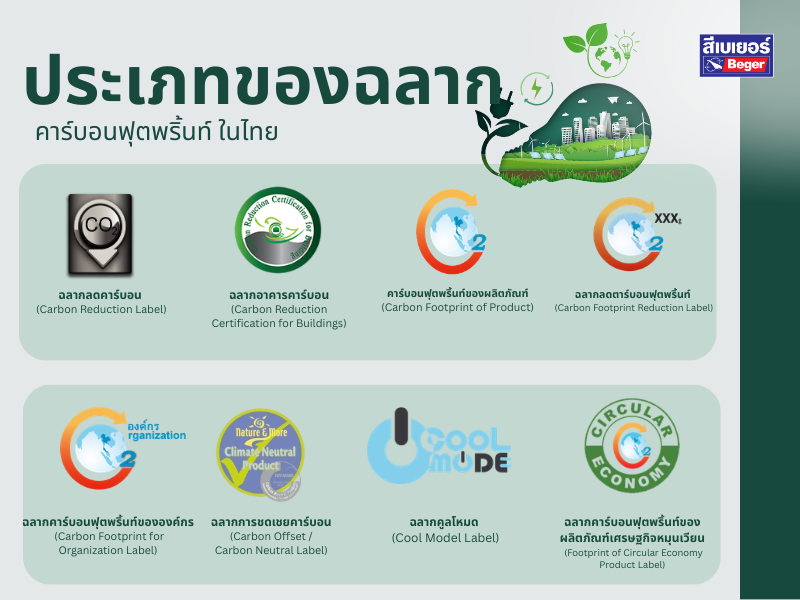
In the building and industrial plant sectors, electricity use for air conditioning systems is considered a significant source of indirect carbon emissions (Scope 2). Therefore, reducing the thermal load of buildings directly impacts the organization’s carbon emissions.
Comparison table of greenhouse gas emissions Scope 1, 2, and 3
|
Type |
Summary Meaning | Examples in organizations/buildings | Emission reduction approaches |
| Scope 1 |
Greenhouse gas emissions that the organization emits directly from activities it controls | Combustion of oil in machinery, generators, refrigerant leaks | Improve machinery efficiency, use clean energy, maintain equipment |
| Scope 2 | Indirect emissions from electricity or energy purchased | Electricity bills for offices, factories, air conditioning systems in buildings | Reduce energy consumption, increase building efficiency, use renewable energy |
|
Scope 3 |
Other indirect emissions occurring in the supply chain | Production of purchased materials, transportation of goods, waste disposal | Select low-carbon suppliers, improve logistics, promote collaboration in the value chain |
1.2 Green Building Rating Systems
Standard systems such as LEED, TREES, EDGE, and WELL have clear assessment categories for energy and environmental impact reduction, particularly in the areas of
|
|
|
|
|



- building energy performance
- reducing heat accumulation on building surfaces
- reducing Urban Heat Island Effect
- selecting materials that help reduce long-term energy use
designing building envelopes with high thermal reflectance can help increase scores in the energy category and reduce actual energy consumption in the long term
1.3 ESG Assessment and Corporate Sustainability
Investors and financial institutions place great importance on environmental performance, particularly
- reducing carbon emissions
- Net Zero plans
- energy efficiency
Buildings designed to reduce energy use from the outset are thus part of the ESG strategy that reflects the organization’s responsibility and readiness in the long term
2. The Role of Building Envelopes in Carbon Reduction
In tropical countries like Thailand, heat from sunlight, particularly infrared radiation, is a major factor that raises the surface temperature of roofs and walls, resulting in air conditioning systems having to work harder
As the surface temperature of buildings rises
- heat accumulation increases
- the load on air conditioning increases
- electricity consumption increases
- Increasing CO₂ Emissions
Therefore, reducing heat from building surfaces is an effective approach that provides continuous results throughout the building’s lifespan.
3. Reflective Color Technology Supporting Low Carbon Goals
One cost-effective and immediately actionable approach is to choose paints with properties that reflect solar heat radiation, particularly in the infrared wavelength, which is the main source of heat energy. The Aerotech Nano Ceramic technology, developed in the reflective paint product line such as BegerCool, is an example of innovation designed to reduce heat absorption of surfaces by using nano-sized ceramic particles that help reflect infrared radiation away from building surfaces.
The working principle can be summarized as follows:
- – Reducing heat accumulation on roof and wall surfaces
- – Helping to lower building surface temperatures
- – Reducing the workload of air conditioning systems
- – Decreasing electricity consumption and reducing indirect carbon emissions
From the perspective of green building assessment, using materials that enhance the energy efficiency of the building envelope can significantly support scores in the energy category. From the operator’s viewpoint, reducing energy consumption continuously each year means reducing costs and carbon simultaneously.
4. Strategic Perspectives for Architects and Operators
For Architects
Choosing materials is not just about aesthetics but also relates to the long-term energy performance of the building. Selecting high-reflective heat colors can help improve the energy efficiency rating of the building and support low carbon building goals.
For Operators
Reducing carbon does not always have to start with large investments. Enhancing the building envelope, such as using high-performance reflective paint systems, is a measure that can be implemented immediately and provides continuous results throughout the building’s lifespan.
The results are not just numbers in ESG reports but reflect:
- – Reduced electricity bills
- – A sustainable corporate image
- – Readiness for future carbon regulations
Carbon reduction scores are becoming a fundamental criterion in the new business world, whether in the form of carbon footprints, green building standards, or ESG assessments in the context of buildings and real estate. Reducing heat accumulation in building envelopes is one of the most effective and tangible methods, especially in hot and humid climates. Choosing technologies that help reflect heat radiation, such as the Aerotech Nano Ceramic innovation in the BegerCool reflective paint product line, is not just about selecting decorative materials but is part of a low carbon building design strategy aligned with Net Zero goals. As carbon becomes a new competitive capability indicator, today’s material decisions may be a crucial factor in determining future business advantages.