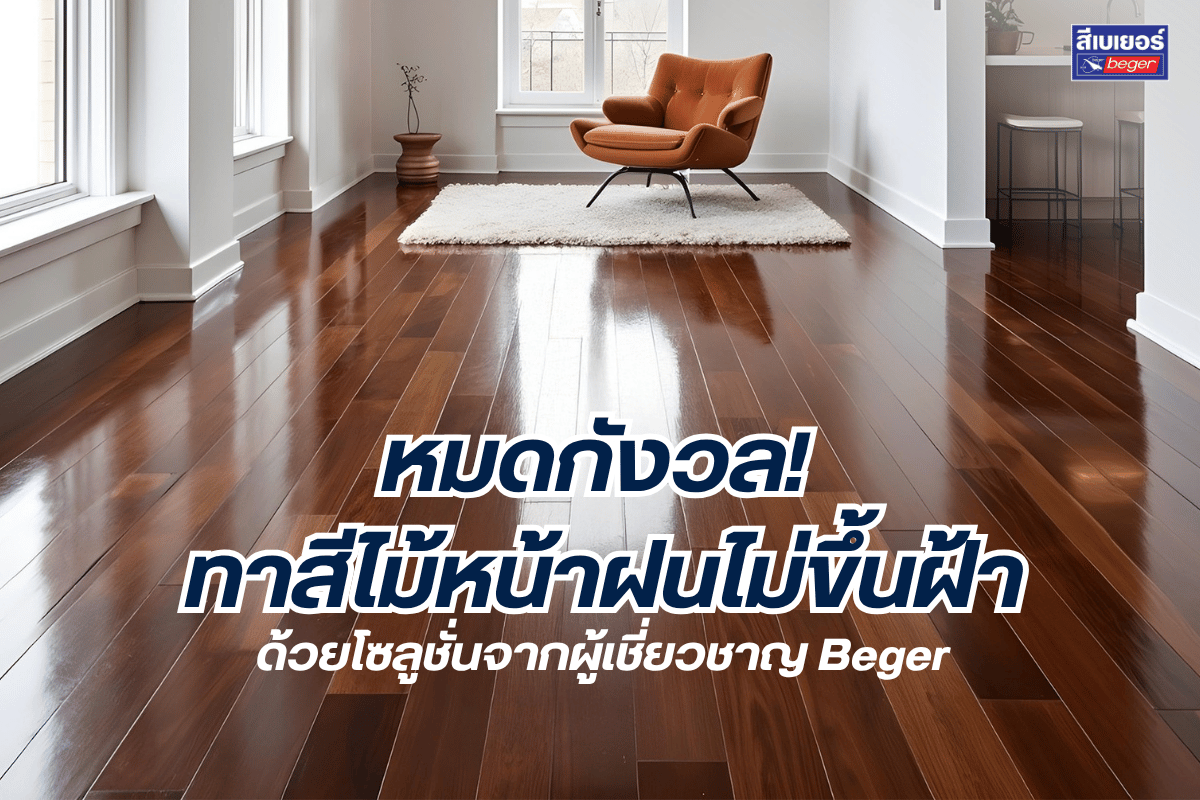
The rainy season in Thailand often comes with humidity and fluctuating temperatures, which become significant obstacles for wood coating work, especially painting with polyurethane that requires precision in terms of temperature, humidity, and the drying of the paint film. If these factors are not properly controlled, it often leads to “blushing” on the wood surface, affecting both aesthetics, durability, and the lifespan of the surface.
Why does the rainy season cause wood damage?
When the rainy season arrives in Thailand—an atmosphere filled with high relative humidity and rapidly changing temperatures becomes the main source of “the occurrence of blushing on the paint film,” or what professional carpenters refer to as “rainy season blushing problem,” especially with wood coated with polyurethane (Polyurethane) such as real wood floors, built-in furniture, or interior wood—if the environment during or after painting is not suitable, it will cause the film surface to blush, the color to lose its gloss, the paint film to become cloudy, or result in incomplete adhesion.
Additional:
The phenomenon of “rainy season blushing” typically occurs only with 1K polyurethane which relies on moisture in the air for the paint film to cure, so it is advisable to avoid painting on overcast days or before and after rain. On the other hand, if using 2K polyurethane which cures through a chemical reaction, it significantly reduces the risk of blushing –click to see information on 1K and 2K polyurethane
Main causes of rainy season blushing
1. Humidity in the air is above standard
When the relative humidity exceeds 60%, it causes moisture to condense on the surface or within the film while it is setting, resulting in blushing.
2. Temperature is too low or fluctuating
The appropriate temperature for spraying polyurethane should be between 15-25°C (59–77°F). If it is lower or fluctuates rapidly, it will cause abnormal solvent evaporation.
3. Poor Ventilation
If the painting area has stagnant or enclosed air, it will cause moisture to accumulate in the spray room
4. Moisture in Wood
If the moisture content in the wood exceeds 12%, it will release moisture during spraying, leading to blushing and abnormal adhesion
Professional Prevention of “Blushing in the Rain”
Spraying wood in the rainy season can be done safely if the following guidelines are followed:
- Prepare a well-ventilated area Open windows or use exhaust fans
- Check moisture levels before starting work
– Air humidity (RH): Should be between 45–60%
– Moisture in wood: Should not exceed 12% - Avoid spraying near bathrooms or damp areas
- Choose products designed for humid tropical weather For the best results
Recommended products for the rainy season by experts from Beger
|
|
|
|
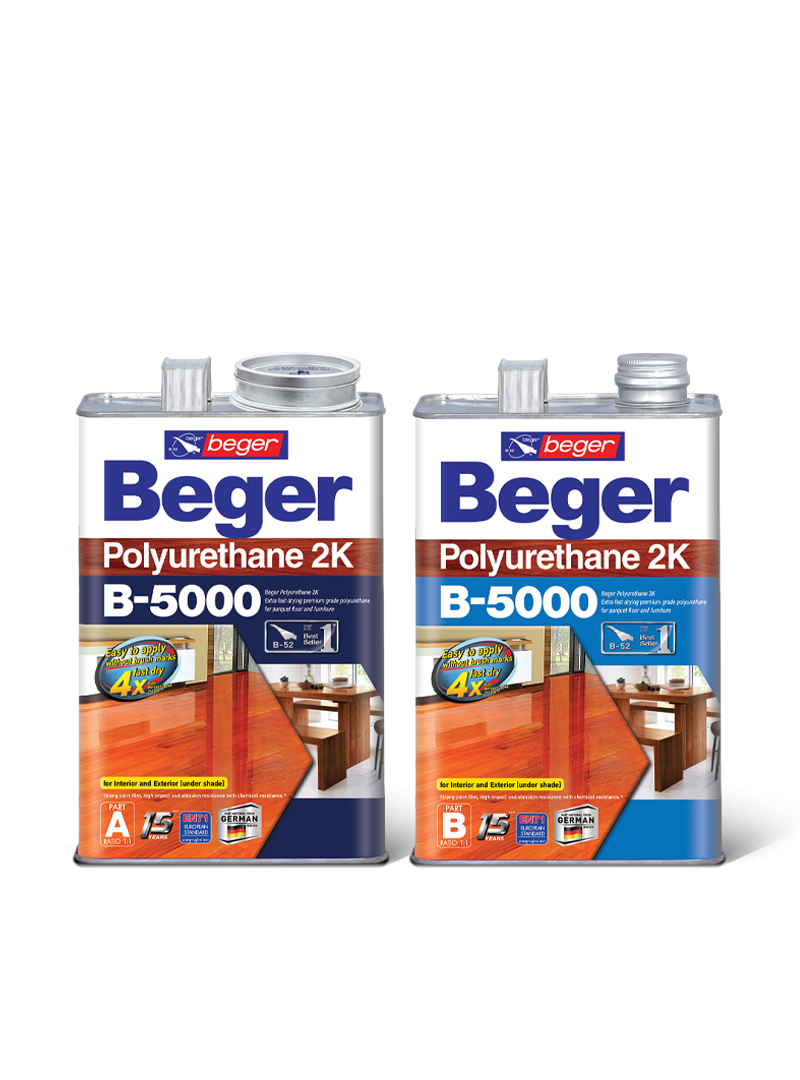
1. Beger B-5000 Polyurethane 2K
Two-component (A+B) ultra-premium grade hard coating oil developed for durability and maximum adhesion, even in Thailand’s unpredictable weather
Key Features:
- Dries faster than regular polyurethane by up to 4 times
- Scratch-resistant/impact-resistant/chemical-resistant
- Can be coated in gloss, semi-gloss, and matte finishes
- 100% water-resistant to prevent moisture from penetrating the wood
- Received safety standard EN 71 (heavy metal free)
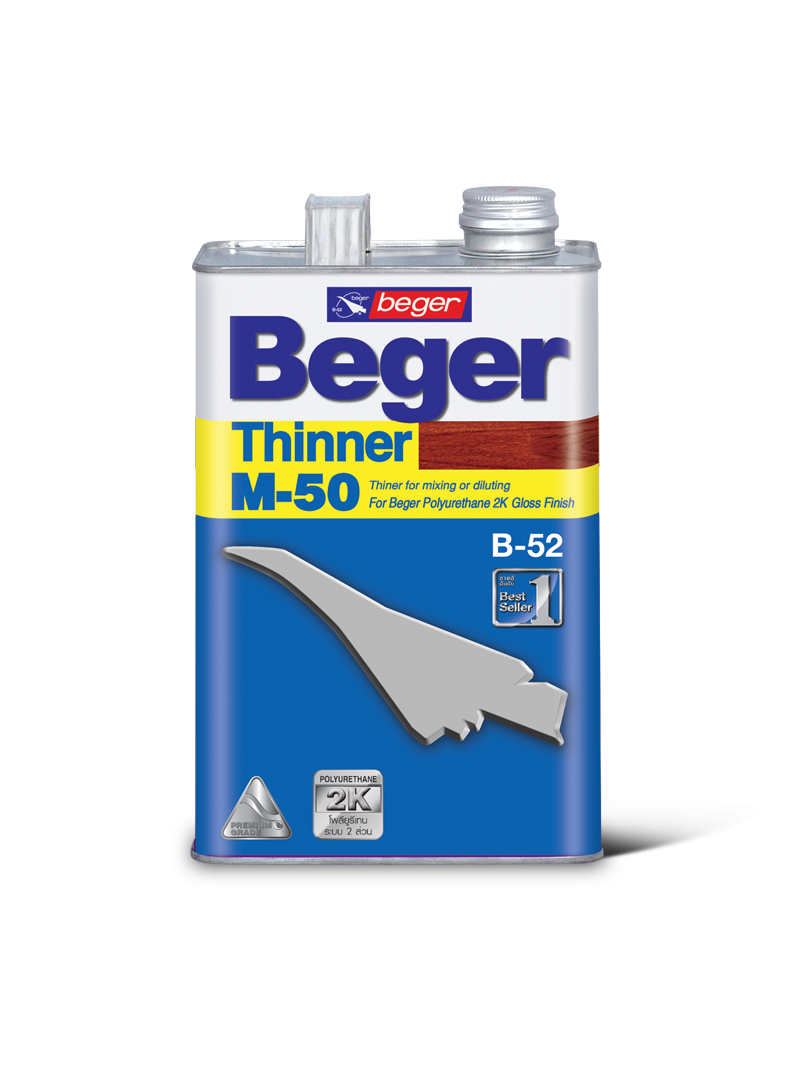
2. Beger Thinner M-50
Special grade thinner for glossy polyurethane, accelerates evaporation for quick drying, suitable for humid weather during the rainy season
Key features:
- Helps achieve a smooth film texture
- Suitable for indoor wood areas and built-in furniture
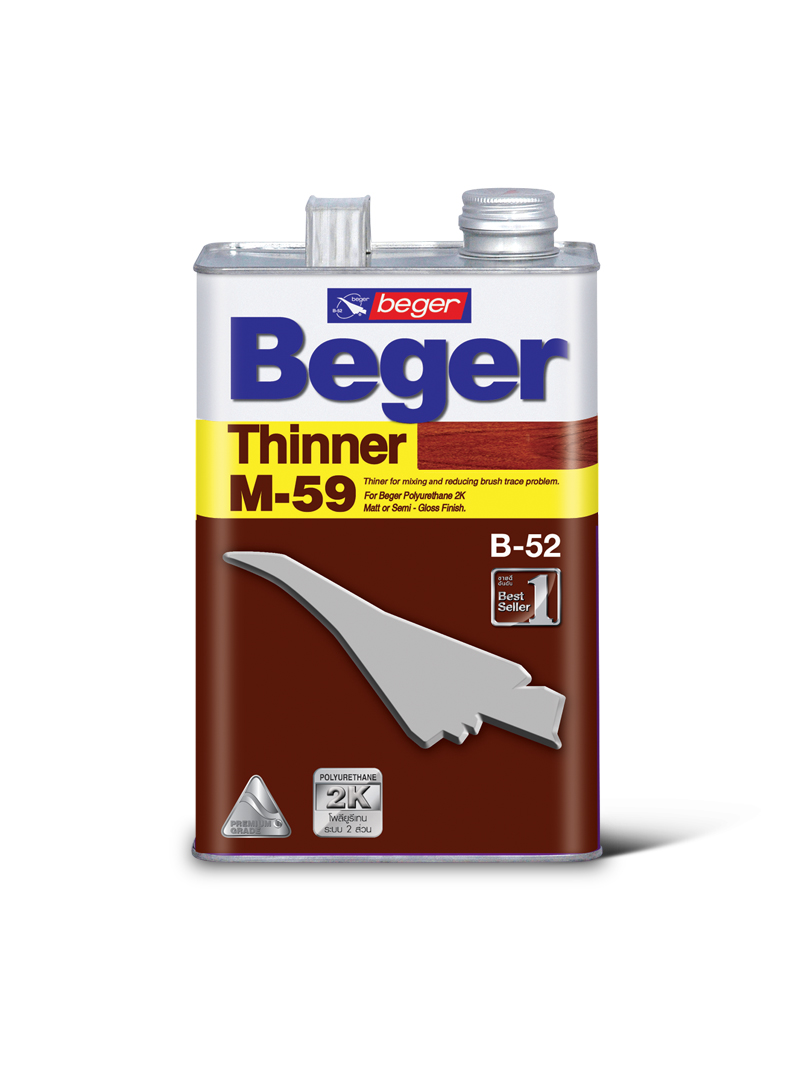
3. Beger Thinner M-59
Thinner specifically for matte or semi-gloss polyurethane, helps achieve a fine spray, reduces the occurrence of haze even in humid areas
Key features:
- Reduces brush marks, dries quickly, easy to spray
- Enhances coating performance during the rainy season
FAQ — Frequently Asked Questions about Painting Wood in the Rain without Haze
Q1: Why does painting wood in the rain often result in haze?
A: Because the humid air and moisture during rainfall cause the paint film to dry incompletely, resulting in white or cloudy haze on the wood surface
Q2: What type of wood paint helps reduce the haze problem the best?
A: It is recommended to use Polyurethane 2K that dries through a chemical reaction, such as Beger B-5000 Polyurethane 2K which helps reduce the chance of haze even in humid air
Q3: How should I prepare the surface before painting wood in the rain?
A: Ensure that the wood is dry, with moisture not exceeding 12%, and the spraying area must have good ventilation. Avoid painting on rainy days or in humid conditions
Q4: If the wood has haze, what should I do?
A: Sand off the old paint film and clean with Beger Thinner M-Series Then repaint with a moisture-resistant wood paint, such as Beger B-5000
Q5: Which Beger wood paint is most suitable for the rainy season?
A: Recommended Beger B-5000 Polyurethane 2K for wood coating and Beger WoodStain Supreme Gloss Finish for exterior wood stains, which helps protect against mildew, mold, and UV rays excellently.
Preventing mildew in the rainy season is not difficult if users understand the main causes of the problem and choose quality products suitable for the environment, especially in Thailand. With the innovation of Beger B-5000 and the M Series thinner group, your work will be complete, glossy, and durable throughout the rainy season. Beger – the true service for wood paint, a professional in wood work.