
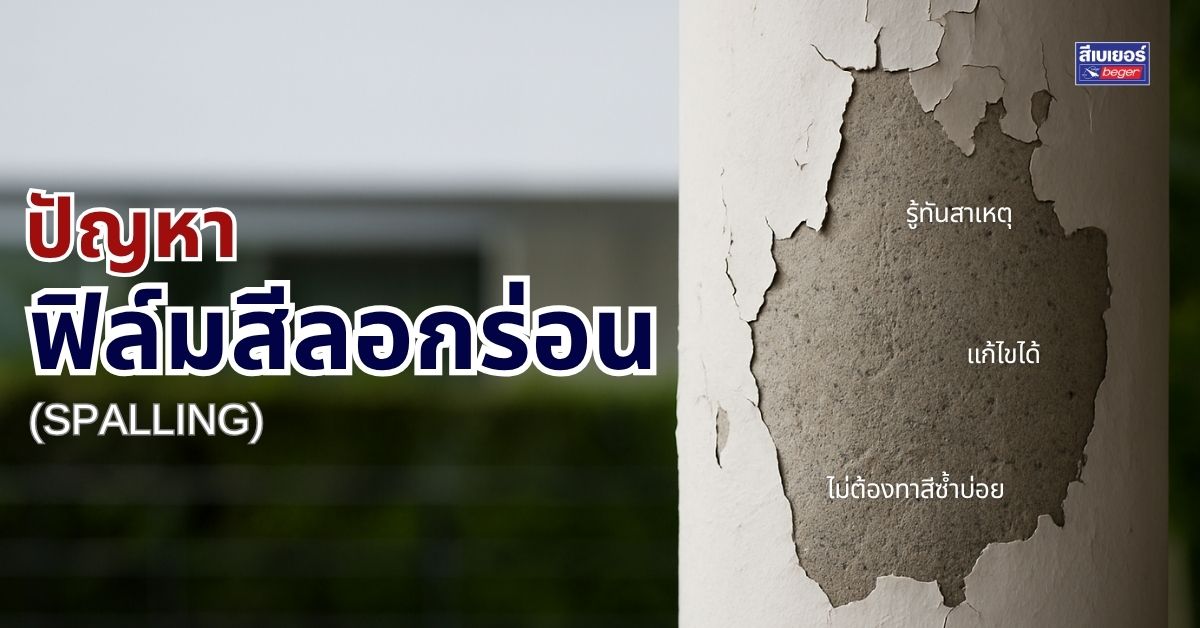
Did you know that…color film that starts to “peel” or “bubble” is not just a matter of aesthetics, but it may be signaling structural problems that should not be overlooked?
Many people may have encountered “Peeling color” Peeling off from the walls of the house, plaster walls, or light walls, even metal and wood, which this problem often occurs after the rainy season or during periods of accumulated humidity, and often many houses choose “Solving problems at the end point” By repainting without knowing that it may cause Repeated peeling paint Faster than before
In this article, we will help you understand neutrally about “The cause of color film peeling off” (Spalling) We are ready to recommend sustainable prevention and solution methods, including high-performance products from Beger that are designed to protect surfaces. Beautiful, durable, long-lasting, not easily peeling off.
Spalling is what?
“Spalling” or Peeling color film It refers to the condition where the color of the material or surface coating changes. Detach from the original surface No matter what Cement, concrete, metal, and wood with characteristics of peeling in sheets, swelling, or cracking, which often starts from small points but can spread widely It can be done in a short time if there is no supervision.
The main cause of peeling color film.
1. Accumulated humidity
Moisture that seeps into the surface of the material will gradually destroy the adhesion of the paint film, leading to blistering or peeling, especially in exterior work that frequently encounters both sun and rain.
2. Improper surface preparation
Dust, oil, cement stains, or old paint residue, if not cleaned before painting It will reduce the adhesion of the paint film. Log in immediately
3. Choosing colors that are not suitable for the surface
Each type of surface (such as concrete, metal, and wood) requires specially designed paint. If the wrong type is used, it will cause Copy later Easy to get.
4. Temperature changes
Surfaces that expand and contract with temperature changes, such as cement walls, rooftops and house roofs, may crack the surface or the paint film, which then leads to peeling.
How to prevent “peeling paint”
1. Prepare the surface like a professional
- Scrub, wash, and clean the surface properly.
- For concrete plaster Problems often arise from accumulated moisture coming from the bottom of the wall (ground moisture) or moisture from walls with cracks.
- For woodwork It usually comes from cracks or joints in wooden pieces where moisture or water can seep into the wood.
- For metal work It often results from not cleaning surfaces that have grease from the seller/manufacturer, and rust stains may occur before starting the painting system.
2. Choose a painting system suitable for the job site
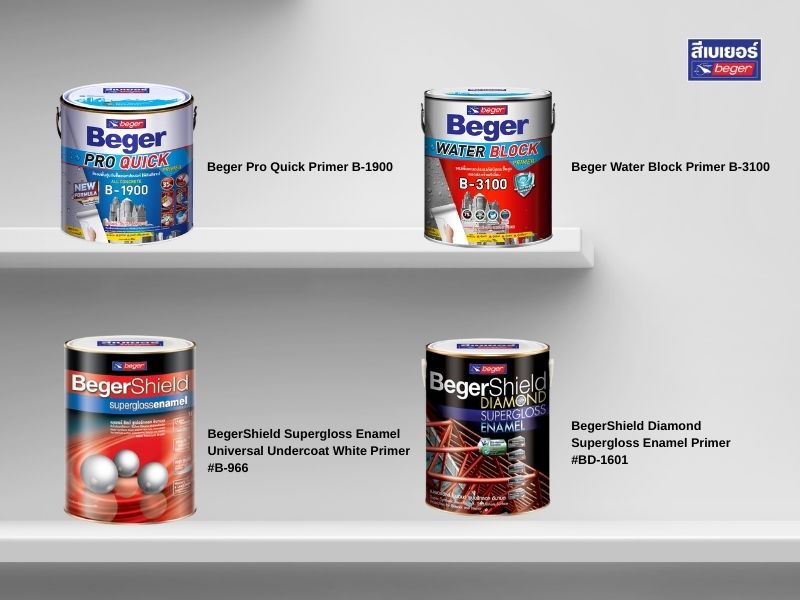
- For general concrete plaster work: The plaster should be allowed to cure for at least 28 days or have moisture not exceeding 14% (from the Protimeter moisture meter). Use a normal alkaline-resistant primer for new plaster. In urgent cases where waiting is not possible, or in the case of damaged old plaster, choose a high moisture-resistant multipurpose primer such as Beger Water Block Primer B-3100 (maximum moisture resistance of 75%) or Beger Pro Quick Primer B-1900 (maximum moisture resistance of 40%).
- For general woodwork: Use BegerShield Supergloss Enamel Universal Undercoat White Primer #B-966 for anti-fungal wood primer, and for wood with resin, apply a first coat with BegerShield Diamond Supergloss Enamel Primer #BD-1601, which is an aluminum primer for resin wood.
- For metal work: Use rust-resistant primer available in various models – quality and price options.
3. Apply topcoat according to the correct procedures
- The topcoat for concrete plaster, woodwork, and metal work, Beyer offers various models – quality and price options.
- Apply at least 2 coats allowing drying time as specified for each product.
- Avoid applying during rain or high humidity.
- In the case of oil-based paint, it is necessary to use the specified solvent only.
Summary: Preventing the problem of “peeling paint”
Good paint starts with “surface preparation” and “choosing colors that match the environment”
Understanding the causes of spalling and selecting appropriate products will help your home’s paint last longer save on repair costs, and also reduce environmental impact especially if you choose a paint system designed to prevent recurring peeling issues in Thailand’s climate.