Today, many industries are increasingly focusing on the environment, and real estate is one of the sectors that is also reconsidering its practices. This is due to the growing awareness of environmental issues, as well as national regulations and guidelines aimed at reducing greenhouse gas emissions, leading to a new direction inGreen Buildingwith the goal of jointly caring for the planet sustainably.
We cannot deny that the real estate industry is one of the major players that significantly influences the building and construction sector, which engages in activities that release a large amount of carbon into the world to support the ever-increasing urban expansion. Let’s take a look at the perspectives of developers and homebuyers regarding eco-friendly, low-carbon materials and the future ofNet Zero.
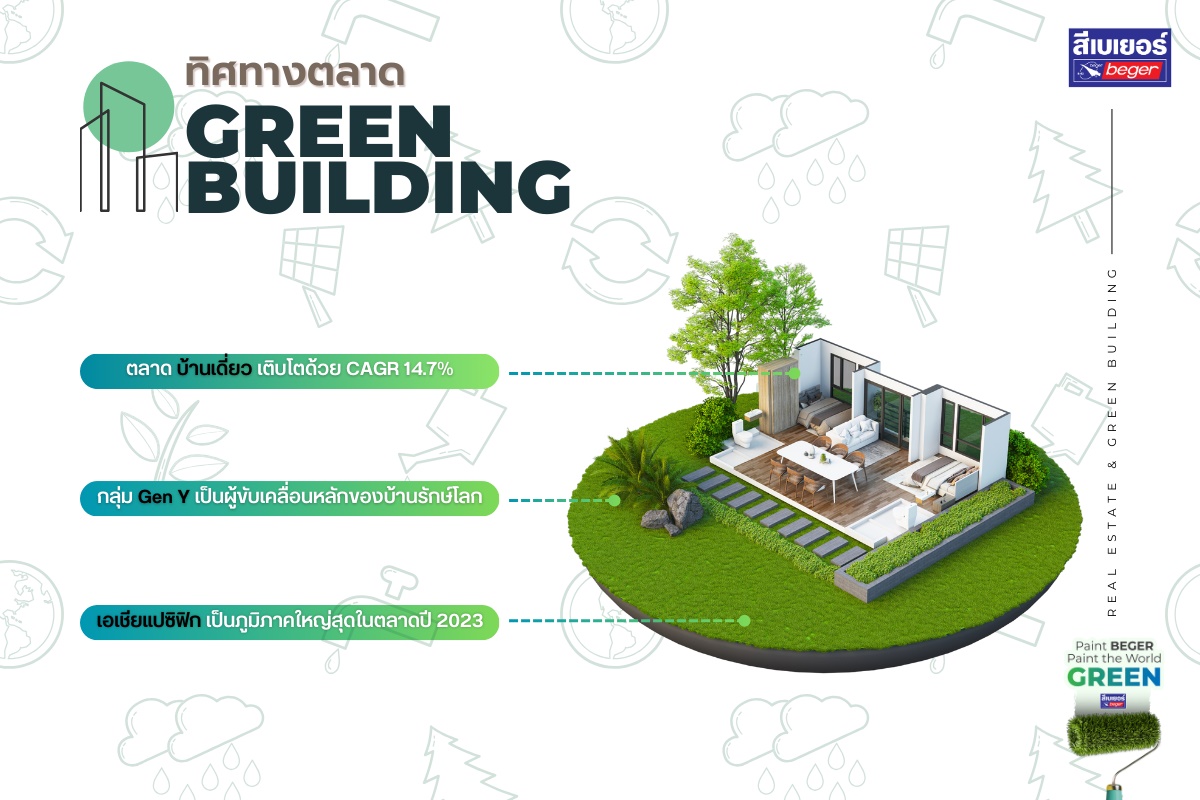
Market Direction of Green Building
- The single-family home market is growing at a CAGR of 14.7%, partly due to various measures to assist those interested in purchasing housing, reflecting the rapidly changing demand in this market segment.
- The Gen Y group (ages 28-43) has become the main driver of green spaces, environmentally friendly homes, and energy-efficient Smart Homes that meet the needs for comfort, safety, electricity savings, and efficient functionality that simplifies daily life. This aligns with the changing work lifestyle, shifting from office work to increased Work From Home arrangements.
- The Asia-Pacific region is the largest market in this sector in 2023, significantly impacted by high heat, climate change, environmental issues, and the global warming caused by the construction industry. The transition to Green Building, particularly through the use of cool house paints, plays a crucial role in the market and the well-being of residents in this region.
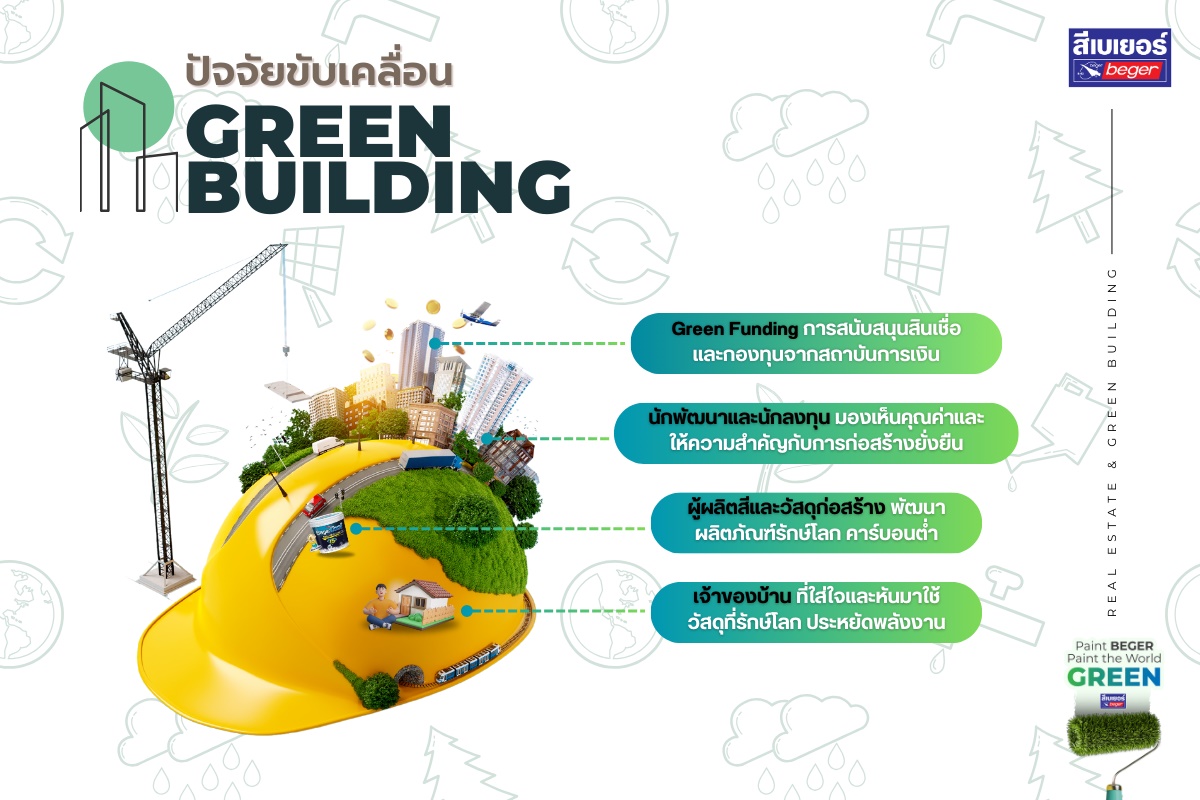
Driving Factors in the Green Building Industry Market
- Green Funding: Support from financial institutions and the government helps reduce financial barriers for real estate developers aiming for Net Zero and planning tangible changes for the planet through housing and building projects by incorporating eco-friendly and environmentally friendly construction materials into their projects.
- Developers and Investors: Recognizing the long-term value of sustainable construction, they collaborate with reputable brands to meet green standards, resulting in a stimulated transition to Green Building across the entire business chain within the industry.
- Beger: One of the manufacturers of eco-friendly, low-carbon paints and construction materials, innovating for the planet and consumers, aiming to minimize energy use and reduce pollution and greenhouse gas emissions throughout the supply chain, from raw material selection, paint and construction material production, transportation to consumers, to managing used paint containers.
- Homeowners: Benefit from reduced energy costs and sustainable living, as Green Building from high-quality eco-friendly materials will help save energy and extend the lifespan in the long term.
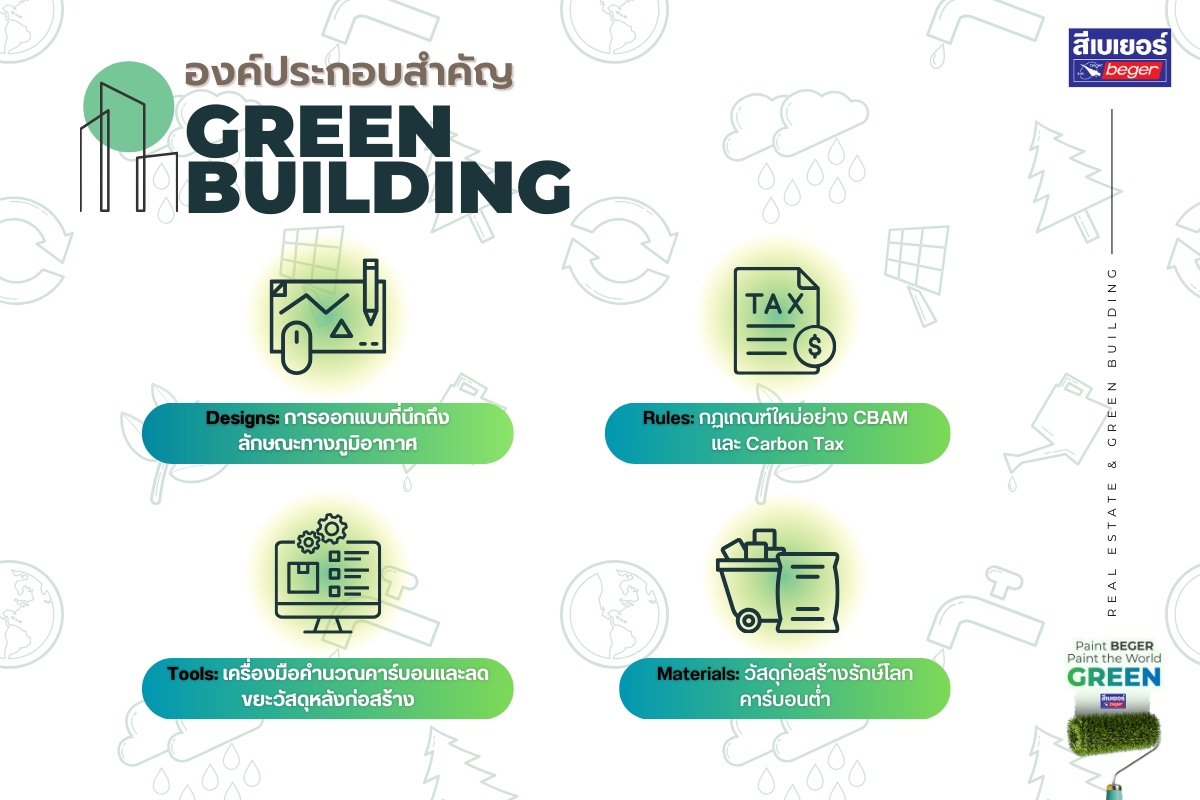
Key Elements of Green Building
- Designs: Designing to reduce energy and heat accumulation for cooling, considering the landscape, climate, and existing materials in the area to avoid unnecessary resource waste.
- Rules: New regulations, such as CBAM and Carbon Tax Helps raise awareness among businesses that emit carbon from various processes and stimulates development beyond trade limitations.
- Tools: Use carbon calculation tools and reduce construction waste, such as the web app Paint CO2Cal, which helps calculate carbon emissions and energy savings from building paints, developed by BEGER and Mahidol University.
- Materials: Low-carbon materials help reduce energy use in buildings, such as BEGER Cool paint with AeroTech technology. AeroTech makes homes cooler and more durable by reflecting 97.5% of heat, reducing maximum accumulated temperature by 6 degrees, and saving over 32% energy.