

When talking about Ozone, many people may think of clean air that is good for health, but in reality, ozone is a gas that has both benefits and harms for humans. At ground level, it can be harmful to the respiratory system, but in the upper atmosphere, it plays a crucial role in protecting the Earth from harmful ultraviolet (UV) radiation. This importance has led many countries to collaborate on the Ozone Layer Protection Convention and designate September 16 of each year as “World Ozone Day” to remind us of the value of ozone for living beings on Earth. Let’s get to know ozone more deeply together.
What is Ozone?
Ozone (O₃) is a gas composed of three oxygen atoms, classified as a gas that is sensitive to chemical reactions. It can occur naturally, such as from lightning, thunder, or sunlight. At the same time, humans can also create ozone from ultraviolet (UV) radiation or high-frequency electromagnetic fields.
In terms of distribution, more than 90% of ozone is found in the stratosphere at an altitude of about 10–50 kilometers, which serves as the “ozone layer.” About 10% is found in the troposphere or near-ground level, 0–10 kilometers, which is ozone that may be harmful to humans and living beings.
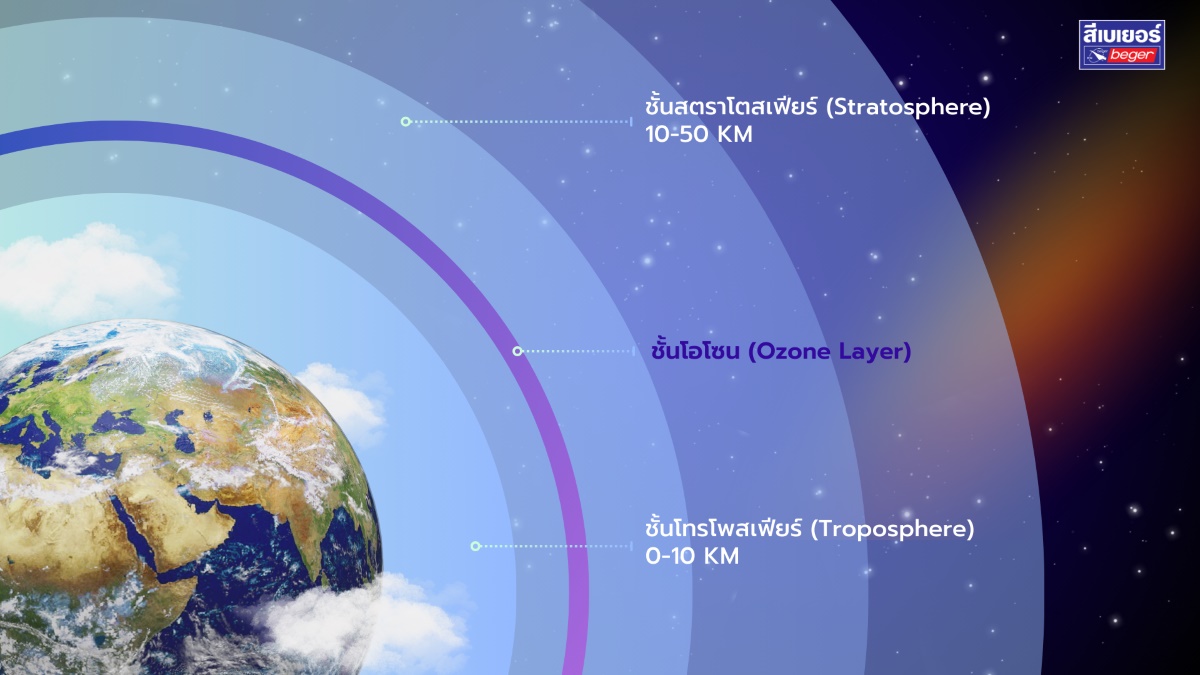
In addition to its role in protecting the Earth, ozone is also used in various industries, such as eliminating unpleasant odors, inhibiting pathogens, breaking down toxic gases, making clean air for bleaching, and treating wastewater. However, it should not be forgotten that ozone is also toxic to humans, especially ground-level ozone (Ground-Level Ozone) found at about 0–2 kilometers, which is produced from vehicle emissions, industrial factories, and reactions of VOCs from various products. Inhaling it can cause coughing, throat irritation, nasal congestion, difficulty breathing, or chest pain.
The severity of symptoms depends on the amount of ozone inhaled, with at-risk groups such as asthma patients, children whose lungs are not fully developed, and the elderly often experiencing more severe effects.
The Impact of Ozone Loss
Although ozone is toxic to humans when inhaled directly, for the Earth, the loss of ozone or thinning of the ozone layer is even more dangerous because it removes the Earth’s natural protective shield, resulting in ultraviolet (UV) radiation. The increased sunlight reaching the Earth’s surface has various impacts on living beings, such as
- humans being at risk of skin problems, skin cancer, pterygium, and pinguecula
- agricultural crops experiencing stunted growth and dwarfism
- materials and constructions deteriorating or breaking down more quickly
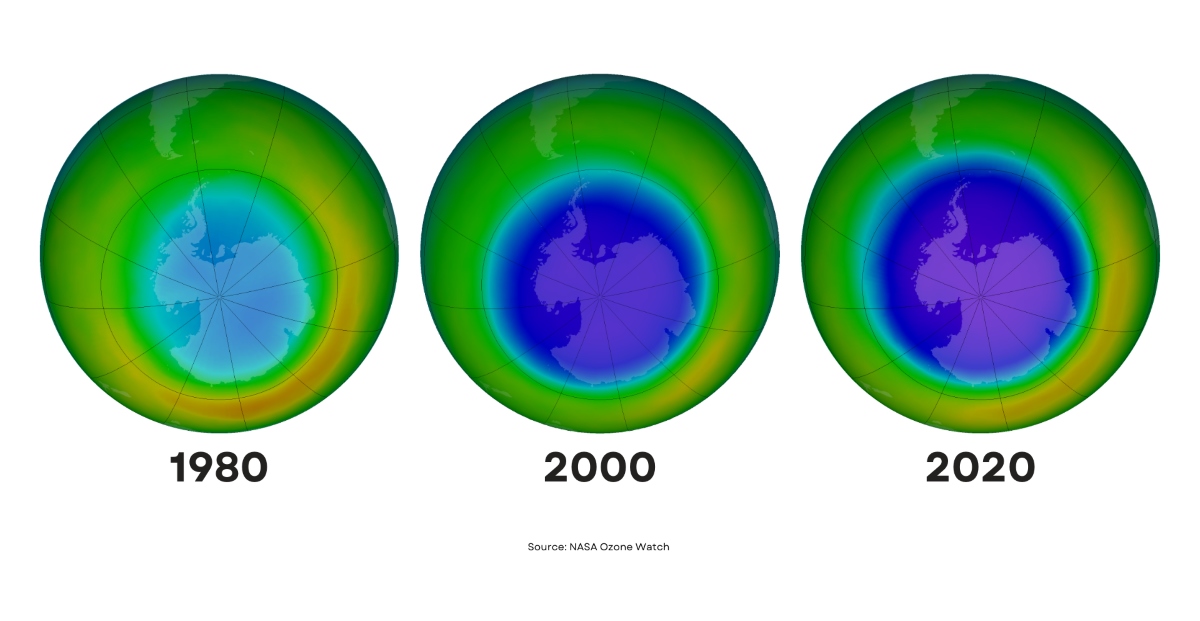
The cause of ozone depletion over the past decades has been chemicals from the industrial sector or from human activities. The substances responsible for ozone destruction are halocarbons (Halocarbon) that contain chlorine (Cl), fluorine (F), bromine (Br), carbon (C), and hydrogen (H), which are classified asgreenhouse gasesincluding
- chlorofluorocarbons (Chlorofluorocarbons: CFCs)
- hydrochlorofluorocarbons (Hydrochlorofluorocarbons: HCFCs)
- hydrofluorocarbons (Hydrofluorocarbons: HFCs)
- perfluorocarbons (Perfluorocarbons: PFCs)
- sulfur hexafluoride (Sulphur Hexafluoride: SF6)
Among these, CFCs such as Freon-12 (CCl2F2), which is used as a refrigerant in refrigerators, air conditioners, and aerosol spray cans, as well as waste from plastic foam production, are considered the main substances that have been seriously banned due to their significant role in ozone depletion, leading to the formation of the ozone hole worldwide, allowing UV radiation to directly reach living beings on Earth.
Many countries have therefore reached a joint agreement calledthe Montreal Protocolin 1987 to reduce and eliminate the production and use of CFCs to help mitigate the ozone hole problem and restore the ozone layer to its normal state, which is expected to be complete by 2070.
Currently, according to a new report from the United Nations, the Earth’s ozone layer is slowly recovering, with full recovery expected by 2040 for other parts of the world, 2045 for the Northern Hemisphere, and 2066 for the Southern Hemisphere.
Recognizing the many important roles of ozone, Beger Paints aims to be part of the solution for the planet through modern paint production technologyAVID(Automatic Vacuum Inline Dispersion), an automatic vacuum inline production machine, enhances the efficiency of the production process
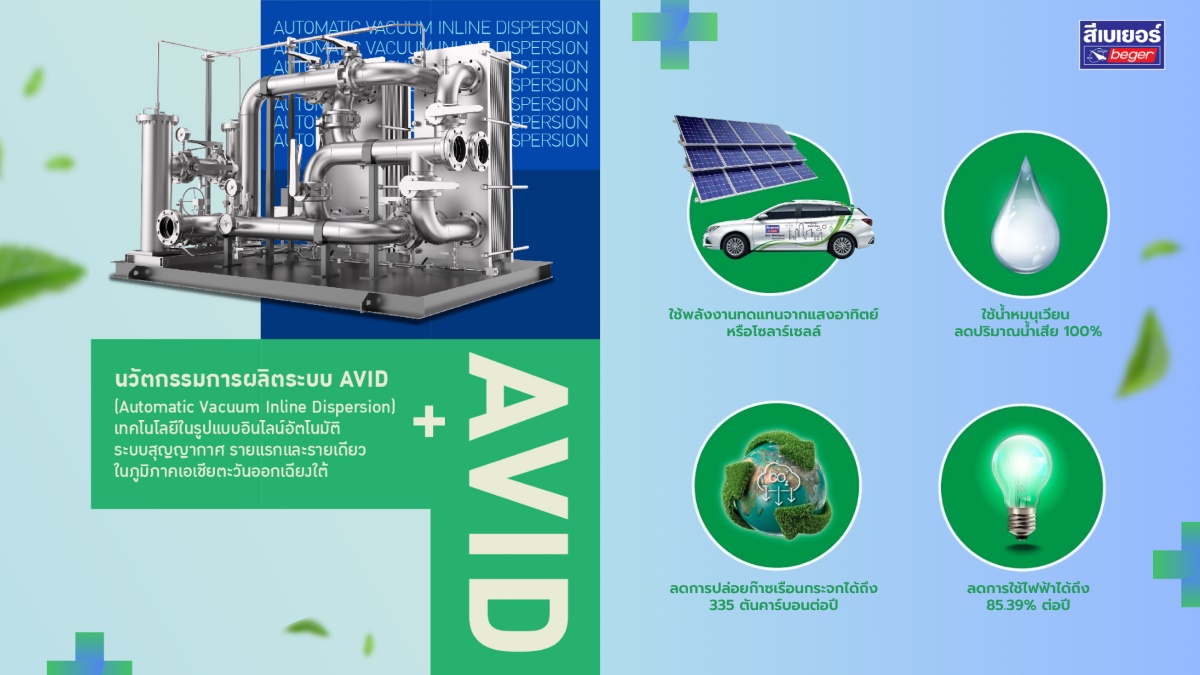
This process reduces energy consumption by up to 85.39% per year, using renewable energy from sunlightand reduces greenhouse gas emissionsthat contribute to ozone depletion by 335 tons of carbon dioxide per year. Additionally, it features a water recycling system that helps eliminate wastewater by 100%, delivering quality products for maximum usability while preserving the planet for our future generations.