

On extremely hot days, living conditions become a challenge. Global Boiling is no longer just an environmental issue that feels distant; it reflects the problem of heat accumulation inside homes, the use of air conditioning, and the energy costs that many families face.
Dealing with hot weather is therefore not limited to just turning on the air conditioning or adding insulation; it also includes selecting building materials and house paints that have heat-reflective properties to help reduce heat accumulation on building surfaces.
One option is BegerCool paint, which has developed innovative cool house paint to help manage heat from sunlight, alongside a product development approach that considers environmental impact. So how can house paint contribute to reducing global warming, lowering energy use, and helping homes cope with the era of global boiling? This article has the answers.
Does house paint really help reduce global warming?
House paint can indeed help reduce environmental impact, especially paints with heat-reflective properties, which may help decrease energy use for cooling, including low-carbon paints that manage greenhouse gas emissions throughout the product’s life cycle. When house walls receive sunlight, the surface absorbs some energy and transfers heat into the building, causing the internal temperature to rise, especially in areas that receive direct sunlight for several hours. Choosing to use heat-resistant house paint with properties that reflect solar radiation is another way to reduce heat accumulation on walls and can help ease the workload on air conditioning units in certain usage conditions. However, painting a house does not directly lower global temperatures but can be part of reducing indirect impacts through energy savings and choosing products that consider greenhouse gas emissions.
How does BegerCool paint help reduce heat, lower energy use, and cope with global boiling?
Coping with the era of global boiling starts with making homes energy-efficient. BegerCool plays a role in helping reduce heat accumulation on building surfaces, while the development of products with a low-carbon paint concept and environmental impact management is another approach that supports responsible resource use.
These approaches can be explained through four key properties and processes:
1. Heat-reflective paint innovation helps walls accumulate less heat.
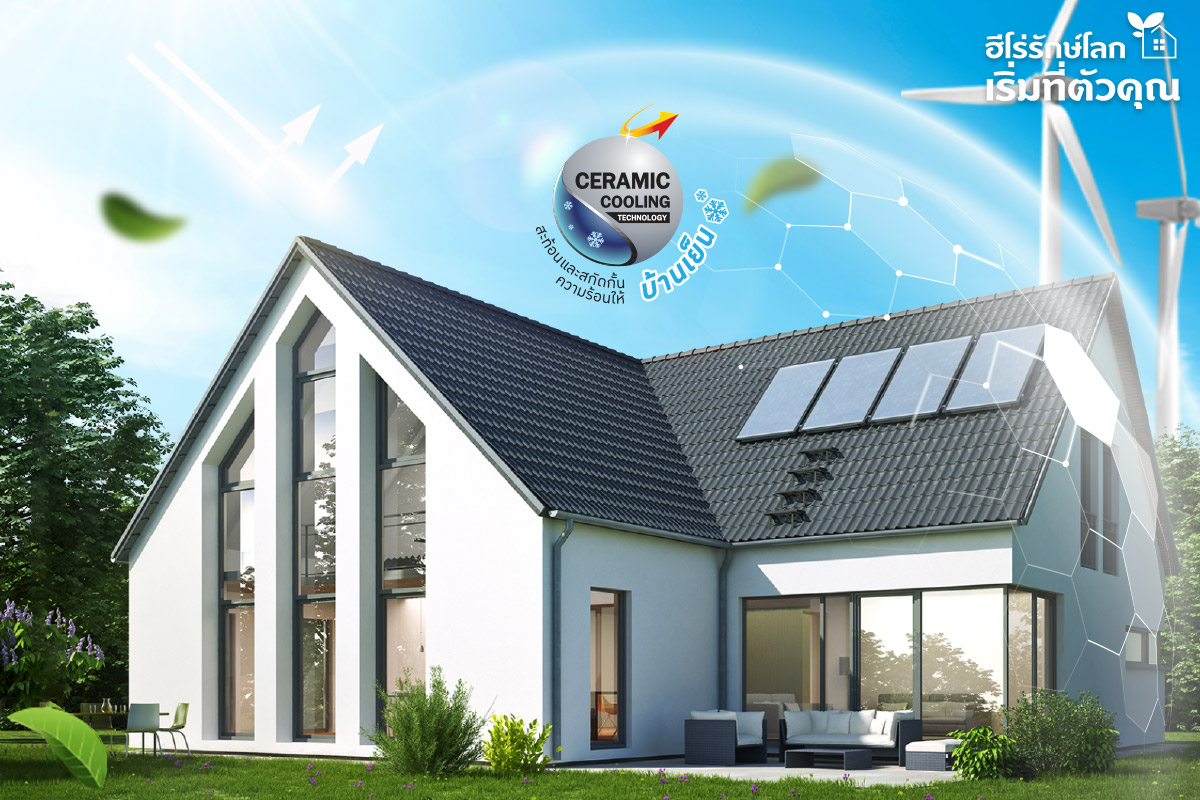
Thailand has a hot climate and receives quite a lot of sunlight throughout the year, especially on walls that face direct sunlight in the afternoon, which can accumulate heat and transfer it into the interior of the home.
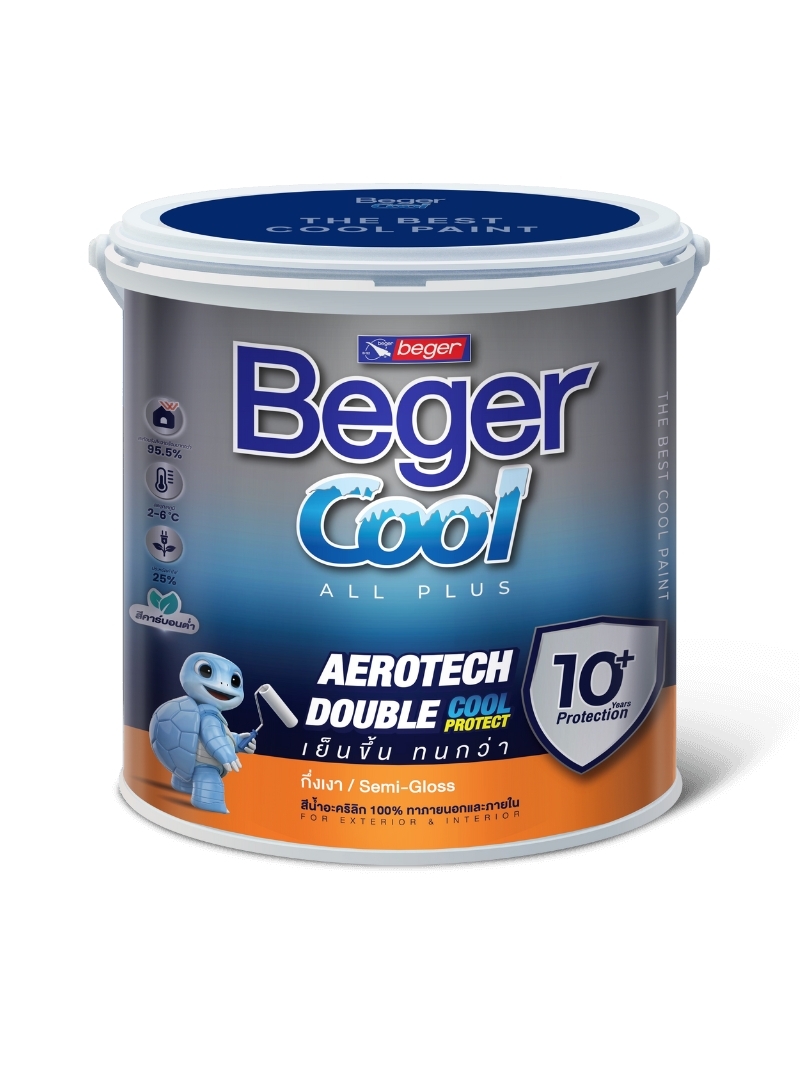
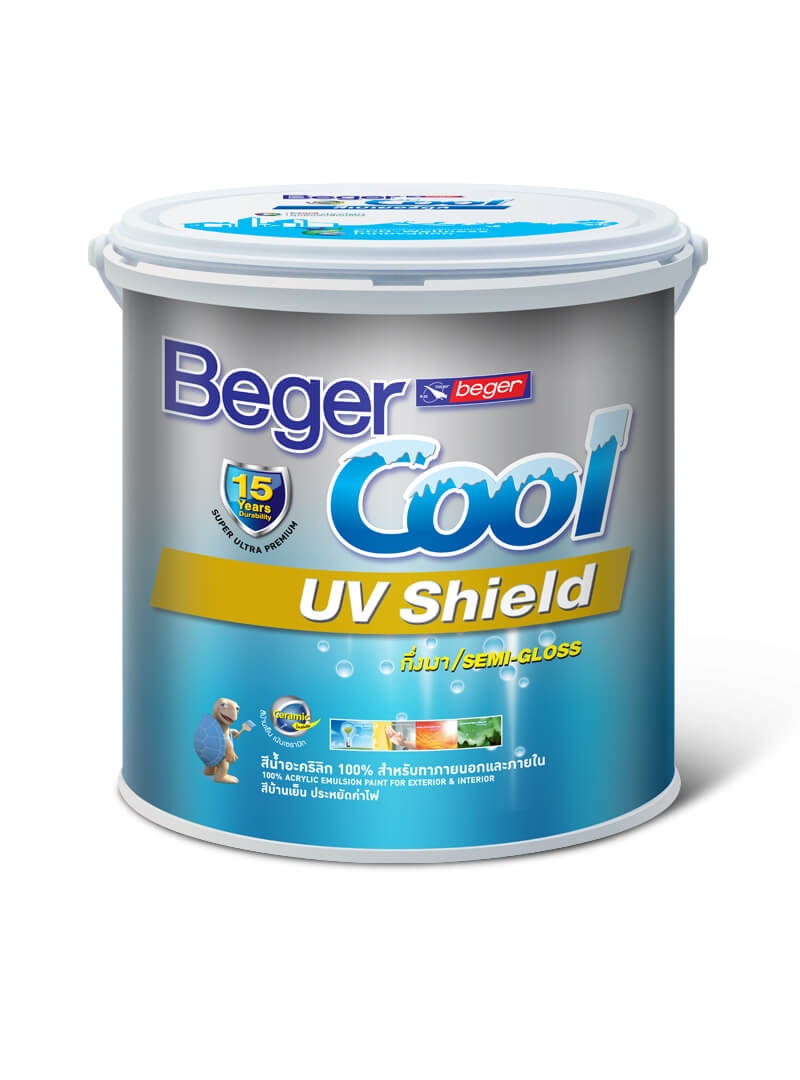
BegerCool paint has been developed with Ceramic Cooling Technology that uses small ceramic materials in the paint to help manage heat from sunlight and reduce heat accumulation on building surfaces.
Additionally, some BegerCool products also feature AeroTech and R-E-I systems designed to manage thermal energy through three mechanisms, including:
- Reflective: Reflects energy from sunlight to reduce heat absorption
- Emission: Promotes the release of heat energy from surfaces
- Insulation: Helps resist heat transfer through the colored film according to the properties of the paint system
Homeowners can learn more about AeroTech technology and the principles of the R-E-I system to better understand the innovation of cool house paint. The effectiveness of heat reflection depends on the product model, color shade, surface condition, and testing conditions, so it is advisable to check the technical documentation of each product model before comparing performance numbers.
2. Reducing heat entering the home may help save energy and electricity costs
When the walls of the house accumulate less heat, the amount of heat transferred into the building may also decrease, allowing the air conditioning system to use less energy to maintain the indoor temperature. This mechanism can be simply explained as heat-reflective paint helps reduce heat accumulation on walls, decreases heat entering the home, and may reduce the workload on the air conditioning system. Reduced electricity usage can contribute to a decrease in indirect greenhouse gas emissions, depending on the source of electricity used to generate power.
However, many may wonder if cool house paint really helps reduce electricity bills?
The answer is that it has the potential to help, but the actual amount of energy saved depends on several factors, such as
- the direction of the house and the duration the walls are exposed to sunlight,
- the size of the wall area using heat-reflective paint,
- the effectiveness of roof and wall insulation,
- the efficiency of the air conditioning system and the set temperature,
- living habits and external weather conditions.
If you want to plan to improve your home to be cooler, you can read additional guidelines on Cool house colors help reduce the burden on air conditioning to assess methods for reducing heat suitable for their own homes
|
|
|
|
3. Develop low-carbon colors to reduce environmental impact from the production process
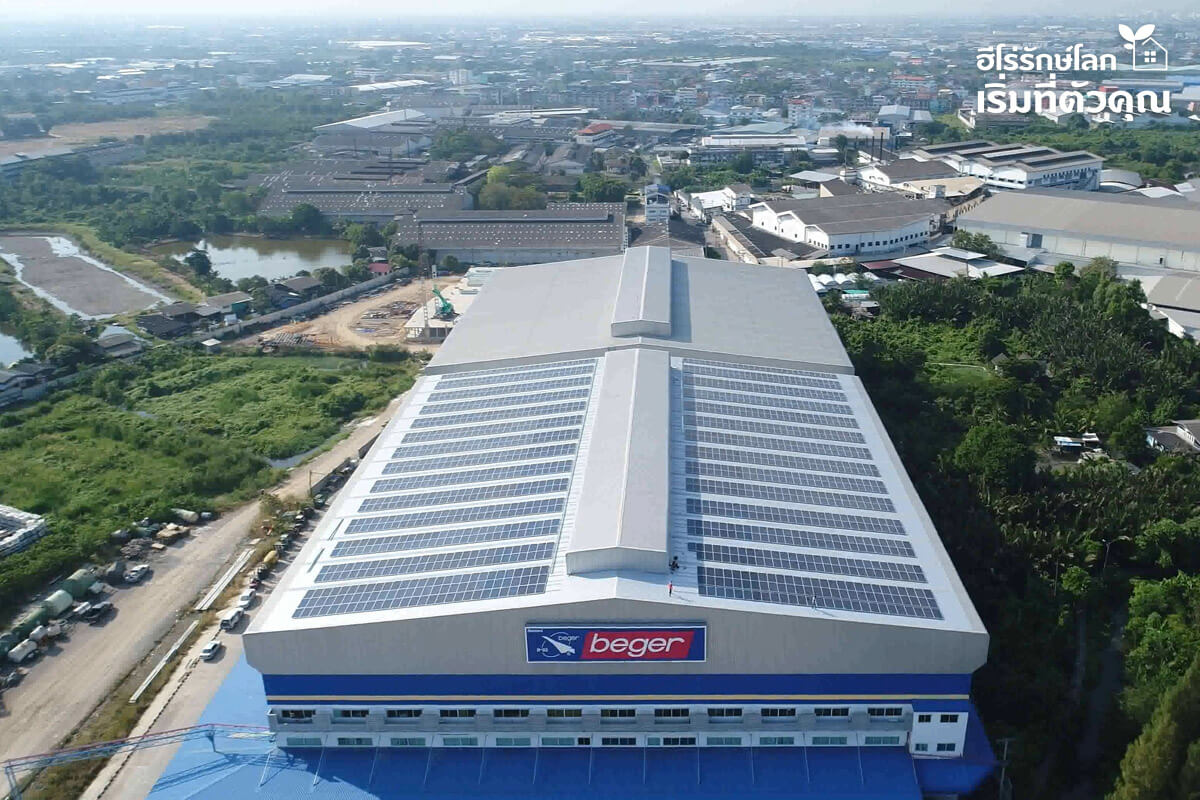
In addition to reducing energy use during habitation, another important factor of eco-friendly house paint is managing environmental impacts throughout the product’s life cycle. Generally, paint production uses resources, raw materials, and energy in multiple steps, from sourcing raw materials, production processes, transportation, to post-use product management. Beger emphasizes the development of low-carbon colors through various approaches, such as using solar energy in the production process and utilizing plant-based or Bio-based Materials to replace certain types of raw materials. Additionally, some product lines have received the Carbon Footprint Reduction Label, which indicates compliance with assessment criteria and reduced greenhouse gas emissions according to established guidelines.
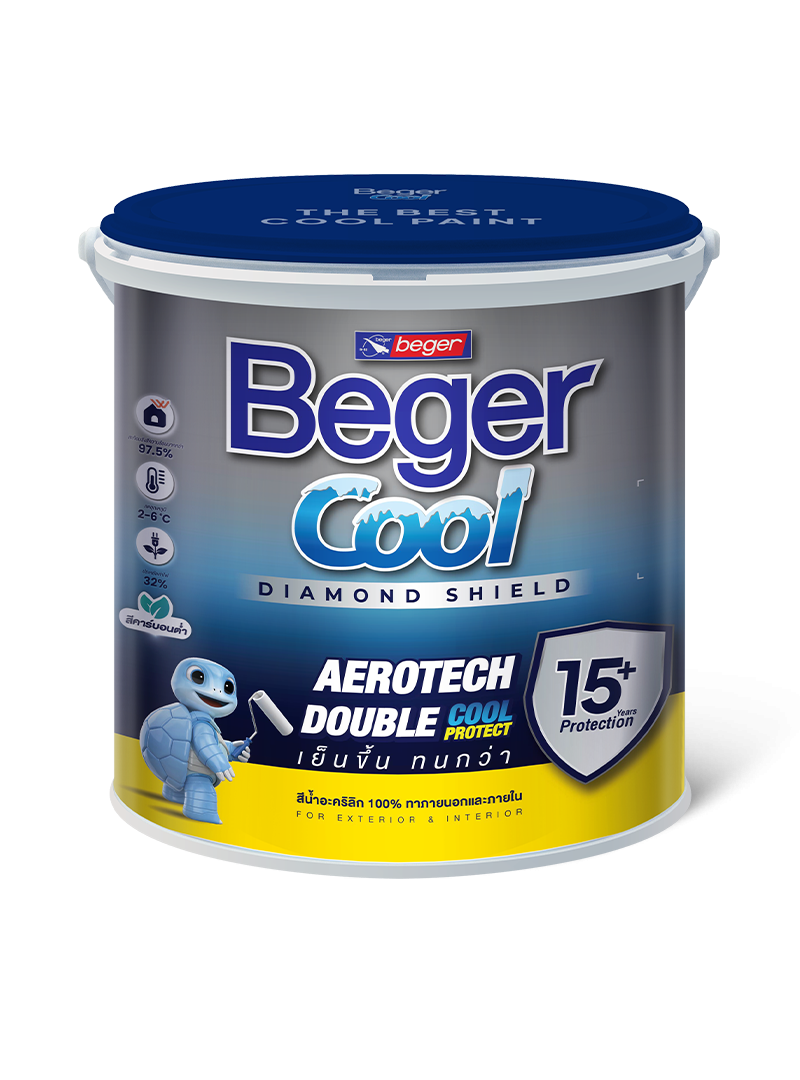
For example, BegerCool DiamondShield 15 for which Beger has published information about receiving the heat reduction label from the Greenhouse Gas Management Organization (Public Organization). However, labels and certifications may vary by product model and the time of certification, so consumers should verify the latest information from the manufacturer and the labeling agency before making a decision.
4. Low VOC paint helps reduce emissions of volatile compounds related to air quality
In addition to energy savings and reducing carbon impact, choosing house paint with low levels of volatile organic compounds, or Low VOC (Low Volatile Organic Compounds) is another factor to consider. VOCs can evaporate from certain products, including architectural paints, and some substances can affect air quality and participate in chemical reactions that cause air pollution.
Choosing Low VOC paint thus helps reduce emissions of volatile substances compared to paints with higher levels of VOCs under comparable usage conditions. However, it is important to distinguish clearly between Low VOC paint and low-carbon paint because Low VOC paint focuses on the amount of volatile substances and air quality, while low-carbon paint relates to greenhouse gas emissions according to the assessment scope.
Both properties are important for selecting products that consider residents and the environment, but they cannot substitute for each other’s certification evidence.
What kind of paint is environmentally friendly?
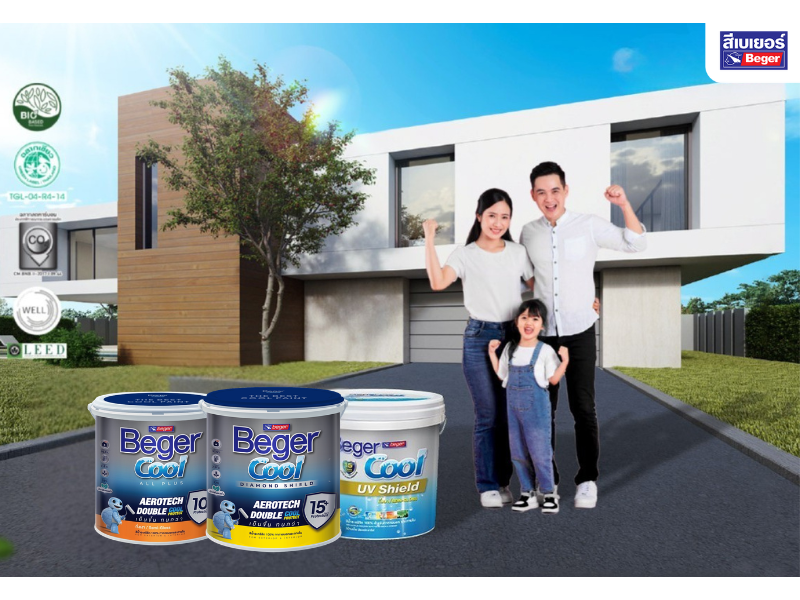
How can you tell which house paint is environmentally friendly? You can easily look for the green label or environmental label certified by the Thai Environmental Institute on the side of the paint can, in the product catalog, or in the technical documents of that paint model to see if it mentions such certification. As shown in the image, to receive this label, the paint must meet criteria regarding VOC emissions and must be free from heavy metals such as mercury or lead. Furthermore, if any paint has received the heat reduction label (gold label) or the Carbon Footprint Reduction label from the Greenhouse Gas Management Organization (TGO), it can be confirmed that the paint helps reduce global warming by lowering greenhouse gas emissions, particularly carbon dioxide, from the production process. Currently, BegerCool DiamondShield 15 is the first and only house paint in Thailand to receive such a label.
In an era of global warming, how can heat-reflective colors help with hot house problems?
As the outside temperature rises, homes that receive direct sunlight may accumulate more heat, especially walls and roofs that are directly exposed to sunlight. This issue is particularly evident in urban areas with numerous buildings, roads, and concrete surfaces, which are related to the Urban Heat Island phenomenon. This phenomenon occurs when urban areas have higher temperatures than their surrounding areas due to a large amount of materials that absorb and retain heat, less green space, and heat generated from human activities.
Choosing heat-reflective colors is one approach to cope with hot weather, as it helps reduce the absorption of solar energy on building surfaces and may help decrease the heat transferred into homes. For homes primarily heated by the roof, selecting heat-reflective roof paint along with managing heat on the walls will help improve homes that cover more sun-exposed surfaces. It should be noted that reducing the urban heat island phenomenon is a different issue from directly reducing the average global temperature, but both are interconnected through energy use and greenhouse gas emissions.

What type of house paint is environmentally friendly? Check the label before purchasing
Choosing eco-friendly house paint should not only consider advertisements claiming to be Eco-Friendly or energy-saving paint, but should also check technical information and certification evidence related to each product model.
1. Carbon Footprint Reduction Label
This label indicates that the product has passed assessment criteria for reducing greenhouse gas emissions according to the requirements of the certifying agency, making it suitable for those who want to consider the carbon impact of the product.
2. Green Label
This is an environmental certification label that evaluates products based on criteria related to the type of product, such as limiting certain substances and environmental impact according to specified standards.
3. High-Efficiency Energy Saving Label
This helps consumers consider products that meet energy efficiency criteria or characteristics related to energy savings according to the certified product type.
4. Environmental Product Declaration (EPD)
EPD, or Environmental Product Declaration, is a document that presents information on the environmental impact of a product according to the specified assessment scope, allowing consumers and professionals to systematically study environmental information.
Beger has published information on obtaining EPD certification for 10 models of cool house paint and construction chemicals on June 18, 2025, which is another way to disclose the environmental impact information of products. More details about Beger Cool Color Standards and EPD certification can be studied for consideration. It is advisable to check the latest certification status and the certified product models before making a purchase.
5 Ways to Choose House Paint and Prepare Your Home for the Scorching World
In addition to choosing house paint with heat-reflective properties, improving other components of the house can also help manage heat and energy use appropriately.
1. Choose exterior paint with heat-reflective properties.
Consider colors that have data on solar radiation reflection, especially in areas of walls that receive direct sunlight, and choose products suitable for the surface characteristics.
2. Choose shades based on radiation reflection values.
Light colors generally absorb less solar energy than dark colors, but some dark colors formulated with infrared radiation reflective technology can also have good thermal performance. Therefore, it is essential to consider the testing data for each shade.
3. Add insulation and ventilation.
Installing appropriate insulation, reducing heat from the roof, and managing ventilation are additional methods to help reduce heat entering living spaces.
4. Use natural shade to help reduce heat.
Planting trees, installing awnings, or designing shaded areas can help reduce direct sunlight exposure on walls and windows in suitable positions.
5. Choose durable colors and maintain them properly.
Using products that are durable and suitable for the environment, and preparing the surface correctly according to the manufacturer’s instructions, helps reduce the need for repairs or repainting prematurely, which may help reduce material and resource use in the long term. After painting, materials and packaging should be managed appropriately. If you want to reuse paint cans, choose safe usage and follow cleaning instructions. More guidelines can be found at Recycling Paint Cans Ideas
Frequently Asked Questions about Eco-Friendly House Paint (FAQ)
Q1: How can house paint help reduce global warming?
A1: House paint with heat-reflective properties can help reduce heat accumulation on building surfaces and may help reduce energy consumption for cooling. Low carbon paints can contribute to reducing greenhouse gas emissions based on the product’s scope and assessment evidence.
Q2: Does BegerCool paint really help reduce electricity bills?
A2: It has the potential to reduce electricity use from air conditioning systems by lowering heat entering the building, but actual savings depend on the home’s condition, sun direction, insulation efficiency, and air conditioning usage behavior.
Q3: How does eco-friendly house paint differ from regular house paint?
A3: Eco-friendly house paint should have verifiable environmental data or evidence, such as VOC levels, greenhouse gas emission data, certification labels, or life cycle impact information. However, the properties of each paint variant may differ.
Q4: Are Low VOC paints and low carbon paints the same?
A4: They are not the same. Low VOC paints focus on reducing volatile organic compounds, while low carbon paints focus on managing greenhouse gas emissions according to assessment scopes. A product may have both properties, but evidence must be verified separately.
Q5: How do heat-reflective paints help cope with global warming?
A5: Heat-reflective paints help reduce heat accumulation on building surfaces and may lower the demand for cooling energy, making them one of the methods to help homes adapt better to extreme heat conditions. However, they should be used in conjunction with insulation, shading, and appropriate building design.
Summary: BegerCool, another option for a cool home in the era of global warming.
Coping with the era of global warming is not just about reducing indoor temperatures but also involves using energy efficiently and choosing environmentally conscious products.
BegerCool (BegerCool) This is another option for homeowners looking to reduce heat accumulation on building surfaces with innovative heat-reflective paint that may help lessen the workload of air conditioning units. At the same time, BEGER also emphasizes the development of low-carbon paint products and environmental certifications for certain models. This is because choosing house paint today is not just about aesthetics and durability, but also part of creating a comfortable home that uses energy efficiently and is ready to cope with changing weather conditions in the future. Cooler homes, energy efficiency, and environmental care all at once with BEGER COOL’s innovative cool house paint.