

Washable house paint: A practical solution for dealing with stains in homes with children—how to choose the best value Anyone with young children at home is probably familiar with this scene: you come home one day to find a long crayon mark across the living room wall, snack-covered handprints around the corner of the sofa, or spilled milk that has dried into a stubborn ring no matter how much you wipe it. Problems like these do not mean you are not taking good care of your home. In most cases, they result from choosing interior paint that was not designed to be washable in the first place. This article will explain why homes with children should prioritize washable house paint, how to clean different types of stains without leaving marks on the walls, and what to look for when choosing a product. This way, you will not have to repaint every year and can enjoy walls that are both clean and safe for everyone in the household.
Why do homes with children need to use washable wall paint?
Children learn about the world through touch, so the walls of a home inevitably become drawing boards, something to lean against, and handholds when they are learning to walk. These behaviors are a natural part of development. What we can truly control is not the child, but the choice of a wall surface that can handle these marks. Many standard interior paints have porous film. When stains come into contact with them, they are absorbed into the paint. Wiping hard can then cause scuff marks and make the discolored patches even worse. This differs from paints designed to be washable, which have a denser film, keeping stains on the surface so they can be wiped away easily without damaging the paint. An often-overlooked cost is the hidden expense of repainting. If the walls become marked and require touch-ups or a full repaint every one to two years, the combined cost of paint, labor, and the hassle of clearing and rearranging the home is often higher than investing in washable, wipe-resistant paint from the outset.
Common stains in homes with children and how to clean them properly
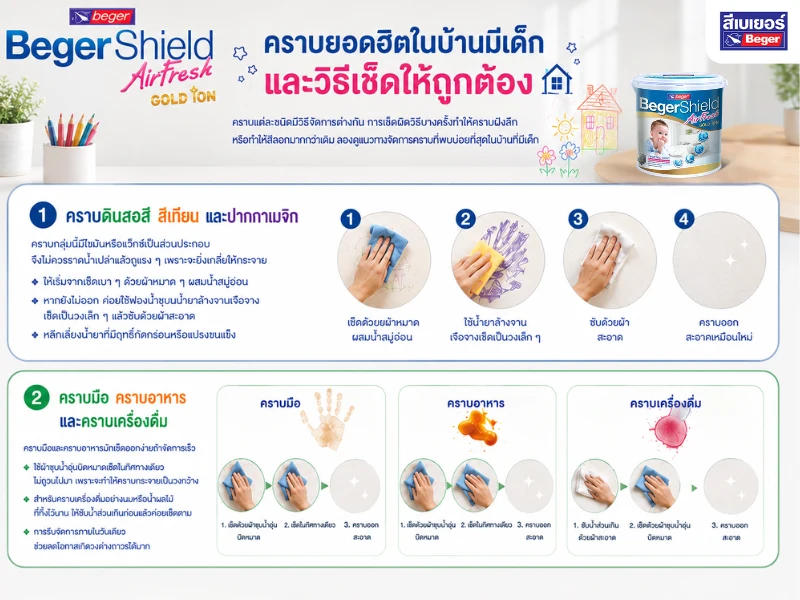
Each type of stain requires a different method of treatment. Wiping it incorrectly can sometimes cause the stain to set deeper or make the paint peel even more. Take a look at how to deal with the most common stains found in homes with children.
- Crayon, colored pencil, and marker stains
These stains contain grease or wax, so you should not pour plain water over them and scrub vigorously, as this will only spread them further. Start by gently wiping with a damp cloth mixed with mild soapy water. If the stain remains, use a soft sponge dampened with diluted dishwashing liquid to wipe in small circles, then blot with a clean cloth. Avoid corrosive cleaners or stiff-bristled brushes. - Handprints, food stains, and beverage stains
Handprints and food stains are usually easy to wipe away if handled promptly. Use a cloth dampened with warm water and wrung out well, wiping in one direction. Do not rub back and forth, as this will cause the stain to spread over a wider area. For beverage stains such as milk or fruit juice that have been left for a long time, blot up the excess liquid first, then wipe as instructed. Taking care of the stain within the same day can greatly reduce the chance of permanent discoloration.
Wiping techniques that do not damage the paint film
- Always test the cleaning solution on an inconspicuous area first to ensure that the color does not fade or peel.
- Use a soft cloth or sponge. Avoid Scotch-Brite and stiff-bristled brushes that can scratch the paint.
- Wipe gently and blot dry, without allowing the wall to retain moisture for long.
- Treat stains as quickly as possible. Fresh stains are always easier to wipe away than stains that have dried and set into the surface.
Where to check whether it can be wiped clean before making a purchase
The termwashable wall paintappears on the labels of almost every brand, but actual durability varies greatly. The most accurate figure for comparison is the number of scrub cycles (scrub resistance), tested by repeatedly scrubbing the same area until the paint begins to wear. The higher the number, the more times the paint film can withstand cleaning. General interior paint may withstand tens of thousands of cycles, while some premium-grade paints can withstand several hundred thousand cycles. This difference directly reflects how long a wall can withstand scrubbing in real life before showing marks. When comparing products, you should therefore consider the number of scrub cycles along with the test conditions, rather than simply looking for the words “washable” on the packaging.
Semi-gloss or smooth matte paint: which one is more suitable for wiping?
The type of paint finish directly affects cleaning. Generally, glossier finishes have a denser surface and are slightly easier to wipe clean, while matte finishes are better at concealing wall imperfections but are more difficult to maintain in areas that are frequently touched. The basic matching principles are as follows.
- Semi-gloss paintSuitable for areas that are frequently stained and need regular wiping, such as hallways, walls near dining tables, and playrooms.
- Smooth matte filmSuitable for bedrooms or feature walls that emphasize a soft, smooth look and are not subjected to heavy daily contact.
Some interior paints are available with both film types in the same product, allowing you to perfectly match each room without changing brands.
Wiping clean alone isn’t enough; it must also be safe for children.
Easy-to-clean walls are only half the challenge. The other equally important half is what’s in the paint and the odors lingering in the room, especially in homes with young children, who breathe more rapidly than adults and spend more time close to surfaces.
Low-odor house paint, allowing you to move in quickly
The strong smell of paint mainly comes from volatile substances. Choosing a low-odor, water-based house paint helps reduce discomfort during and after painting, allowing the family to return to using the room sooner without having to endure the smell for several days. This is especially important for homes with young children or elderly people who are sensitive to odors.
Safe colors and colors safe for mothers and children
The term “safe paint” should also be judged by what is absent from the paint. Good paint should not contain mercury or lead, and Zero VOCs or havelow volatile organic compound (VOCs)levels. This is why many brands promote their products as safe paint for mothers and children, because this group has particularly frequent contact with walls and breathes the air indoors. An easy way to check is to read the label and look for environmental or air-quality certification, including TIS standards for emulsion paint. These certifications help confirm that the claims on the packaging are backed by actual testing, rather than being merely marketing messages.
Examples of interior paint colors that meet both wipeability and safety requirements
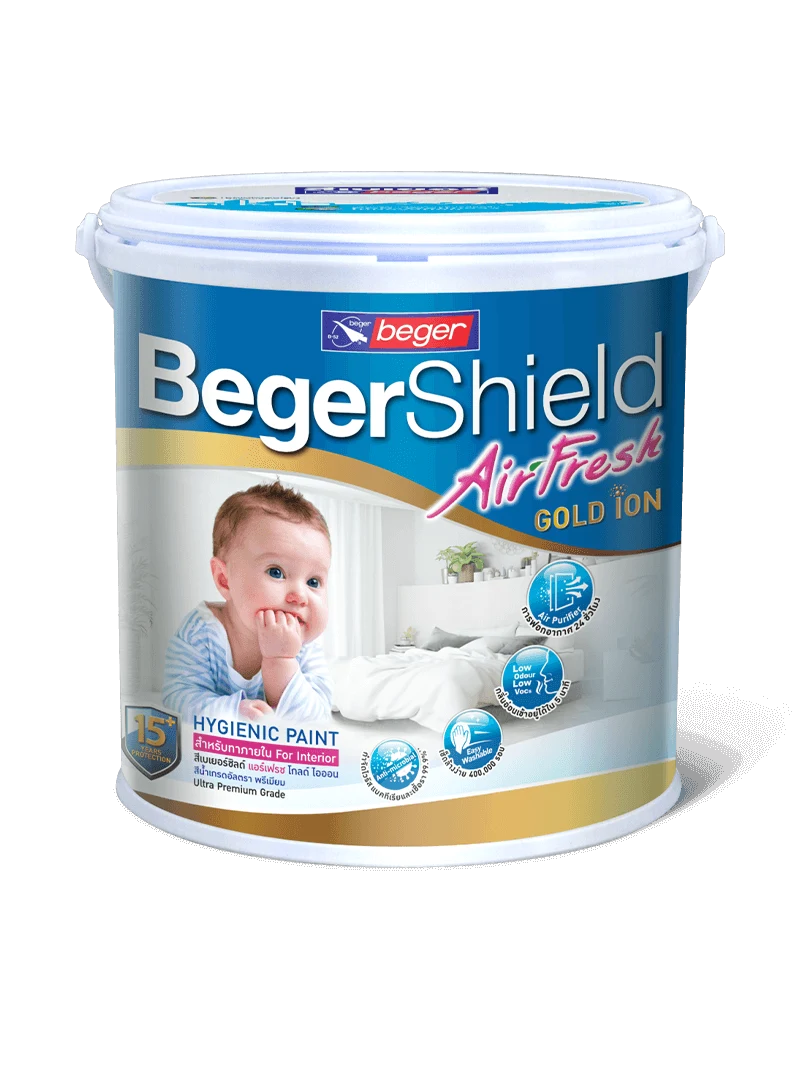
If we were to give an example of a paint that combines all the above features in a single product:BegerShield AirFresh Gold IonIt is an interior Zero VOC paint with a mild odor, free from mercury, lead, and harmful volatile organic compounds (VOCs). Its key highlight is a paint film that can withstand up to approximately 450,000 scrubbing cycles, according to testing by the Beger laboratory, directly meeting the need for stain cleaning in homes with children.
In addition to being easy to wipe clean, the product is designed around the concept of 3D cleanliness: inhibiting germs on walls with Gold Ion technology, helping purify the air by reducing pollutants such as formaldehyde, and featuring a film surface that makes cleaning easier. It is a water-based paint with a mild odor, contains no mercury or lead, and states that the room can be occupied within 5 minutes after the paint dries. In terms of credibility, this productreceived the Most Innovative Best Interior Paint award from theAsianparent Awards 2023and has certifications for air quality and volatile emissions from internationally recognized institutions. It is available in both semi-gloss and smooth matte finishes, allowing it to be paired with each room according to its intended use. Nevertheless, you should always compare the specifications with your budget and your home’s actual usage requirements before making a decision.
Product Recommendations
FAQ Frequently Asked Questions About Washable House Paint
Q1: Can all types of interior paint be wiped clean?
A: No, not all types. Many paint products can only be wiped to remove superficial stains, but they may leave marks if scrubbed vigorously or if exposed to deeply embedded stains. The number of scrub cycles indicated on the label should be used as a basis for comparison.
Q2: Semi-gloss or smooth matte—which one is easier to wipe clean?
A2: Generally, glossier films are slightly easier to wipe clean, making them suitable for areas that are frequently touched. Matte films are better suited to rooms where a soft, smooth appearance is preferred and daily cleaning is not required.
Q3: What should you look for in paint that is safe for mothers and children?
A3: Look for paint that does not contain mercury or lead, or has Zero VOCs, a mild odor, and environmental or air quality certification.
Homes with children do not have to surrender to stains on the walls. Simply understanding two key points can make home maintenance much easier: 1. Choose an interior paint that is genuinely washable by checking its scrub-cycle rating and pairing the right semi-gloss or matte finish with each room. 2. Treat stains correctly and promptly, while also choosing a low-odor, safe paint for mothers and children. With an interior paint that is both easy to clean and safe, your home’s walls will stay beautiful, durable, and easy to maintain for a long time. Try comparing these criteria with the paints you are considering, then choose the product that best fits both your budget and your family’s lifestyle.