
To ensure that galvanized steel and square steel tubing paint adheres well, two essential steps must always be taken: completely wash off any oil residue and sand the shiny surface with fine sandpaper. Then, you can choose between two systems: the traditional 4-step system (1. Surface preparation 2. Wash primer 3. Rust-inhibiting primer 4. Oil-based topcoat, applied twice) which takes 1–2 days, or the new 2-step system using 2 in 1 steel paint that includes a primer, allowing for the next coat to be applied in 30 minutes and completing the job in one day. For square steel tubing, you must first determine whether it is “black square steel” or “galvanized square steel” as different paint systems are used.
What is galvanized steel?
Galvanized steel (Galvanized Steel) is steel that has been coated with zinc (Zinc) to prevent rust formation. The most popular method is hot-dip galvanizing (Hot-Dip Galvanizing) at a temperature of about 450°C, resulting in a shiny silver surface that is strong and weather-resistant. The zinc layer protects the steel in two ways: it acts as a barrier to prevent moisture from contacting the steel, and it serves as a sacrificial anode that corrodes instead of the steel when the surface is scratched. Therefore, it is commonly used for fences, roofing structures, gutters, poles, and outdoor structures. However, when subjected to drilling, cutting, welding, or prolonged use, the zinc layer will be damaged at specific points. Painting over it provides an additional layer of protection, extending the structure’s lifespan while enhancing its appearance.
How to paint square steel tubing? First, you need to distinguish which type it is.
Square steel tubing (Steel Tube/Box Section) used for fences, doors, roofing structures, and metal furniture comes in two main types and uses different paint systems, which is where painting square steel tubing often fails.
| Topic | Black Square Steel | White Steel/Zinc Coated |
|---|---|---|
| Surface Characteristics | Gray-black color, matte surface, may have oil residue | Shiny silver color, smooth |
| Rust Risk | Very prone to red rust if not painted | Good rust resistance but susceptible to rust at cut/weld points and can develop white rust |
| Required Paint System | Wipe off oil → Rust-inhibiting primer → Oil-based topcoat applied twice, or use 2 in 1 paint to finish in 2 coats | Do not use alkyd oil paint directly → Use wash primer first or use acrylic 2 in 1 paint |
| Points to Watch Out For | Rust at corners and welds; sand off completely first | Factory oil residue and white rust |
How to distinguish: Black square steel has a matte dark surface, while galvanized square steel is shiny like zinc. If it is galvanized square steel, you can follow all the steps in this article. For black square steel, focus on rust sanding + special rust-inhibiting primer steps, or use 2 in 1 steel paint that includes a rust-inhibiting primer to complete the job faster.
What is the difference between galvanized steel and electro-galvanized steel (EG)?
|
Topic |
Hot-Dip Galvanizing (HDG) |
Electro-Galvanized Steel (EG) |
|---|---|---|
| Coating Method | Dipped in molten zinc at approximately 450°C | Electroplated at room temperature |
| Zinc Layer Thickness | Thick and available in multiple microns | Much thinner |
| Surface Characteristics | May have a floral pattern, rough surface is clearly visible | Smooth, glossy, uniform |
| Outdoor Lifespan | Longer | Shorter, should be painted over |
Does galvanized steel need to be painted when it is already rust-resistant?
It should be painted if the work is outdoors, has cuts, welds, or if a color change is desired. This is because the cut or welded areas are where the zinc layer is compromised and rust forms first. Painting over galvanized steel is technically referred to as a Duplex System, and the American Galvanizers Association states that this system provides 1.5–2.3 times the protective lifespan of the two systems combined, as the paint film helps slow down the wear of the zinc while the zinc serves as an excellent primer for the paint. The reasons for painting can be summarized in four points: to cover weaknesses at welds/cuts/screw heads, extend the lifespan of the structure according to the duplex principle, change the color to match the design, and the paint film that blisters or discolors serves as a warning of corrosion beneath the surface before it spreads.
Why do ordinary paints peel off galvanized steel?
Because alkyd oil paints chemically react with zinc, not just because of the smooth surface. The problem arises from two overlapping mechanisms.
- Saponification Reaction Fatty acids in alkyd resin react with zinc, forming a “zinc soap” layer at the interface, causing the paint film to peel off in large sheets even while the paint is still intact.
- Glossy and smooth surface New galvanized surface has almost no roughness for paint to adhere mechanically
There are only 2 solutions: use a wash primer in between, or choose an acrylic formula designed to adhere directly to galvanized surfaces, which does not cause saponification like alkyds
Comparison of old vs new methods for painting galvanized steel (2in1 paint)
| Comparison topics | Old method (Multi-layer system) | New method (2in1 paint) |
|---|---|---|
| Number of steps | 4 steps | 2 steps |
| Number of coats | 4 coats Wash primer 1 + primer 1 + topcoat 2 |
1–2 coats |
| Requires wash primer | Requires both | No, it’s already mixed in |
| Requires rust-inhibiting primer | Required | No, it’s already mixed in |
| Drying time between coats | 30–60 minutes / 5–6 hours / 8–10 hours | 30 minutes |
| Approximate total time | 1–2 days | Can be completed in one day |
| Number of products to purchase | 3 types | 1 type |
| Type of resin | Alkyd(Oil paint) | Acrylic |
| Yellowing issues | There is a chance of yellowing in white/light shades | Not easily yellowing |
| Suitable for | Industrial specification work requiring a thick anti-rust layer |
DIY projects, urgent jobs, rainy season, square steel, fences, doors |
How to paint galvanized steel the old way in 4 steps
Step 1: Prepare the surface (the crucial step that determines how many years the paint will last)
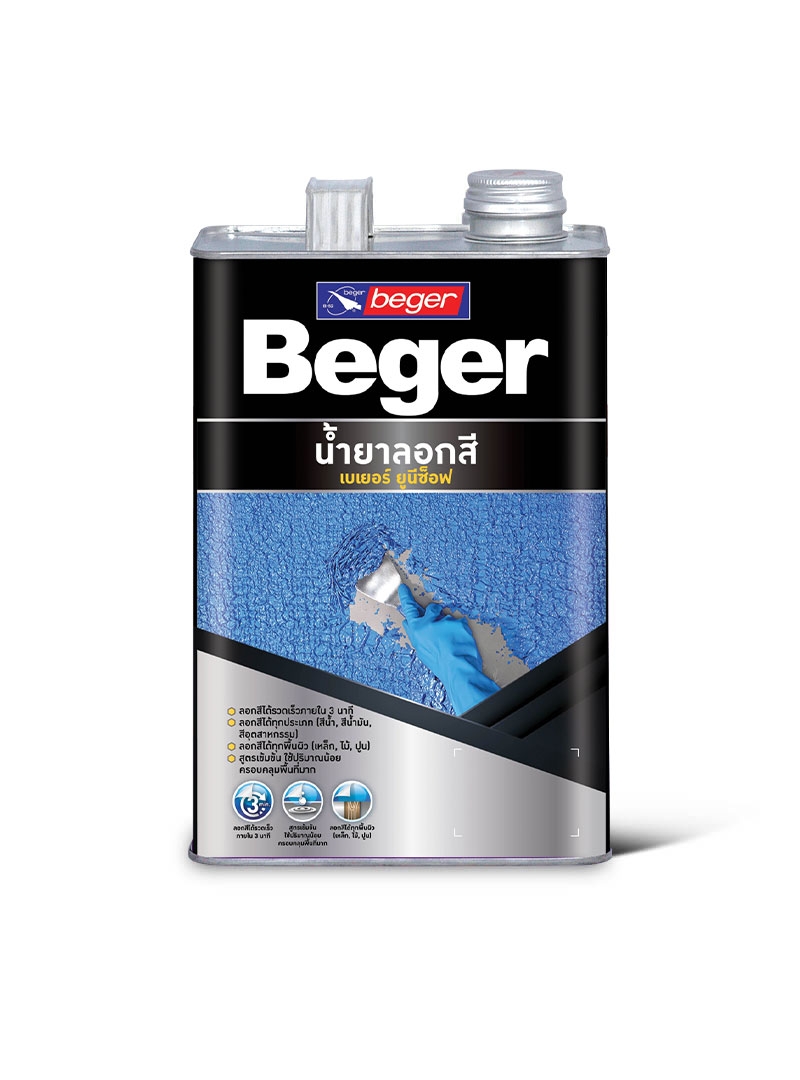
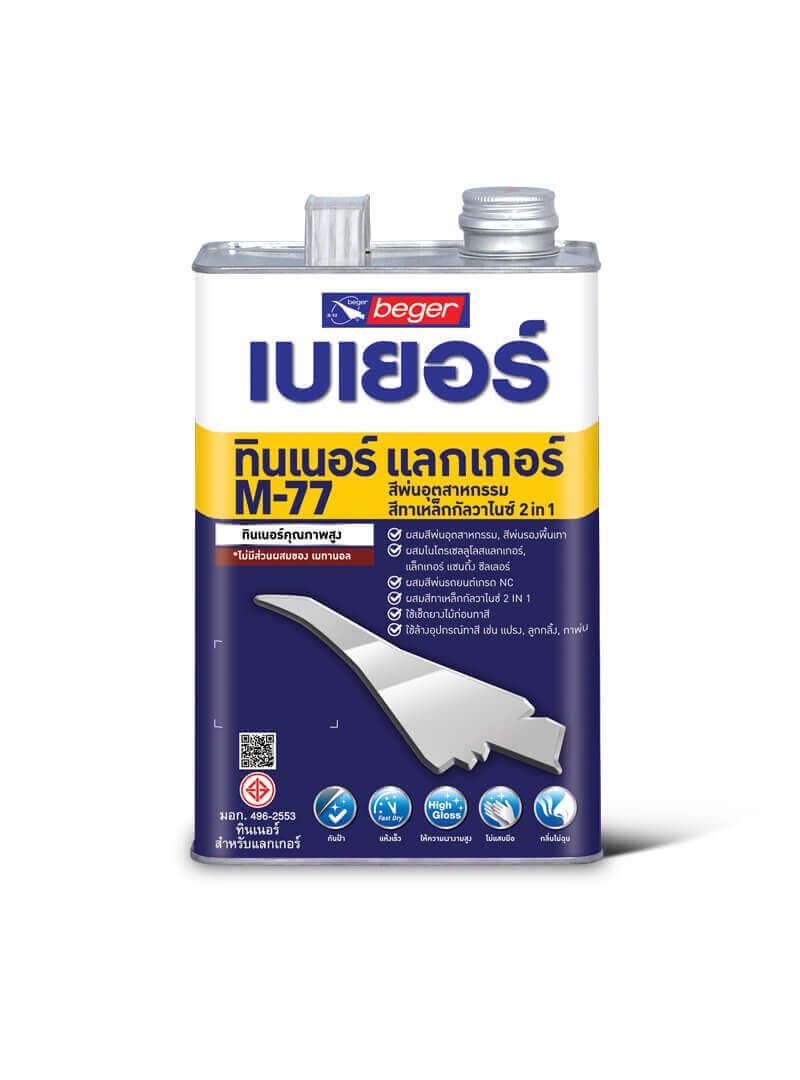
New steel: Often has a factory-applied rust-proof oil coating. Use a cloth soaked with Beger Thinner M-77 to wipe it off completely, then rinse clean. Old steel: If the original paint is deteriorated, scrape it off or use Beger Unisoft 9119 paint remover. If there is rust, sand it off as much as possible. If the original film is still good, just wash off dust and grease.
Surface preparation table according to the condition of galvanized steel in 3 types
| Surface condition | Observable characteristics | Surface Preparation |
|---|---|---|
| New Galvanized (Age < 6 months) | Shiny, smooth, and oil-coated |
1. Wipe off the oil with M-77 thinner |
| Used Galvanized | Dull silver color and rough surface |
1. Wash off dust and grease |
| White Rust (White Rust) | White powdery stains that cling in patches |
1. Scrub off the stains completely with a soft wire brush |
Galvanized Steel Surface Preparation Products
|
Beger Unisolve 9119 Paint Stripper |
|
Step 2: Wash Primer to open the glossy metal surface for paint adhesion
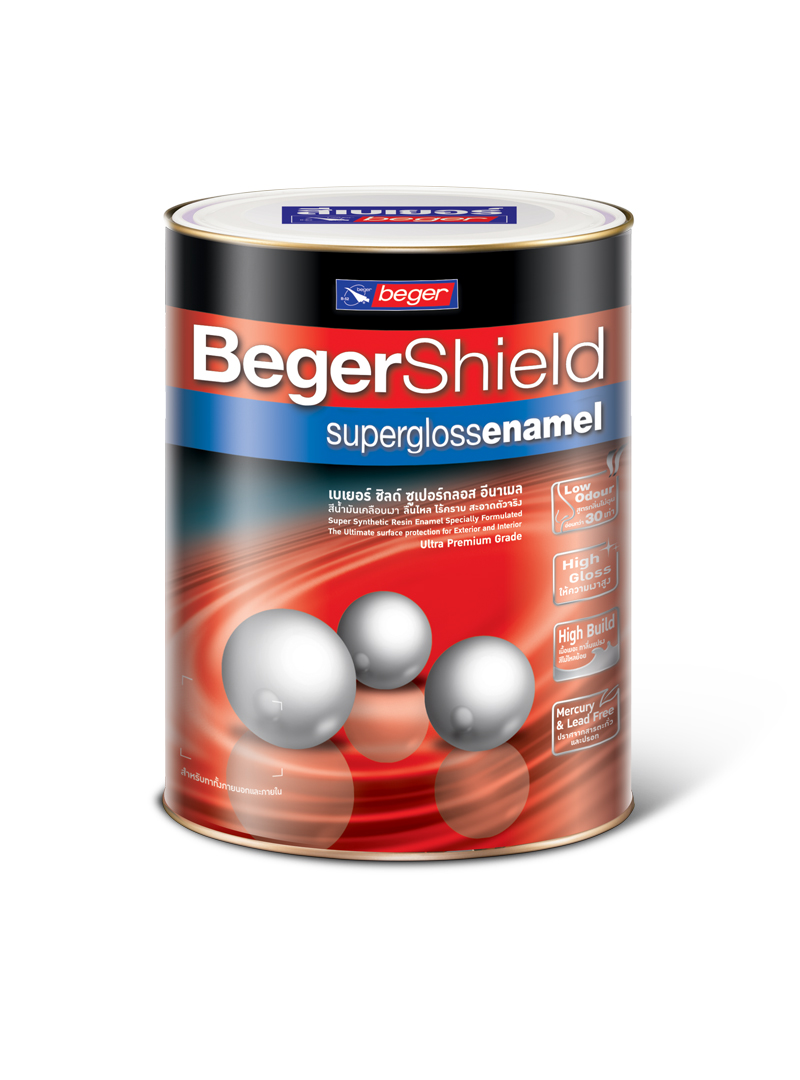
Wash Primer is a 2-component primer (Part A : B = 4 : 1) that “opens” the glossy metal surface to create texture Recommended BegerShield Supergloss Enamel Wash Primer #B-922 can be applied by brushing, spraying, or rolling. Allow to dry for 30–60 minutes before the next layer. Suitable for all types of glossy metals including galvanized, aluminum, and zinc.
Precautions: It is a 2-component (2K) paint system with a limited Pot Life. Mix only the amount that will be used in one application. Work in a well-ventilated area and wear a mask and gloves.
Wash Primer
|
Galvanized Steel Primer Wash Primer B-922 |
Step 3: Applying Rust-Resistant Primer
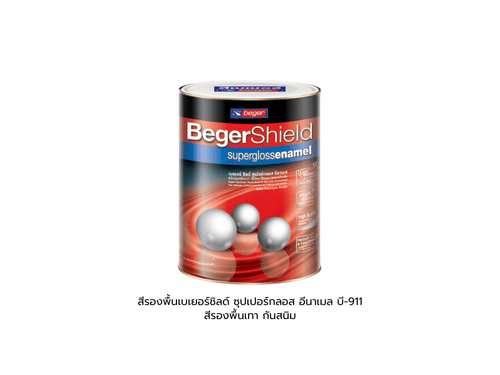
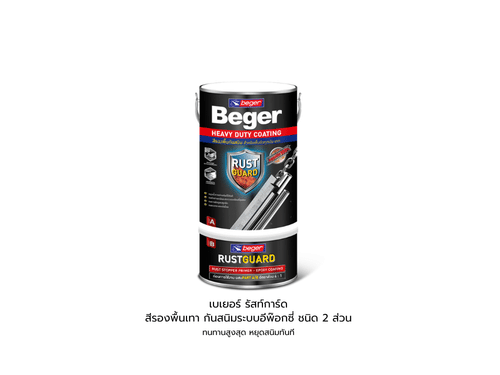
There are 3 main types of rust-resistant primers. Apply 1 coat and wait for 5–6 hours to dry.
Comparison of Rust-Resistant Primers
| Type of Primer | Shade | Suitable for | Level of Protection |
|---|---|---|---|
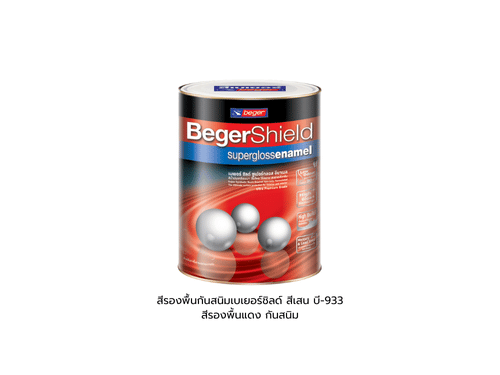
| Red Rust-Resistant (B-933) (Should wear a mask/gloves, not suitable for areas touched by children) |
Red / Orange | New / Good Condition Old Steel | ★★★ |
| Gray Rust-Resistant (B-911) (Zinc Phosphate) |
Gray | New / Good Condition Old Steel | ★★★ |
| Epoxy 2 Parts (Rust Guard) | According to shade |
Original rusty metal / High durability work |
★★★★★ |
Beger Anti-Rust Primer
|
|
|
|
Step 4: Apply oil-based gloss top coat in 2 coats
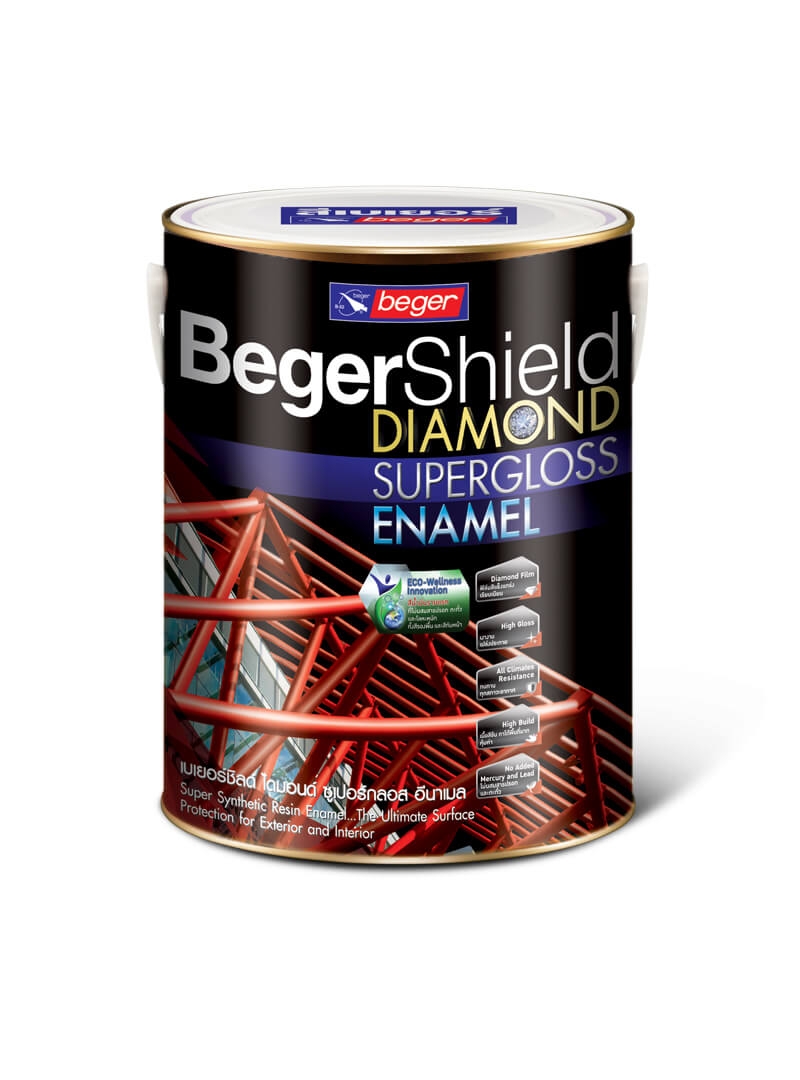
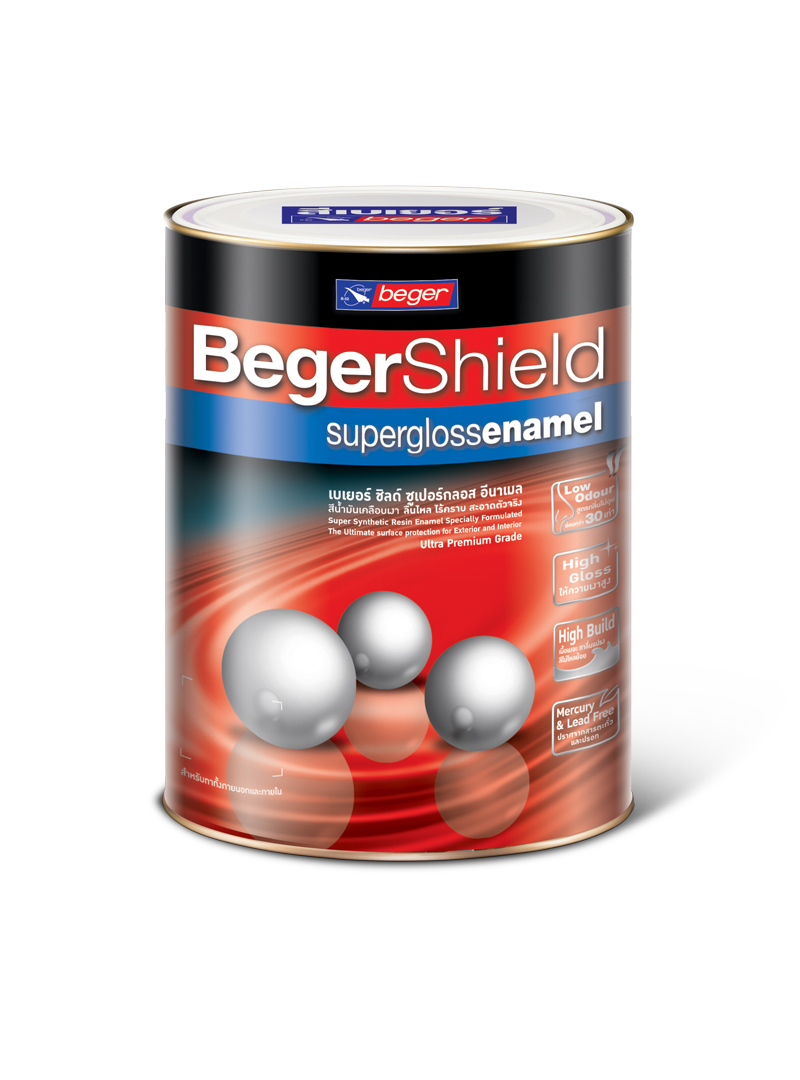
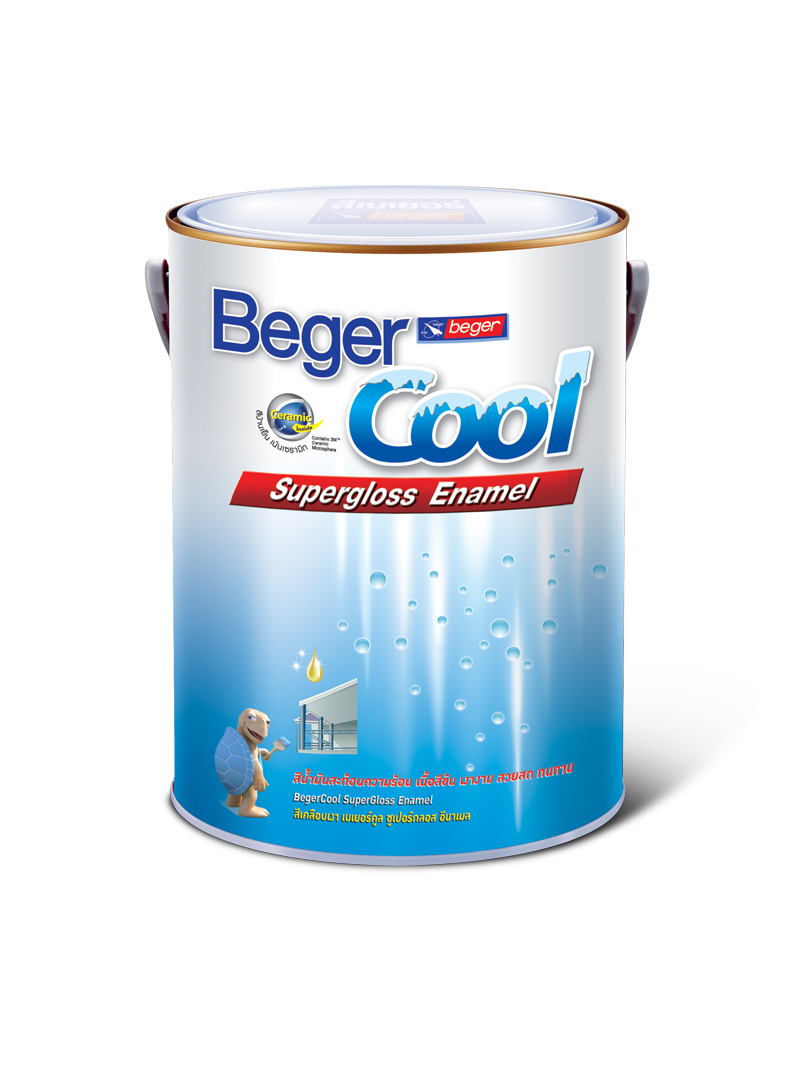
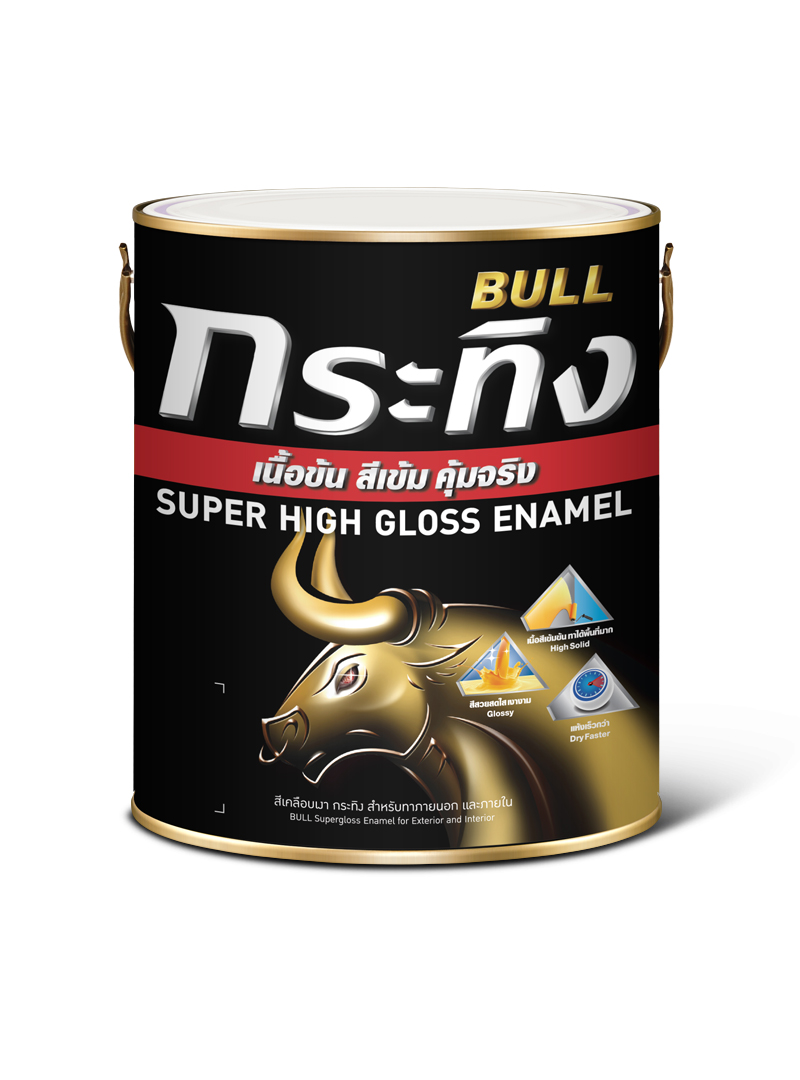
The final layer that protects against UV, moisture, and dust. Apply 2 coats, allowing to dry for 8–10 hours each time. Choose according to the work: BegerShield Diamond Supergloss Enamel for maximum gloss work, BegerShield Supergloss Enamel with low odor formula for interior work, BegerCool Supergloss Enamel for heat-reflective use in sun-exposed areas, Beger Duramel for maximum durability, or Bull Super High Gloss Enamel for cost-effective work.
| Step | Duration |
|---|---|
| Touch dry | 5–10 minutes |
| Recoat | 30 minutes |
| Full system application | Within one day |
Oil-based gloss top coat
|
BegerShield Diamond Supergloss Enamel(High gloss alkyd resin oil paint) |
BegerShield Supergloss Enamel(Special low odor gloss coating formula compared to regular paint) |
BegerCool Supergloss Enamel(Heat-reflective gloss coating with durable dark color) |
Glossy Coating, Krating(Thick, Dark Color) |
New Method for Painting Galvanized Steel
The new method for painting galvanized steel involves using a glossy coating that includes rust-inhibiting primer in one product, eliminating the need for a wash primer and separate primer altogether. This significantly reduces working time, as 2in1 Steel Paint of this type dries much faster than the old method of painting galvanized steel. This includes the glossy steel paint BegerShield GRIPTECH 2in1, which is a steel paint that does not require a primer.
Painting Galvanized Steel (New Method) Drying Time
| Steps | Duration |
|---|---|
| Touch Dry | 5–10 minutes |
| Recoat | 30 minutes |
| Complete the entire system | within one day |
Step 1 Prepare the Surface
Surface preparation for the new method is the same as the old method in every respect, which involves cleaning to remove all dust and dirt. For maximum adhesion, it is recommended to lightly sand the surface with fine-grit sandpaper.
Old Galvanized Steel Surface
- If the original surface is deteriorated and peeling, it is necessary to scrape off the old paint first, or use the Beger paint remover to strip off the old paint, and then clean the surface according to the system.
- If the original surface has rust, try to remove as much rust as possible, and then clean the surface.
- If the original surface is still intact or is metal that has never been painted before, clean off dust and grease, then lightly sand the surface before applying paint.
New galvanized steel surface
- New galvanized steel usually has a protective oil coating to preserve the quality of the steel. Before painting, it is necessary to remove that oil coating by wiping it off with a cloth dampened with Beger M-77 thinner.
Step 2: Apply the 2In1 Multi-Purpose Gloss Paint.
After preparing the surface, you can immediately apply BegerShield Griptech 2in1 multipurpose oil-based paint for metal without the need for a wash primer or rust-inhibiting primer. Apply 2 coats, allowing only 30 minutes of drying time between each coat, and you will achieve a beautiful shiny galvanized steel color. The advantage of Grip Tech is that it is an acrylic formula, making it more durable than regular oil-based paints that are alkyd. Not yellowing.
read User reviews If you need to spray small pieces, there is a model. GRIPTECH 2in1 SPRAY And the formula for a light fragrance. GRIPTECH 2in1 AQUA
5 Reasons Why Galvanized Steel Paint Peels
The number one reason is not washing off the factory coating oil. which is most commonly found in DIY projects and urgent tasks