
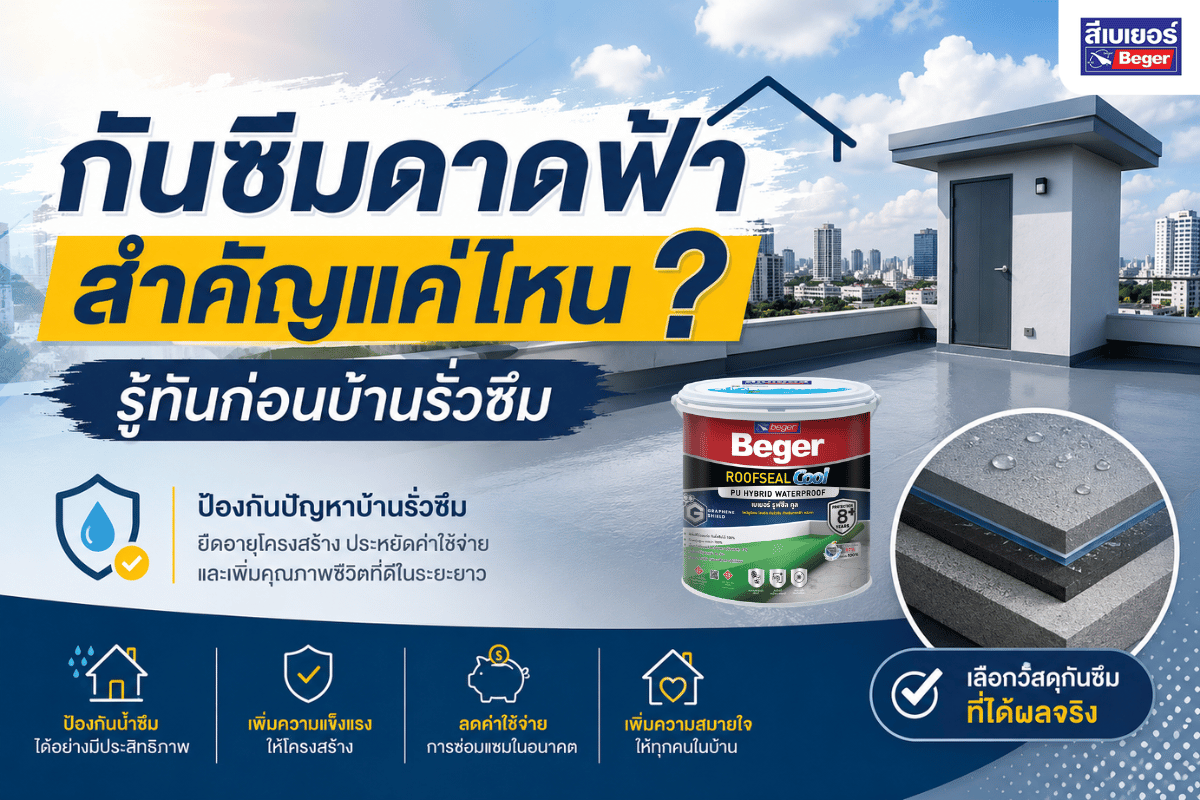
A leaking rooftop is not a minor issue, as the consequences go beyond just water stains; it leads to damage that gradually accumulates within the structure of the house, from swollen ceilings, peeling paint, mold, to rebar that may rust without being visible. Many people tend to address the symptoms, such as repairing the ceiling or repainting, without realizing that the real cause lies in the “waterproofing system on the rooftop” that has deteriorated. Therefore, waterproofing the rooftop is not just about preventing leaks, but it is about “protecting the entire structure of the house.” Choosing the right methods and materials from the start can help reduce long-term costs and make the home more secure.
How important is rooftop waterproofing?
The rooftop is a point that must endure:
- Sun
- Rain
- Expansion of the structure
If there is no good waterproofing system or inappropriate materials are used, problems will arise immediately, such as:
- Water seeping into the house
- Mold and musty odors
- Rapid deterioration of concrete structures
- Increasing repair costs
Good waterproofing is like preventing problems from the source.
Warning signs “The rooftop is having issues”
If you notice these symptoms, you should check immediately:
- Water stains on the ceiling
- Bubbling or peeling paint
- Cracks on the rooftop surface
- Moss or mold growth
- Water pooling for extended periods
All of these are signs that the “waterproofing system is beginning to fail.”
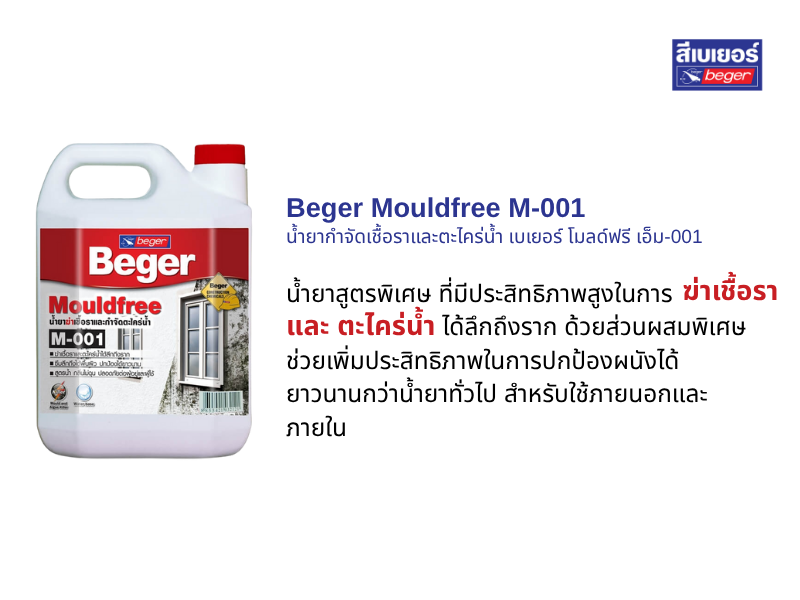
Beger Mouldfree M-001– A mold and moss remover, this special formula is highly effective in killing mold and moss down to the roots. With a special blend that enhances effectiveness, it can be used both indoors and outdoors.
- Eliminates mold and moss down to the roots
- Non-irritating scent, safe for users and residents.
- Can be left on without rinsing off
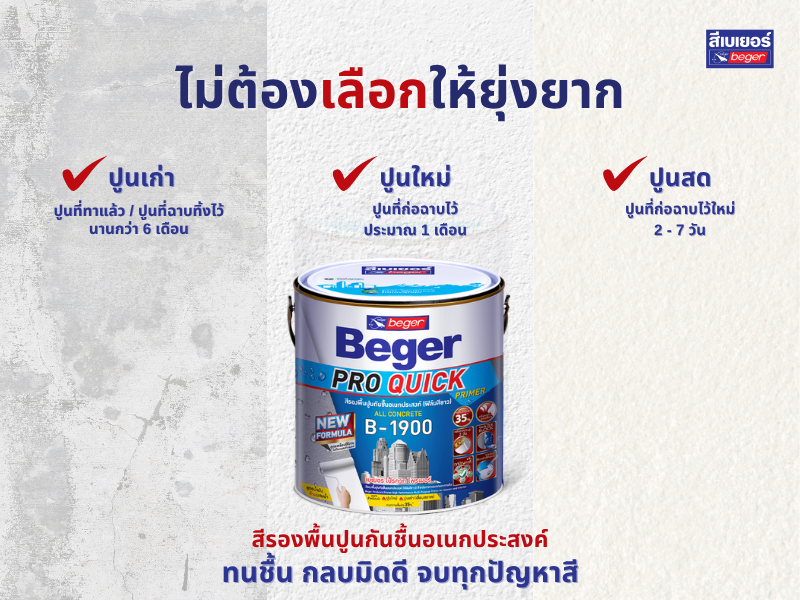
Beger Pro Quick Primer B-1900–Multipurpose cement primer, moisture resistant up to 40%New formula! Thick white paint covers surfaces better, ready to use without mixing with thinner! Beger B-1900 multipurpose cement primer, oil-based and effective
- Can be used on all types of cement surfaces, both new and old deteriorated cement, or fresh cement (walls that have just been plastered for 2 days)
- Moisture resistant up to 40%
- Can cover surfaces well, providing better concealment than regular cement primers
- Penetrates deeply, adheres excellently on fiber cement and all types of cement surfaces
- Prevents salt stains and alkalinity from cement, prevents mold and algae growth
- Addresses issues of peeling paint, blistering, and chalking, prevents discoloration and fading
Recommendation: In cases of repairing old surfaces that have been in use for a long time
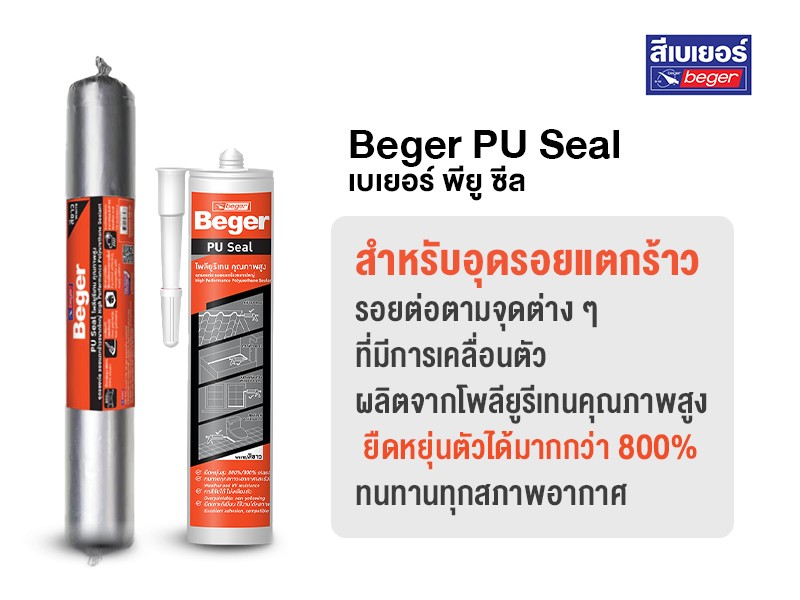
Beger PU Seal –High-quality polyurethane sealant with high flexibility, used for Filling cracks before painting To enhance the efficiency of the waterproofing system
- Adheres tightly to concrete, cement, wood, aluminum surfaces
- Highly flexible, does not crack with temperature changes
- Suitable for filling cracks on rooftops and joints between walls and floors
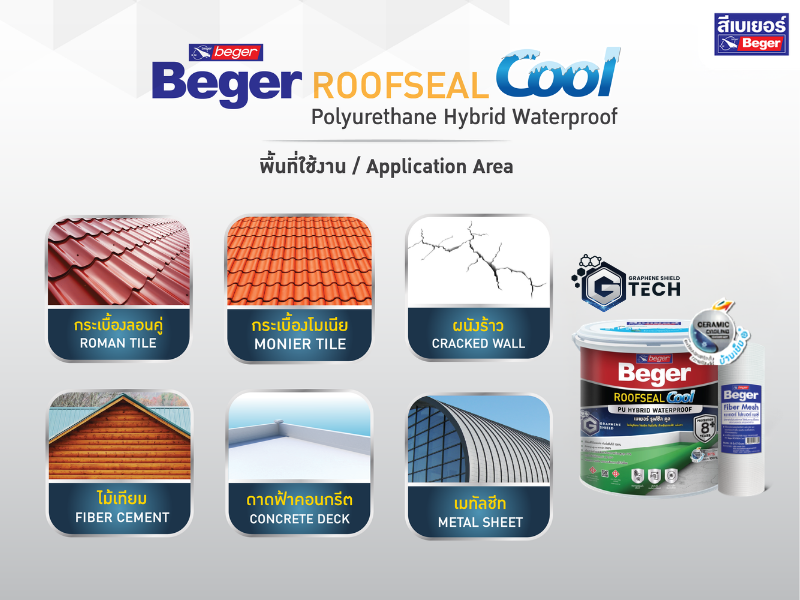
Beger ROOFSEAL Cool A hybrid polyurethane waterproofing paint that helps Prevent leaks 100%, withstands standing water for up to 220 days, Flexible up to 7 times Reflects heat up to 98.3%And can reduce the surface temperature inside the house by more than 8°C suitable for concrete decks, flat roofs, and exterior joints
Professional deck waterproofing steps
1. Clean the surface
- Remove dust, oil stains, grease, and debris completely
- The surface must be clean, completely dry, and free of loose debris
2. Disinfect mold and algae with Beger MoldFree M-001
- Use Beger MoldFree M-001 to apply over the area
- Let it dry without rinsing to inhibit mold in the long term
Recommended suitable for areas with mold and algae
3. Apply a moisture barrier primer with Beger Pro Quick Primer B-1900
- Use Beger Pro Quick Primer B-1900 for one coat
- helps enhance adhesion and protects against moisture from the original surface
4. Seal cracks with Beger PU SEAL
- Apply along cracks / joints
- Let it dry completely before proceeding to the next step
Recommended suitable for areas with cracks
5. Apply Beger RoofSeal Cool (apply 3 layers)
- First application: mix with clean water at a ratio of 3:1 to use as a primer (add Beger Fiber Mesh to reinforce adhesion at joints and cracks)
- Second application: Apply without mixing water after the first coat dries for 2-4 hours.
- Third coat: Apply the final layer without mixing water and leave it to dry for 12 hours before use.
Recommendation Apply each layer in alternating directions (crosswise) to ensure a smooth coating and complete coverage of all corners and joints.
Roof waterproofing is not just about solving water leakage problems but is about preventing damage that could escalate throughout the entire home system. Starting with a correct understanding, choosing materials suitable for the job site, and following all steps thoroughly will help ensure that roof leakage problems do not return in the long term. A good home is not just beautiful from the outside but must be “strong from the internal structure,” and a good waterproofing system is one of the essential aspects that should not be overlooked.
FAQ Frequently Asked Questions about Roof Leakage
Q1: Is roof waterproofing necessary?
A1: It is very necessary as it helps prevent water from leaking into the home’s structure, reducing long-term damage problems.
Q2: How long does roof waterproofing last?
A2: It depends on the materials and installation. Generally, it lasts about 5-10 years if high-quality materials are chosen and installed correctly.
Q3: If the roof has small cracks, should they be repaired before applying waterproofing?
A3: They must always be repaired first because if left unattended, water will seep through and cause the waterproofing system to deteriorate quickly.
Q4: Does waterproofing really help reduce heat?
A4: Some types of waterproofing materials have heat-reflective properties, which can actually help lower the temperature inside the home.
Q5: Can I apply waterproofing myself, or should I hire a professional?
A5: You can do it yourself if the area is not complicated, but for larger areas or structural issues, it is recommended to hire a professional.