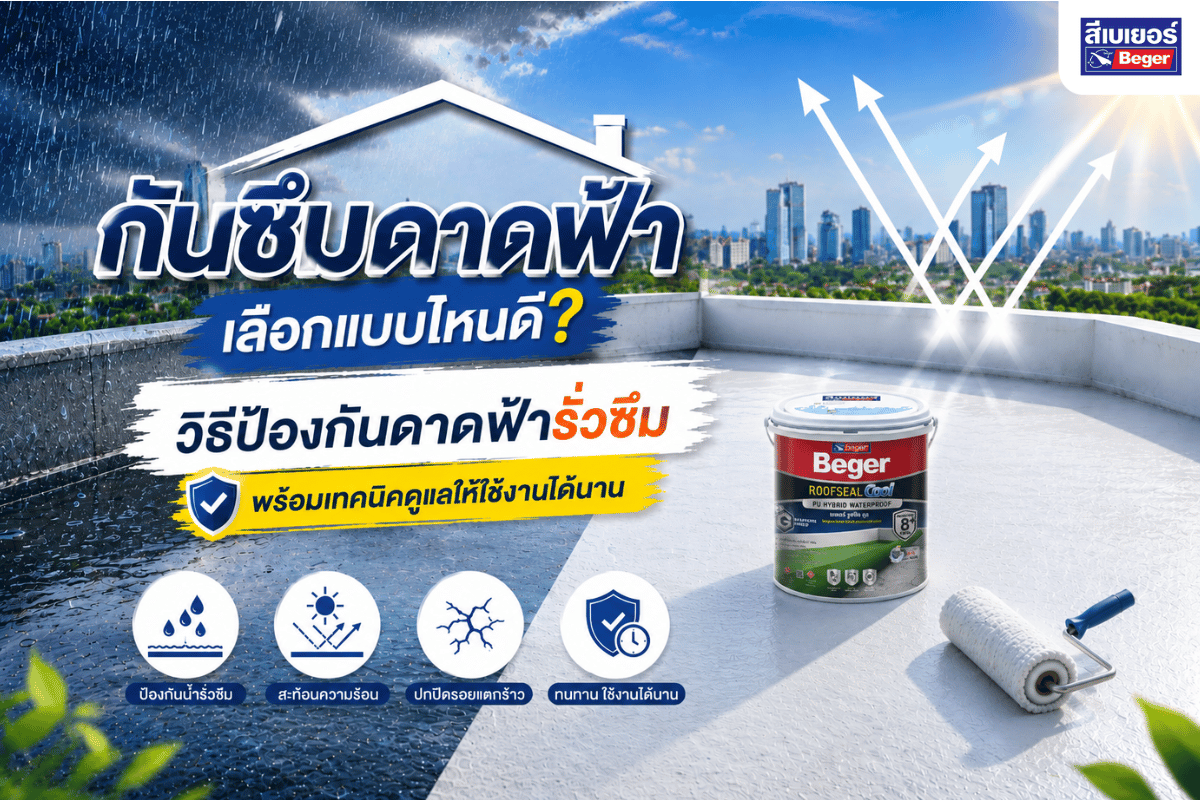
Many people often start looking for solutions only when symptoms appear, such as a leaking rooftop. However, in reality, preventing from the beginning by choosing the right roof waterproofing will help reduce repair costs for the structure in the long run. The rooftop is an area that faces sunlight, rain, humidity, and temperature changes throughout the year. Over time, the concrete surface may crack or deteriorate, allowing water to seep into the internal structure, causing issues such as water stains, mold, peeling paint, or even damage to the rebar within the building. This article will introduce the causes of rooftop leaks, how to choose the appropriate roof waterproofing for your needs, as well as maintenance techniques that help extend the lifespan of the waterproofing system effectively.
What causes rooftop leaks?
Before selecting a waterproofing solution, it is essential to understand the causes of the problem to choose the right solution for rooftop leaks. Common causes include:
- Cracks on the concrete surface due to expansion and contraction from temperature changes
- Deterioration of the existing waterproofing system from sunlight and UV rays
- Water accumulation on the rooftop for an extended period
- Improper installation of the waterproofing system
- Clogged drainage pipes, causing slow water drainage
If left unattended for too long, it may lead to structural damage and increase future repair costs.
How to choose roof waterproofing
How to select roof waterproofing suitable for homes and buildings
Currently, there are various types of waterproofing materials available in the market. Choosing the right product will enhance the effectiveness of leak prevention.
1. Choose a waterproofing product that is resistant to sunlight and UV rays
The rooftop is an area that receives direct sunlight all day, so it is advisable to select products that can withstand UV rays and harsh weather conditions well, including having heat-reflective properties to reduce heat accumulation on the surface.
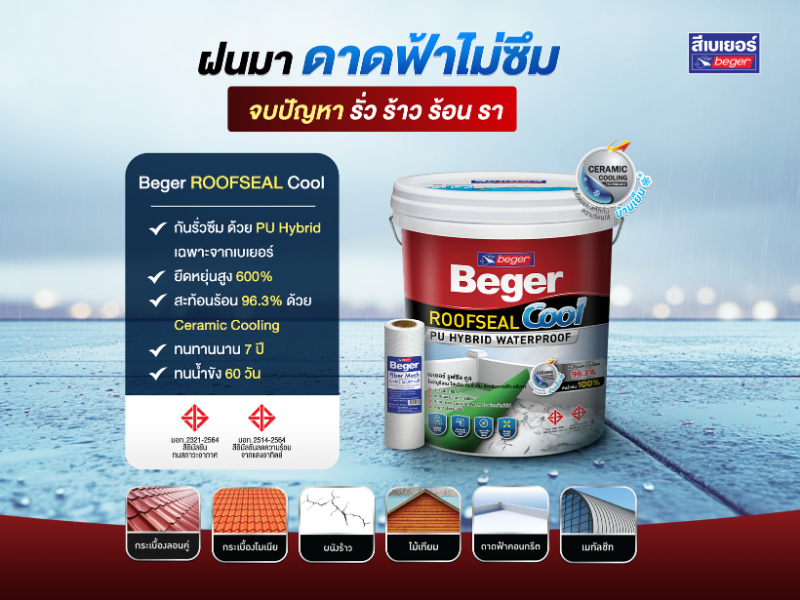
For example Beger ROOFSEAL Cool which effectively reflects heat and reduces surface temperature
2. Choose products with high flexibility
Concrete surfaces always expand and contract with weather conditions. If the waterproofing material is not flexible enough, it may lead to cracking. For rooftop areas, it is advisable to choose waterproofing materials with high elongation values, such as PU Hybrid or high-quality Polyurethane, which can better accommodate surface movement.
3. Choose waterproofing that can withstand standing water
Some rooftop areas may experience standing water after rainfall, so it is essential to select products that can withstand moisture and water pressure effectively to prevent long-term leakage.
4. Check adhesion performance to the surface
A good waterproofing product should adhere effectively to concrete surfaces, reducing the risk of peeling and extending the lifespan of the waterproofing system.
5. Choose products that help reduce heat inherently
In addition to preventing water leakage, selecting waterproofing with heat-reflective properties can help lower indoor temperatures, reduce the workload of air conditioning units, and contribute to energy savings.
How to maintain rooftop waterproofing to prevent leakage?
- How to care for rooftop waterproofing to ensure longevity?
Even if high-quality products are chosen, regular maintenance is another crucial factor that helps extend the lifespan of the waterproofing system. -
Inspect the rooftop at least twice a year
Observe for cracks, blisters, or areas where water begins to pool. If any abnormalities are found, repairs should be made immediately. -
Regularly clean drainage systems
Debris, dust, or accumulated dirt can cause water to drain slowly, leading to standing water on the rooftop. -
Avoid harsh chemicals
Certain types of cleaning agents may affect the waterproofing film, causing it to deteriorate faster than normal. -
Repair cracks immediately upon discovery
Do not wait for leaks to occur, as this may allow water to infiltrate the internal structure.
Choosing rooftop waterproofing Choosing the right solution is not just about addressing current water leakage issues, but also about investing in the long-term protection of building structures. Considerations should include flexibility, resistance to sunlight, UV radiation, surface adhesion, and the ability to withstand standing water. If your rooftop has started to crack, leak, or if you are looking for ways to prevent problems before the rainy season, opting for high-quality products like Beger ROOFSEAL Cool that offer both waterproofing and heat-reflective properties will help extend the lifespan of your rooftop, reduce the chances of leakage, and keep your home comfortable in the long run.
Frequently Asked Questions
Q1: What type of waterproofing is best for rooftops?
A1: A good rooftop waterproofing should have high flexibility, UV resistance, good adhesion to concrete surfaces, and accommodate surface expansion due to weather conditions. For rooftops exposed to intense sunlight and frequent rain, it is advisable to choose high-quality PU Hybrid or Polyurethane waterproofing.
Q2: How long does rooftop waterproofing last?
A2: Generally, high-quality rooftop waterproofing has a lifespan of about 5-10 years, depending on product quality, installation methods, and environmental conditions.
Q3: How to fix a leaking rooftop?
A3: You should check the leak location, repair cracks, clean the surface, and reapply the waterproofing system suitable for the surface condition to prevent water from penetrating the structure.
Q4: Can waterproofing be applied to rooftops during the rainy season?
A4: It is possible, but you should choose a time when there is no continuous rain, and the surface must be completely dry before installation to ensure the waterproofing material adheres effectively.
Q5: Is it necessary to apply waterproofing to concrete rooftops?
A5: Yes, it is necessary because concrete is naturally porous. Over time, it may develop cracks and absorb water, leading to leakage problems inside the building.
Q6: What should be done if an old building’s rooftop that has never been treated before starts to leak?
A6: It is recommended to prepare the surface first by 1. Cleaning with a high-pressure washer 2. If there are cracks, repair them with Beger PU Seal (make sure to widen the cracks to at least 8 – 10 millimeters) 3. If there is mold, apply Beger Mouldfree M-001 (leave it on for at least 3-4 hours without rinsing). If there is an existing waterproofing material that has deteriorated, scrape off as much of the old waterproofing film as possible before proceeding with the steps mentioned above and apply a primer coat with Beger Pro Quick Primer B-1900, allowing it to dry for at least 2-3 hours before applying Beger ROOFSEAL Cool.