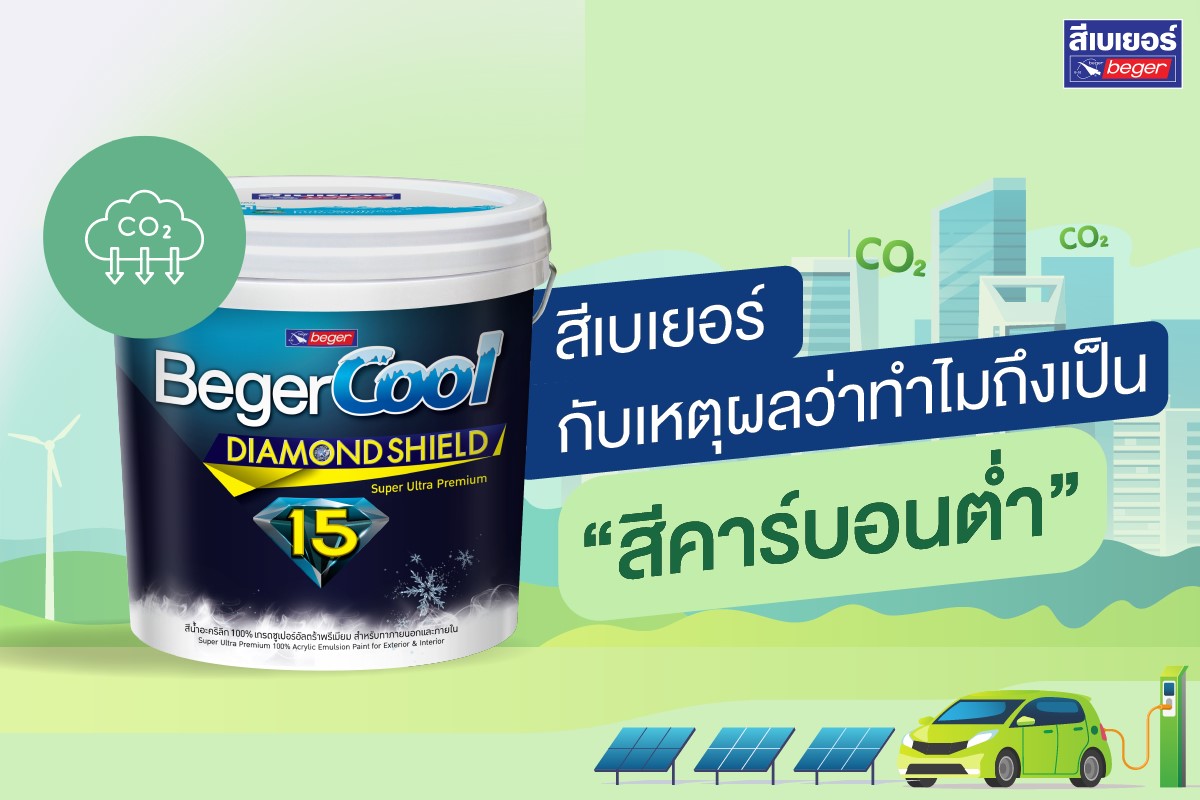
Many people may already know that BEGER is a leader in innovative and eco-friendly paint for a long time, especially withBEGER Coolwhich helps keep homes cool, save energy, and is environmentally friendly. However, another point that many may not know is that BEGER is alsolow carbon paintas well. This carbon is the culprit causing environmental issues such as global warming. BEGER, recognizing the importance of this problem, has developed BEGER paint into low carbon paint. Let’s see how we achieved this.
Carbon (Carbon dioxide: CO2) is one of the greenhouse gases that contributes to rising global temperatures, leading to changes and fluctuations in climate conditions, whether it be wildfires, floods, droughts, melting glaciers, and it also affects human health. This is an environmental problem that impacts us all, which is why we in every sector should work together to reduce carbon starting now, before the world is harmed beyond repair.
Why is BEGER paint low carbon?
Throughout the production process until the product reaches consumers, BEGER has innovated and developed products to be environmentally friendly, striving tokeep carbon emissions lowas much as possible, to the point where we can confidently say that BEGER paint is truly low carbon. Let’s dive a little deeper into how we achieved this!
Eco-friendly production processes from start to finish
Whether it’s before production, during production, or after production, BEGER paint contributes to reducing carbon dioxide emissions at every stage. We adhere to sustainable practices based onESG principles(Environmental, Social, and Governance), which helps enhance the capability to create high-quality products that are low carbon and environmentally friendly as follows:
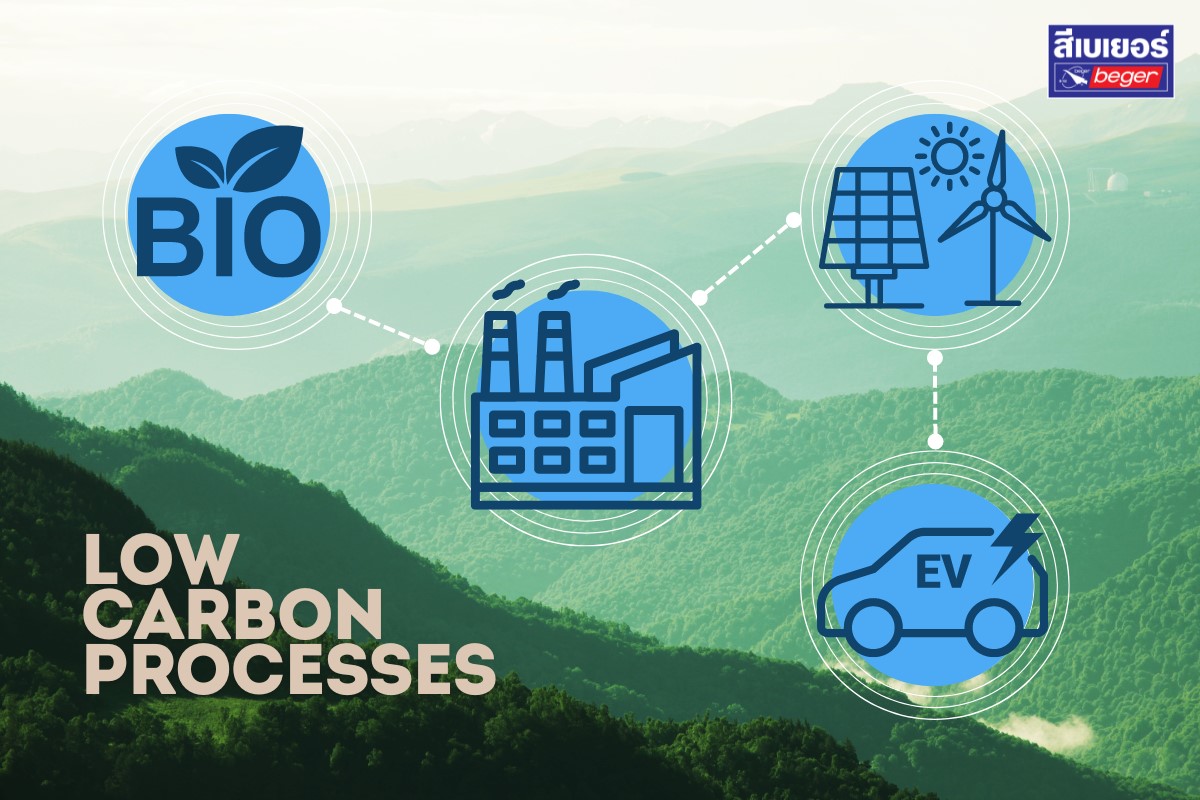
- Selecting alternative raw materials from natural low carbon sources, some of which are produced in-house, such as binders
- Entering the production process using the “AVID” vacuum system, the first in Asia, which is waste-free, recycles wastewater 100%, free from dust, smoke, and air pollution, significantly reducing carbon dioxide emissions while also reducing energy, time, and labor usage.
- An efficient wastewater treatment management system where wastewater from the production process is zero, reducing the use and discharge of chemical wastewater into rivers or seas, not impacting the aquatic ecosystem including marine animals.
- Reducing electricity usage and natural resources that contribute to greenhouse gas emissions, using clean energy such as solar power as a substitute.
- Efficient product storage through computer systems, transporting and distributing products with electric vehicles (EV) while calculating energy-saving routes using AI.
Looking ahead to post-use management that is still eco-friendly
Starting from the source, not just the end, but also being able to return to the starting point to create a sustainable and cost-effective circular flow.
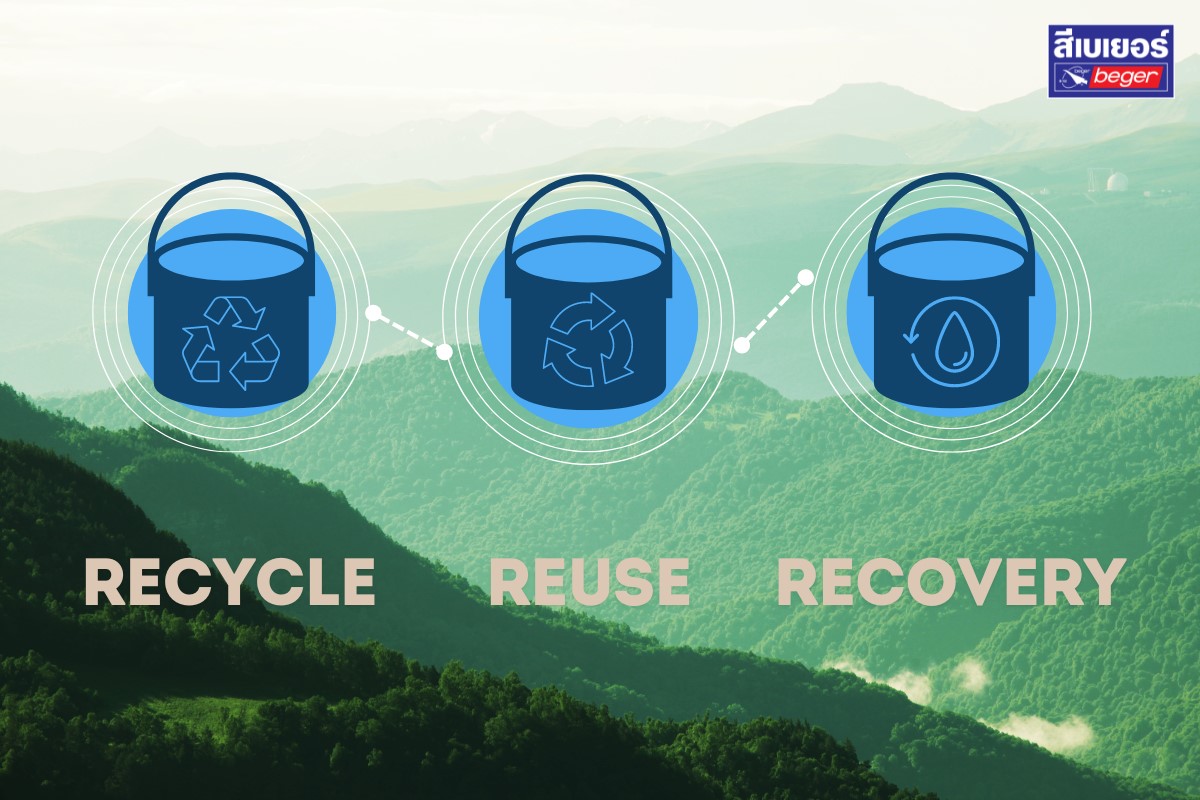
We care about managing, restoring, and helping to reduce waste or garbage after use by accepting the return of paint buckets for reuse, recycling them into new paint buckets or components in other materials, as well as cleaning the paint buckets and treating leftover paint (Recovery) to make the most beneficial use of water resources as possible.
Guaranteed low carbon paint with Certification from leading agencies
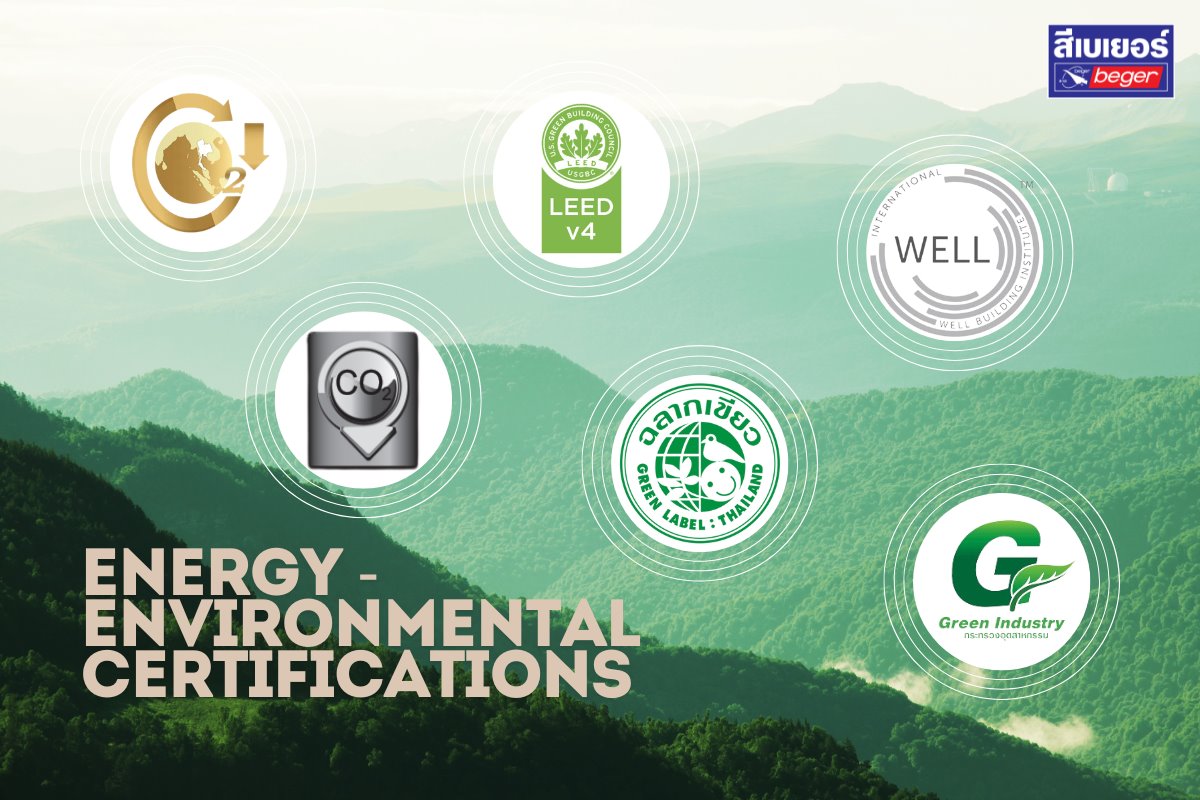
Anyone can claim to be low carbon paint, but awards and standards certified by leading agencies or institutions serve as proof of quality and guarantee that it is a genuine low carbon product. Currently, BEGER has received numerous labels regarding resources, the environment, and energy, such as
- the Global Warming Reduction Labelor the Gold Label
- the Carbon Reduction Label
- the Green Label
- the LEED Label
- the WELL Label
- the BIO-BASED Label
- the Green Industry Label
In addition to producing low carbon products, post-use management, and having certification standards, BEGER is also involved in forest conservation and cares for the environment through reforestation projects to increase the amount of oxygen in the atmosphere. The goal is to continuously develop in all dimensions towards the aim of achieving carbon neutrality or Net Zero in the future.