
Hot homes are not just about discomfort; they pose a direct danger to the body. From tests conducted in real homes by Sibelayer, it was found that homes with indoor temperatures reaching 38°C can cause the body to start experiencing heat stress within just 10 minutes. The solution is to transform the home into a “Cool Zone” or a heat-safe area that regulates the indoor temperature, allowing the body to dissipate heat effectively, thus reducing the risk of Heat Stress and Heat Stroke, even when the outside temperature is extremely high. Therefore, reducing heat in the home is not just about comfort but is a health measure.
|
|
|

How does heat affect the body and how quickly?
Heat affects the body rapidly, within just a few minutes, not several hours as many people believe. From tests conducted in real homes with volunteers by Sibelayer, in homes where the indoor temperature reached 38.0°C, it was found that after just 10 minutes in a hot home, the volunteers’ bodies showed clear changes as follows:
| Changes in the body | Volunteer proportions | Meaning |
|---|---|---|
| Heart rate increases | 71% | The heart works harder to dissipate heat |
| Blood pressure decreases | 57% | Risk of dizziness, lightheadedness, fainting |
| Skin temperature rises | 100% | The body starts to accumulate heat |
Reference: Real home tests by Sibelayer
These figures explain why some people feel fatigued, have headaches, or experience dizziness even without being exposed to direct sunlight. The reason is that the body is already fighting against the heat inside the home, especially for vulnerable groups such as the elderly, young children, and patients with heart and blood pressure issues, who adapt to heat more slowly than the general population.
How hot is Thailand right now?
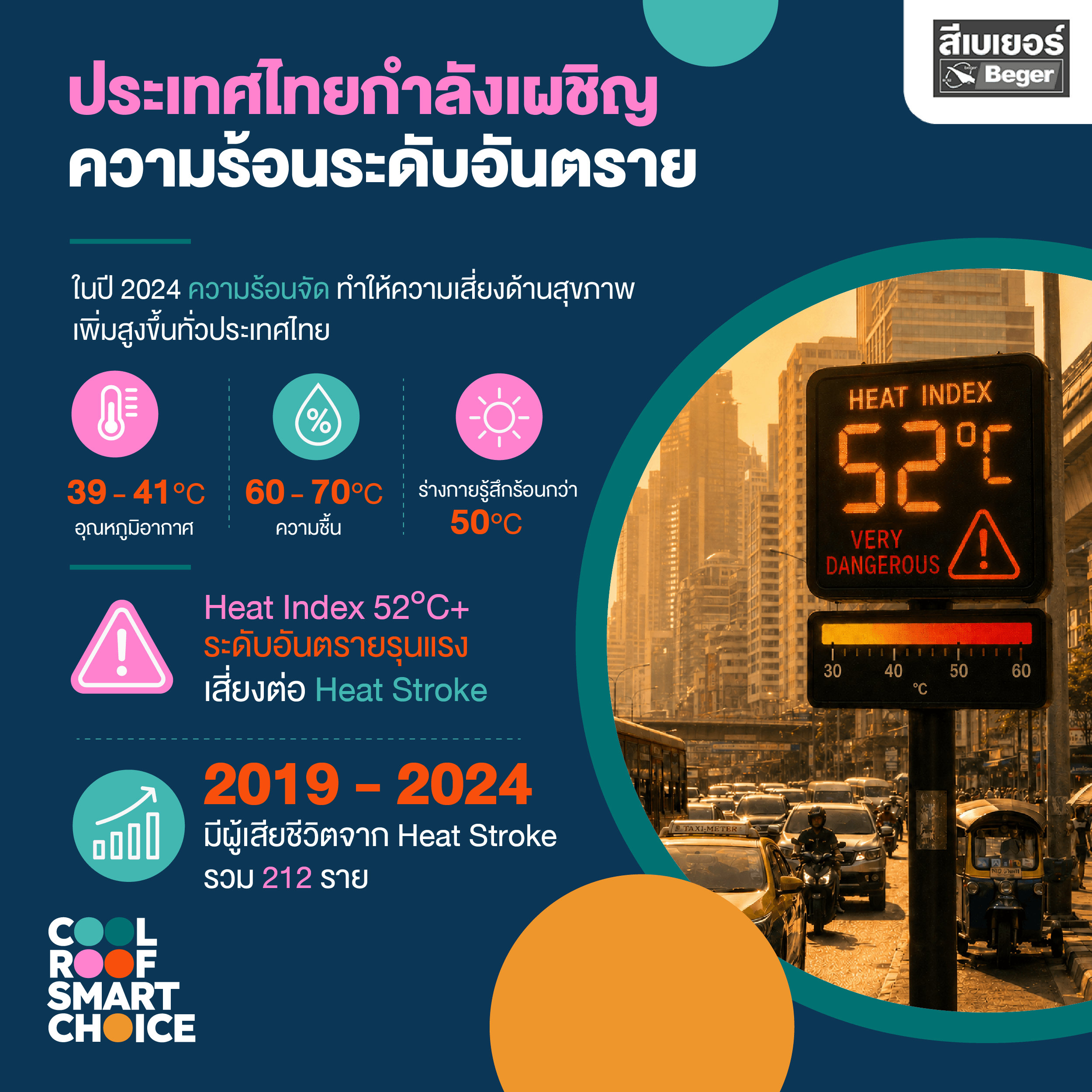
Thailand is currently facing dangerously high temperatures. In 2024, extreme heat is increasing health risks nationwide. Important figures to know are as follows:
- Air temperature 39–41°C combined with humidity 60–70% makes the body feel hotter than 50°C.
- Heat Index 52°C+ is classified as “Very Dangerous,” which poses a risk of Heat Stroke Directly
- Between 2019 and 2024, there were a total of 212 deaths from Heat Stroke [3] (the numbers and the actual report link need to be verified)
The Heat Index, or “heat index,” is a value that combines both air temperature and humidity to indicate how “hot” the human body actually feels. The higher the humidity, the harder it is for sweat to evaporate, making it more difficult for the body to dissipate heat. This is why a temperature of 39°C on a thermometer can feel like 52°C. You can check the daily heat index values from the Meteorological Department
So what is the solution? Get to know Cool Zone
Cool Zone is an area with controlled temperature and heat transfer, allowing the body to dissipate heat normally, thus avoiding Heat Stress or Heat Stroke even when external weather conditions are severe. This concept is part of heat prevention measures that many countries have started to adopt, alongside the Heat Health Warning System.
An important misconception is that extreme heat is not just a problem for “buildings” but a problem for “people.” When the body cannot dissipate heat quickly enough, Heat Stress begins to occur, and if it worsens, it can lead to Heat Stroke, which is a life-threatening emergency. If you want to understand the physiological mechanisms of these two conditions in detail, you can read more in the article What are Heat Stress and Heat Stroke
Why does Cool Zone start at home?
Because most people spend the most time at home, and many believe that “being indoors is safer,” even though in reality, poorly designed homes can accumulate heat to the point of being hotter than the outside. Especially in large cities facing the Urban Heat Island phenomenon, homes are at greater risk of becoming heat traps. Read more at The Urban Heat Island Phenomenon in Bangkok
How to create a Cool Zone at home step by step
Transforming a hot home into a Cool Zone starts with managing the “entrance of heat,” primarily the roof, walls, and ventilation, without the need to completely renovate the house.
1. Manage the roof first, as it receives the most heat
The roof is the surface that is exposed to direct sunlight for the longest time each day, making it the main channel for heat to enter the house. Using heat-resistant roofing or applying heat-reflective paint on the roof (Cool Roof) provides the most noticeable results.
2. Apply heat-reflective paint (Cool Paint) on the walls and roof
Heat-reflective paint helps to reflect sunlight’s rays away instead of absorbing them into the building. In tests of Beger paint, homes using BegerCool had significantly lower internal temperatures than those using regular paint(see the comparison table below)
3. Increase ventilation and shade
- Open air channels to allow hot air that rises to escape
- Use insulation under the roof to reduce heat radiation downwards
- Plant trees or create shade on areas exposed to intense sunlight (west and south sides)
4. Designate a “safe room” in the house
Choose the coolest room to be the main Cool Zone of the house for at-risk groups to rest during the hottest part of the day (generally between 12:00 PM and 3:00 PM).
How do a typical colored house and a Cool Roof house differ?
The main difference lies in the “indoor temperature of the house,” which directly affects bodily safety and air conditioning costs. From tests conducted in real homes by Beger, the summary is as follows:
| Topic | Typical Colored House | BegerCool House (Cool Roof) |
|---|---|---|
| Indoor Air Temperature | 38.0°C | 34.4°C |
| Effects on the Body | Risk of Heat Stress Quickly | Better Heat Dissipation |
| Cool Zone Status | Low | Higher |
| Air Conditioning Load | High (Increased Electricity Costs) | Reduced |
Reference: Tests in real homes by Beger
The temperature difference of about 3.6°C may not seem significant, but physiologically, this is the difference between “the body can still dissipate heat” and “the body starts to accumulate heat.” It also helps reduce the load on air conditioning, improving the home’s health and increasing its ability to cope with heat. Interested in ways to reduce heat with Cool Roof products? Learn more from other articles in the campaign. Cool Roof, Smart Choice
|
|
|


FAQ Frequently Asked Questions about Hot Houses
Q1: How does a Cool Zone differ from a regular air-conditioned room?
A1: An air-conditioned room reduces temperature by using energy, but a Cool Zone is designed to minimize heat absorption from the start. When less heat enters, the air conditioning works less and remains safe even on days when the power is out.
Q2: Is it really dangerous to be in a hot house even if you are not in direct sunlight?
A2: Yes, according to tests by Beger paint, in a house that reaches 38°C, after just 10 minutes, 100% of volunteers had elevated skin temperatures, and 71% showed increased heart rates, indicating that the body begins to experience heat stress even indoors.
Q3: What does a Heat Index of 52°C mean?
A3: It means that when the air temperature is combined with humidity, the body feels as hot as 52°C, which is classified as “extreme danger” and poses a risk of Heat Stroke, even if the thermometer reads lower than that.
Q4: Is it possible to reduce heat in the house without using air conditioning?
A4: Yes, starting with the roof and heat-reflective paint, ventilation, insulation, and shading can help reduce indoor temperatures without solely relying on air conditioning.
Q5: Who is the most at-risk group that should have a Cool Zone?
A5: The elderly, young children, individuals with heart disease and high blood pressure, as well as those who work outdoors, because these groups adapt to and dissipate heat more slowly than the general population.
Conclusion
A Cool Zone is a concept that transforms a house from a “heat trap” into a “heat-safe area” and serves as the first line of defense against Heat Stress and Heat Stroke in an era when Thailand faces dangerous Heat Index levels. When a hot house can harm the body within 10 minutes, reducing heat through roof management, heat-reflective paint, and ventilation is a worthwhile health investment. Start creating a Heat Safe Zone for your home today, and read more about the effects of heat on the body at Heat Stroke and Heat Stress in Thailand.