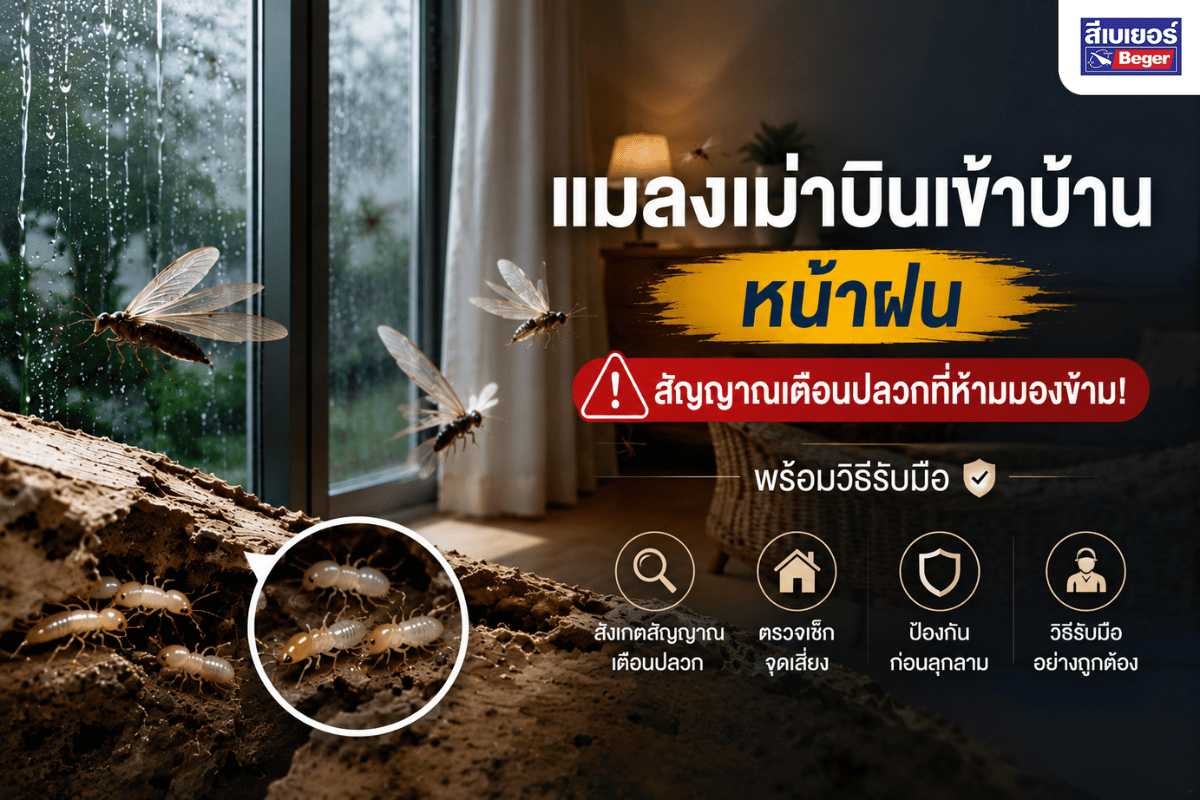
On a night when the rain has just stopped, you turn on the lights in your house and suddenly a swarm of flying termites enters, numbering in the hundreds, circling around the light bulb, falling to the ground, leaving wings scattered everywhere. By morning, you find piles of clear wings in the corners of the room. Many people think of them as just seasonal pests and sweep them away, but the truth is that the influx of flying termites into your home in large numbers on the same night is an early warning sign that there is a “termite nest” nearby. This article will help you understand what flying termites indicate, how to distinguish between termites and ants, along with an immediate action plan for that night, and a checklist to investigate whether your home already has a hidden termite nest.
What does the influx of flying termites into your home signify?
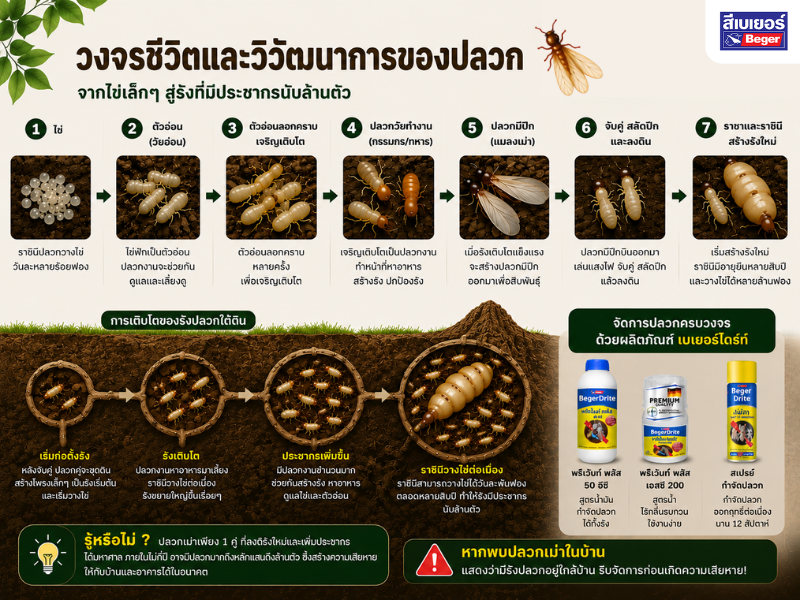
Flying termites are not a different kind of insect from termites; they are reproductive termites that are fully grown and winged. When a termite nest grows large enough to have a sufficient population, it will produce winged termites to fly off and establish a new colony. They will emerge to play in the light to mate, shed their wings, and burrow into the ground to become the king and queen of a new nest.
This means that if you see flying termites playing around the lights in your home, it is almost guaranteed that there is a termite nest located nearby. What is even more concerning is that just one successful pair that burrows into the ground can become a termite colony with a queen that can live for several decades and produce millions of offspring.
What flying termites are telling you:
- There is a mature termite nest around your home (the nest must be several years old to produce flying termites).
- They are entering a phase where termites will expand their new territory.
- If the house has no protection, a successful pair may establish a new nest in or under your home within 30-60 days.
Termites vs. winged ants: distinguish them in 10 seconds
Before panicking, check to ensure that the creatures flying into your home are indeed flying termites and not just winged ants that look similar, as the methods of dealing with them differ. Use these 3 visual cues to differentiate them.
| Observation points | Flying termites (winged termites) | Winged ants |
|---|---|---|
| Body | Straight, thick, no neck (no constricted waist) | Clearly has a constricted waist |
| Antennae | Straight, resembling beads in a row | Bent at an elbow |
| Wings | 4 wings of equal length fall off easily | the front wings are longer than the hind wings |
| what is left behind | a pile of clear wings scattered on the floor under the light bulb | usually does not leave wings piled together |
the easiest distinguishing point is the waist and antennae termite swarmers have a thick body, straight waist, and straight antennae, while winged ants have a slender waist and elbowed antennae. If you find a pile of clear wings scattered on the floor under the light bulb the next morning, it is almost certainly a termite swarm.
why do termites swarm in the rainy season and the trends for 2026 that you need to know
reproductive termites wait for the perfect weather conditions to fly out of their nest, which is when the humidity is high and the temperature is pleasantly warm, coinciding with the beginning of the rainy season. The rain softens the soil, making it suitable for burrowing down to establish a nest, so they tend to fly mainly on nights after it rains.
factors that trigger termite swarming:
- high humidity and warm temperatures after rainfall
- light, especially cool white light, which attracts insects more than yellow-toned light
- rotting wood, moist soil, or piles of debris around the house that serve as food sources and nesting sites
what needs special attention is the trend in recent years. Many pest control experts have observed that the termite season tends to start earlier and last longer than before which is linked to rising temperatures and erratic rainfall patterns, making homes in urban areas like Bangkok and the central region more likely to encounter termites more frequently and for longer periods. Therefore, early prevention planning is more important than in previous years (this trend information is based on observations from industry service providers, not official statistics; actual conditions around the house should be checked).
24-hour response plan when termites invade your home tonight
if termites are flying all over the house tonight, the immediate goal is not to kill every single one but to “reduce attraction” and “trap them from landing to establish a nest.” Follow these steps:
what to do immediately
- turn off the white lights that attract termites and only turn on yellow/warm white lights in necessary areas
- turn on strong fans in the room; the wind will prevent termites from landing and cause them to fall
- place a basin or tray of water mixed with dish soap under the light bulb; termites will fall in and will not be able to fly back up
- attach clear plastic bags or tape around outdoor light bulbs to trap them before they fly into the house
- Close the doors and windows where light seeps in, and seal any cracks or gaps that termites can enter through.
- The next morning, sweep up all the wings and remains, and check for wings coming out from the wall crevices or wooden frames inside the house.
Things to avoid
- Do not spray insect repellent for mosquitoes or general insects all over the room, as it does not break the termite cycle and unnecessarily poisons the air in the house.
- Do not turn on lights to lure termites outside and think it’s over, because the pair that has landed can still establish a new nest.
- Do not overlook it just because you think a concrete house or steel structure has no termites. Termites can infest if there is wood, frames, furniture, or moisture.
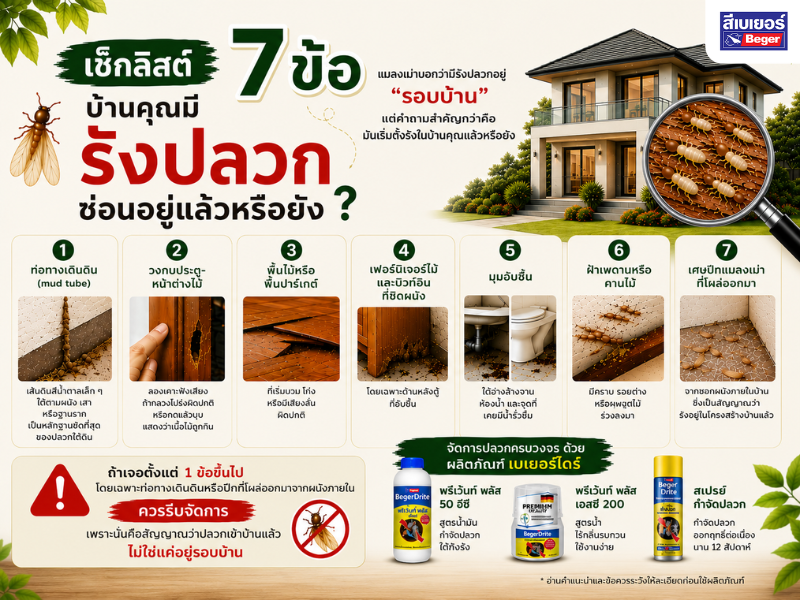
Check the 7-point checklist: Does your house already have a hidden termite nest?
Termites indicate that there is a nest “around the house,” but the more important question is whether they have started nesting in your house yet. Try to inspect these 7 points.
- Mud tubes: Small brown dirt lines climbing up walls, posts, or foundations are the clearest evidence of subterranean termites.
- Wooden door and window frames: Tap to listen for sound; if it sounds hollow or collapses when pressed, it indicates that the wood has been eaten.
- Wood or parquet floors that are starting to swell, warp, or make unusual creaking sounds.
- Wooden furniture and built-ins that are close to the wall, especially the back of cabinets that are damp.
- Damp corners, under sinks, bathrooms, and areas that have previously had water leaks.
- Ceilings or wooden beams with stains, discoloration, or wood dust falling down.
- Pieces of termite wings that emerge from the wall crevices inside the house, which is a sign that a nest is already in the house’s structure.
If you find any 1 point or more especially the mud tubes or wings emerging from the walls inside, you should take action quickly, as this is a sign that termites have entered the house, not just around it.
Long-term prevention: Break the cycle before termites become a nest.
Methods to trap termites in one night can reduce annoyance, but do not address the root cause, as the termite nest producing the termites is still there, and the pair that has landed can establish a new nest. Effective prevention is to make the soil underneath and around the house a barrier that termites cannot pass through.
The key is to use a termite prevention solution that is Non-Repellent Termites will walk through the treated area unknowingly, carrying the active ingredient back with them and passing it on to others in the nest in a domino effect until the entire nest dies, unlike repellent solutions that termites will avoid and seek other entry points instead.
Recommended prevention measures:
- Treat or apply termite prevention liquid into the ground beneath and around the house, especially for newly built houses, it should be done before pouring concrete.
- Collect wood piles, wood scraps, and decayed wood around the house as they serve as both food and hiding places for termites.
- Do not place wooden furniture too close to walls or floors to allow for inspection and moisture ventilation.
- Inspect risk points around the house at least once a year, especially before the rainy season.
For homeowners who want to manage it themselves, BEGER has a range of BegerDrite products that cover both soil treatment formulas and wood application formulas, using a non-repellent principle and providing continuous action to the nest, helping to prevent and eliminate termites for a long time. If you want to delve deeper into methods of elimination and selecting the right formula for your home,
we recommend the product
|
BegerDrite Prevent Plus 50 EC |
BegerDrite Prevent Plus SC 200 |
BegerDrite Spray |



FAQ Frequently Asked Questions about flying termites entering the house
Q1: Do flying termites bite or pose a danger to humans?
A1: Flying termites do not bite and do not directly harm humans. The real danger is that they are reproductive termites that may establish a nest and later consume the wooden structure of the house.
Q2: Does seeing flying termites mean there are definitely termites in the house?
A2: Seeing flying termites likely indicates that there is a termite nest nearby, but it does not always mean that termites have entered the house. Use the 7-point checklist in the inspection article to confirm.
Q3: How long do flying termites live? If left alone, will they die on their own?
A3: Flying termites that are attracted to light usually die within 1-2 days if they do not find a mate and land successfully. However, the problem is that a few pairs that do land successfully can establish a new nest, so they should not be ignored.
Q4: If living in a condo or high-rise building, should I be concerned about flying termites?
A4: There is a chance of encountering them because moths are attracted to light and can enter through vents, pipes, or cracks. Even though the main termite nest is located in the ground, wooden furniture and door frames in the room are still risk points that should be regularly inspected.
summary
Termites flying into your home at the start of the rainy season are not just a seasonal nuisance, but a primary warning sign that there is a termite nest nearby, and your home is at risk. There are 3 important things to remember.
- Seeing termite swarms = There is a termite nest around the house, so separate them from winged ants before taking action.
- On the night you encounter them, reduce attraction and trap them, while checking 7 risk points to see if termites have entered the house yet.
- The long-term solution is to prevent on the ground with a non-repellent agent before termites turn into a nest in the house.
Don’t wait for your house to be eaten away before fixing it, because the cost of repairing wooden structures is often many times more expensive than prevention. If you start seeing it tonight, Termites flying into the house Consider this a warning to take action and plan for termite prevention starting today.