
Water drips in the middle of the room, but the actual leak may be several meters away. This is why many homes repeatedly repair the same spot without success; they are sealing the wrong area. The problem of a leaking house is not difficult to fix because of materials, but it is challenging because “the source cannot be found.” This article will guide you systematically in locating leaks, from understanding how water travels, knowing where homes typically leak, to methods for testing leaks yourself and assessing which areas you can repair on your own and which require a professional, so you can fix the right spot the first time without wasting money.
A leaking house cannot be left unattended because water never leaks from the same spot.
The most obvious signs of a leak are water stains on the ceiling or dripping water, but what is not visible is the path the water takes to reach that point. Water seeps in through small cracks in the roof or walls, then flows along beams, pipes, and rebar, before dripping down to the lowest position it can reach. Therefore, the point where water drips is often not the actual leak. This is a trap that causes people to make mistakes when repairing. If the leak is left unattended without finding the source, the damage will gradually accumulate in ways that are not visible:
- The ceiling will swell, stain, and eventually decay.
- Wall paint will peel and bubble.
- Mold, mildew, and musty odors will accumulate in the house.
- Reinforcing steel in concrete will rust, weakening the structure without anyone realizing it.
The longer it is left, the more widespread the water damage becomes, increasing the scope of repairs and costs. Finding the source as quickly as possible is therefore the most cost-effective method in the long run.
What can cause a leak in a house? 5 overlooked reasons.
Almost every leak in a house can be traced back to 5 main causes. Knowing which category your problem falls into will help you locate the leak more accurately.
1. Aging waterproofing materials
Waterproof paint, membranes, or sealants all have a lifespan. When they become brittle or lose flexibility, they crack and allow water to pass through. Houses that have not had waterproofing redone for more than 5–7 years are often at particularly high risk.
2. Joints and cracks
Points where two types of materials meet, such as the junction of the roof and wall, door and window frames, and the junction of floors and walls, are the weak spots where water is most likely to seep in, including cracks in the walls that provide direct access for water.
3. Non-standard installation
Roof screw holes that are not sealed properly, roofing sheets that overlap too little, or sealants that are not applied thoroughly allow water to find its way in even when the house is new, without waiting for materials to deteriorate.
4. Structural movement and settling
Concrete expands and contracts with temperature, combined with soil settling, leading to new cracks over time, even if the house was built well.
5. Leaking pipes and bathrooms
Not all leaks come from rain. Sometimes the source is a broken water pipe in the wall or water seeping from the bathroom floor above, which will leak continuously regardless of whether it rains. This can be easily identified as it is often wet even on dry days.
7 common leak points in a house (check one by one)
Use this list to systematically check your house point by point, starting from the locations where problems are most frequently found, so you know where to begin looking for the source.
| Inspection Points | Observable Symptoms | Common Causes |
|---|---|---|
| Roof and Roof Flashing | Water stains under the ceiling after rain | Cracked tiles, deteriorated roof flashing |
| Rooftop / Concrete Roof | Water seeping from the top ceiling | Deteriorated waterproofing system, water accumulation not draining |
| Exterior Walls | Moisture stains inside matching the exterior wall | Cracks, deteriorated waterproof paint |
| Door and Window Frames | Water seeping around the frame during heavy rain | Caulking around the frame cracked or peeling |
| Balcony and Floor-Wall Joints | Water stains on the ceiling of the room below the balcony | Deteriorated balcony waterproofing, cracked joints |
| Upstairs Bathroom | Water stains on the ceiling of the room below the bathroom | Leaking floor waterproofing, deteriorated tile grout |
| Water Pipes in Walls / Ceilings | Moisture spots on the wall, leaking even when it’s not raining | Leaking pipe joints, cracked pipes |
You will see that the joints (roof, door frames, balcony, bathroom) are the most common causes of leaks, and they are areas where homeowners can repair themselves using quality sealants.
A DIY solution for sealing joints and leaks
For the joints that frequently cause leaks, sealing with flexible and weather-resistant sealants is an effective solution:
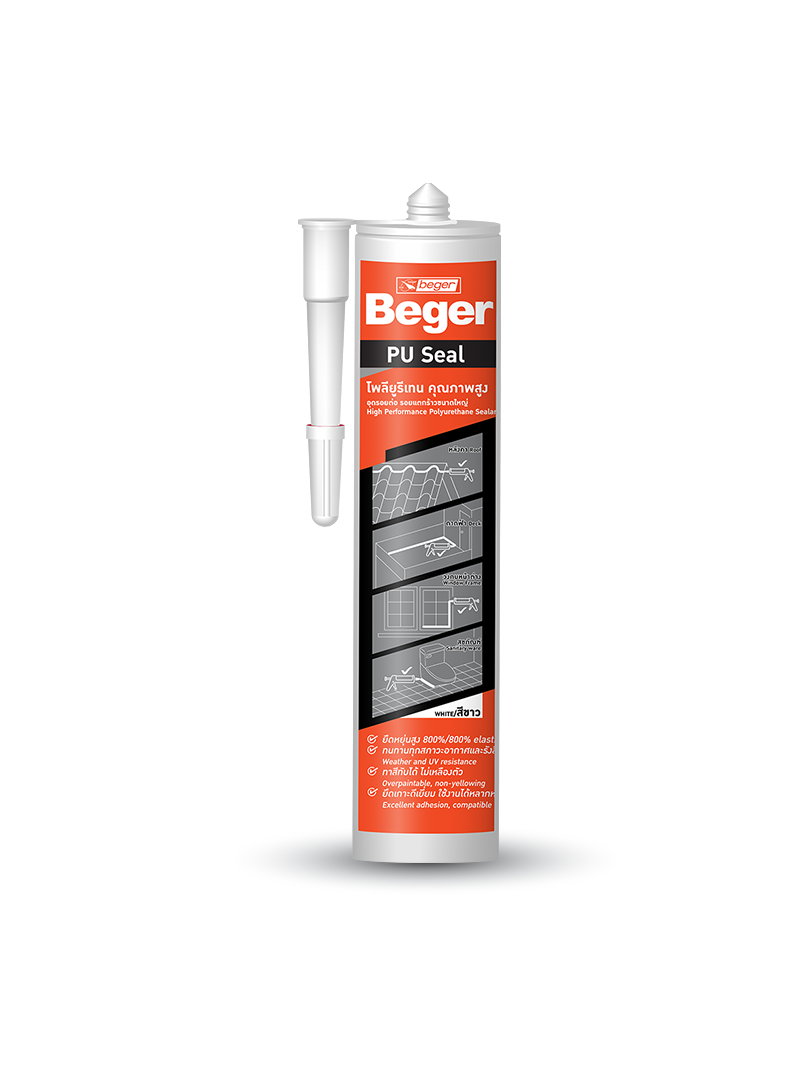
- Beger PU Seal highly flexible polyurethane up to 800%, paintable, non-yellowing, suitable for moving joints such as door frames, roof joints, and floor-wall joints.
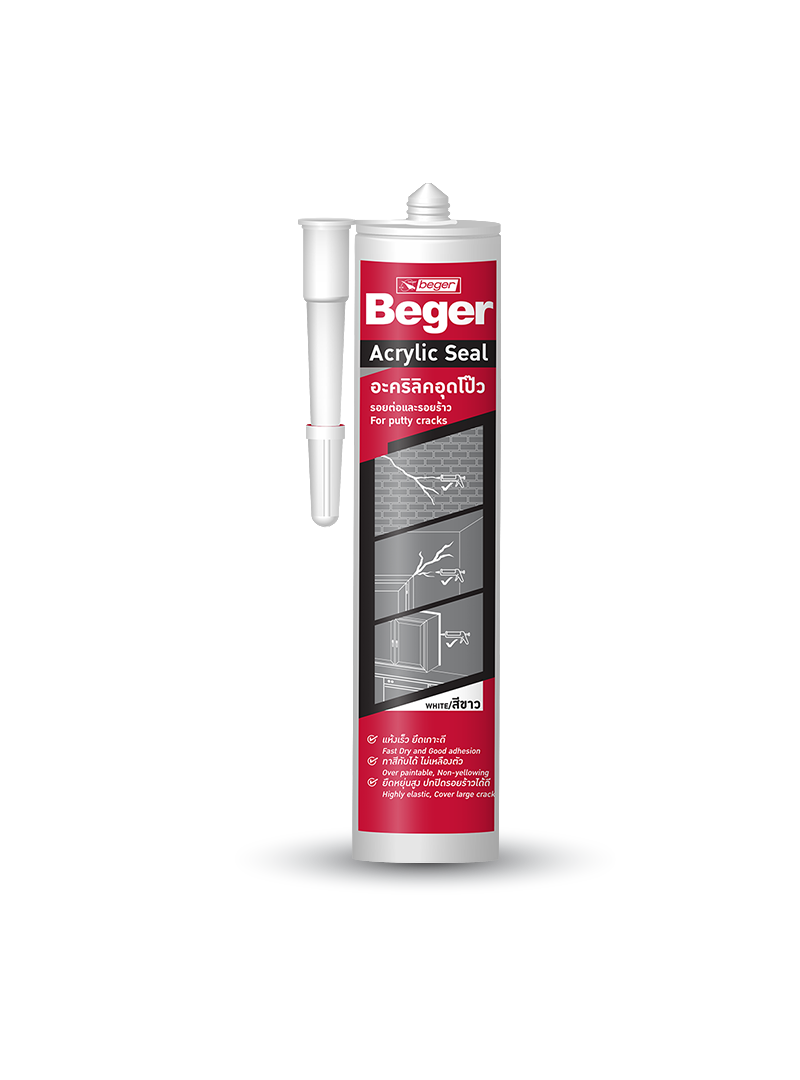
- Beger Acrylic Seal for sealing door frames, doors, and walls, easy to use, paintable, quick-drying.
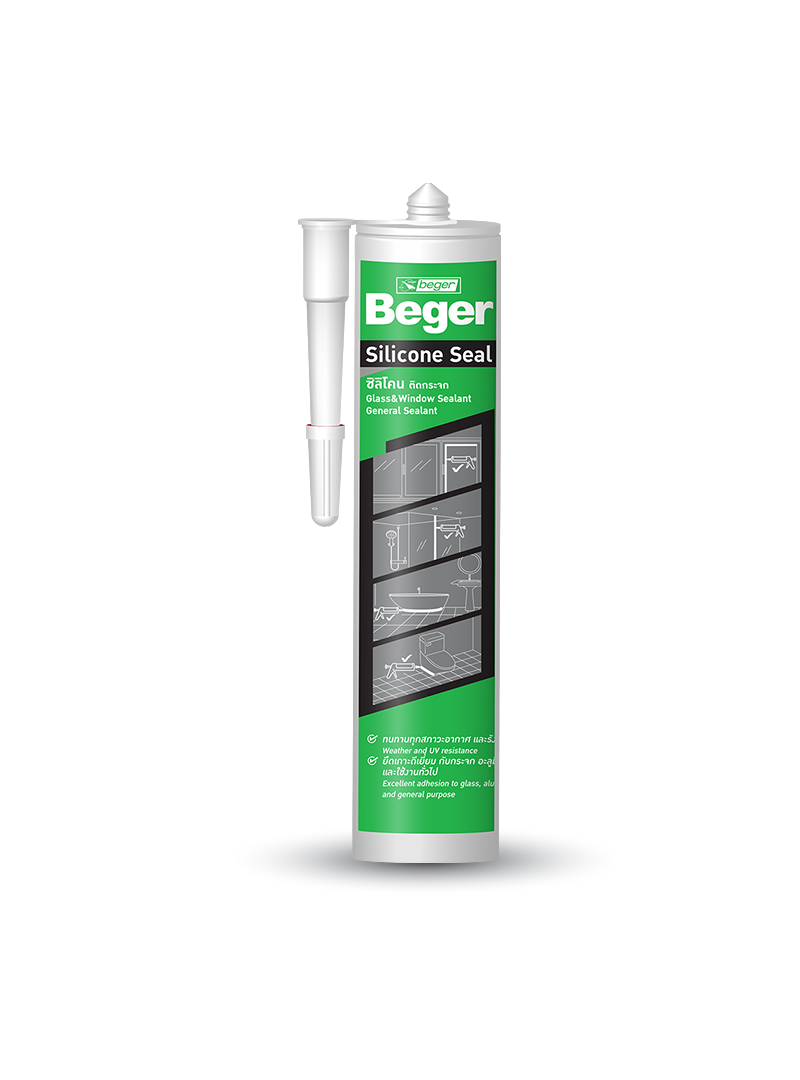
- Beger Silicone Seal acidic silicone adhesive, weather-resistant, suitable for glass windows and shower partitions.
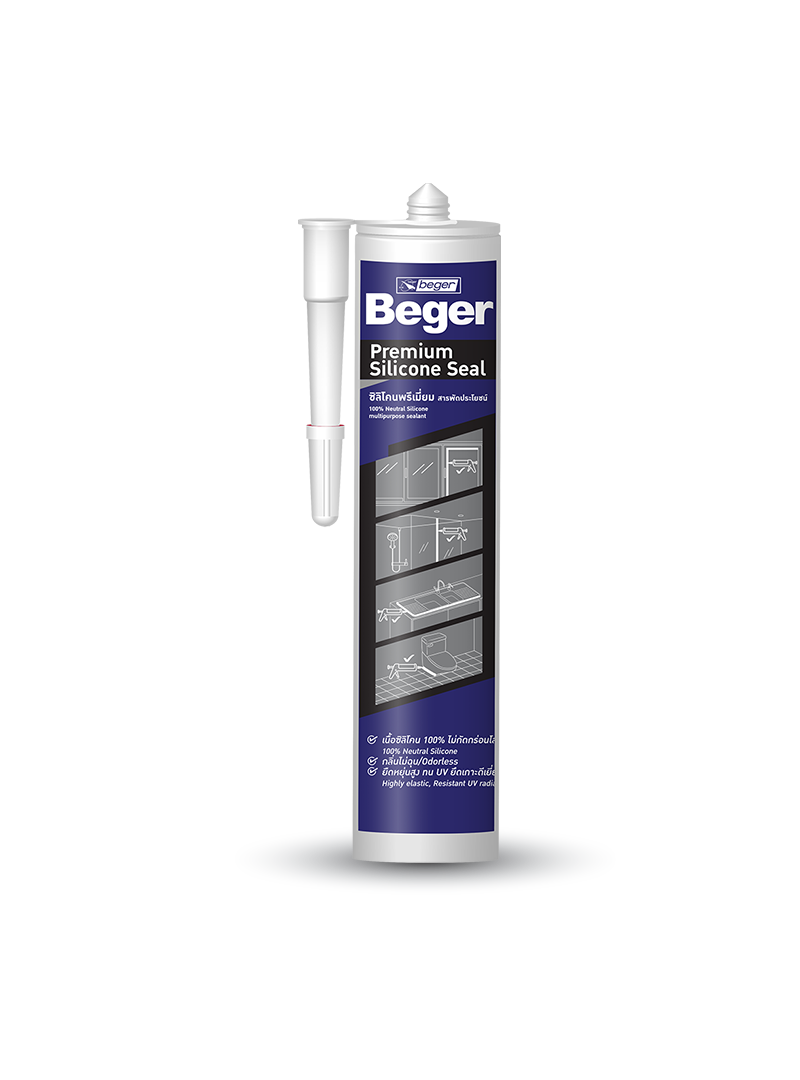
- Beger Premium Silicone Seal non-acidic, non-corrosive, works well with metals, gutters, and roofs.
|
Beger PU Seal |
Beger Acrylic Seal |
Beger Silicone Seal |
Beger Premium Silicone Seal |
How to find leaks by yourself (practical steps)
Once you know the causes and risk points, the most important step is to identify the actual leak points. Use these 4 methods to systematically trace the source.
Trace from the downstream to the upstream
Start from the point where water drips and trace the line upwards to find the source, as water always flows down due to gravity. The source is always “higher” than the visible point. Check beams, pipes, and wall lines above the drip point; you may find that the actual leak is several meters away.
Test with water zone by zone
On a non-rainy day, use a hose to spray water on one area at a time, starting from the lowest point and working your way up zone by zone, spending 5–10 minutes per zone. Then wait and observe which point causes leaks. This method simulates rain and can pinpoint leaks more accurately than guessing.
Observe the shape of water stains.
Water stain characteristics indicate their source: Circular stains that expand from a central point are often caused by water dripping from a single point above. Stains that are elongated suggest that water is flowing along beams or pipes, while stains at the corners of rooms usually come from wall joints.

Separate “leaks” from “accumulated moisture.”
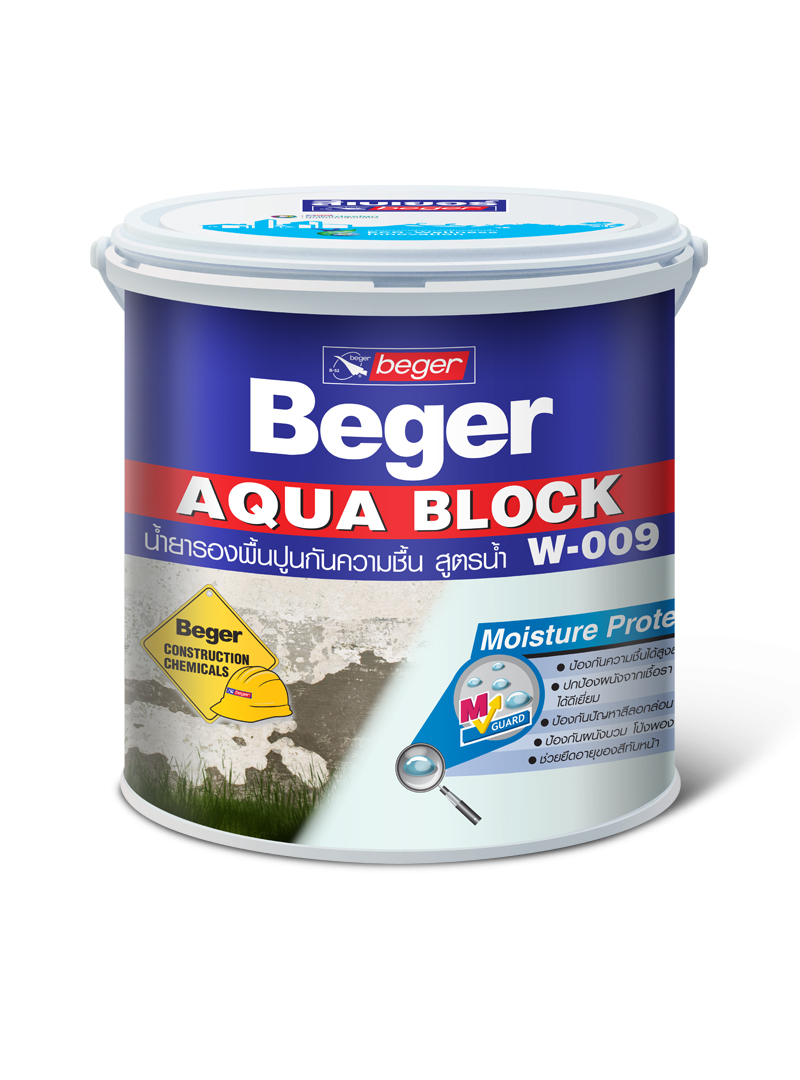
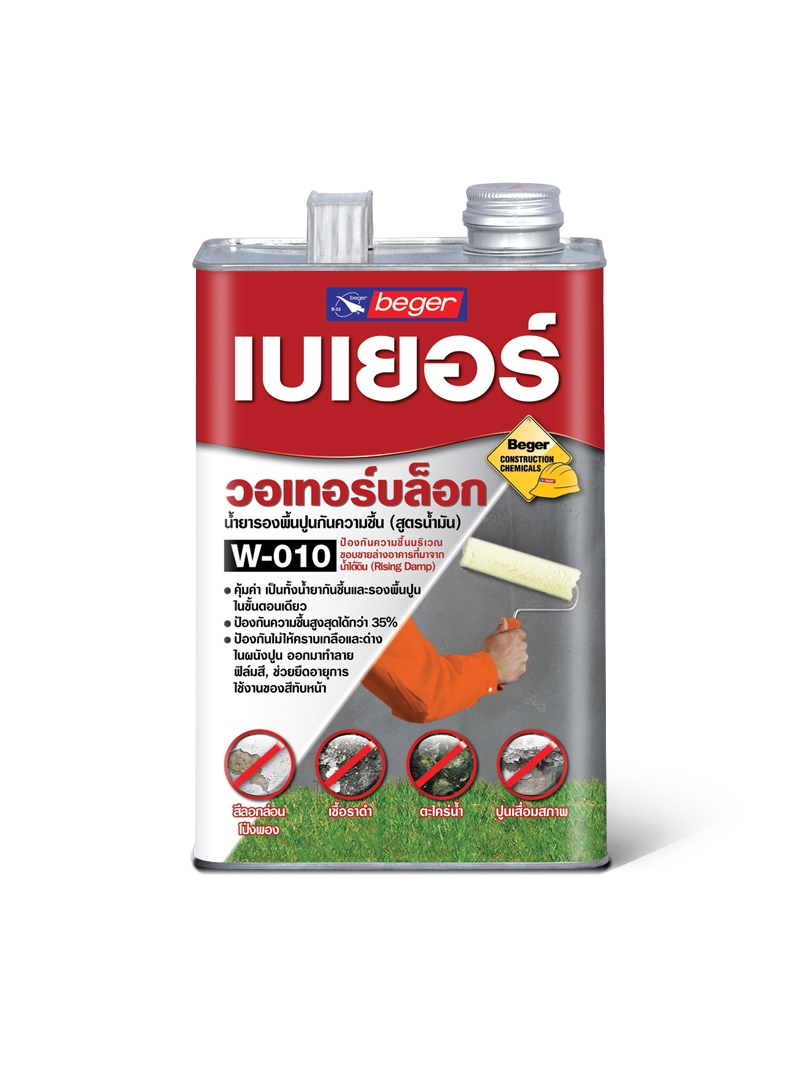
Not every water stain is a leak from above. If the wall is damp only in the lower section near the floor, is uniformly wide, and occurs even without rain, it is usually accumulated moisture from underground or pipes, not a leak. This case can be resolved with moisture-proofing agents such as Beger Aqua Block W-009 or Beger Water Block W-010 which help reduce moisture permeability, distinctly different from sealing leaks. Identifying this correctly is essential for proper resolution.
|
Beger Aqua Block W-009 moisture-proofing primer |
Beger Water Block W-010 |
What type of leak can be repaired by oneself, and which requires a professional?
| Crack characteristics | Level | Guidelines |
|---|---|---|
| Cracks smaller than 1 mm (hairline cracks) | Light | Can be repaired by oneself |
| Wall cracks 2–10 mm | Moderate | Can be repaired by oneself with filler/sealant |
| Caulking around frames/joints deteriorating | Light–Moderate | Can be repaired by oneself with sealant |
| Multiple leaks not identified | Moderate–Heavy | The technician should assess |
| deep cracks greater than 10 mm at beams and columns | serious | call a technician urgently, affects the structure |
| diagonal cracks in the middle of the house | serious | call a technician urgently |
DIY crack filling products
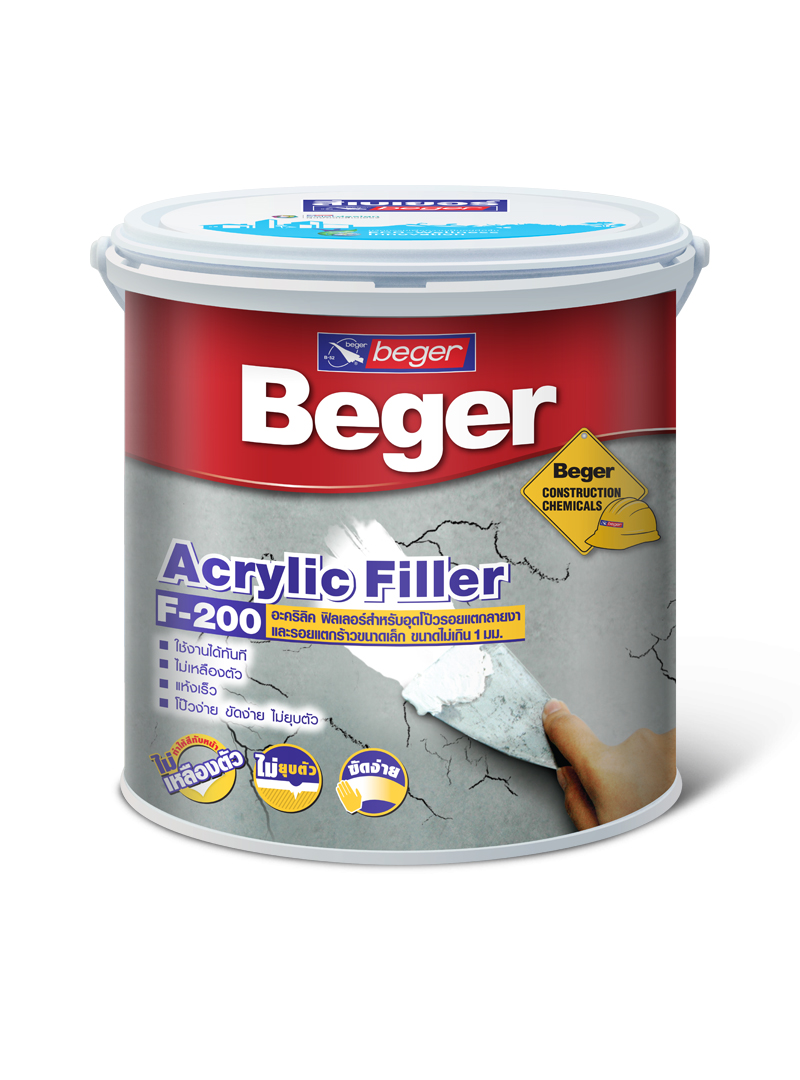
- small cracks less than 1 mm: use Beger Acrylic Filler F-200 100% pure acrylic, flexible, does not shrink
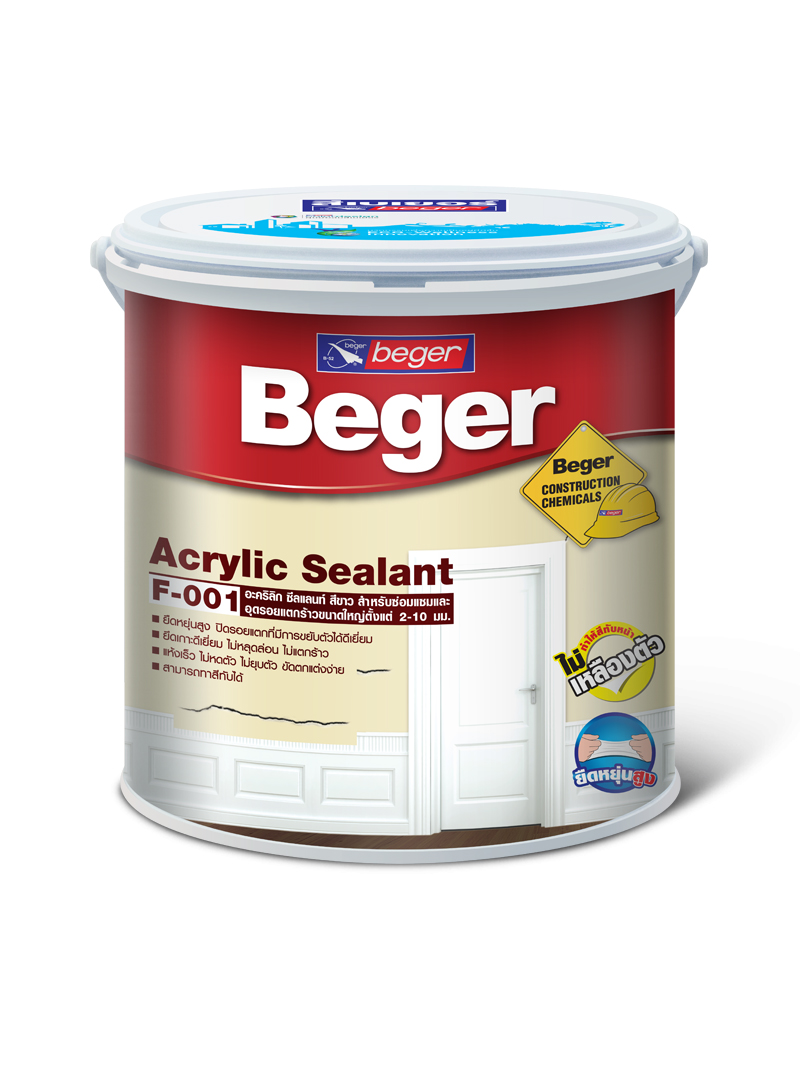
- large cracks 2–10 mm: use Beger Acrylic Sealant F-001 smooth finish and can be painted over
danger signals that require immediate technician call: cracks continuously widening, doors and windows starting to close improperly, or sloped floors may indicate dangerous structural issues, do not attempt to repair yourself
|
Beger Acrylic Filler F-200 |
Beger Acrylic Sealant F-001 |
initial fixes for each point
once you know the points and severity level, here is a brief guideline for each point, along with a detailed manual if you need more information
wall cracks and joints
fill with filler or sealant according to the crack size, always clean the surface and let it dry first, then apply a topcoat to finish the job and prevent re-seepage
exposed walls, exposed brick, bare cement where water seeps
surfaces that are not painted over, such as exposed brick, polished cement, or washed stone should use a clear waterproofing agent to protect against water while maintaining the original surface: B
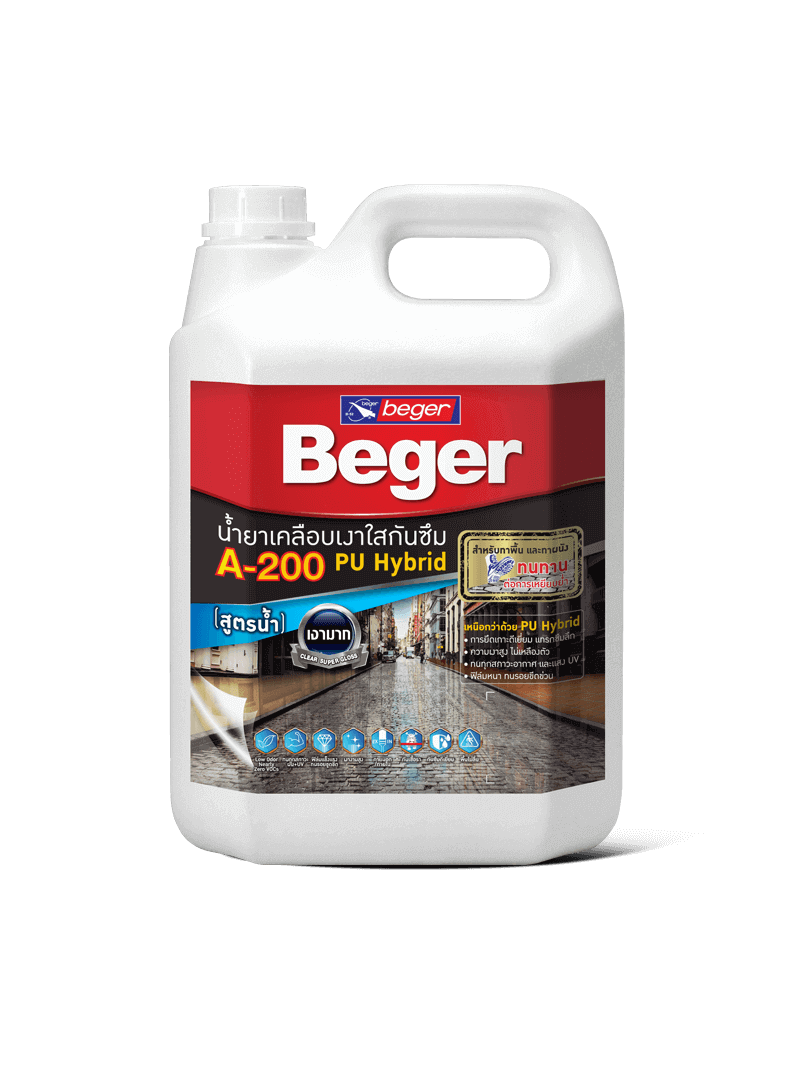
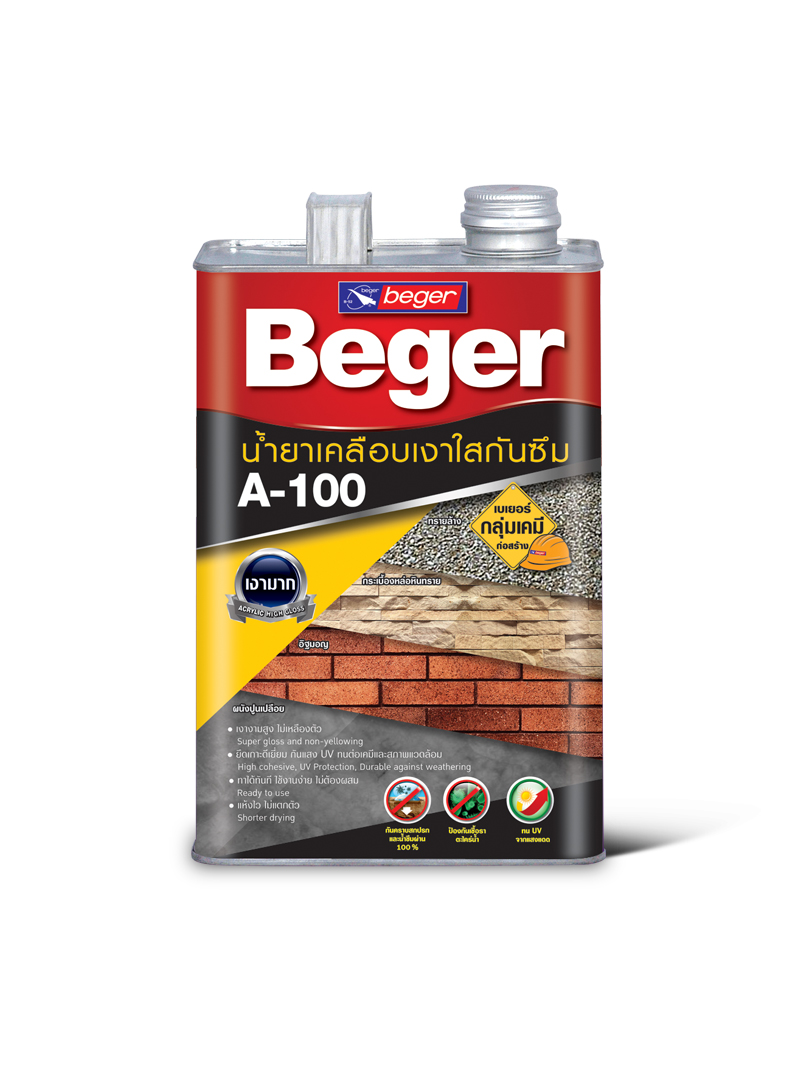
Beger A-200 PU Hybrid A clear water-based coating that is glossy, non-yellowing, and resistant to foot traffic. Suitable for stamped concrete, washed stone, and loft walls or Beger A-100 A high-gloss clear coating suitable for exposed brick, slate, and polished concrete.
|
Beger A-200 PU Hybrid |
Beger A-100 Water Repellent Gloss |
For leaking concrete roofs and decks.
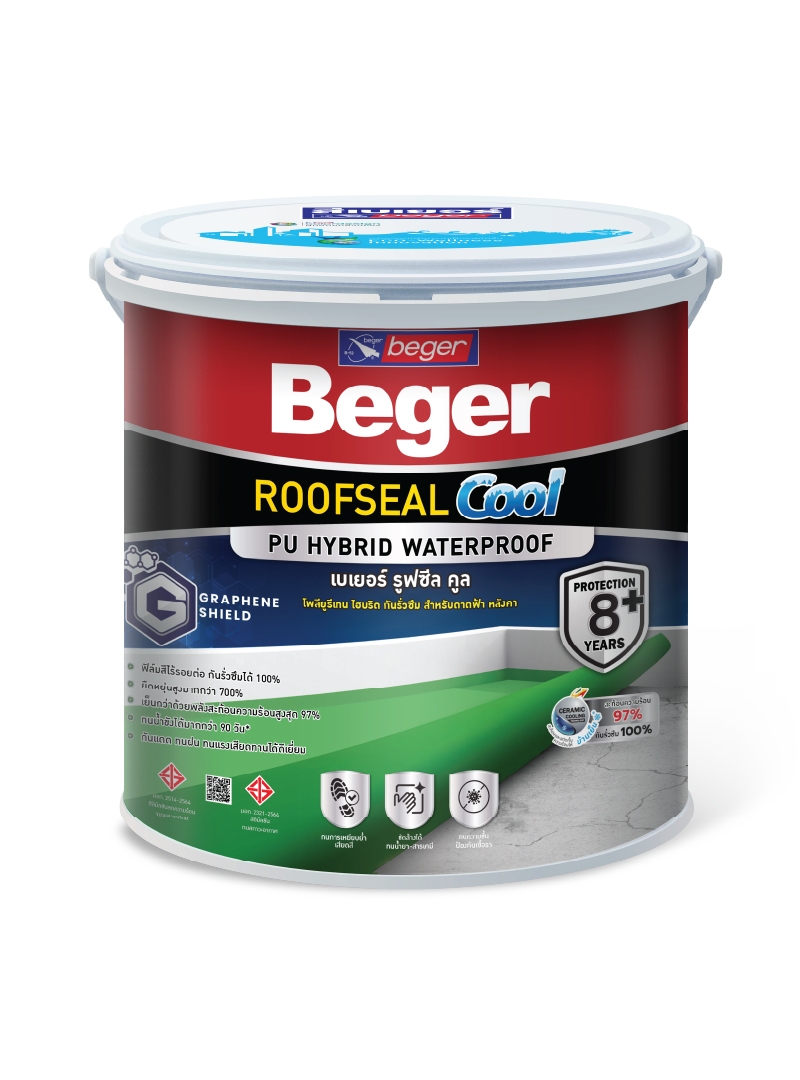
If the source is the roof deck, a waterproofing system for the entire area must be done, not just spot repairs. Recommended: Beger ROOFSEAL Cool A hybrid polyurethane waterproofing paint that is 100% water-resistant and heat-reflective. For detailed professional roof deck waterproofing steps, see Roof Waterproofing Guide: Choosing Materials for Real Results
|
Beger ROOFSEAL Cool |
Problems before the rainy season: mold, algae, and rust.
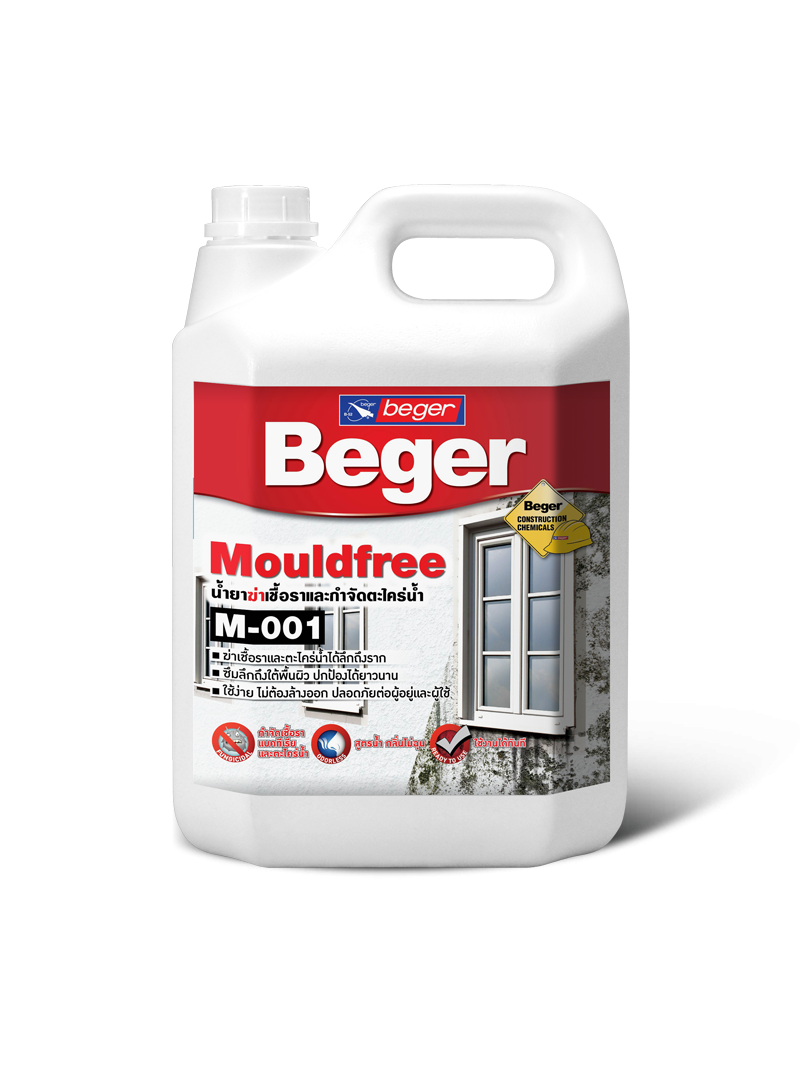
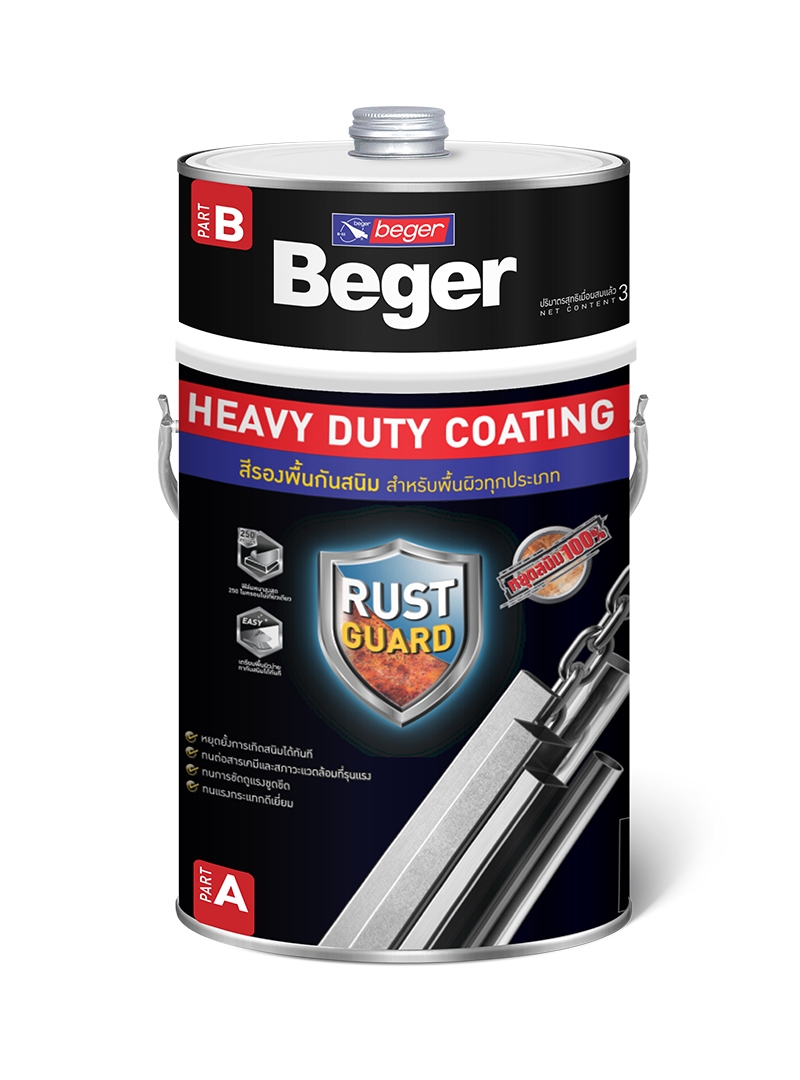
Leaks often come with mold and rust due to moisture. If found, address it with Beger Mouldfree M-001 For mold and algae, and Beger Rust Guard For rust on metal work. See how to tackle all types of home problems during the rainy season at Complete Guide to Handling Home Problems Before the Rainy Season
|
Beger Mouldfree M-001 |
Beger Rust Guard |
Preventing home leaks from recurring.
The best repair is the one you don’t have to do often. Follow these preventive care tips to extend the life of your home and reduce risks.
- Inspect your home twice a year, especially before the rainy season.
- Reapply waterproofing according to the lifespan of the materials; do not wait until leaks occur to fix them.
- Clear gutters and drainage pipes to prevent blockages that can cause water to accumulate.
- Seal small cracks immediately before they spread.
- Choose highly flexible materials for joints that experience movement.
FAQ Frequently Asked Questions about Leaky Homes
Q1: I can’t find the leak at all; what should I do?
A1: Try using a water spray test zone by zone from the lowest point upwards. If you still can’t find it, the leak may be in a pipe or beneath an unseen surface. It is advisable to have a technician use a thermal camera or moisture meter to identify the point.
Q2: It’s not raining, but the house is still leaking or damp; what could be the reason?
A2: It is often not a leak from above, but rather a leaking water pipe in the wall, water seeping from the bathroom, or moisture accumulation from underground. The cause must be clearly identified before it can be properly addressed.
Q3: Water is dripping from the ceiling in the middle of the room; where is the source?
A3: It does not necessarily have to be directly above the drip point, as water often flows along beams or pipes before dripping down. Check upwards and around the area, including the roof and joints.
Q4: I have repaired the same spot multiple times, but it still leaks; why?
A4: This is a sign that you may be sealing the wrong spot or addressing the symptom rather than the cause. Water may be entering from elsewhere and flowing to the same point. The solution is to find the actual source by testing water zone by zone.
Q5: Are the leak points different between a single-family home and a condo?
A5: Yes, they are different. Single-family homes often leak from the roof, terrace, and exterior walls, while condos or high-rise buildings typically leak from the bathrooms or balconies of the upper floors and the joints of the building’s exterior walls.
Summary
A leaky home is not difficult to fix with the “repair method,” but it is challenging to “find the source.” Here are the key points to remember:
- Water never leaks from the same spot; the point where it drips is often not the leak point. Always trace the source higher up.
- Check 7 risk points, especially joints, which leak most often and can be repaired yourself with sealant.
- Assess the severity before taking action; any cracks affecting the structure should always involve a professional.
Start by inspecting your home today, checking each point according to this guide, and selecting products that match the source. This will help you resolve the leaky home issue in one go without needing repeated repairs. If you need specific advice, you can consult Beger’s experts for free.