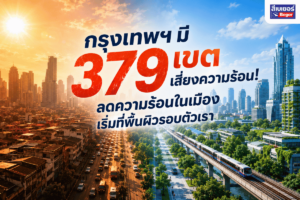
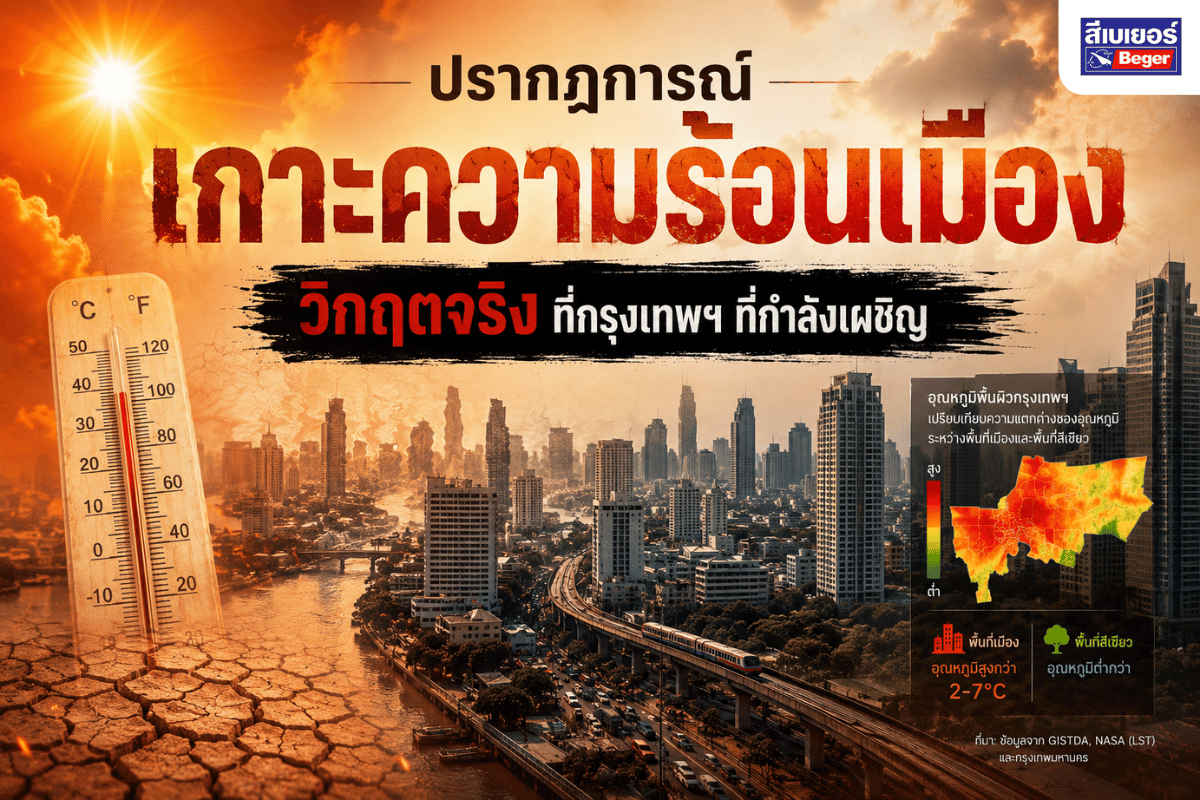
Currently, if we try to walk from a shady public park into the city center on a scorching midday, you will immediately feel that the air is noticeably hotter. This is not just a feeling, but it is the Urban Heat Island (UHI) phenomenon that can be measured and has been intensifying every year. Bangkok is ranked as one of the five hottest cities in the world, with the city center potentially being 6-7°C hotter than the surrounding areas during the dry season. This article will help you understand what UHI is, why our city continues to get hotter, and why it is a pressing issue that affects health, daily life, animals, ecosystems, the economy, and the future of our children.
What is the Urban Heat Island (UHI) phenomenon?
The Urban Heat Island phenomenon is a condition where urban or densely populated areas have significantly higher temperatures than the surrounding rural or green areas. The main cause comes from replacing nature with concrete and asphalt that absorb heat well.
Imagine concrete, roads, and buildings acting like giant heat sponges. They absorb energy from sunlight throughout the day and then gradually release heat at night, preventing the city from cooling down like rural areas that have trees and soil to dissipate heat. The result is that nights in the city remain sultry and do not cool down as much as they should.
It is important to understand that UHI is not a natural disaster but a direct result of how we design and build our cities. This means it is a problem that can be prevented and mitigated if we understand the causes and take action starting today.
Why is “Bangkok” hotter than the surrounding areas?
Bangkok’s heat increases due to several compounding factors, not just one cause, but a buildup of conditions that allow the city to retain more heat over time.
- Proximity to the equator: Bangkok is located at a latitude of about 13°N, which gives it a naturally hot and humid climate, receiving intense sunlight almost year-round.
- Rapid urban expansion: In the past 21 years, the built-up area has expanded by about 403.99 square kilometers, with green spaces and water sources replaced by buildings and roads.
- Heat-absorbing concrete, asphalt, and roofs: These dark, hard surfaces absorb heat very well, especially “roofs” that are fully exposed to sunlight and have a vast area throughout the city.
- Insufficient green spaces: Bangkok has an average green space of only about 3.3 square meters per person, compared to the recommended standard of 9 square meters per person in many cities. There are not enough trees to provide shade.
- PM2.5 dust that traps heat: Air pollution not only harms the lungs but also helps retain heat in the city for longer periods.
When all these factors work together, the result is that the city center can be up to 6.4°C hotter than the surrounding areas, which is a temperature gap significant enough to turn an ordinary day into a health hazard.
The shocking real figures: How severe is UHI in Thailand?
Data from research helps illustrate that this problem is not distant. The table below compares the excess heat values of Bangkok with major metropolitan areas around the world.
| City | Urban Heat Island (UHI) Maximum Estimated |
|---|---|
| Phoenix | 7–10°C+ |
| New York | 5–9°C |
| Tokyo | 5–8°C |
| Bangkok | 6–7°C |
| London | 5–7°C |
| Singapore | 4–7°C |
| Shanghai | 4–7°C |
| Hong Kong | 4–6°C |
It can be seen that Bangkok is among the cities with high excess heat values, comparable to major metropolitan areas of the world. When combined with the existing hot and humid climate, the heat that city dwellers actually experience is more intense than the numbers on paper.
What is concerning is the trend for the future. Past studies have found that Bangkok used to have about 60–100 days per year with temperatures exceeding 35°C, and climate model projections indicate that by the end of this century, Bangkok could have up to about 150 days per year of extreme heat. This means nearly half a year that the city will face dangerously high temperatures.
The impact on “people,” health, life, and vulnerable groups
Urban heat affects daily life more than many people think. It impacts how we live, learn, and work.
- The risk of heat stress (heat stress) and heat stroke (heat stroke) is increasing
- Comfort in daily life is decreasing, making it harder to sleep and easier to become irritable
- Learning and working are disrupted, with concentration and efficiency declining as the body struggles against the heat
- The demand for air conditioning is skyrocketing, followed by higher electricity bills
The most severe impact is on life; research estimates that for every 1°C increase in the average temperature of Bangkok, there could be an increase in heat-related deaths of over 2,300 people per year and the most vulnerable groups are children under 15 years old, about 880,000 people, and the elderly over 65 years old, about 1 million people, who find it harder to adapt to heat than the general population
Impact on animals, ecosystems, and surrounding life
UHI does not only harm humans but affects all living systems. Urban animals, including pets, birds residing in buildings, and small animals in green spaces, also face heat stress. The decreasing and warming natural water sources make it harder for animals to find relief from the heat
Pollinators like bees and butterflies are sensitive to high temperatures. When cities become too hot, their numbers decline, affecting the pollination of trees and plants in urban areas
Trees themselves are stressed by heat and drought, causing slower growth and less shade, creating a cycle that makes cities even hotter. Additionally, high temperatures accelerate reactions that lead to air pollution, such as ground-level ozone, exacerbating already poor air quality
Impact on the economy and the future of our children
Urban heat is not just an environmental issue but also an economic and future concern. Bangkok has a workforce that must work outdoors at least one day a week, about 1.3 million people As the city heats up, their work efficiency directly declines. Research estimates that productivity losses from heat and humidity could reach about 5% of the city’s output in a normal year, and this is expected to rise to about 6% by 2050 if no action is taken
In monetary terms, every 1°C increase in temperature could incur total costs from deaths, productivity losses, and energy costs of about 85,000–123,000 million baht per year for Bangkok
But perhaps the most important thing is not the numbers, but the question of what kind of city we are passing on to our children. A city that may have extremely hot days for about 150 days a year, where outdoor play becomes a risk, is a legacy we do not want to leave behind. That is why taking action from today is crucial
How can we help reduce urban heat?
The good news is that because UHI is caused by human actions, we can also address it through human actions
- by increasing green spaces, planting large trees for shade, creating rooftop gardens, and adding public parks.
- Design urban layouts to allow wind circulation and reduce heat accumulation in dense areas.
- Choose materials that reflect heat instead of absorbing it, especially for surfaces that receive the most sunlight, such as “roofs.”
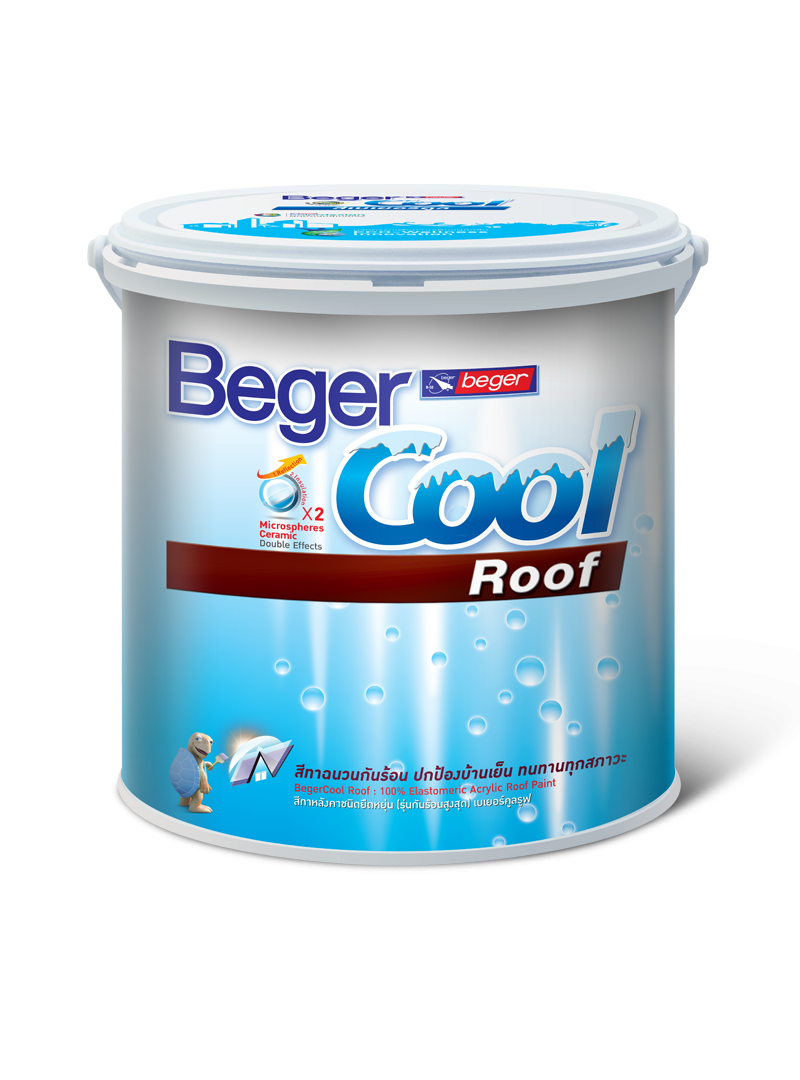
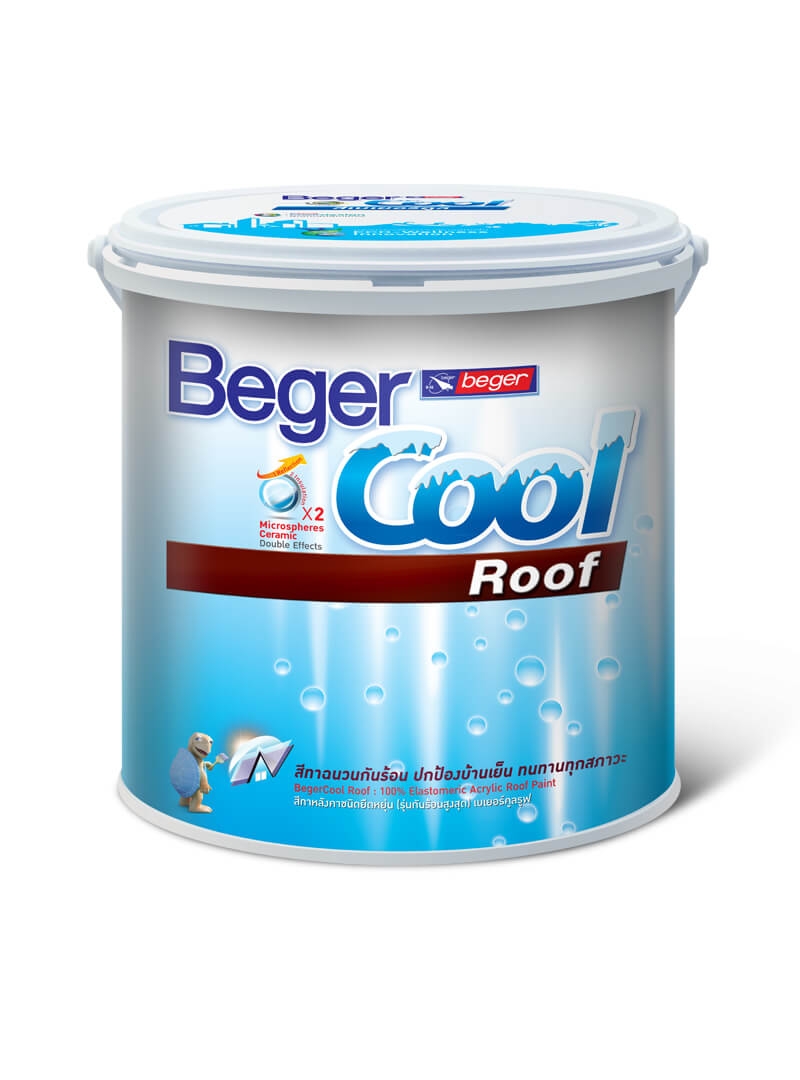
Roofs are often overlooked, even though they are the first line of defense against direct sunlight and have a total area nearly equal to that of all buildings in the city. Changing roofs to “reflect” heat instead of “absorbing” it, with the concept of Cool Roof is therefore one of the practical methods that show quick results and can start from our own homes or buildings with heat-resistant roof paint BegerCool Roof (BegerCool Roof) helps keep homes cooler. It combines ceramic cooling technology from the United States, which NASA uses to manage heat for space shuttles, and has excellent properties in reflecting and preventing heat. This is a solution to the problem of the second floor being hotter than the first floor and helps reduce both heat accumulation in the building, electricity costs from air conditioning, and heat released back into the city.
While changes at the city level require policies, every cooler roof is a step that truly helps cool down the entire city.
Product Recommendations
|
BegerCool Roof |
BegerCool Roof Primer #7000 |
BegerCool Roof Primer #8000 |
FAQ Frequently Asked Questions about the Urban Heat Island Phenomenon
Q1: How does UHI differ from global warming?
A1: Global warming refers to the increase in the average temperature of the Earth due to greenhouse gases, while UHI is a localized phenomenon that makes “urban areas” hotter than their surrounding areas. The two issues complement each other; as the Earth warms, cities with UHI become even hotter.
Q2: Can we really help by addressing our own homes?
A2: Yes, it can help. Reducing heat in homes, such as planting trees, using heat-reflective roofing materials, or adding insulation, helps lower both indoor temperatures and heat released outside. When many homes do this simultaneously, the cumulative effect on the city is even greater.
Q3: What is a Cool Roof?
A3: Cool Roof is the concept of making roofs reflect sunlight and dissipate heat better, instead of absorbing and retaining heat like conventional roofs. This helps reduce the temperature under the roof and the load on air conditioning systems.
Summary
The urban heat island phenomenon is not a distant future issue but a crisis that is already happening and affecting us today.
- Bangkok ranks among the hottest cities in the world, with the city center potentially being 6–7°C hotter than the outskirts.
- This heat threatens the health and lives of people, especially children and the elderly, as well as animals, ecosystems, and the economy.
- Since UHI is caused by our actions, we can address it, and one of the practical starting points is “roofs.”
Urban heat is an issue that we can all contribute to solving. Follow the campaign Cool Roof, Smart Choice to learn how small choices like cooling down roofs can help create a more livable city for us and for future generations.
References
[1]Peng, S., Piao, S., Ciais, P., et al. (2012). Surface Urban Heat Island Across 419 Global Big Cities. Environmental Science & Technology, 46(2), 696–703.
[2]World Bank & Bangkok Metropolitan Administration. (2025). Shaping a Cooler Bangkok: Tackling Urban Heat for a More Livable City.
Note: The UHI figures for each city in the table are compiled from several literature reviews. It is recommended to verify and add the original paper names from the team’s data file to match the actual values used.