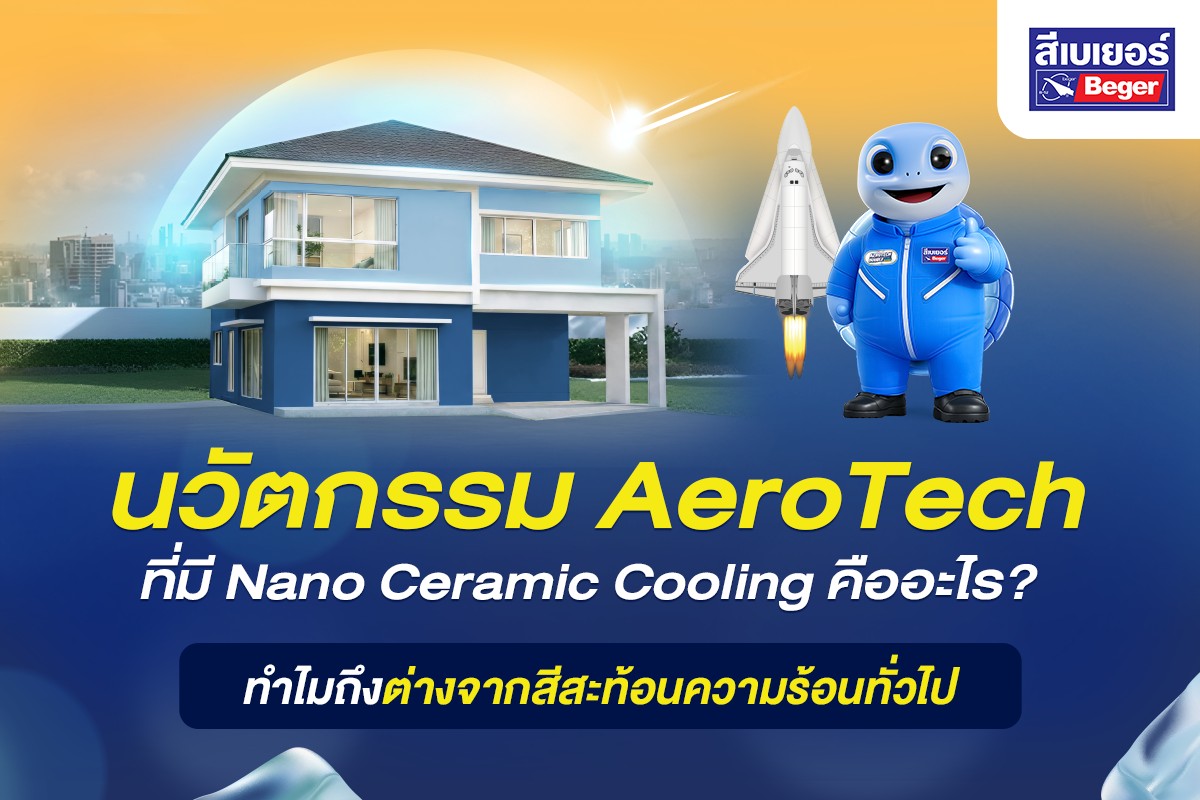
Thailand has to face hot weather and intense sunlight almost all year round, causing the walls of houses to accumulate heat, especially the exterior walls that receive direct sunlight. Therefore, choosing house paint should not only consider aesthetics but also take into account the heat management properties and durability of the paint film as well.
AeroTech (AeroTech) is one of the innovations used in BegerCool paint to enhance heat management properties. When combined with Ceramic Cooling, it becomes another technology that meets the needs of homes in hot weather. What is AeroTech? How does it reduce heat, and how does it differ from regular heat-reflective paint? Let’s understand it better.
What is AeroTech? Why is it used in heat-reflective paint?
AeroTech is a technology that uses a special type of silica material, which has a small nanometer-scale porous structure and contains a high proportion of air within its structure. This type of material has properties related to resistance to heat transfer, making it of interest for development as a component of heat management materials.
Beger has developed this concept into AeroTech technology for use in the BegerCool paint system to enhance the heat management properties of the paint film. However, the properties of silica material do not imply that paint mixed with this material will have the same effectiveness as all types of thermal insulation, as the performance of the paint system depends on the paint formula, film thickness, and results from testing the finished product as well.
How does AeroTech reduce heat?
When sunlight hits the walls of a building, some of the energy is reflected away, while some is absorbed and converted into heat, causing the surface temperature to rise and heat to transfer into the building. AeroTech is used as part of the paint system to enhance heat management properties by working alongside other components in the paint formula, such as Ceramic Cooling. When the paint film can reduce heat accumulation on the surface, it may help lower the heat that transfers into the house under suitable usage conditions. For those who want to understand the heat management mechanism in detail, you can read more about what REI is, the principles of reflection, emission, and resistance to heat, which explain the differences between Reflection, Emission, and Insulation.
How do AeroTech and Ceramic Cooling differ?
Although AeroTech and Ceramic Cooling are technologies related to heat management, they have different material concepts.
– AeroTech is a special silica material technology.
AeroTech uses the concept of a material structure with small pores to enhance heat management properties when part of the paint formula.
– Ceramic Cooling is a ceramic microsphere technology.
Ceramic Cooling uses ceramic microsphere materials as components in the paint formula, which Beger developed to enhance the reflection and heat management properties of the paint system. When AeroTech is combined with Ceramic Cooling in BegerCool paint, it utilizes different types of materials together to support the thermal performance of the paint film, with the results depending on the formula and properties of each product variant. Read more about Ceramic Cooling Technology, the innovation of ceramic microspheres in BegerCool paint.
2 highlights of AeroTech technology in BegerCool paint.
1. Cooler with heat management technology.
One of the highlights of the BegerCool paint system is the integration of AeroTech with Ceramic Cooling under the concept of Double Cool, Double Protection. The paint system has been developed to help reduce heat accumulation on walls exposed to sunlight, which may help lower the heat that transfers into the building.
According to testing data published in the original article, Beger states the results regarding heat reflection and temperature reduction under the product testing conditions. However, it is important to check the paint variant, testing methods, and indicators before comparing numbers with other products. Additionally, the results regarding indoor temperature also depend on the direction of sunlight, roof insulation, wall materials, ventilation, and the building’s environment.
Compared to other products.
Additionally, the results regarding indoor temperature also depend on the direction of sunlight, roof insulation, wall materials, ventilation, and the building’s environment.
2. More durable with enhanced strength of the paint film.
In addition to thermal management properties, BegerCool also emphasizes the durability of the color film to withstand the hot and humid weather conditions of Thailand.
The color system employs Advance Silicate Technology to enhance the properties of the color film, with key features to consider including:
- Durability against sunlight and UV rays
- Maintaining the condition and aesthetics of the color film
- Durability against outdoor weather conditions
- Reducing the likelihood of premature deterioration of the color film
Both AeroTech and Advance Silicate should be explained separately, as durability properties must be considered based on the color system and product test results, not solely from AeroTech materials.
What applications is BegerCool paint with AeroTech suitable for?
The BegerCool color system using AeroTech technology is suitable for those considering exterior paint that emphasizes thermal management and the durability of the color film, such as:
- Houses with walls exposed to intense sunlight Especially west-facing walls
- Houses that need repainting And prioritize heat reflection properties
- Houses that need renovation To improve both appearance and exterior color system
However, it is important to check which technologies are included in the selected BegerCool product and whether they are suitable for the surface or painting system desired. If comparing products, you can read “Cool House Colors: Which Paint to Choose? Reduce Heat, Endure Sun with Surface Lock” to learn how to select colors suitable for your home.
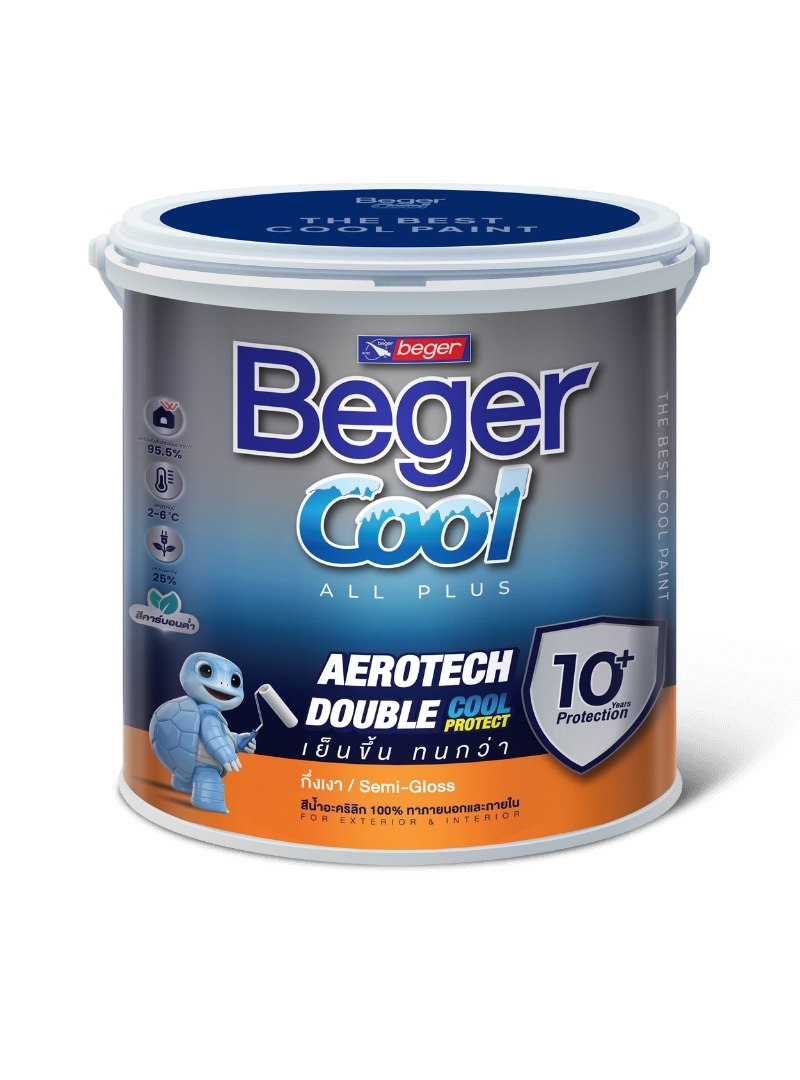
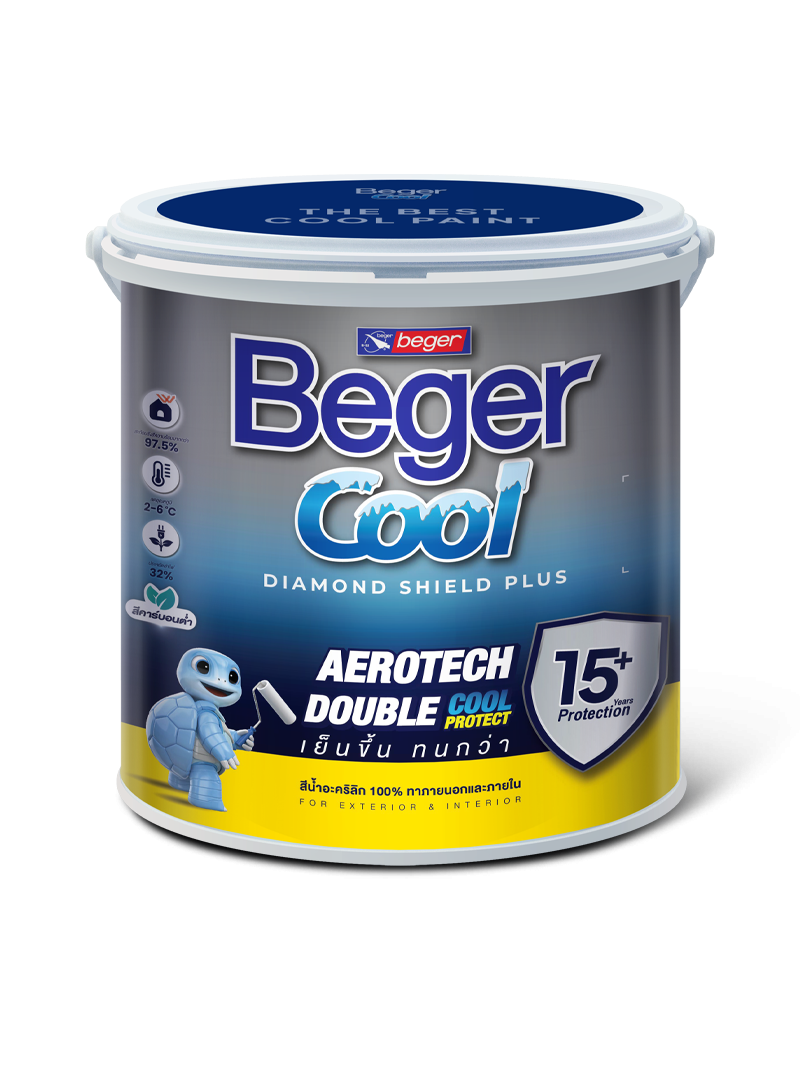
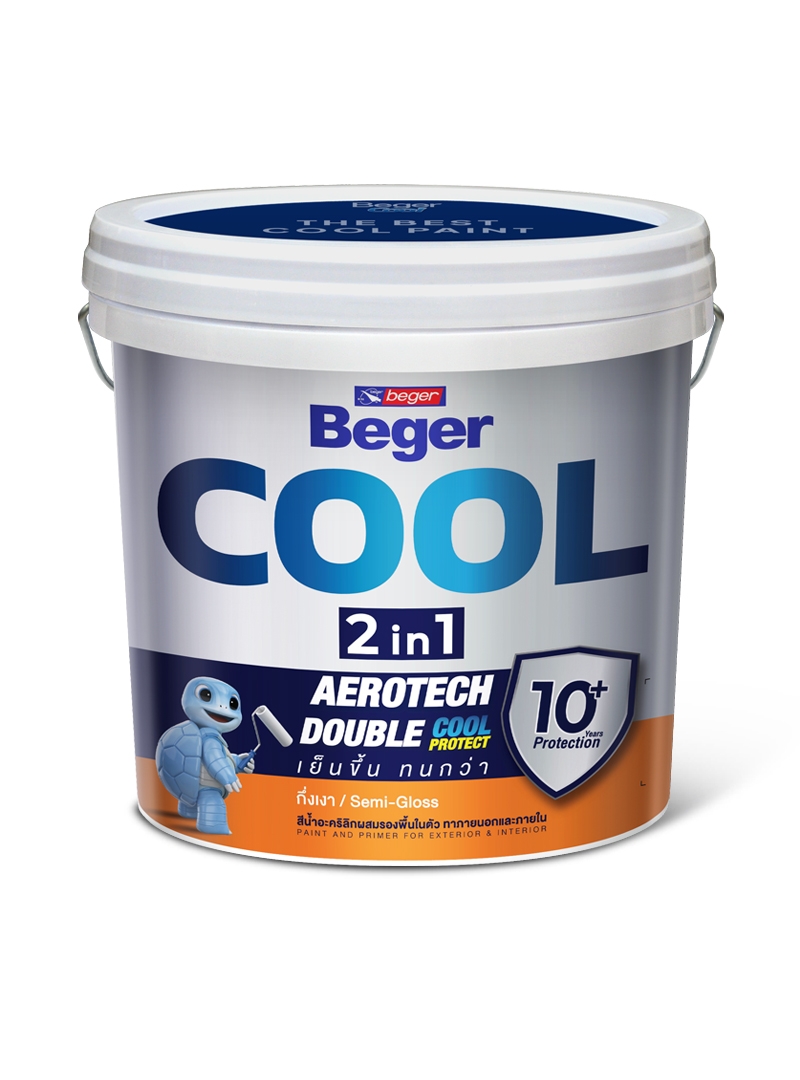
Product Recommendations
|
|
|
|
FAQ: Questions about AeroTech Innovation and Nano Ceramic Cooling
Q1: What is AeroTech?
A1: AeroTech is a technology that uses a special type of silica material with a small porous structure, developed as part of the BegerCool color system to enhance thermal management properties.
Q2: Is AeroTech the same as Ceramic Cooling?
A2: No, they are not the same. AeroTech is based on silica materials with a porous structure, while Ceramic Cooling uses ceramic microsphere materials. Both are different components used together in the paint formula.
Q3: How many degrees can AeroTech paint reduce the temperature?
A3: The temperature reduction results depend on the product model, color shade, surface condition, and testing conditions. Therefore, it is important to check whether the values specified by the manufacturer refer to surface temperature or indoor temperature. The numbers should not be used as guaranteed results for all buildings.
Q4: Does AeroTech make house paint more durable?
A4: The BegerCool paint system that uses AeroTech has been developed in conjunction with other technologies to enhance both thermal properties and durability, and the test results of each product variant should be considered.
Q5: Does AeroTech really save on electricity bills?
A5: Reducing the heat transfer into the building may help lessen the load on air conditioning units, but the amount of energy saved depends on the building conditions and actual usage.
For more details, you can read “Does heat-reflective paint really reduce the workload of air conditioners?”
In summary, AeroTech is an innovation in heat-reflective paint that combines coolness and durability.
AeroTech is a special type of silica material developed by Beger for use in the BegerCool paint system, working in conjunction with Ceramic Cooling under the concept of thermal management and durability of the paint system. When choosing house paint, one should consider the heat-reflective properties, durability of the paint film, suitability for the surface, and product testing data to achieve a paint system that meets long-term usage needs.