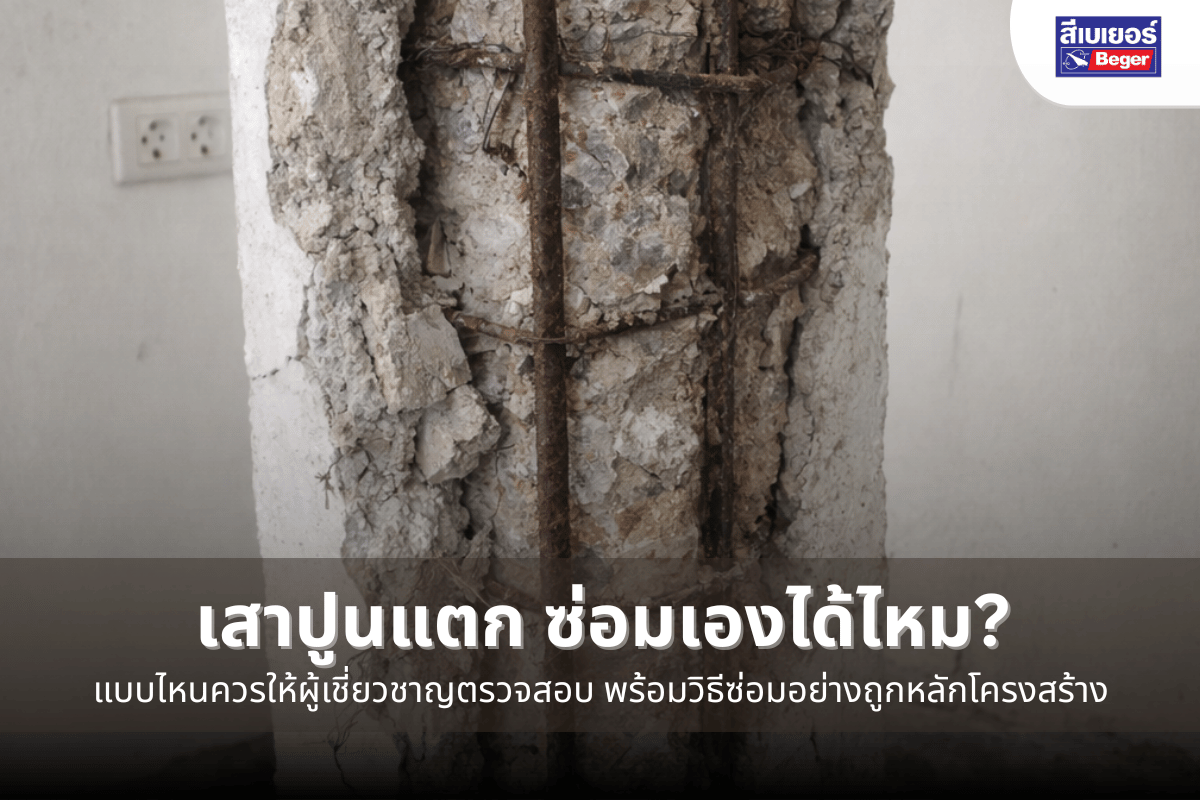
Many people have encountered this situation… walking past a house column and seeing a small crack running along the surface of the concrete. The first feeling is concern because the column is not just a decorative wall, but the “main structure that supports the weight of the entire house.” The immediate question that follows is Is this kind of crack dangerous? Can I fix it myself or should I have a professional check it? The truth is that a cracked concrete column can either be a mere surface flaw due to natural causes or a warning sign of internal structural problems. Therefore, the decision to repair it correctly must start with “reading the crack.” This article will guide you through assessing the risk and the proper structural repair methods to ensure your home is strong and safe again.
Is a cracked concrete column dangerous? Start by observing the right points.
Not all cracks on concrete columns are equally dangerous. Some cracks are merely the result of concrete shrinkage during the curing process, while others are caused by accumulated stress in the structure, and some reflect issues with the foundation that is shifting.
A preliminary assessment can be made by looking at three important factors:
- How wide is the crack?
- Is the crack deep enough to reach the rebar?
- In which direction does the crack run?
Generally, hairline cracks that are no wider than 1–2 millimeters and do not reach the rebar are usually just surface flaws that can be repaired by yourself. However, if the crack runs diagonally at about 45 degrees or if concrete has spalled off revealing the rebar, that is a sign to stop and assess the situation seriously.
Cracks that should be checked by a professional before repair
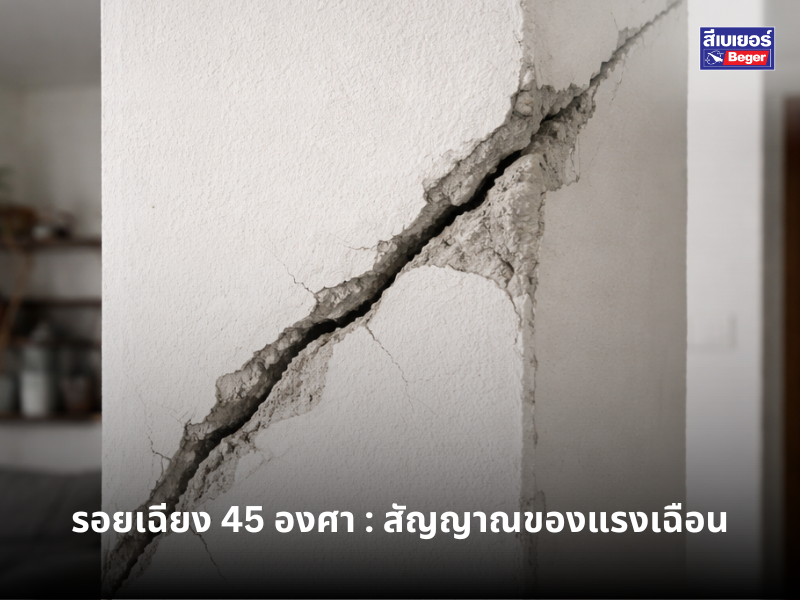
Diagonal cracks at 45 degrees: A sign of shear forces.
In engineering, diagonal cracks are often associated with “shear forces,” which occur due to unbalanced weight distribution, such as partial soil settlement or uneven load on the foundation. These types of cracks are not ordinary surface flaws because they may indicate changes occurring within the structure. If only the surface is patched, the crack may reappear, and the internal problem will remain.
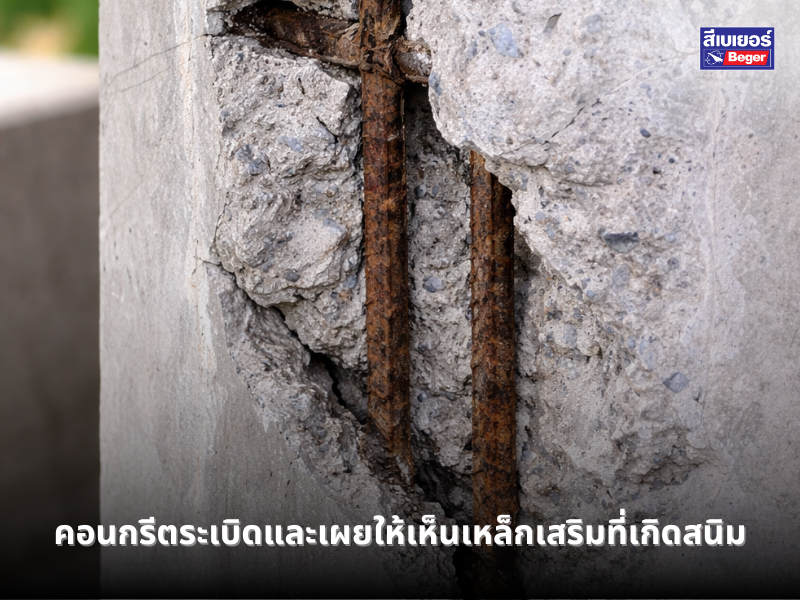
Concrete spalling and exposing rusted rebar.
When concrete spalls and reveals the inner rebar, or when concrete flakes off, it means that the “protective layer of the rebar” has lost its function. Moisture and air will cause the rebar to rust. Rust not only weakens the rebar but also expands, pushing the concrete to crack further. If it is found that the rebar has corroded to the point where its diameter has reduced by more than 30%, it is advisable to reinforce it with new rebar and weld points to ensure proper load transfer. This step is structural work that requires experience and expertise.
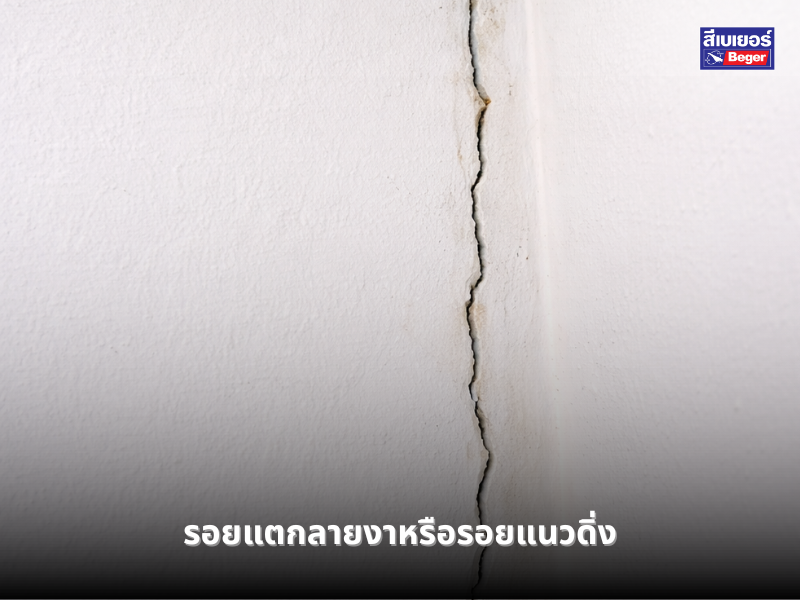
Hairline cracks or vertical cracks.
Hairline cracks or small vertical cracks that are not deep often occur due to the natural shrinkage of concrete (Drying Shrinkage) or temperature changes. Although these types of cracks are not immediately dangerous, if left unattended, water may seep in and accumulate, causing the rebar to start rusting in the future. Repairing them early is therefore a worthwhile preventive measure.
How to repair a cracked concrete column correctly.
Good repairs are not just about patching over the cracks but also preparing the surface and preventing long-term issues.
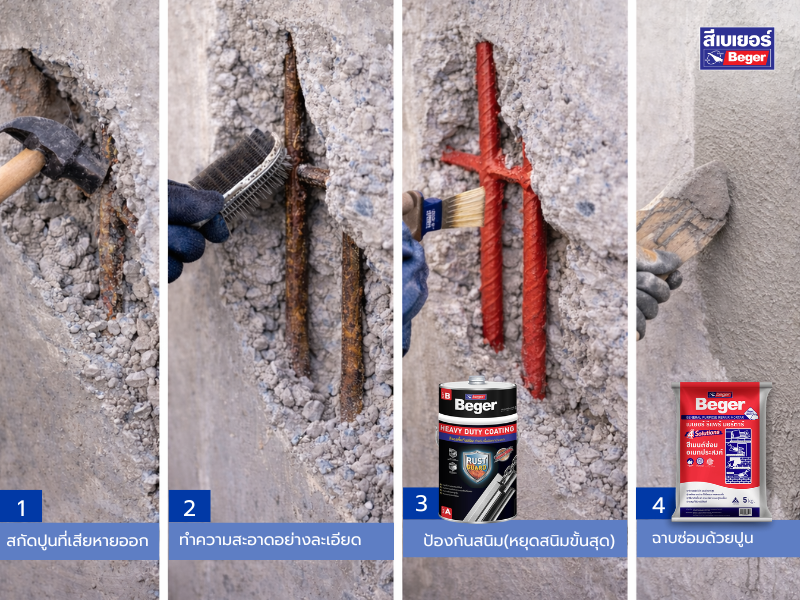
1. Chisel out the damaged concrete.
Start by tapping to check. If you find hollow or flaking concrete, chisel it out until you reach the solid concrete. Slightly widening the crack will help the repair material adhere better.
2. Clean thoroughly.
Scrub with a wire brush or sandpaper, blow out the dust, and mist the surface to keep it damp but not wet (SSD). A clean surface with the right moisture will help the repair concrete bond effectively.
3. Rust prevention (ultimate rust stop).
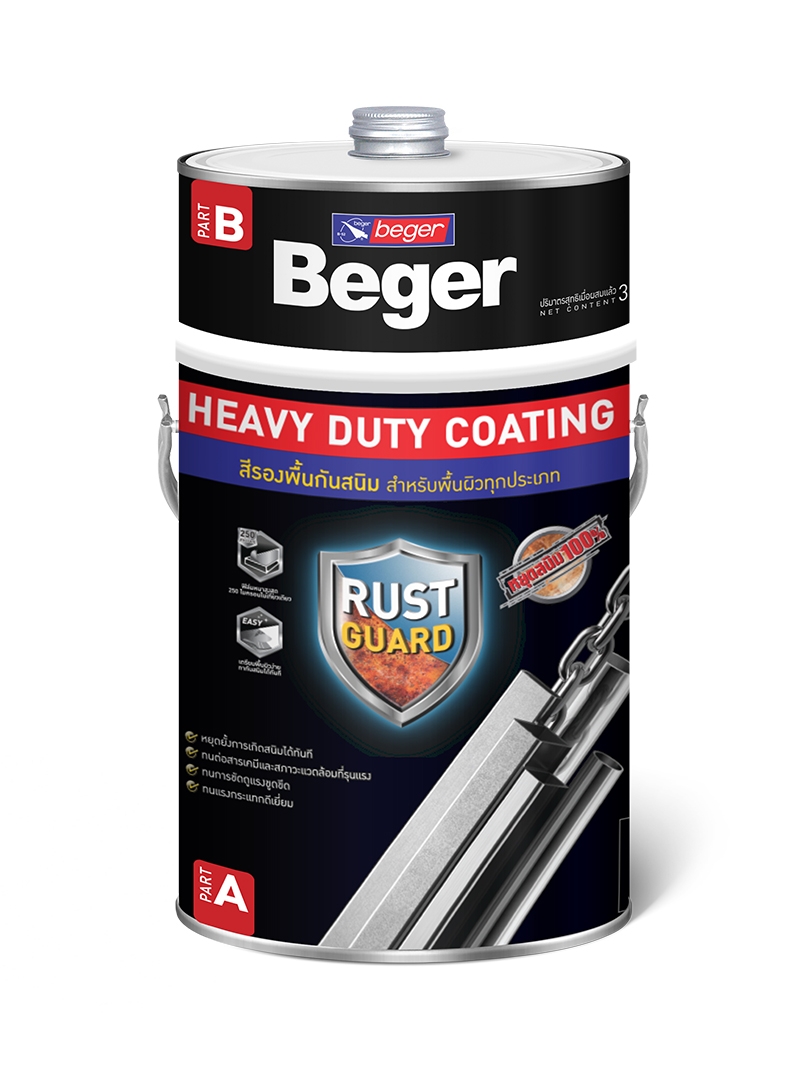
If you find slight rust after cleaning, you should apply Beger Rust Guard to prevent future corrosion. Rust prevention at this stage is important because if the steel rusts again, cracking will return.
4. Repair with mortar
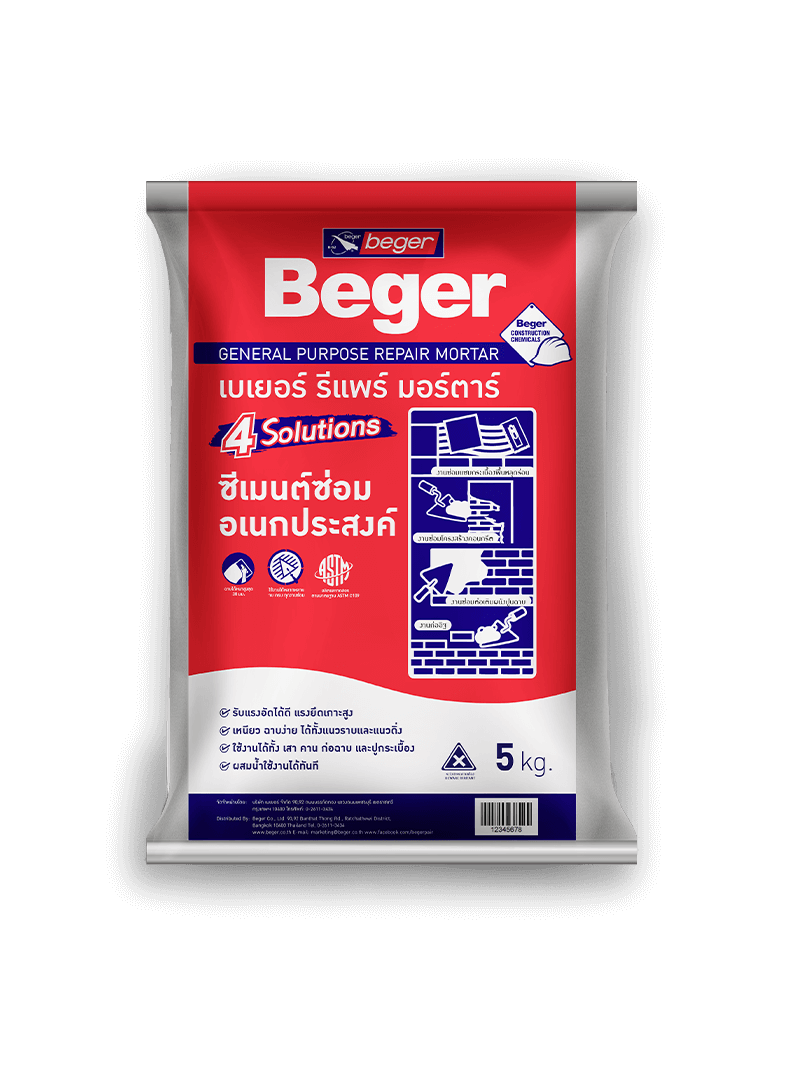
Choose Beger Repair Mortar a non-shrink multipurpose repair mortar specifically designed for structural repair work.
Key features include:
- High compressive strength
- Good adhesion
- Reduces recurring cracks
- Can be used in vertical and overhead applications
Fill the voids completely, smooth to the original surface, and ensure proper curing.
What causes concrete columns to crack? Understanding the causes to prevent in the future.
Concrete columns can crack due to several factors, such as:
- Concrete shrinkage during curing
- Water leakage and moisture accumulation
- Reinforcing steel rusting
- Uneven soil settlement
- Non-standard construction
- Long service life
Regular inspection of concrete columns and repairing as soon as problems are detected helps extend the lifespan of the house better than allowing damage to escalate. Cracked concrete columns can be repaired by yourself if it is just a surface crack not exceeding 1–2 mm, not deep to the reinforcing steel, and without expansion. Repairs should be done following the correct procedures to restore strength and prevent recurrence. However, if there are diagonal cracks, deep cracks exposing steel, spalling concrete, or signs of structural abnormalities such as leaning columns or sinking floors, it is advisable to have an expert inspect it, as it may relate to structural issues that need more than just surface repair. Accurate assessment and choosing repair methods based on structural principles from the beginning is a safe approach that helps extend the lifespan of the house in the long term.
Recommended products
|
Beger Rust Guard |
Beger Repair Mortar |
FAQ Frequently Asked Questions about Cracked Concrete Columns
Q1: Is a cracked concrete column dangerous?
A1: A cracked concrete column can be either dangerous or not, depending on the nature of the crack. If it is just a small hairline crack not exceeding 1–2 millimeters and does not reach the rebar, it is usually a surface crack that does not affect the structure. However, if it is a diagonal crack at a 45-degree angle, deep enough to expose the rebar, or if there is spalling concrete, a professional should inspect it immediately as it may relate to structural issues or foundation settlement.
Q2: What type of cracked column can I repair myself?
A2: A cracked column that can be repaired by yourself is a small surface crack that does not reach the rebar and has not worsened. It can be repaired by chipping away the damaged concrete, cleaning the surface, preventing rust on the rebar, and applying a non-shrink repair mortar such as Beger Repair Mortar to restore strength and reduce the risk of further cracking.
Q3: What causes a diagonal crack at a 45-degree angle?
A3: A diagonal crack at a 45-degree angle is often caused by shear forces in the structure, which are related to foundation settlement, excessive loading, or accumulated vibrations. This type of crack is considered high risk and should not be repaired only on the surface without investigating the cause.
Q4: What should I do if the rebar is rusty?
A4: If you find that the rebar is rusty, you should clean it until you see the metal. Then, apply a corrosion-resistant primer such as Beger Rust Guard before repairing with non-shrink mortar. If the rebar has corroded to the point where its diameter has decreased by more than 30%, additional reinforcement should be added for structural strength.
Q5: How much does it cost to repair a cracked column?
A5: The cost of repairing a cracked column depends on the level of damage. Small surface cracks may start at around 1,500–3,000 Baht, but if epoxy injection or rebar repair is needed, the price may range from 5,000–15,000 Baht or more, and in cases where structural reinforcement is required, the costs may be higher.