
Traffic colors Traffic lines are one of the most important elements on every road because they help organize, communicate meaning, reduce confusion, and enhance safety for both drivers and pedestrians. Although we see traffic lines every day, many people may still not know how “each color serves a different purpose.” This article will help you understand traffic colors, the meaning of road marking colors, types of traffic colors, and why you should choose to use quality standard colors, such as BEGER traffic paint, which has been developed specifically for the actual road conditions in Thailand.
Traffic paint is a material used to mark roads so that drivers and pedestrians can understand and comply with traffic rules correctly. Traffic paint is usually weather-resistant and durable to ensure long-term usability. Generally, it features prominent colors such as white, yellow, and red to ensure visibility in all lighting conditions.
Traffic Paint is a type of paint specifically designed for marking lines on roads, with properties that make it durable for heavy use. It can withstand abrasion from vehicle tires, continuous foot traffic, and severe weather conditions such as intense sunlight, heavy rain, and UV rays that can cause regular paint to fade quickly.
The characteristics of good traffic paint.
- Easy to use, highly resistant to wear.
- Clear visibility both day and night
- Dries quickly, activates the area in no time.
- Does not easily fade even when exposed to sunlight (UV rays)
Faded or non-standard traffic lines can lead to misinterpretation, resulting in accidents. Therefore, it is essential to use colors that meet standards and are suitable for traffic work specifically.
Traffic Paint Types
Traffic colors are divided into 2 main categories, designed to meet different usage needs, including Non-Reflective and Reflective
1) Ordinary traffic paint (non-reflective)
Suitable for areas primarily used during the day and with sufficient lighting. General use, such as in communities, parking lots, schools, or public roads.
The highlights of regular paint.
- Value for money, low operating costs.
- Provides clarity in normal lighting conditions.
2) Reflective Paint
Suitable for roads that require high safety, such as dark roads, highways, grade-separated roads, or accident-prone areas. Used together with Glass Beads to ensure that car headlights reflect back, making road markings clearly visible in low light conditions, such as at night or during rain.
The highlights of reflective colors
- Clear visibility at night
- Help reduce accidents in high-risk areas
- Increase visibility in rainy or foggy conditions
Meaning of each traffic paint color (Traffic Paint Color Meanings)
1. White – General traffic lines / Temporary stop zones – Most commonly found, such as
- Lane markings
- Stop Line
- Crosswalk
- White–black sidewalks and curbs (stopping allowed, but not for parking)
It is a color for clearly “defining the use of space”
2. Yellow – Opposing lane markings / Warning points – Used to indicate direction and warn drivers, such as
- Dividing opposing traffic lanes
- Warning lines before curves
- Rumble Strip to slow down
Clearly visible even at night
3. Black – Background color / Enhancing clarity – Black is not used to convey meaning directly but helps emphasize other colors, such as
- Background of traffic signs
- Area before repainting
- Black–white sidewalks for drop-off and pick-up
Helps make various symbols easier to see
4. Red – No parking zone / No stopping –Used in areas that must remain clear and have high safety, such as
- School Entrance
- Gas Station
- Mouth of the Alley
- U-Turn Point
Red indicates “absolute prohibition”; drivers must not stop or park in this area under any circumstances.
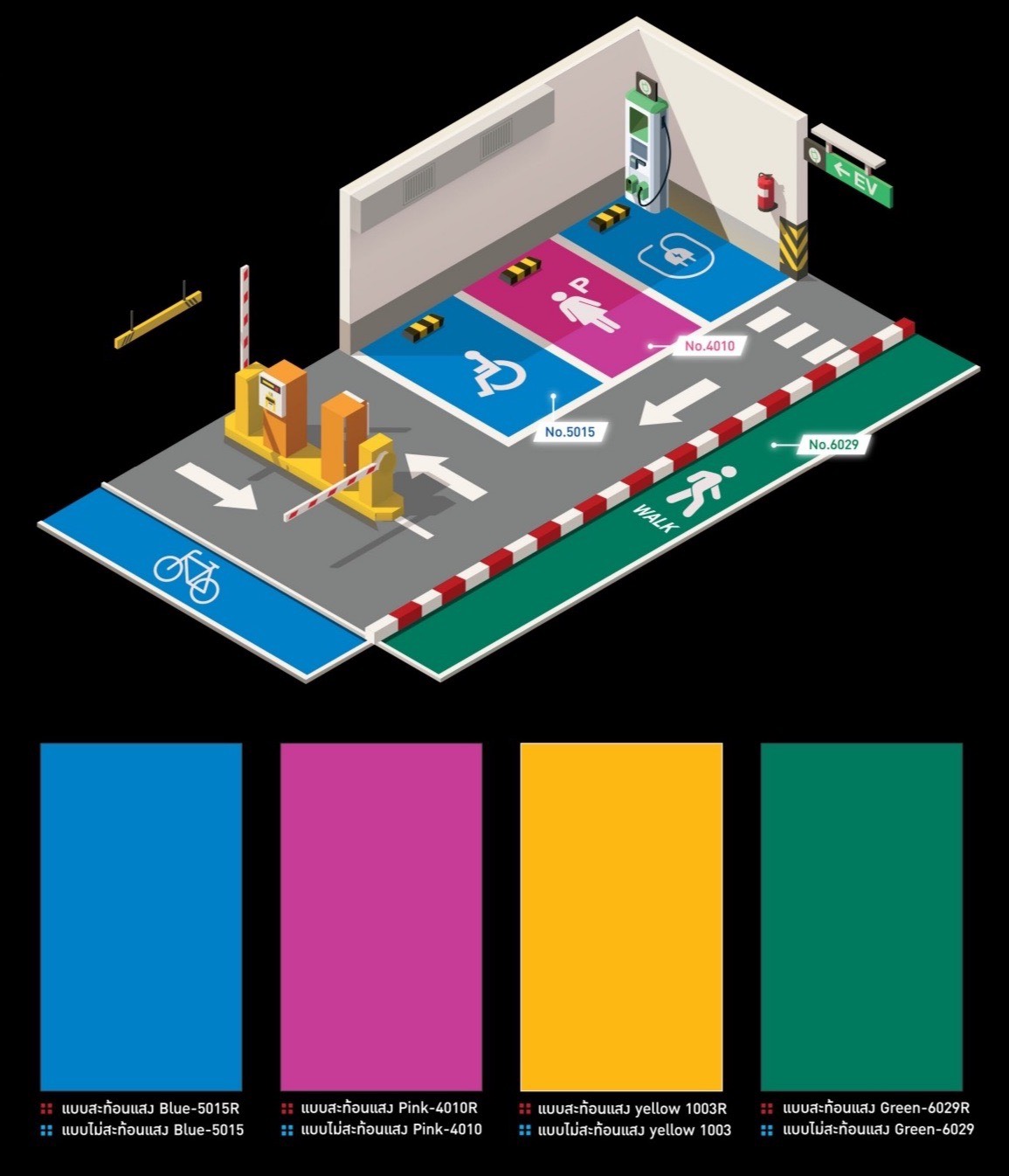
5. Blue or Navy – Special Privilege Area – Used to designate specific areas, such as
- disabled parking and bike lanes
- Specific Service Areas
- Areas that need to be easily observed
Often used in conjunction with the Wheelchair Symbol and Bike Lane
6. Pink – Activity Zone / Specific Area – Suitable for community areas, such as
- sidewalks in schools
- women and children activity zones
- areas that require prominence
helps create safety with visibility
7. Green – Walkway / Speed Reduction Area – This color “grants higher rights” to vulnerable road users, such as
- pedestrian paths (in some cases used instead of bike lanes)
- community activity zones
conveys safety and friendliness to everyone in society
Why must traffic colors meet standards?
1) To prevent accidents and clearly delineate usable areas
Faded or peeling lines can easily lead drivers to misinterpret them.
2) Reduce long-term costs
Low-quality paint needs to be reapplied frequently, leading to wasted budget.
3) Enhance the safety image of the area
Schools, communities, or roads with clear lines appear safer and more trustworthy.
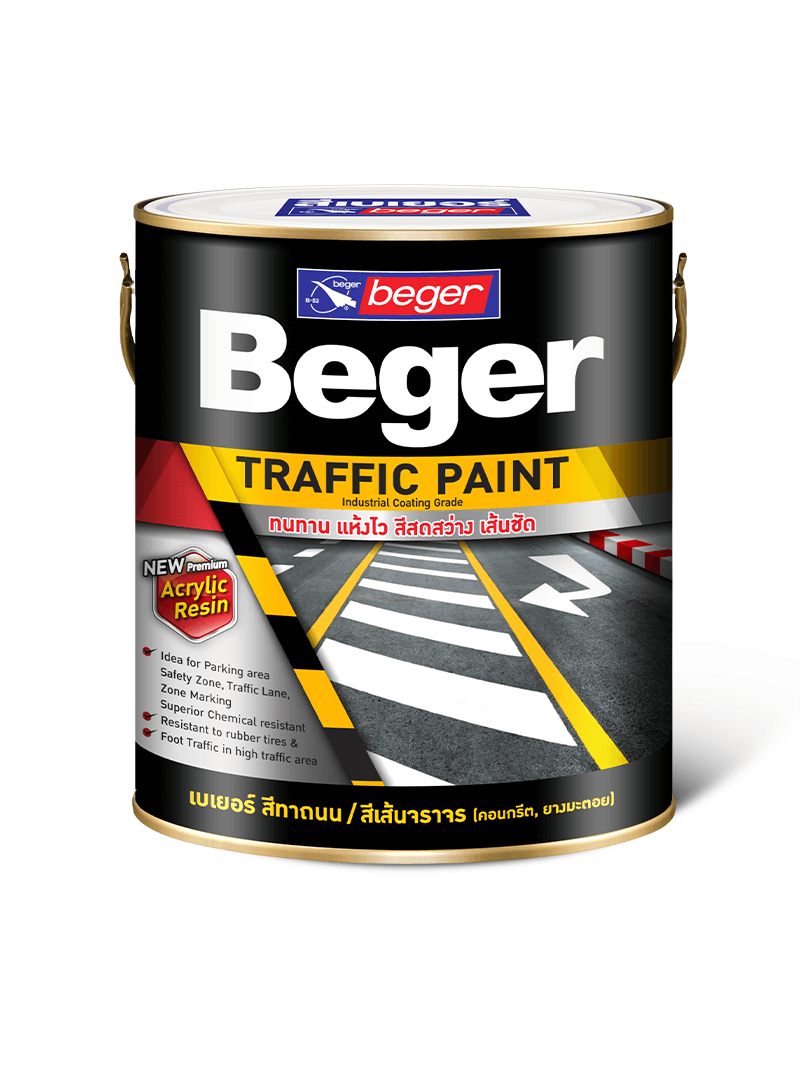
Why is “Beger Traffic Paint” suitable for Thai road conditions?
- The paint is concentrated, providing sharp lines.
- Dries quickly, ready for use within 15-20 minutes.
- Resistant to intense sunlight (UV rays), heavy rain, and standing water.
- Does not easily catch stains and does not embed in the paint film, keeping surfaces clean for a long time.
- Resistant to foot traffic and abrasion.
- Meets traffic paint standards.
Suitable for schools, communities, roads, and all types of traffic work.
Summary: Traffic paint is the language of safety that makes roads safer.
Traffic paint is not just colored lines on the road, but a symbol of safe driving that helps reduce accidents, increases orderliness, and allows everyone to use the road confidently. Choosing quality traffic paint, such as Beger Traffic Paint, is a worthwhile long-term investment to ensure that all roads in the community are as safe as possible.
Product Recommendations
FAQ Frequently Asked Questions about Traffic Paint
Q1: How is traffic paint different from regular building paint?
A1: Traffic paint is designed to withstand abrasion and repeated foot traffic better, thus providing clearer and more durable markings.
Q2: How often does traffic paint need to be reapplied?
A2: It depends on the usage conditions and the density of traffic. High-quality paint, such as Beger Traffic Paint, can last for years without frequent maintenance.