

Applying waterproof paint is a task that helps protect the home from moisture, leaks, and long-term damage. However, what homeowners often overlook is “surface preparation before applying waterproof paint,” which is the most crucial step. Because no matter how high-quality the waterproof paint is, if the surface is not ready, the paint will not adhere, peel off, and will not effectively prevent water. This article provides techniques that are correct according to professional standards and can be used on roofs, old concrete walls, new concrete walls, as well as areas that have previously leaked.
1) Clean the surface as thoroughly as possible

The surface to be painted with waterproof paint must be dry, clean, free from dust and stains. If there is dirt, peeling old paint, or mold stains, it will directly affect the adhesion of the waterproof paint film.
What needs to be done:
- Scrape off all peeling paint.
- Dust off the surface.
- Wash away any stains that may prevent the paint from adhering.
For areas with mold or slime,
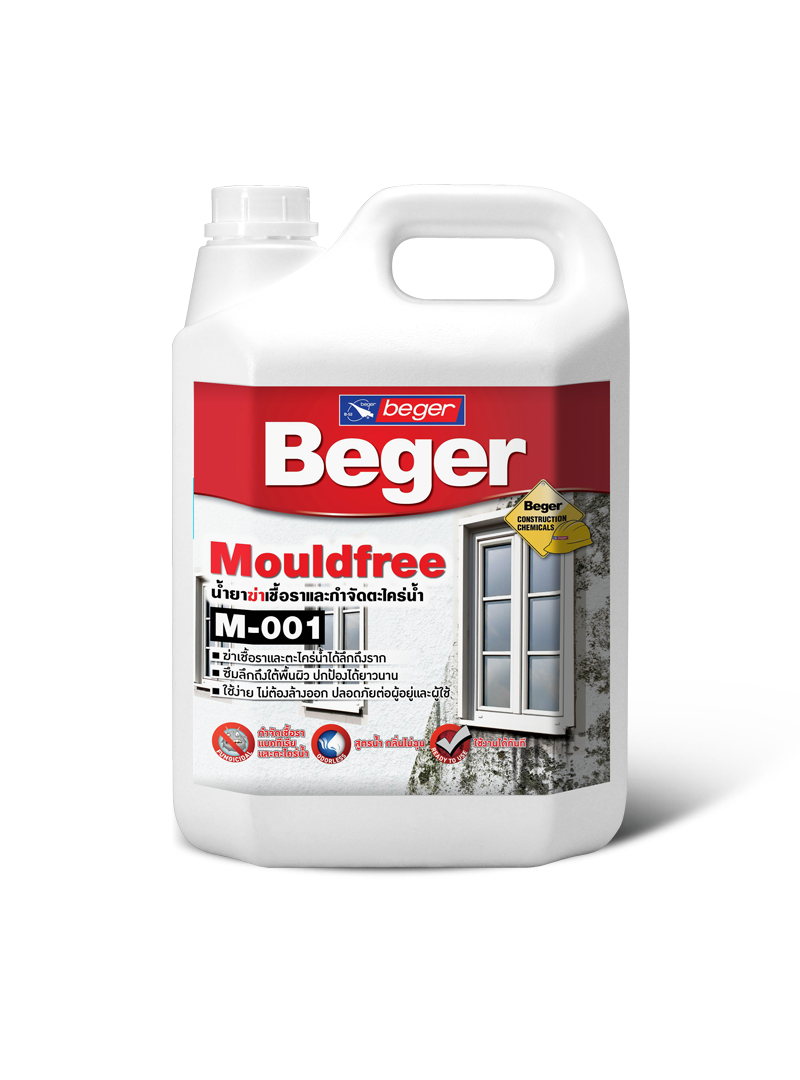
it is advisable to use a mold killer Beger MouldFree M-001 to sustainably stop mold growth, reduce the chance of recurrence, and help the waterproof paint adhere better.
2) Address cracks before applying waterproof paint

Cracks and crazing are significant enemies of waterproofing work. If not properly repaired, water can still seep through even after applying waterproof paint.
Properly repairing cracks
- Use Beger Sealant to fill the cracks.
- Choose the type of sealant suitable for the size of the crack, such as
– Small cracks: Acrylic sealant
– Temperature-expanding cracks: Polyurethane sealant
After filling, always wait for it to dry before applying the primer and waterproof paint.
3) Choose a primer suitable for the surface condition

Applying waterproof paint on “old concrete surfaces” requires special attention because the surface often has accumulated moisture and the original structure may be deteriorating.
It is recommended to use
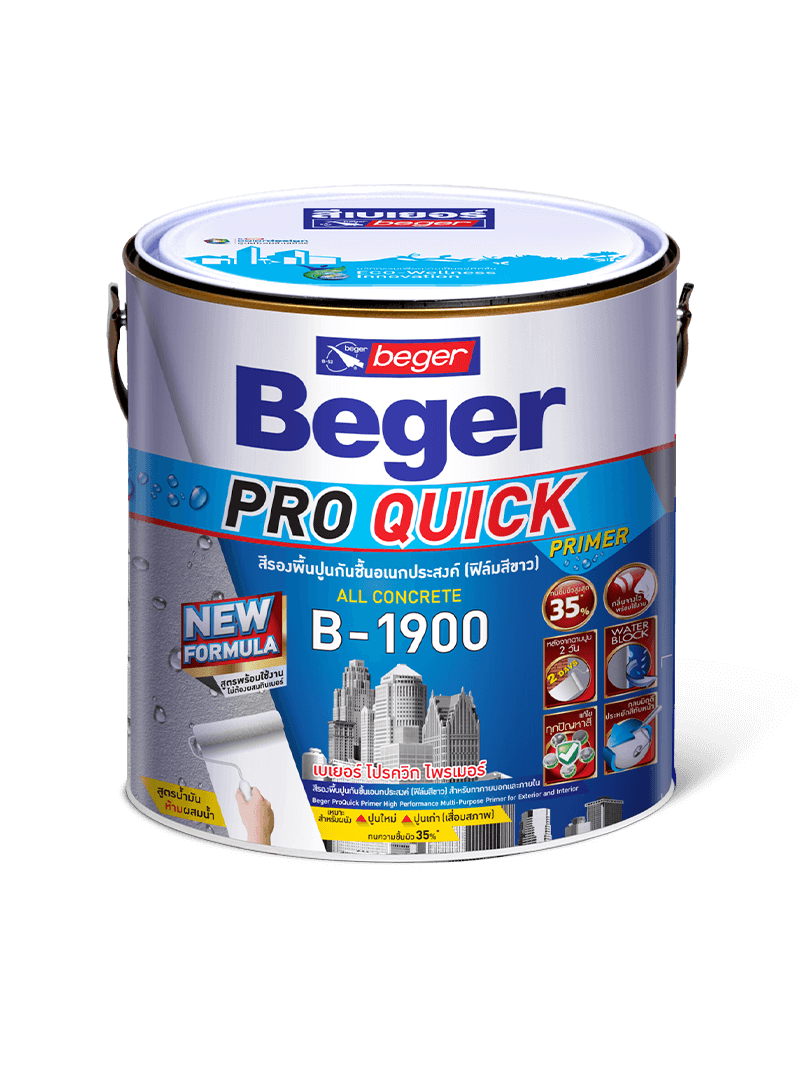
Beger Pro Quick Primer B-1900 a primer for old plaster that is highly moisture-resistant, helping to enhance the adhesion of waterproof paint, making the paint film strong and reducing the chances of blistering or peeling.
Benefits of using a primer for old plaster:
- Enhances adhesion to the surface
- Prevents moisture push from within
- Maximizes the effectiveness of the waterproof paint applied on top
4) Install Fiber Mesh
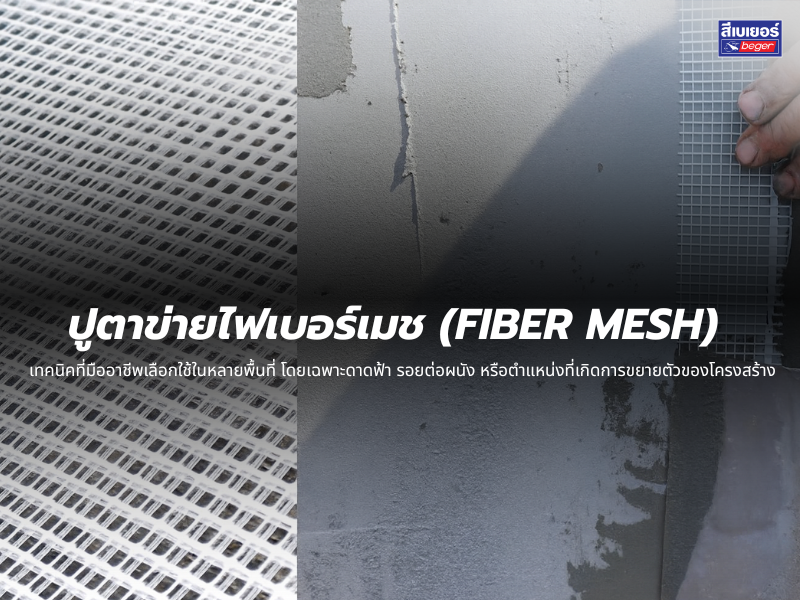
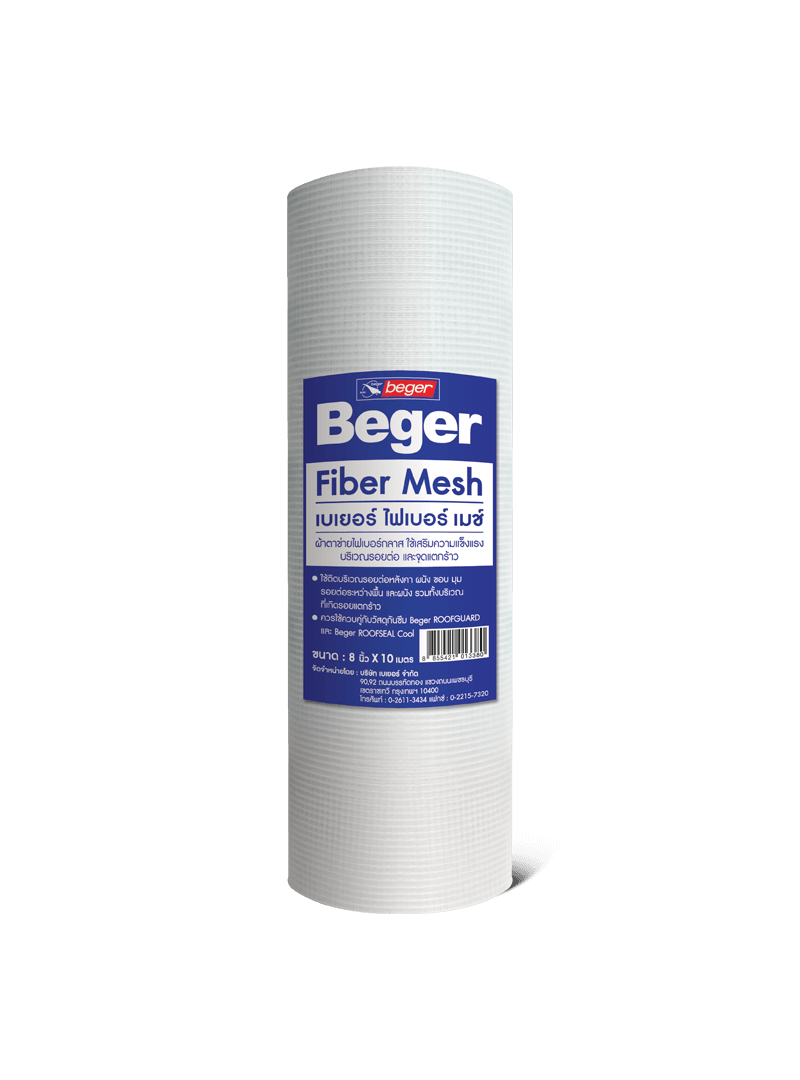
A technique chosen by professionals in many areas, especially rooftops, wall joints, or locations where structural expansion occurs. Using Beger Fiber Mesh is very important.
Reasons to install Beger Fiber Mesh before applying waterproof paint:
- Increases the strength of the waterproof paint film
- Helps distribute stress, reducing the chances of new cracks
- Enhances the adhesion of the waterproof paint to the surface
- Extends the lifespan of the waterproofing system
The technique is to apply the first coat until slightly damp, then lay the mesh on the area before applying another coat of waterproof paint.
Start the waterproofing paint application process according to the correct system.
Once the surface is ready, the actual waterproofing work can begin, which generally consists of
Standard steps
- Apply the first coat of waterproof paint
- Wait for it to dry
- Install Fiber Mesh (if necessary)
- Apply the second coat of waterproof paint
- Check the flatness across the entire area
Depending on the type of waterproof paint, some brands may require three coats to ensure the film thickness is sufficient for water protection.
Why is “surface preparation” the most important in waterproof painting?
Because 80% of issues such as peeling, blistering, swelling, and cracking arise from improperly prepared surfaces, not because the waterproof paint is of poor quality.
If the surface preparation steps are done correctly, the results will be as follows:
- Excellent paint adhesion
- Long-lasting water protection for many years
- Reduced need for repairs
- Long-term cost savings
- A home that is truly free from water leakage issues
Summary: The best professional surface preparation techniques before waterproof painting
Surface preparation is the most critical step in waterproof painting because it determines whether the paint film will adhere well, be durable, and provide effective water protection. The surface must be dry, clean, free from peeling paint, dirt, and all types of mold. If mold or algae are found, it should be cleaned with a fungicide such as Beger MouldFree M-001.
Cracks and fissures must always be repaired first using an appropriate sealant like Beger Sealant to fill the cracks smoothly and prevent water penetration. Then, a primer suitable for the surface condition should be applied, especially for old concrete surfaces where a high-moisture-resistant primer like Beger Pro Quick Primer B-1900 should be used to enhance adhesion and stability of the paint film.
In areas prone to cracking or surface expansion, such as rooftops, fiber mesh should be laid to reinforce and extend the lifespan of the waterproofing system. Once all surface preparation steps are completed, the waterproof paint should be applied according to the system, ensuring the specified number of coats is achieved. The result is a waterproof paint film that adheres tightly, does not peel, effectively protects against water, and is durable, significantly reducing future repair issues.
Recommended Products
|
|
|
|
FAQ Frequently Asked Questions about Surface Preparation Before Waterproof Painting
Q1: Why is surface preparation necessary before waterproof painting?
A1: Because it helps the waterproof paint adhere well, prevents peeling, provides full water protection, and extends the lifespan in the long term.
Q2: Do small cracks need to be repaired before waterproof painting?
A2: Yes, they must be repaired in all cases because cracks are points where water can seep through. If not filled, the waterproof paint will not be able to prevent leaks effectively.
Q3: How should old concrete surfaces be treated for waterproof painting to ensure durability?
A3: They should be cleaned, cracks filled, and a moisture-resistant primer applied before painting to enhance adhesion and reduce future peeling issues.
Q4: Is it necessary to use Fiber Mesh before applying waterproof paint?
A4: It is recommended to use it in vulnerable areas, such as rooftops and wall joints, as it helps reinforce strength, reduce cracking, and extend the lifespan of the waterproof paint.