
Eco-friendly Paint is a type of house paint that has very low levels of volatile organic compounds (VOCs), making it safe for health and reducing environmental impact. For homes in Thailand, which experience hot and humid weather, the best choice is to use heat-reflective paint for exterior walls to lower the home’s temperature, and Low VOCs paint for interiors to maintain indoor air quality.
What is Eco-friendly Paint and how does it differ from regular paint?
Eco-friendly Paint is designed to have a very low amount of volatile organic compounds (VOCs – Volatile Organic Compounds), thus releasing fewer chemicals into the air compared to regular paint. The key difference lies not in the aesthetics of the color but in the safety for health and reduced environmental impact.
Regular paint often emits VOCs during and after application, which causes strong odors and the accumulation of chemicals in indoor air. In contrast, Low VOCs or Ultra Low VOCs Eco-friendly Paint reduces this problem, and many formulations also include heat-reflective or antimicrobial properties.
Why is Eco-friendly Paint suitable for homes in Thailand?
Eco-friendly Paint is suitable for homes in Thailand because it meets the needs of the hot and humid climate and accommodates multi-generational living. Thailand is in a tropical region with high temperatures, intense sunlight, and humidity almost year-round, which directly affects the lifespan of paint and indoor air quality.
3 reasons why Eco-friendly Paint is suitable for Thailand’s climate
- Extreme heat: Heat-reflective paint helps reduce indoor temperatures and lessen the load on air conditioning.
- High humidity: Paint must be flexible, resistant to wall expansion, and not peel easily.
- Multi-generational living: Thai homes often accommodate multiple generations, so the paint must be safe for children, the elderly, and those with allergies.
How to choose Eco-friendly Paint suitable for your needs, step by step
The principle of selecting Eco-friendly Paint is to categorize by usage area first, as exterior and interior walls face different issues, and then choose paint properties that address those specific problems.
1. Exterior areas: Focus on sun resistance and reducing indoor temperatures
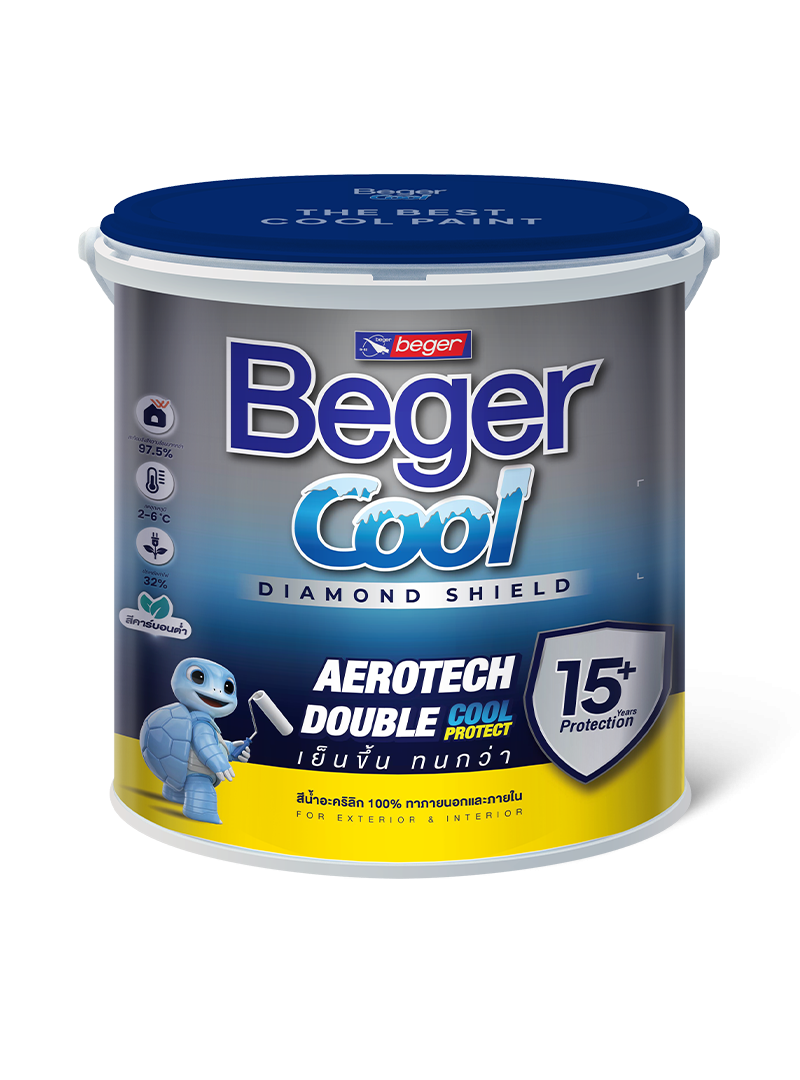
Exterior walls are directly exposed to sunlight and heat, so it is advisable to choose paint with heat-reflective properties. For example, BegerCool is a product that the manufacturer claims can reduce wall temperatures by up to 6 degrees, helping to keep the house cooler and save on electricity costs.
- Helps reduce heat entering the house
- Saves energy and lowers electricity bills
- Sun and rain resistant, suitable for all regions of Thailand
- Looking for models that have Energy-saving label number 5 and green label
2. Indoor space: The safety of people in the house comes first
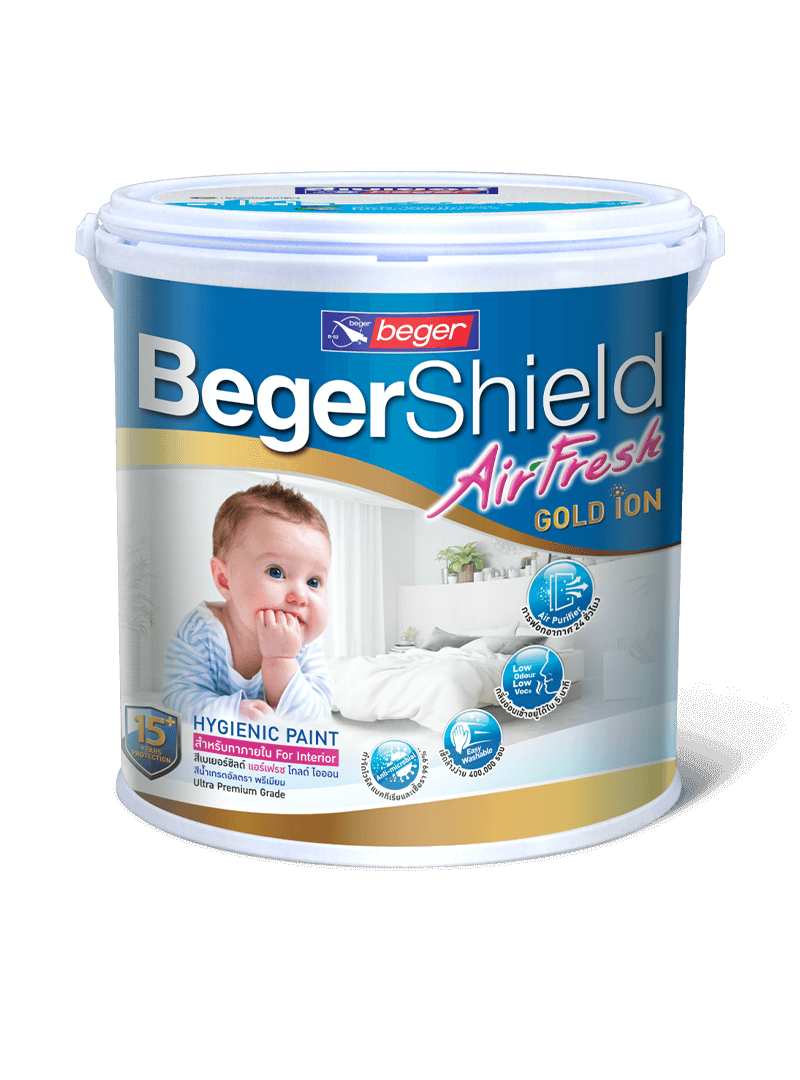
The indoor space is where we spend a long time, so the focus should be on indoor air quality. Choose colors that do not contain harmful volatile substances (Low VOCs or Zero VOCs) and have properties that help reduce the accumulation of germs, such as BegerShield AirFresh Gold Ion
- Has Gold Ion technology that can inhibit the coronavirus (SARS-CoV-2)
- Mild scent ready to move in within 5 minutes (after paint dries)
- Helps purify the air inside the room
- Suitable for children’s rooms, elderly rooms, and bedrooms
3. Make sure it is “truly” eco-friendly paint, not just marketing
- Amidst the greenwashing trend, checking labels is the best way to verify. Before purchasing, check in this order
- Look for the VOCs value indicated on the can; the lower, the better (look for the terms Low VOCs or Zero VOCs)
- Look for the green label (Green Label) certified by environmental standard organizations
- Check for energy-saving label number 5 if it is a heat-reflective paint
Consider carbon labels or carbon footprint information of the product
How do eco-friendly paint and regular paint differ?
In summary, eco-friendly paint has advantages over regular paint in terms of health safety, odor, and environmental impact, while regular paint may be cheaper when comparing only the price per can but does not consider long-term electricity costs and health.
| Comparison topics | Eco-friendly paint (Eco-friendly) | Regular paint |
|---|---|---|
| VOCs | Very low (Low/Zero VOCs) | Often higher, may accumulate in the air |
| Odor during application | Light scent, quick ventilation | Strong scent, requires long ventilation |
| Safety for children/elderly | Suitable, safer | Caution in enclosed areas |
| Heat reduction (heat-reflective model) | Has, helps reduce wall temperature | Generally does not have this property |
| Environmental label | Often has green label/carbon label | Uncertain |
| Long-term environmental impact | Lower than | Higher than |
Eco-friendly paint technology to know
The trend of eco-friendly paint is the integration of “health technology” with tangible “environmental data.” Consumers are not just looking for safe paints but also want verifiable information that genuinely helps the planet.
- Gold iON Technology: A technology that the manufacturer Beger claims helps inhibit viruses and bacteria on surfaces
- Beger Paint CO₂ CAL app: A tool to calculate carbon footprint, allowing consumers to make informed decisions with environmental data
- Low Carbon Paint: A new product group focused on reducing carbon emissions throughout the product’s life cycle
Who is eco-friendly paint suitable for?
Eco-friendly paint is suitable for every home that values health and long-term costs, but it will be particularly beneficial for the following groups
- Homes with young children, elderly individuals, or those with allergies and respiratory issues
- Houses that frequently use air conditioning and want to reduce electricity costs from accumulated heat
- People who work from home (WFH) and spend long hours in closed rooms, thus caring about air quality
- Homeowners who want to participate in reducing carbon and support sustainability
Choosing eco-friendly colors suitable for the climate and lifestyle in Thailand is not just about the beauty of the home, but an investment in long-term quality of life, including comfort in the home, the health of family members, energy savings, and reducing environmental impact. Start simply by choosing heat-reflective paint for the exterior, Low VOCs or Zero VOCs for the interior, and checking environmental labels before every purchase. This alone is a small step that can truly change both our home and the world.
Recommended Products
|
BegerCool DiamondShield 15 |
BegerShield AirFresh Gold Ion |
FAQ Frequently Asked Questions about Eco-friendly Paint and its Use in Homes
Q1: What is eco-friendly paint, and how is it different from regular paint?
A1: Eco-friendly paint (Eco-friendly Paint) is house paint with low (Low VOCs or Zero VOCs) or no volatile organic compounds, safe for health, and reduces environmental impact, unlike regular paint that may release harmful chemicals into the indoor air.
Q2: Does eco-friendly paint really help keep homes cooler?
A2: Eco-friendly exterior paint that has heat-reflective properties can help reduce wall temperatures, making the interior of the home cooler, reducing air conditioning usage, and saving energy in the long run.
Q3: Why is Low VOCs paint important for health?
A3: Low VOCs paint helps reduce the release of harmful chemicals in the air, making it safe for the respiratory system, suitable for homes with children, the elderly, or those with allergies, and improves indoor air quality.
Q4: What type of paint is best for homes in Thailand?
A4: Homes in Thailand should choose paint suitable for the hot and humid climate, which means heat-reflective paint for the exterior and non-toxic Low VOCs or Zero VOCs for the interior to help reduce heat, prevent moisture, and care for the health of residents.
Q5: Does eco-friendly paint really help save on electricity bills?
A5: Choosing paint with heat-reflective properties will help reduce heat accumulation in the home, causing the air conditioning to work less, thus effectively reducing electricity bills in the long run.
Q6: How can I tell if the paint I buy is truly eco-friendly?
A6: Check the VOCs level indicated on the can, green labels, Energy Saving Label No. 5 (for heat-reflective paint), and the carbon footprint information of the product. If it has certification from a standards organization, it is more reliable than advertising claims alone.