
“Flooding at Home”is a natural disaster that can cause severe damage to both the structure of the house and the mental well-being of the residents. This is especially true during the rainy season when heavy rain falls continuously, leading many areas to face sudden flooding without warning. Therefore, preparing in advance and understanding how to restore a home after flooding is something that every household should not overlook. This article will introduce you tohow to cope before floodingandguidelines for properly restoring a home after the water recedesbased on the 3RE concept (Recheck – Repair – Repaint), along with recommendations for products that help make your home beautiful again, safe, strong, and ready to face any future situations.
Causes of Flooding: What Are They?
The causes of flooding often stem fromheavy rainfallor prolonged rain, combined with various natural factors such as low-pressure systems, tropical storms, troughs, monsoon winds, high sea levels, and natural disasters like earthquakes, tsunamis, or coastal waves. Some flooding is also a result of human actions such as deforestation and the construction of roads or structures that obstruct water flow.
Different areas or geographical features may experience flooding in different ways. For example:
- flash floods occur in areas at the foot of hills, low-lying plains near high mountains, andheadwater forestswhere water flows down from above to the lower plains because trees cannot absorb the water quickly enough.
- Stagnant flooding occurs in a horizontal manner from higher areas to lower areas, in low-lying plains along riverbanks, low-lying areas by the water, along water flow paths in communities, and coastal areas. Urban areas often encounter this type of flooding due to poor drainage. Another case may occur from high sea levels near the coast.
- Overbank flooding occurs in low-lying plains along riverbanks when the volume of water exceeds what the river can handle, causing it to overflow and damage surrounding areas.
Another main cause of flooding that many people are unaware of is the house itself and its surroundings. Whether it’s a house without flood barriers, a house situated below street level, clogged drainage systems, or roofs or walls withleaksor poorly designed plumbing systems that allow water to enter the house more quickly. These issues are partly things that homeowners can prepare for or plan to prevent flooding in advance.
Stay Informed, Prepare, and Cope Before Flooding at Home
Preparing to cope before flooding is essential, especially in areas that are prone to flooding every year. The better prepared we are, the safer we will be, and the risk of flooding at home will decrease. When the damage to the house is minimized, there will be less time and expense involved in renovating the home. The following are recommendations for preparing for flooding:
- monitor the flood situation and water levels in the area from reliable agencies or organizations that closely facilitate flood issues in the area and strictly follow their recommendations
- continuously observe abnormalities or natural signs such as water levels in rivers, the color of waterways, and the unusual behavior of wildlife to prepare for response or evacuation to safe areas
- In high-risk areas, it is recommended to prepare flood protection equipment such as placing sandbags or reinforcing dikes around the house to block water flow, along with clearing trash, weeds, or obstacles around water pipes or drainage systems to prevent blockages
- move belongings to higher ground especially electrical appliances or items made of wood and metal to keep them above flood levels. If you have vehicles, it is advisable to park them in a safe location where flooding does not reach
- prepare important documents, essential survival items, and consumables sufficient for at least 3-5 days, such as bottled drinking water, dry food, canned food, medications, mobile phones, flashlights, batteries, candles, lighters, trash bags, toilet paper, and boots, among others
- If evacuation is necessary, all electrical appliances should be turned off use tape to seal electrical outlets in the house, turn off the circuit breaker, and securely lock doors and windows before leaving the area
- note down emergency contact numbers or hotlines in your residential area, district, or province for early flood assistance

3 correct and safe solutions for flood problems in homes
Flooding in homes is a difficult time for all affected individuals, but what is even more challenging is renovating the home or addressing flood damage, which often comes with many problems, such as swollen walls, peeling, damp walls, mold, algae, or dirt stains on walls. Therefore, it is essential to address these issues correctly, restore the damaged home to its former beauty, and enhance the home’s protection for greater durability. By BEGER, there are principles of3REto help make solving home flood problems easier, as follows:
1) RECHECK – Inspect
Inspect the areas of the house that are submerged in water, especially the walls and concrete pillars, as these are points where moisture accumulates. Also check the ceiling areas that may be affected by flooding, water leaks, or continuous heavy rain.
Warning:During the inspection, protective gear should be worn, and caution should be taken regarding the electrical systems in the house, as well as any poisonous animals that may come with the water, for personal safety.
2) REPAIR – Repair
Prepare equipment for restoration andHome RepairGet ready with items such as gloves, rubber boots, a hose, or a high-pressure washer. Then start removing the damaged paint film and clean the walls as much as possible.
The damaged paint film that is peeling or bubbling should be scraped off with a putty knife, a multifunctional sander, or a paint stripper. Dirt and mud should be removed with warm water mixed with a cleaning solution and scrubbed with a stiff brush. You may use bleach to cover the area and scrub to remove deep stains. After that, rinse with clean water again.
Importantly:Since flooding comes withmold,homeowners must not forget to apply a mold and mildew remover before painting the house. This is not only to prevent the house from looking old and dilapidated but also to avoid potential long-term health issues, particularly respiratory diseases and allergies.
Initially, after preparing the surface, it is recommended to apply a mold and mildew removerBeger MouldFree M-001once, leaving it to soak without rinsing off, and then proceed to paint according to the proper system.
3) REPAINT – Paint according to the system
Homeowners shouldpaint the houseaccording to the system, which is primer + topcoat. Due to the flooding causing significant damage to the house, it is crucial to applya primerbefore applying the topcoat to enhance adhesion, durability, and moisture resistance as much as possible.
Recommended high-moisture-resistant multipurpose primers includeBeger Water Block Primer B-3100with maximum moisture resistance of 75%, suitable for all types of cement walls, orBeger Pro Quick Primer B-1900with high moisture resistance of 40%, suitable for deteriorated old cement.
For the topcoat, it is recommended to use paint with the desired properties, selecting one that is suitable for the walls of the house, such as interior paint.BegerShield AirFresh Gold iONFeatures that help purify the air and eliminate various pathogens on walls or exterior house paintBegerCool DiamondShield 15Cool house paint, durable, energy-saving, and also low carbon emission
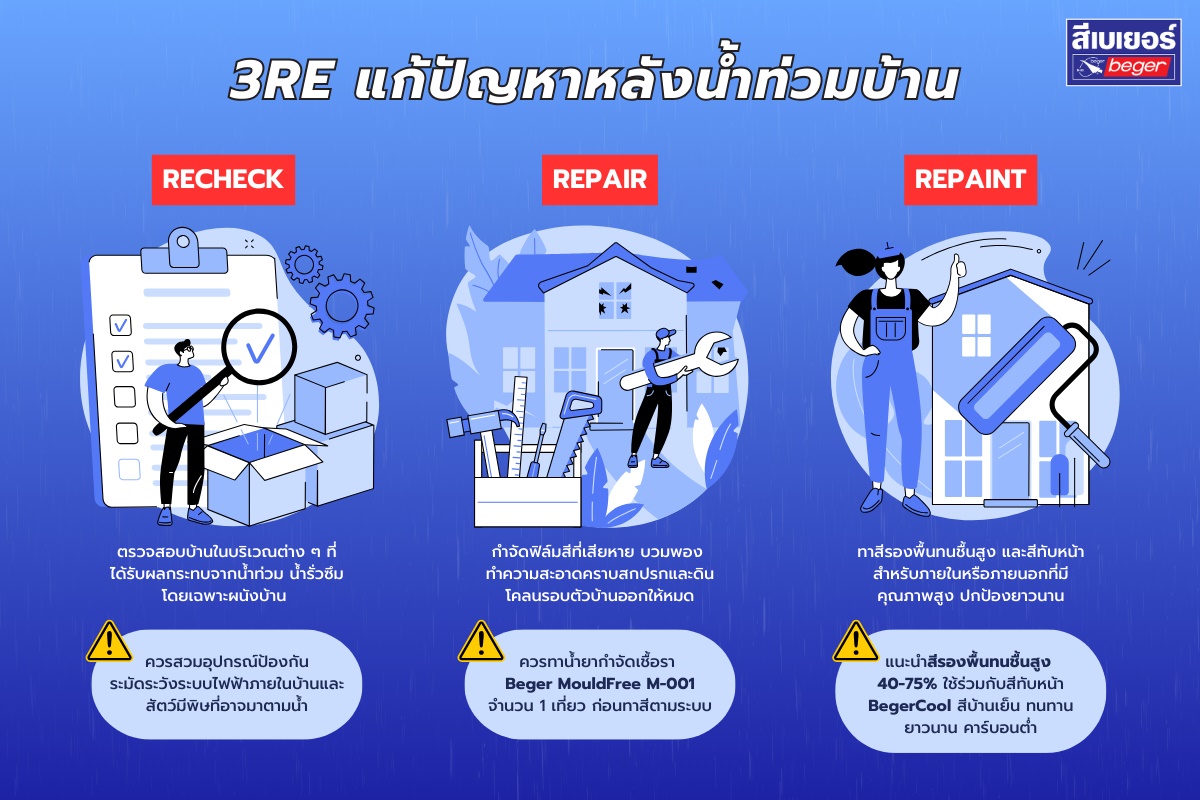
3RE steps to revive your home after the flood
If you have questions or concerns about flood preparedness, solving home flooding issues, or want to consult about renovating your home after a flood, you can consult directly with experts from Beger at Line:@begerpaintduring business hours