

A wooden house that has been flooded may suffer more damage than what is visible externally, as water can seep into the wood, causing it to swell, warp, and peel, as well as leading to moisture accumulation and mold, especially in areas like wooden walls, wooden floors, and furniture that have been submerged for an extended period.
Can flooded wood be repaired? Does swollen wood need to be replaced? And how many days should one wait for the wood to dry before painting?
Some parts of the wood can be repaired and reused if the wood is still strong and not severely rotted or deformed. However, if the damage extends deep into the structure, it may be necessary to replace the wood for safety reasons.
This article will guide you through checking 3 important points of a wooden house after flooding, along with solutions for swollen wood, warped floors, peeling paint, and recommendations for wood care products suitable for each surface.
What should you start with when repairing a flooded wooden house?
Repairing a flooded wooden house should begin with checking the strength of the wood, cleaning off dirt, addressing mold, and reducing moisture to allow the wood to dry before starting surface repairs or repainting. You should not rush to paint over wood that is still damp, as this may cause the paint to bubble, peel, and lead to moisture problems accumulating beneath the paint film. If the wood is still strong and only has minor peeling or swelling, spot repairs may be possible. However, if the wood is rotted, decayed, cracked, or has lost its load-bearing capacity, it is advisable to have a professional assess it before repairs.
Check the condition of the wood after flooding: which can be repaired and which should be replaced?
| Symptoms of wood | Solutions |
|---|---|
| Peeling paint, but the wood is still strong | Strip the old paint, prepare the surface, and repaint. |
| Slightly swollen wood, not permanently warped | Air dry, check moisture, and assess for repairs. |
| Swollen or detached parquet flooring | Inspect the wood panels and subfloor, repair or replace sections as needed. |
| Signs of mold or musty odors | Address moisture and mold before repairing the surface. |
| Rotted, decayed, collapsed, or deformed wood | Consider replacing the wood and checking the structure. |
Prepare the surface before repairing a wooden house after flooding to prevent paint peeling issues.
Before starting to restore wooden walls, wooden floors, or furniture, ensure that the area is safe from electrical leakage, structural damage, and contaminants carried by floodwaters.
Then prepare the surface according to the following steps:
1. Clean mud and dirt stains.
Remove mud, soil, and dirt from the wooden surface by choosing a cleaning method suitable for the type of wood and surface condition. Avoid using high-pressure water jets on joints, as this may cause more water to seep into the wood. If the floodwaters contained sewage or chemical contaminants, assess the safety of the materials before reusing them.
2. Inspect and manage mold on wood.
Wood surfaces that have been damp for an extended period may develop mold, especially in corners, under wooden floors, behind furniture, and at the joints of wooden panels. If mold stains are found, address moisture issues and clean appropriately before starting to sand the wood or apply new paint. Do not sand dry mold that may disperse into the air. For surfaces that the product supports, consider using a mold remover such as Beger Mouldfree M-001, ensuring to check the usage specifications for wooden surfaces from the label or technical documents beforehand. Read more: 24–48 hours after the water recedes, what should be done? How to eliminate mold before it spreads throughout the house.
3. Allow the wood to dry properly.
Drying the wood is a crucial step in repairing a wooden house after flooding because accumulated moisture can cause the wood to warp and lead to long-term paint issues. Ensure proper ventilation, use fans or dehumidifiers as appropriate, and avoid using high heat or direct sunlight on still-wet wood, as this may cause uneven drying and warping.
How many days must wet wood wait before it can be painted? There is no fixed time frame, as it depends on the type of wood, thickness, duration of water immersion, and weather conditions. Use a moisture meter to check according to the specifications of the paint system to be used; do not rely solely on touching the wood’s surface.
4. Sand the wood surface and repair cracks.
Once the wood is dry and confirmed to be still strong, you can start sanding off the old, peeling paint using sandpaper or an appropriate sander. If you find nail holes or minor blemishes, you can use Beger Wood Filler to fill the wooden surface according to the product instructions.
If you find wood sap, you can use Beger Thinner M-77 to clean as appropriate, ensuring compatibility with the existing and new paint systems before use. Once the surface preparation is complete, choose wood paint that is suitable for the location and usage.
3 points to check when restoring and repairing a wooden house after flooding to make it beautiful again.
Different parts of a wooden house are affected by flooding in different ways. Wooden walls must withstand sun and rain, wooden floors must bear foot traffic and friction, while furniture may consist of various types of wood materials. Choosing the right repair methods and wood coatings that match the work characteristics will help reduce the chances of problems after restoration.
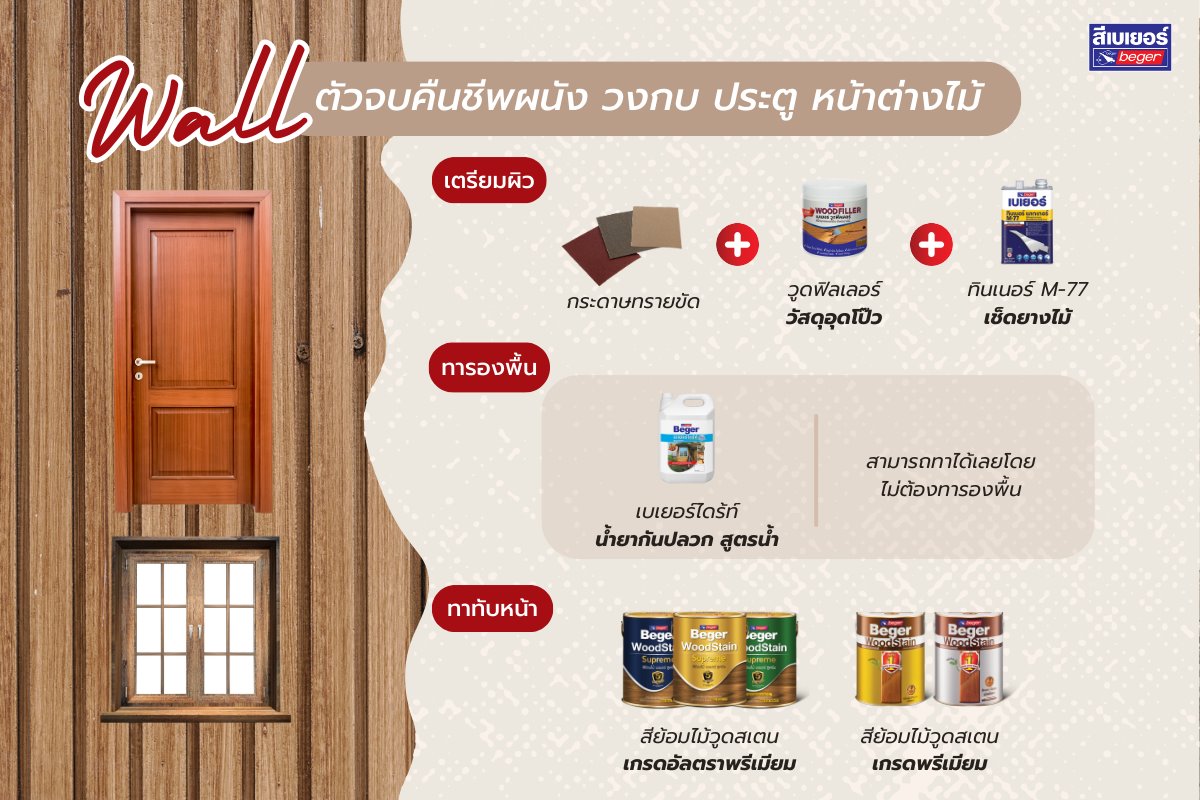
Point 1 Wooden walls, frames, doors, and windows
Frequently Asked Questions: Swollen wood walls, peeling wood color, warped wood, tight door frames, doors that do not close properly, and mold on wood.
When wooden walls or frames are submerged in water for a long time, the wood may absorb moisture and expand, causing the wood panels to warp and the original paint film to deteriorate.
How to Repair Wooden Walls After Flooding
- Check the wooden walls, frames, and doors for signs of swelling, warping, or decay.
- Clean dirt stains and manage mold appropriately.
- Dry the wood until the moisture content is at an appropriate level for painting.
- Remove the old peeling paint and repair blemishes on the wood surface.
- Consider using BegerDrite Wood Preservative Water Base To prevent termites, wood borers, and wood-eating insects, follow the steps specified by the product.
- Choose wood stain colors for vertical applications that are suitable for the environment and the existing color system.
Wood dye for exterior and interior wooden walls Paint the top coat for long-lasting durability or desired properties by applying it to all 6 sides to enhance maximum durability. For example,
- e Beger WoodStain Supreme Ultra Premium Grade Wood Stain for Vertical Wood Applications
- Beger WoodStain Premium wood dye for vertical wood applications.
- Delight WoodStain Wood dye for outdoor and indoor woodwork
- Beger Aqua WoodStain Water-based wood dye Suitable for indoor woodwork
For wood that can be disassembled for painting, it is advisable to coat all sides, including edges and ends, according to product specifications to help reduce moisture absorption through uncoated areas.
Recommendations: If the wooden frame is swollen to the point that the door does not close properly, wait for the moisture to decrease and the wood to stabilize before considering planing or sanding. Rushing to adjust the size while the wood is still swollen may result in excessive gaps when the wood dries.
‘Walls, Floors, Furniture’ 3 points to check for restoring wooden houses after flooding
Each area of a wooden house, whether it be the walls, floors, or furniture, will have different repair methods after flooding. Using the wrong wood paint in the wrong place may risk damaging the wood surface or lead to problems with the wood finish. Let’s learn the correct methods together!
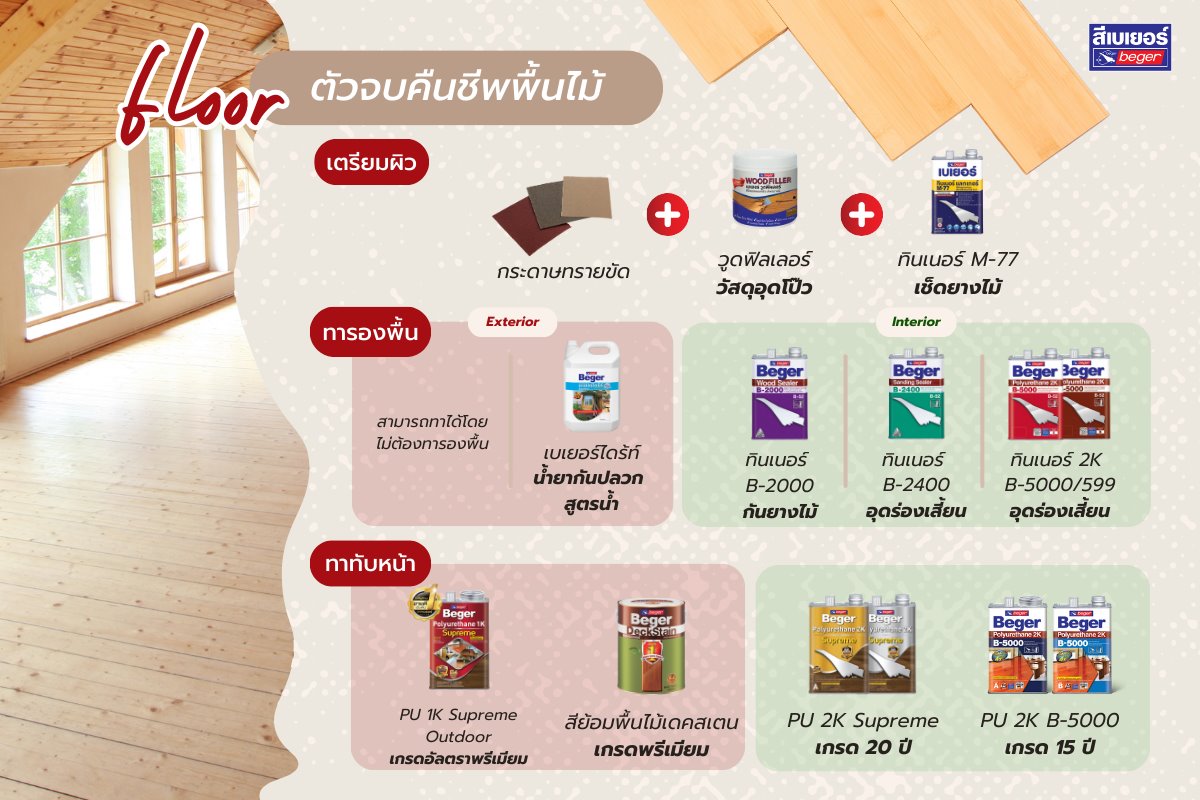
Point 2: Wooden floors, parquet floors, and wooden balcony floors
Common problems: Swollen wood floors, buckled wood, warped wood, separated joints, loose parquet floors, and peeling wood finish.
Wooden floors are directly affected when flooding occurs, especially parquet floors that are glued down and wooden floors that have moisture accumulated from the lower layers. If the wooden floor is sagging, feels unstable when walked on, or shows damage in the joists and supporting structure, it should be inspected by a professional before use.
How to repair wooden floors after flooding
- Check if the wood panels are still strong or if they are swollen, warped, or deformed.
- Remove dirt and moisture from the wooden floor and the supporting layer.
- Inspect the condition of the adhesive or fastening system of the wood panels, especially for parquet floors.
- Replace rotten or permanently deformed wood panels and repair parts that can still be salvaged.
- Once the floor is dry and stable, sand the surface, repair blemishes, and choose an appropriate wood finish.
If it is necessary to protect against termites and wood-eating insects, consider using Beger Dry according to the appropriate system. If the wood has rubber wood issues, you may use Beger Wood Sealer B-2000 For wood with grain and needing surface preparation before coating, consider Beger Sanding Sealer B-2400 or a 2-component system B-5000/599 (2K) by selecting according to compatible color systems.
Exterior wood finish paint
- Beger Polyurethane 1K Supreme Outdoor For woodwork that requires a coating system suitable for outdoor conditions
- Beger DeckStain Stain for outdoor wooden floors
- Beger NaturalDeck For outdoor wooden floors that want to showcase the natural wood grain
- Beger SuperDeck Stain for wooden floors in a translucent film
Interior wood floor coating
- Beger Polyurethane 2K Supreme For wooden floors that require a hard film and durability for use
- Beger Polyurethane 2K B-5000 For wooden floors according to specified usage areas
- Beger Unithane U-404 (B-52) for parquet wood floors and interior wooden floors
- It is necessary to check the specifications regarding priming, number of coats, drying time, and time before actual use of each product
Water-damaged parquet wood floor: Should it be removed or repaired?
If the parquet wood floor is swollen to the point where the wood planks buckle or the adhesive deteriorates, both the wood planks and the subfloor should be inspected before repair, as the problem may arise from moisture beneath the floor, not just the wood surface. If the wood planks are still strong and not deformed, they may be usable again after proper cleaning and moisture reduction. However, if the wood is permanently warped, has deep-rooted mold, or the adhesive and underlayment materials are severely damaged, it may be necessary to remove and replace some or all of it.
Do not rush to glue and recoat the floor while the concrete or subfloor is still damp, as this may cause the parquet to loosen or swell again. It is also important to choose an adhesive suitable for the wood flooring system, not just any general adhesive without checking its properties.
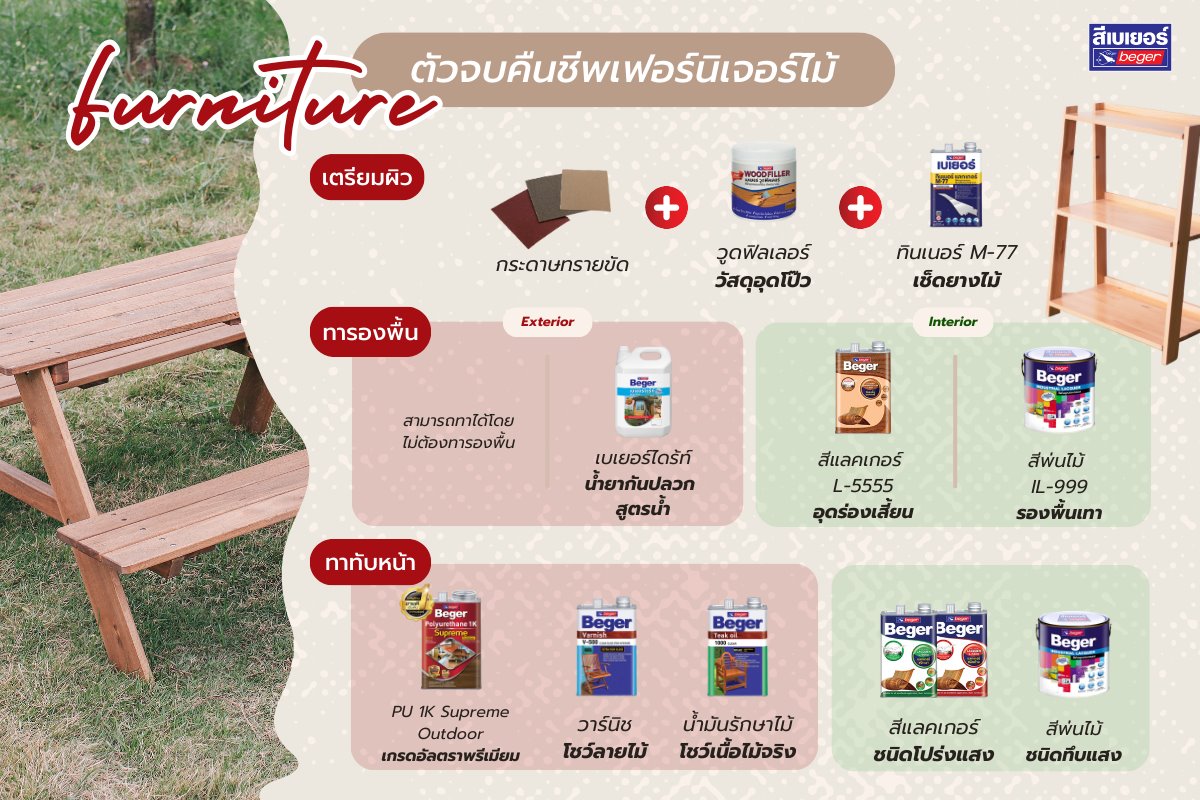
Point 3: Wooden furniture, wooden cabinets, wooden tables, and built-in work
Common problems: Swollen wooden furniture, rotting table legs, moldy wooden cabinets, blistering wood surfaces, peeling furniture paint, and delaminated wood panels
Furniture after flooding needs to have the type of material checked before repair, as solid wood, MDF, and particleboard have different moisture resistance and repair capabilities.
How to repair wooden furniture after flooding
- Move furniture out of the flooded area when it can be done safely.
- Check the legs, base, drawer joints, and wood materials.
- Clean and reduce moisture appropriately.
- Separate swollen, deformed, rotten parts, or those that cannot be thoroughly cleaned.
- For wood that can still be repaired, sand off the old finish, repair imperfections, and choose a wood coating color suitable for use.
If you need to prevent wood-eating insects, consider using Beger Drite according to product specifications, and if the furniture has grain grooves, you can use|||WBT_SEP|||Beger Sanding Sealer Lacquer L-5555 in the appropriate lacquer system.
For furniture that requires an opaque finish, consider a primer in the Beger. industrial spray paint such as the gray primer spray IL-999 according to usage specifications.
Wood paint for outdoor furniture
- Beger Polyurethane 1K Supreme Outdoor for wood that requires a coating film in suitable environments.
- Beger Varnish for woodwork and furniture that aims to showcase the wood grain.
- Beger Teak Oil for outdoor wooden furniture that aims to maintain the natural wood appearance.
Wood paint for indoor furniture
- Beger Clear Gloss Lacquer L-5000 for clear glossy wood coating.
- Beger Matt Clear Lacquer L-5500 for clear matte wood coating.
- Beger Industrial Lacquer for wooden furniture that requires an opaque color.
- Beger Aqua Lacquer (Beger Aqua Industrial Lacquer) water-based lacquer for furniture and interior wood decoration.
Important Information: Furniture made from MDF or particle board, if soaked in water until swollen and loses strength, often cannot be repaired to its original properties. Replacing parts or furniture may be more appropriate than sanding and repainting.
5 Precautions for Repairing and Painting Wood After Flooding
Even if some wood still looks beautiful and strong, repairing without checking the surface may lead to recurring problems. Things to avoid include:
- Painting over wood that is still damp because moisture may cause the finish to adhere poorly and peel off.
- Sanding wood with mold without protection because it may cause dust and mold spores to spread.
- Using the wrong type of wood finish for example, using products suitable for vertical wooden walls on wooden floors that are walked on.
- Repairing wood surfaces without checking the structure especially wooden floors and stairs that may have lost strength from being soaked in water.
- Rushing to reinstall floors or furniture while the supporting surface and surrounding area still have accumulated moisture.
If the flood damage covers the entire house you can find more information at How to Repair and Fix House Paint After Flooding, A Professional Guide
Frequently Asked Questions About Repairing Wooden Houses After Flooding (FAQ)
Q1: Can wood that has been flooded be repaired?
A1: Wood that has been flooded can be repaired in some cases, depending on the type of wood, the duration of water exposure, and the level of damage. If the wood is still strong, not rotten, and not permanently deformed, it can be cleaned, moisture reduced, sanded, and repainted. However, if the wood is rotten or has lost strength, the damaged parts should be replaced.
Q2: How to fix swollen wood?
A2: Start by removing the source of moisture, drying the wood evenly, and assessing any deformation after the moisture has decreased. If the wood is slightly swollen, the surface may be repairable, but if it is warped or has permanent separation, it may need to be replaced. Do not rush to sand or plane the wood while it is still wet.
Q3: How many days should wood be wet before it can be painted?
A3: There is no set number of days for all types of wood, as it depends on thickness, wood type, and environmental moisture. Moisture should be measured with a moisture meter, and the specifications of the wood finish product should be followed before starting work.
Q4: Do I need to completely remove swollen parquet flooring?
A4: Not necessarily in every case. If only certain areas are damaged, you may be able to repair or replace just those planks. However, you need to check the moisture of the subfloor and the condition of the adhesive first. If the wood planks are extensively loose or the subfloor is significantly damaged, you may need to remove and repair the entire flooring system.
Q5: Can I paint over mold on wood after flooding?
A5: You should not paint directly over mold, as this does not address the moisture and contaminants causing the issue. You should clean and treat the mold appropriately for the material, and check that the wood is dry and still structurally sound before repainting.
Q6: What type of paint should I choose for repairing a wooden house after flooding?
A6: You should choose based on the usage area, such as wood stain for wooden walls, wood floor coating for areas that will be walked on, and lacquer or paint systems for furniture. Additionally, consider the type of wood, the existing paint system, and the product specifications.
In summary, to properly repair a wooden house after flooding, start by inspecting the wood before selecting paint.
Restoring and repairing a wooden house after flooding is not just about sanding off old paint and applying new paint; it must begin with assessing the condition of the wood in three key areas: wooden walls, wooden floors, and wooden furniture to evaluate which parts of the wood can still be repaired and which should be replaced. The key is to clean, reduce moisture, manage mold, check for structural integrity, and prepare the surface properly before choosing wood coating. Using products that match the type of work will help reduce the chances of future issues like peeling paint or damaged wood flooring.