The construction of any building or structure is considered one of the activities that has a significant impact on the world. Whether it is the use of materials that harm nature, the emission of pollutants, greenhouse gases, orcarbon dioxideduring construction, as well as the generation of a large amount of waste after construction, green construction has emerged to slow down or reduce the long-term impact on the environment. Let’s explore this together in this article.
From all carbon dioxide (CO2) emissions worldwide, about 37% comes from the building and construction sector. If we delve deeper, we find that carbon from construction materials, concrete, steel, bricks, glass, and building decoration products accounts for as much as 11%. This aligns with the global trend we observe: cities are expanding and growing alongside increasing global variability. This is why the construction industry is beginning to take responsibility and adapt under the concept of sustainable construction.
What is green construction?
As mentioned, green construction must be sustainable construction that does not harm the environment and our world. It may involve the use of technology, innovations, materials, or processes that are environmentally friendly to enhance construction both before and after, ensuring quality and long-lasting efficiency while minimizing harm to the planet as much as possible. For example:
- Choosing sustainable, low-carbon materials and products that help save energy and havehigh durabilityor construction materials made from recycled sources to reduce waste.
- Repairing is better than demolishing (Adaptive Reuse) because new construction increases CO2 emissions from the entire process from start to finish, while repairing emits less CO2.
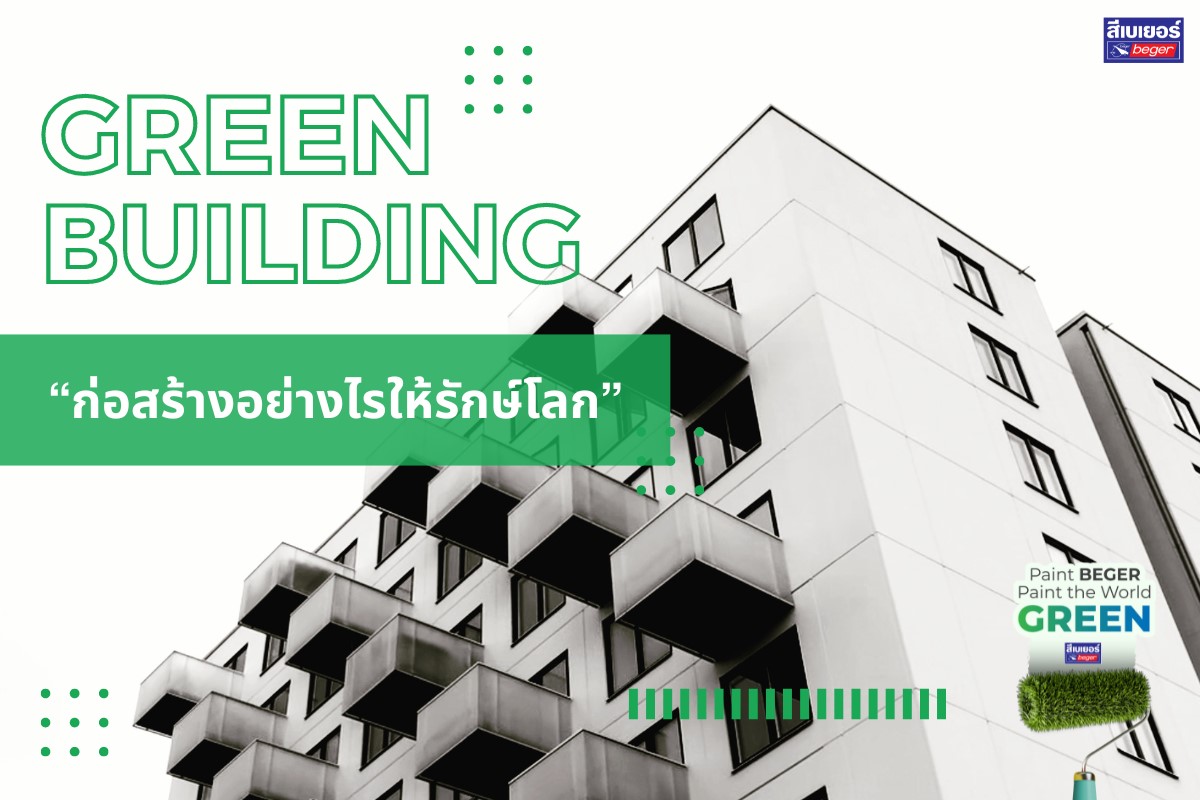
- Constructing green buildings (Green Building) according to environmental and energy criteria set.
- Limiting the materials and products used to control waste generation, or using multipurpose paint or2in1 paintto reduce water usage and the number of working steps.
- Managing the construction site, such as treating water on-site, prohibiting smoking, separating waste, packaging, food containers, and recycling after use.
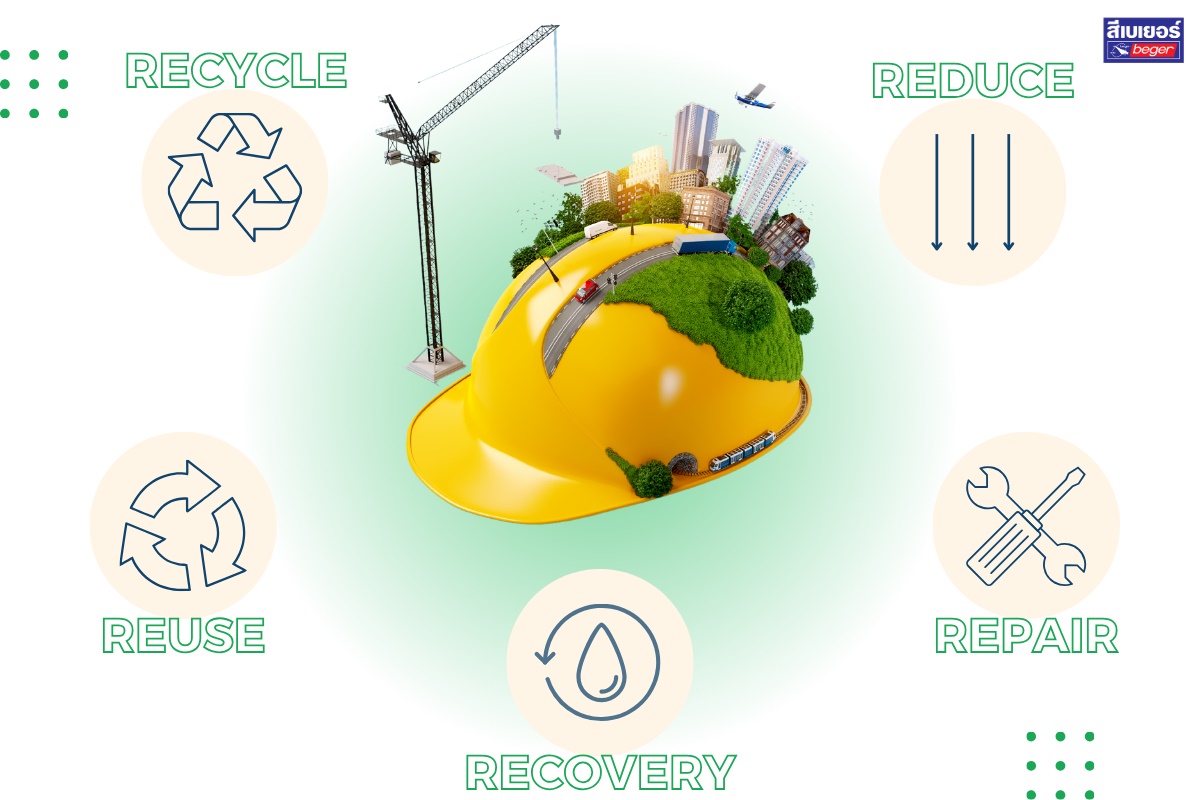
Not just the building itself, but the building envelope is also important.
When it comes to building construction, many may only see the interior of the building, but in reality, the building envelope or facade (Facade), such as balconies, windows, awnings, eaves, decorative plaster patterns, and wall moldings, is equally important. In addition to enhancing the beauty and appeal of the building, it protects the building from external environmental conditions and significantly contributes to environmental conservation and energy savings. It can be designed to optimize wind direction, humidity, air, and sunlight entering the building, thus facilitating energy reduction and cooling.
The development of green buildings in Thailand under the Thai Energy and Environmental Sustainability Assessment (TREES) criteria, which guarantees energy-saving and environmentally friendly buildings throughout the life cycle of the building, also emphasizes the issue of heat within buildings. This is particularly relevant as Thailand falls into the tropical country category, which experiences exacerbated effects during the season withextreme heat
. The heat accumulated inside buildings can arise from various factors, such as heat radiation from the sun, heat transfer from roofs, building walls, outside air, equipment inside the building, heat from building occupants, and heat transfer from the building floor.
The assessment of buildings according to the TREES criteria consists of several categories, one of which is the energy category, which considers heat transfer within the building known as RTTV and OTTV, calculated in watts per square meter (W/m2).
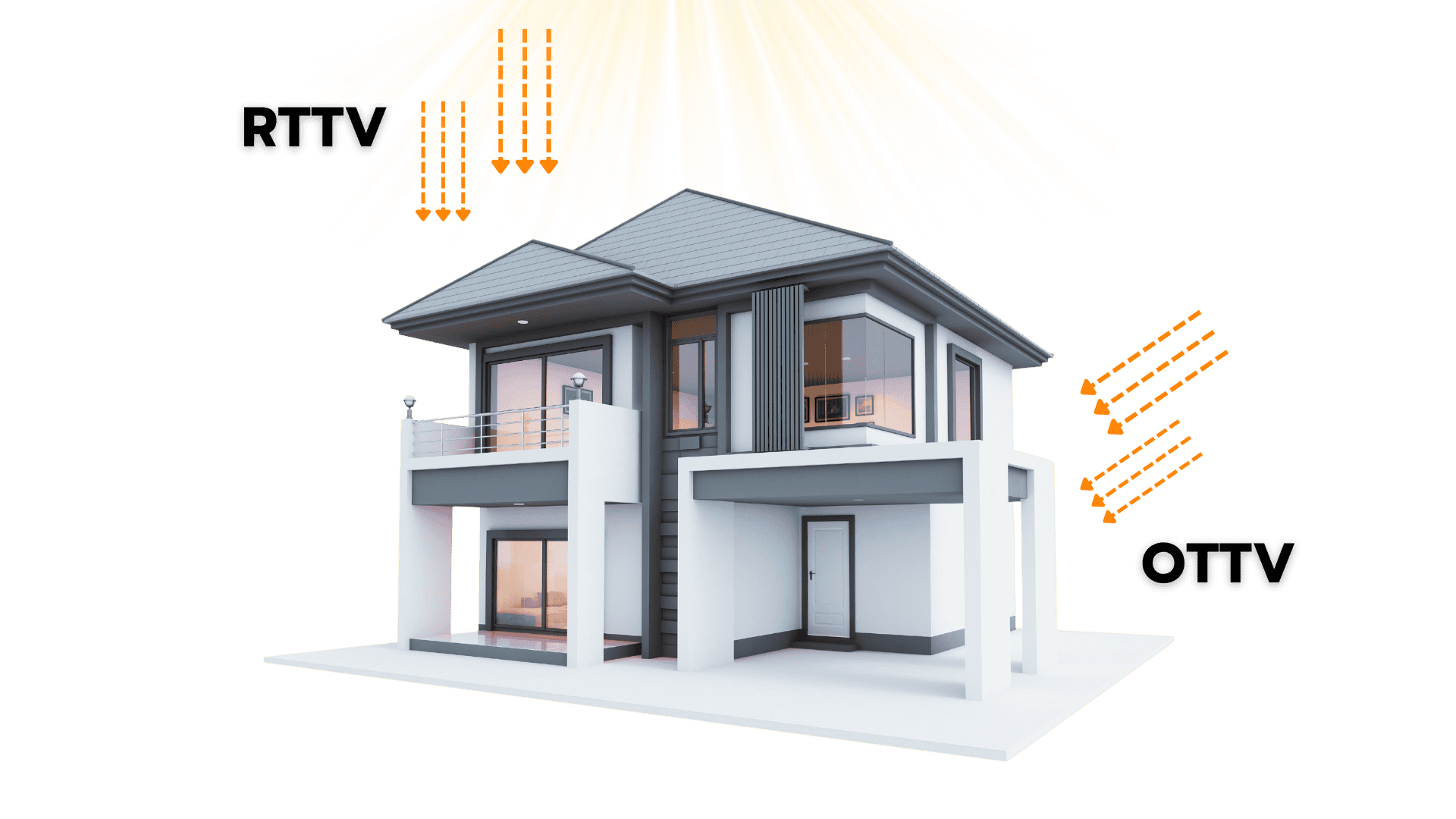
1) RTTV (Roof Thermal Transfer Value)
or the total heat transfer value of theroof.In the air-conditioned areas of each building type, the average amount of heat passing through the roof into the building is shown, which will help enhance energy savings through the design and selection of high thermal resistance building envelope materials, focusing on roofing materials and roof designs with insulation at the ceiling.
According to TREES requirements, there will be a new standard in 2562 for RTTV values at 3 levels as follows:
- An average value below 6 W/m2 will achieve a Good level.
- An average value below 5 W/m2 will achieve a Very Good level.
- An average value below 4 W/m2 will achieve an Excellent level.
2) OTTV (Overall Thermal Transfer Value)
or the overall heat transfer value of the exterior walls of air-conditioned areas in each building type, showing the average amount of heat passing through opaque and translucent walls in all directions. This is a certification criterion that also helps enhance energy savings similar to the RTTV but focuses on wall and window design, color selection, and sun shading for exterior walls and windows.
According to TREES requirements, there will be standards for OTTV values at 3 levels as follows:
- An average value below 30 W/m2 will achieve a Good level.
- An average value below 25 W/m2 will achieve a Very Good level.
- An average value below 20 W/m2 will achieve an Excellent level.
RTTV and OTTV for houses and townhouses
For houses and townhouses, the heat transfer values of the building frame can be calculated in all 4 directions according to research from the Joint Graduate School of Energy and Environment (JGSEE), with the following criteria:
RTTV values for houses and townhouses
- Bedrooms with an average value below 15 W/m2 will achieve a Good level, 5-10 W/m2 will achieve a Very Good level, and below 5 W/m2 will achieve an Excellent level.
- Living rooms and offices with an average value below 12 W/m2 will achieve a Good level, 4-8 W/m2 will achieve a Very Good level, and below 4 W/m2 will achieve an Excellent level.
OVTT values for houses and townhouses
- Bedrooms with an average value below 20 W/m2 will achieve a Good level, 10-15 W/m2 will achieve a Very Good level, and below 10 W/m2 will achieve an Excellent level.
- Living rooms and offices with an average value below 25 W/m2 will achieve a Good level, 15-20 W/m2 will achieve a Very Good level, and below 15 W/m2 will achieve an Excellent level.
Additionally, the TREES standard also considers scores from other categories, including site planning, landscaping, building materials, or indoor environmental conditions. However, the consideration of energy or heat aspects is also given equal importance to other main issues, as the heat entering the house from the roof or walls results in increased energy consumption. The acquisition of that energy also comes with a significant amount of carbon released into the atmosphere, contributing to global warming and current climate change.
Therefore, the selection of building envelope materials must be carefully considered. For example, choosing the appropriate house paint color can help block heat from entering the house, effectively saving energy and promoting true environmental conservation. It is recommended to uselow carbon-emitting paints,such as BEGER paint, which is environmentally friendly from the production process to sustainable paint can management, guaranteed by standards andenvironmental labels.For example, LEED, WELL, the Carbon Footprint Label, or the Green Label, consumers can be assured that BEGER colors will be a suitable choice and contribute to eco-friendly construction to make the Net Zero goal a reality in the future.