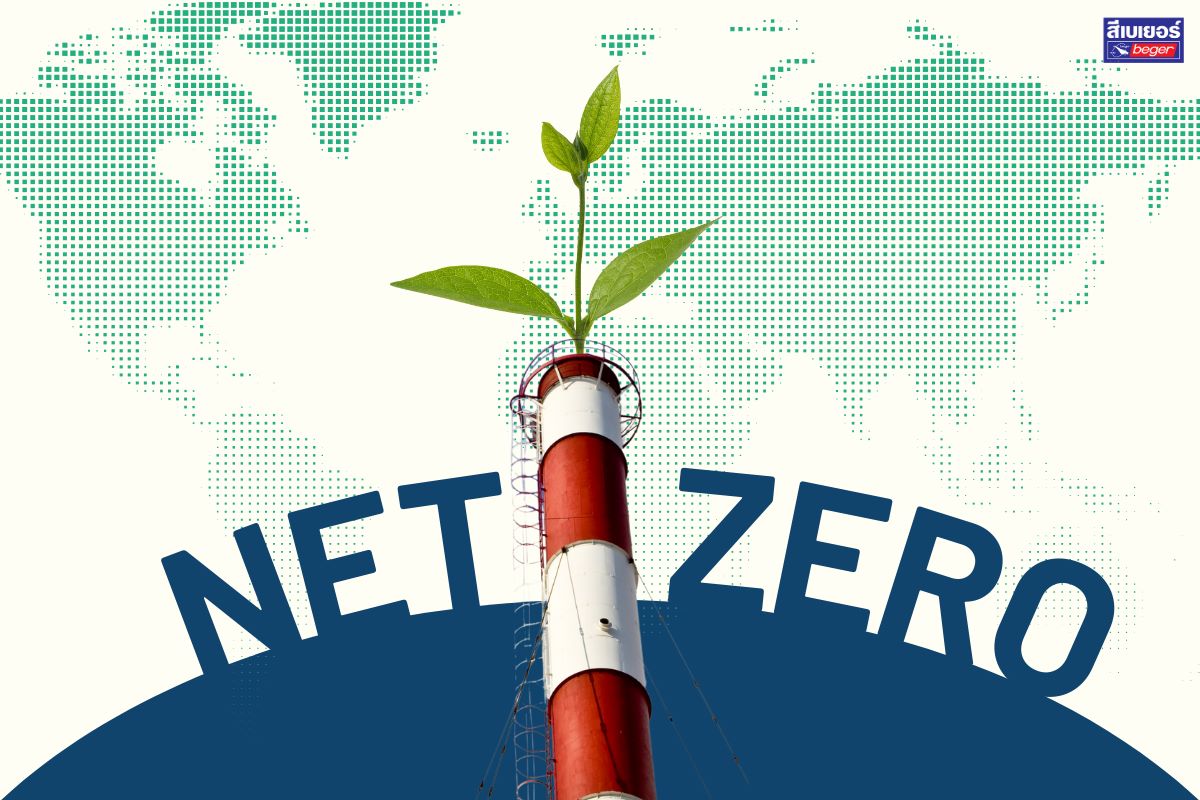
Due to Thailand’s goal of achieving Net Zero Emission or zero greenhouse gas emissions by 2608 (A.D. 2065), carbon tax is starting to play a more significant role in the business sector. It serves as a mechanism to control greenhouse gas emissions that cause global warming and climate change, elevate low-carbon products, and enhance the competitiveness of the business sector, as well as encourage consumer behavior to be more environmentally conscious and caring for the planet. Before we reach the date of serious carbon tax collection, let’s understand this tax better.
What is Carbon Tax?
Carbon Tax is a fee or tax that the government levies on businesses that emit greenhouse gases from production and service processes in excess of set limits, whether it be carbon dioxide (CO2), methane (CH4), nitrous oxide (N2O), or fluorinated gases (G-Gases), based on the principle that the polluter pays (Polluter Pays Principle).
The goal is to change the behavior of businesses and consumers, facilitating development, enhancing capabilities, and creating technologies that make low-carbon product manufacturing a reality, along with consumers who are aware and concerned about environmental issues or global warming that we and future generations will face.
Generally, the types of carbon tax are divided into two categories:
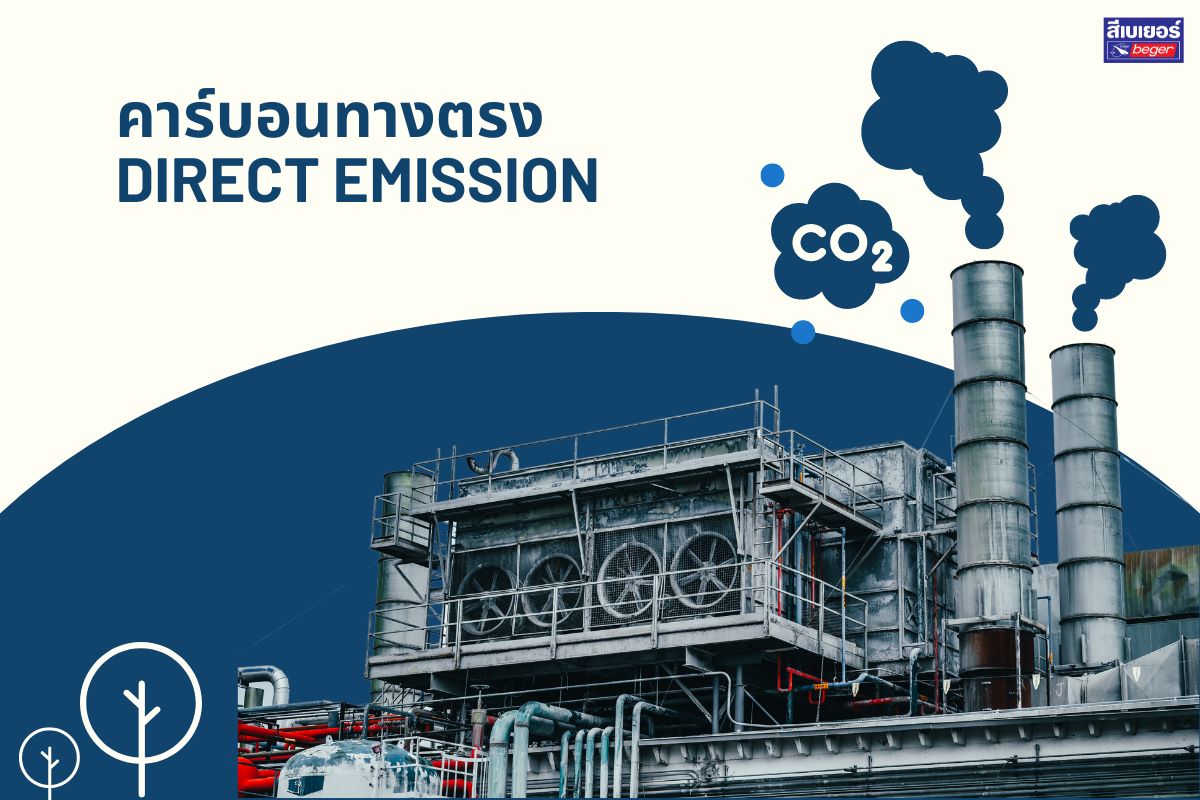
1) Direct Carbon Tax (Direct Emission)
Calculated based on the amount of greenhouse gases emitted directly from the production process of goods, thus having a higher tax rate. For example, electricity generation from fossil fuels, combustion of machinery in factories, waste incineration, wastewater treatment, vehicle combustion, or the production of cement and chemicals.
2) Indirect Carbon Tax (Indirect Emission)
Calculated based on the amount of greenhouse gases resulting from consumption, such as purchasing energy for use in organizations, using products that generate greenhouse gases like steel, paper, paint, furniture, or electrical appliances.

The Excise Department, which plays a role in this matter, will gradually implement carbon tax measures, expected to start in the fiscal year 2568, to push and promote businesses and consumers to prepare for and adapt to this change until reaching carbon neutrality in 2593 and achieving net zero emissions in 2608.
In other countries, there is also a pilot program for Carbon Border Tax, which is an import tax levied on countries that do not enforce carbon tax laws, preventing high-carbon products from flowing into the country. This acts as an incentive for nations that have yet to implement measures to reduce greenhouse gas emissions to take environmental issues seriously, and it may also help reduce the cost burden on businesses.
Does Carbon Tax Affect Businesses and Consumers?
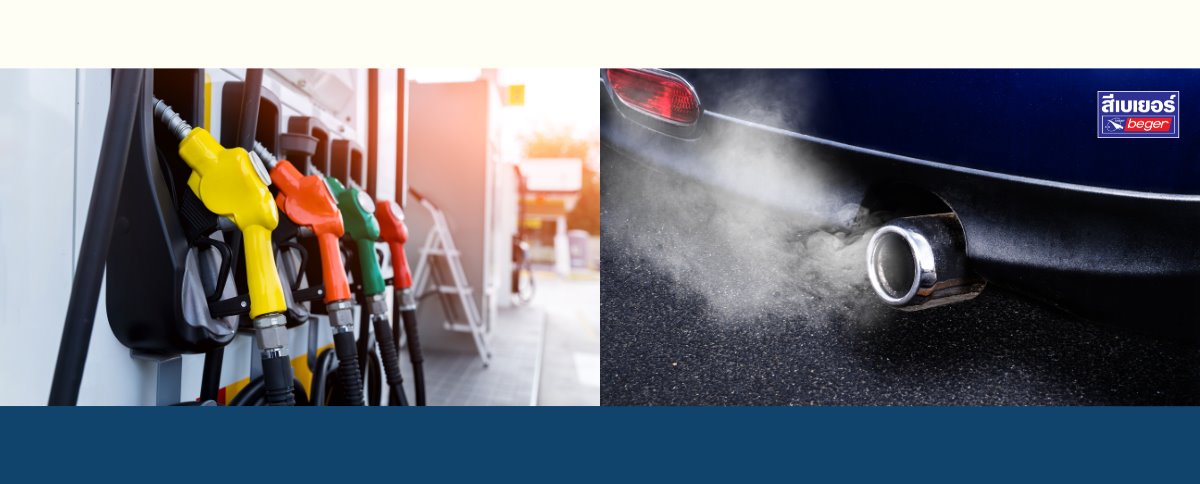
When talking about tax collection, there may be concerns about its impact on consumers. However, the initial carbon tax, according to the Excise Department’s regulations, will not affect or shift the burden to consumers, as it will link existing excise taxes, such as vehicle tax and fuel tax, with carbon emission levels to convert them into carbon tax. The focus will be on collecting taxes from the upstream, which is a method used internationally, calculated based on the excess carbon emissions along with the carbon tax rate.
For instance, the vehicle tax collected in the past is considered an indirect carbon tax from fossil fuel combustion, collected based on engine size. Currently, it has shifted to direct collection based on carbon dioxide emission levels, with initial guidelines suggesting that vehicles emitting high carbon will incur higher taxes, which may increase in the future as follows:
- Vehicles emitting over 200 grams per kilometer will incur a tax of 35% in 2026 and 38% in 2030.
- Vehicles emitting 151-200 grams per kilometer will incur a tax of 30% in 2026 and 33% in 2030.
- Vehicles emitting 121-150 grams per kilometer will incur a tax of 25% in 2026 and 29% in 2030.
- Vehicles emitting 101-120 grams per kilometer will incur a tax of 22% in 2026 and 26% in 2030.
- Vehicles emitting less than 100 grams per kilometer will incur a tax of 13% in 2026 and 15% in 2030.
As for fuel tax, the standard rate for diesel is 6.44 baht per liter, and in 1 liter, diesel emits about 0.0026 tons of carbon. This amount of carbon emitted will be used to calculate the carbon tax.
If we adhere to the initial carbon tax policy from the Excise Department at a rate of 200 baht per ton of carbon (about 6 dollars per ton of carbon), it means that in 1 liter of diesel, an average carbon tax of 0.46 baht or 46 satang will be incurred, which is similar to Singapore, the first country in ASEAN to impose a carbon tax, and there may be a gradual increase in tax rates in the future.
It can be seen that linking carbon tax to excise tax will not increase the tax burden on consumers and will also help businesses not lose export benefits while waiting for the Climate Change Act or the Climate Change Bill in the near future.
Importantly, linking carbon tax with excise tax is an amendment to the ministerial regulation that can be implemented immediately, requiring only submission to the Cabinet without the need to enact a new law, which takes longer to process.
How does Carbon Tax help the world?
Carbon tax is highly beneficial to our world because it originated to reduce greenhouse gas emissions from businesses and industries, which are significant contributors to toxic gases in the atmosphere. Therefore, carbon tax helps control and reduce overall greenhouse gas emissions, resulting in less impact on the planet, slowing down global warming or climate change in the future.
In addition to the environmental benefits, which are the primary goal, carbon tax also has several advantages for businesses, such as
- encouraging changes, improvements, and the development of technologies for producing higher quality products that are environmentally friendly, low carbon-emitting, and safe for consumers.
- facilitating trade competitiveness or market expansion, unlike products that are not environmentally friendly, which will bear a heavier tax burden.
- promoting the use of clean energy such as solar, wind, or hydro, helping to reduce the use of natural energy that generates greenhouse gases, leading to lower costs in this area in the long term.
The carbon tax collected in each country may have different guidelines, regulations, or tax rates, which is something that businesses need to learn and adapt to prepare for changes and open up new trading opportunities on the global stage.
And we will see that environmental issues are important, whether it’s global warming, climate crisis, greenhouse gases, or carbon levels, all are interconnected and impact each other. Many countries agree that it is time to take responsibility and care for this world better, to make the Net Zero goal a reality sooner and to escape the severe consequences.