
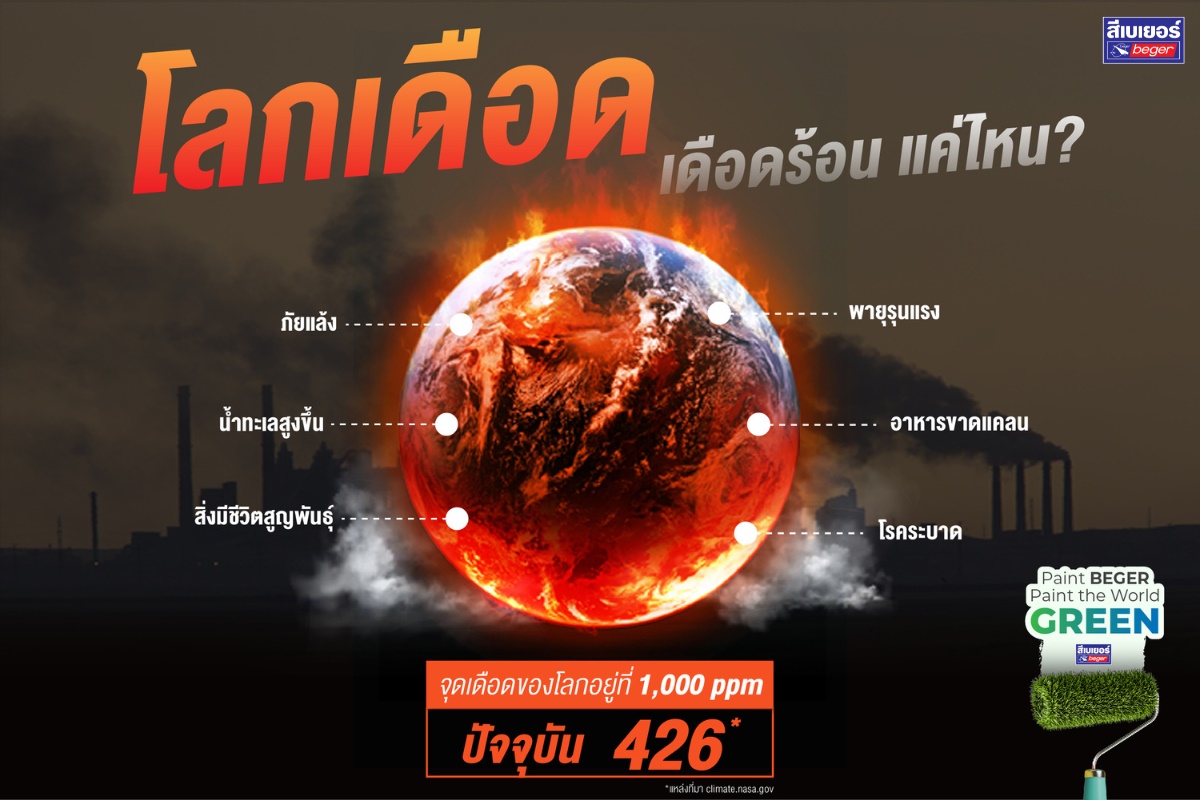
Everyone can probably feel that the world is getting much hotter than before, especially during the hot summer month of April when many provinces in Thailand experience scorching temperatures exceeding 40 degrees Celsius. But what does “very hot” mean in this context?How many degrees is the world warming?And what will happen if the world becomes even hotter, surpassing the boiling point? Let’s study this topic together.
How many degrees is the world warming?
In fact, the Earth’s temperature has been steadily rising since the Industrial Revolution, currently averaging 1.1 degrees Celsius. This increase is primarily due to human activities that release greenhouse gases such ascarbon dioxide(CO2) into the atmosphere, resulting in a continuous upward trend in global temperatures. The past decade (2015-2023) has been recorded as the hottest years in the history of the world.
Statistics from a few years ago indicated that 2016 and 2020 were the years with the highest average temperature increases from the baseline, at 1.03 and 1.01 degrees Celsius, respectively. However, this has now been surpassed by the year 2023, with an average temperature of1.18 degrees Celsius, the highest ever recorded. This aligns with the predictions made by scientists from the World Meteorological Organization.
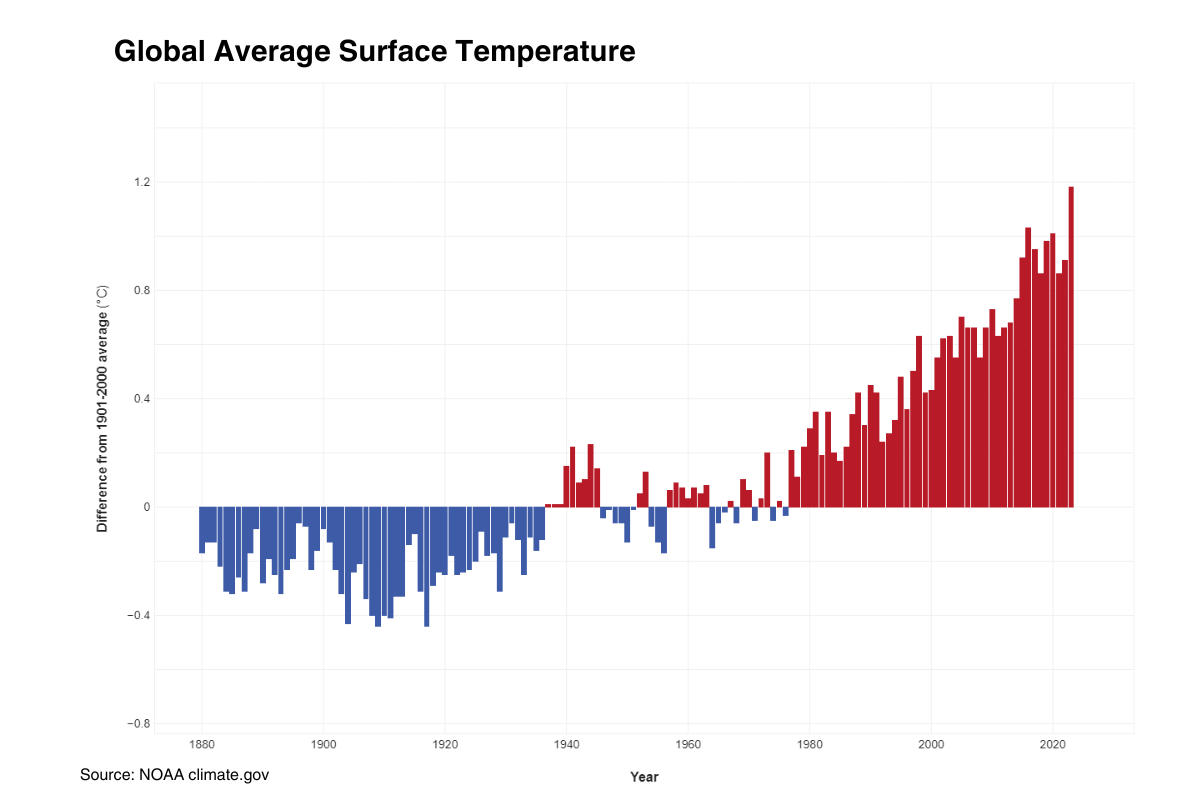
What is even more alarming is that it is estimated that if humans continue to emit greenhouse gases into the atmosphere, by the year 2027, or within the next 5 years, the world could see a temperature increase exceeding 1.5 degrees Celsius. This figure is the target set by the Paris Agreement aimed at addressing climate change and controlling global temperatures from rising further.
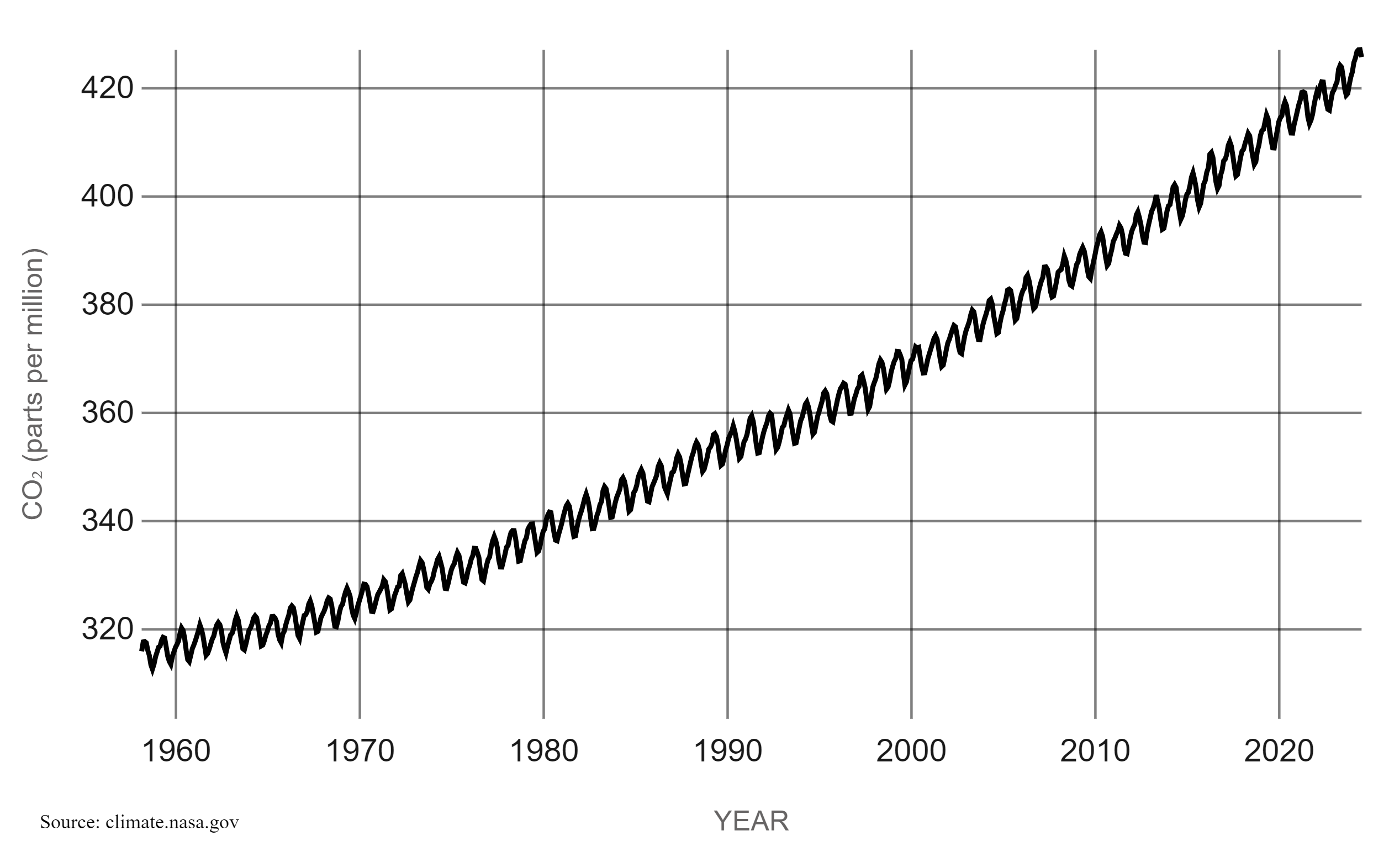
One key point in the transition from a warming world to a boiling world lies in carbon dioxide emissions, which come from the extraction and burning of fossil fuels such as coal, oil, or natural gas, wildfires, and natural processes like volcanic eruptions. Currently, the average concentration of carbon in the atmosphere is measured at426 parts per million(ppm), an increase of over 50% compared to the pre-industrial era.
If the day comes when carbon concentration exceeds 500 ppm, we may witness widespread melting of ice caps. In the worst-case scenario, if it reaches 1,000 ppm, no human could survive on this planet, or life would be extremely difficult, reminiscent of the world 50 million years ago, as the average temperature would rise by over 10 degrees Celsius, leaving very little ice and causing sea levels to rise by more than 60 meters.
Impacts of global warming reaching boiling point
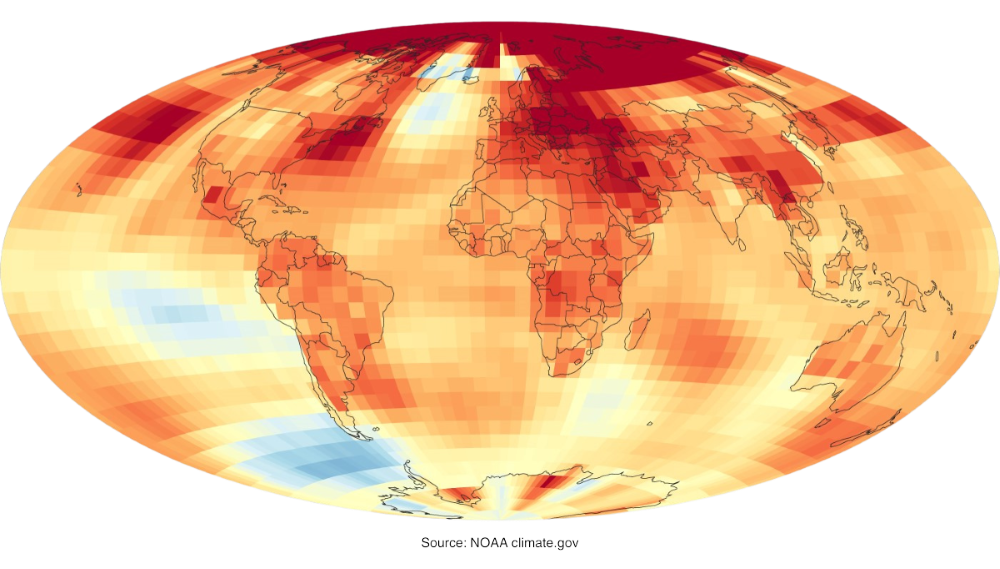
The increase in global temperatures due to greenhouse gases has significant effects on nature and living beings. Even a decimal point increase cannot be overlooked, as a mere 0.1 degrees Celsius rise could turn efforts to protect the Earth into actions that harm it.
With the current average temperature of 1.1 degrees Celsius, many changes are occurring in the world, such as more frequent and severe weather conditions, including droughts, heatwaves,heavy rainfall, faster melting of glaciers, rising sea levels, and warming oceans, leading to the loss of resources, food, lives, and property.
Let’s look at examples of predicted impacts or changes from temperature increases of 1.5 and 2 degrees Celsius.
Temperature increase of 1.5 degrees Celsius.
- It’s very hotIn the mid-latitude regions, temperatures will rise by 3 degrees Celsius compared to pre-industrial times.
- 14% of the world’s population will face extreme heat waves every 5 years.
- Sea levels will rise by more than 0.40 meters by the year 2100.
- Coral reefs are at risk of declining by more than 70-90%.
- Annual fish catch will decrease by about 1.5 million tons.
- Corn yields in tropical areas will decrease by about 3%.
- 4% of vertebrates, 6% of insects, and 8% of plants will experience a decline in biodiversity.
Temperature increases 2 degrees Celsius.
- Very hot days in mid-latitude regions will rise by 4 degrees Celsius compared to pre-industrial times.
- 37% of the world’s population will face extreme heat waves every 5 years.
- Sea levels will rise by more than 0.46 meters by the year 2100.
- Coral reefs are at risk of declining by more than 99%.
- Annual fish catch will decrease by about 3 million tons.
- Corn yields in tropical areas will decrease by about 7%.
- 8% of vertebrates, 16% of plants, and 18% of insects will experience a decline in biodiversity.
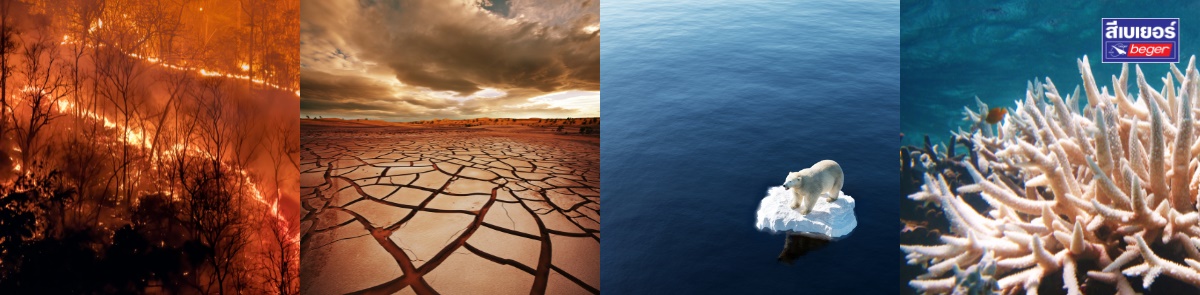
Higher temperatures, whether by 1.5 or 2 degrees Celsius, may lead to food issues, health problems, and living conditions challenges, with people in some areas potentially becoming homeless. The heat intensifies, posing risks to health and mortality, outbreaks of vector-borne diseases like malaria or dengue fever, and food shortages, particularly of corn, rice, wheat, or various grains.
No matter how many degrees the world warms, it will have widespread impacts on the environment and living beings. This is everyone’s responsibility to be aware and come together to protect the planet, starting withPaint Beger, Paint the World Greentowards the goal ofNet Zero Emissionor zero greenhouse gas emissions, to minimize impacts on the world and the environment before passing it on to our future generations.
References:
- Annual 2023 Global Climate Report | National Centers for Environmental Information
- Carbon Dioxide | Vital Signs – Climate Change: Vital Signs of the Planet NASA
- Climate change: The IPCC summarized 5 years of reports | World Economic Forum
- Impacts at 1.5 and 2 degrees of warming | Climate Council
- Record-breaking increase in CO2 levels in world’s atmosphere | Greenhouse gas emissions | The Guardian
- When Antarctica was a tropical paradise | Antarctica | The Guardian
- 1.5 or 2 degrees Celsius of additional global warming: Does it make a difference? | Yale Climate Connections
- 7. Is the current level of atmospheric CO2 concentration unprecedented in Earth’s history? Answer | Royal Society
- Global warming: Statistics show 2023 is the hottest year on record, with 2024 likely to be even hotter | BBC News Thai
- Global warming: A simple guide to understanding “climate change” | BBC News Thai
- Scientists warn that global temperatures are set to rise by 1.5 degrees Celsius by 2027 | Thai PBS News