

The world is heating up, flooding occurs, and crop yields are declining, all of which are environmental issues that the global community is facing together. This is the impact of greenhouse gas emissions from the industrial sector that cannot be denied, leading many organizations today to revisit their social responsibilities that they have previously neglected, using what is called Carbon Footprint to define energy usage and effectively reduce emissions.
What is Carbon (CO2) and where does it come from?
To begin with, carbon or carbon dioxide (Carbondioxide) is one of the greenhouse gases (Greenhouse Gas: GHG) present in the atmosphere, which absorbs and retains infrared radiation from sunlight and releases some heat back to the Earth. If there is an excessive amount of certain greenhouse gases like carbon, it will cause heat to accumulate in the atmosphere, leading to an increase in global temperatures, which results in climate change and environmental issues today.
The major greenhouse gases are often the result of human activities in households, the economy, and industry, stemming from fuel combustion, deforestation, the decomposition of plant and animal waste, agricultural and industrial waste, or chemical reactions in the industrial sector.
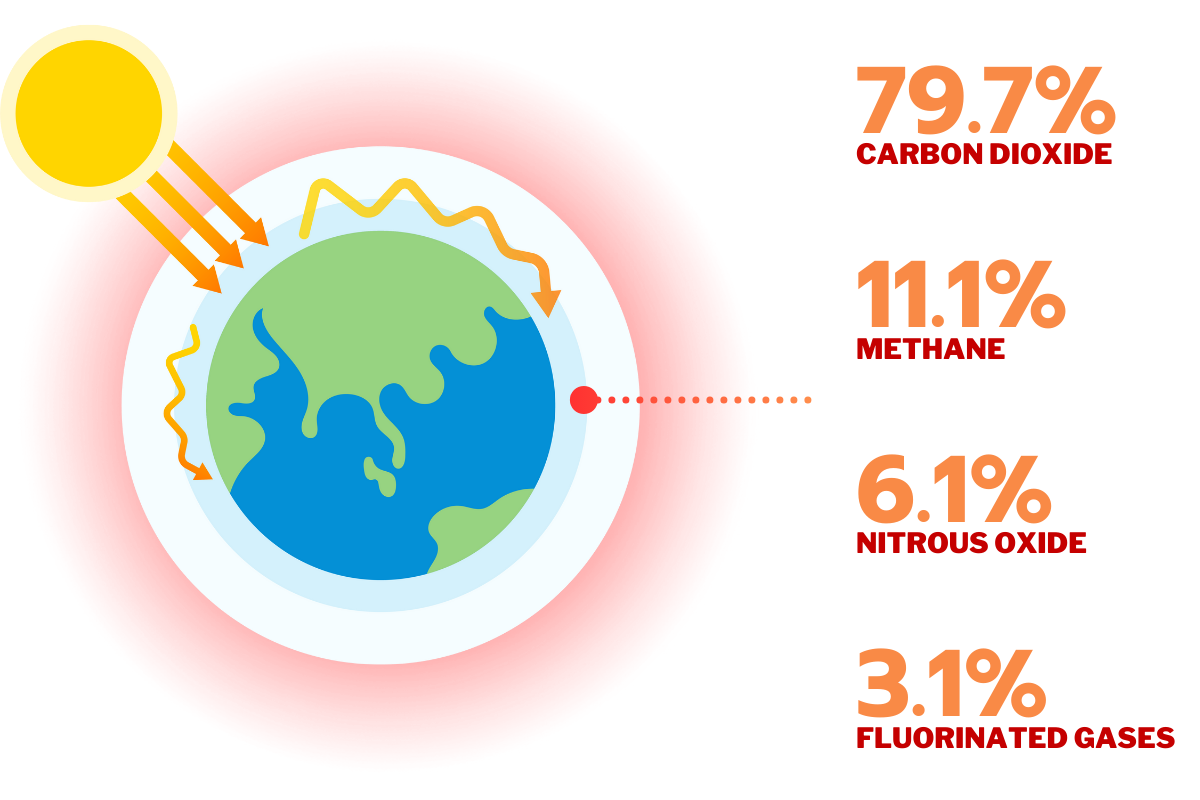
The main greenhouse gases that are controlled for emissions into the atmosphere, as defined through international cooperation in the Kyoto Protocol, include:
- Carbon dioxide (CO2) is the most emitted gas into the atmosphere, accounting for over 70% from fuel combustion and deforestation.
- Methane (CH4) is the second most abundant, primarily from landfill waste disposal, natural gas combustion, and agricultural livestock.
- Nitrous oxide (N2O) often comes from fossil fuel use, fertilizer application, and chemical industries using nitric acid.
- Fluorinated gas group such as hydrofluorocarbons (HFCs), perfluorocarbons (PFCs), sulfur hexafluoride (SF6), or nitrogen trifluoride (NF3), which primarily come from the industrial sector, especially refrigerants, solvents, feedstock for production, and by-products from various processes.
What is Carbon Footprint and how many types are there?
Carbon Footprint refers to the amount of greenhouse gases emitted naturally and from various human activities, whether directly or indirectly, such as energy use, agriculture, industrial expansion, waste management, transportation of goods, or deforestation.
Carbon Footprint is divided into two main types as follows:
1. Carbon Footprint for Organization
The Carbon Footprint for Organization refers to the amount of greenhouse gases emitted from various organizational activities, which is often used as an indicator of greenhouse gas emissions in the industrial sector measured in “carbon dioxide equivalent (CO2eq)” such as kilograms of carbon dioxide equivalent (kgCO2eq) or tons of carbon dioxide equivalent (tCO2eq).
The greater the amount of carbon footprint, the more it impacts our world. The sources of greenhouse gas emissions are divided into three categories:
- Direct emissions (Direct Emissions) such as combustion from machinery, the use of chemicals for wastewater treatment, or vehicle use.
- Energy indirect emissions (Energy Indirect Emissions) such as purchasing electricity, heat, or steam for use in the organization.
- Other indirect emissions (Indirect Emissions) such as the use of various materials, employee travel by other vehicles, off-site seminars, or events.
2. Carbon Footprint for Product
The Carbon Footprint for Product refers to the amount of greenhouse gases generated from the production of the product or throughout the product’s life cycle (Product Life Cycle), from the sourcing of raw materials, production, distribution, usage, to waste management, which is also measured in carbon dioxide equivalent.
How do the world and organizations benefit from carbon footprint?
When organizations are aware of the carbon footprint they emit each year or overall, they can effectively plan to reduce carbon emissions, absorb existing carbon, and engage in carbon offsetting for carbon neutrality, aiming for the next goal of achieving net-zero greenhouse gas emissions.
To explain it more simply, studying and applying carbon footprints in organizational operations will lead to better awareness and management of environmental issues, benefiting society, the world, and organizations in the industrial sector significantly. For example:
- Assessing the amount of greenhouse gases emitted by the organization and understanding the significant causes of these emissions to find ways to reduce the carbon footprint.
- Utilizing the carbon footprint data to enhance company operational planning, develop eco-friendly products, plan to reduce greenhouse gas emissions, or engage in carbon offsetting.
- Contributing to the reduction of greenhouse gas emissions, which are a major cause of global warming, climate change, and extreme weather events.
- Meeting the demands of environmentally conscious customers and addressing climate issues, reinforcing the significance of consumer collaboration.
- Driving change and development within the industrial sector to maximize benefits for consumers in society.
- Reducing costs, conserving resources and energy, enhancing organizational credibility, and ensuring sustainable operations that provide a competitive advantage.
It is evident that the carbon footprint is a crucial element in driving the industrial sector towards better development without further harming the planet as in the past. Therefore, reducing carbon or greenhouse gas emissions is an urgent mission that Beger has always adhered to, hoping to be a cog in the wheel of building a Carbon Neutrality society and working towards the larger goal of Net Zero Emissions together in the future.
Currently, Beger is an organization that has received the Carbon Footprint for Organization (CFO) certification from the Greenhouse Gas Management Organization (Public Organization) or TGO, which emphasizes that Beger’s operations are mindful of the planet and are ready to drive towards a tangible and sustainable green business.
Moreover, Beger has also been certified for the Carbon Footprint of Product and is the first in the building paint product category to receive the Carbon Footprint Reduction (CFR) label from TGO, helping consumers understand the amount of greenhouse gases emitted by the products, which is an important factor in the purchasing decisions of modern consumers and encourages the industrial sector to pay more attention to environmental issues.
References:
- Overview of Greenhouse Gases | US Environmental Protection Agency
- Greenhouse effect | Meteorological Department
- What is the carbon footprint of an organization? | Thai Carbon Label
- What is the carbon footprint of a product? | Thai Carbon Label
- Guidelines for assessing the performance of local administrative organizations (Local Performance Assessment: LPA) on greenhouse gas emission reporting | Greenhouse Gas Management Organization (Public Organization) GHG_LPA.pdf (tgo.or.th)
- Carbon Footprint: A footprint investors should know | SET Investnow