Cement and concrete are the most important materials in construction, but many people often confuse cement and concrete as the same thing. In reality, cement (Cement) is just one of the components used to make concrete (Concrete) This article will help you understand both in detail, along with recommendations for choosing the right cement and products that will make your work easier.
What is cement (Cement)?
Cement, or Portland cement, is a gray powder that acts as a binder. When mixed with water, it undergoes a chemical reaction and hardens, serving to “adhere” various materials together. Cement is used in many forms, including bricklaying, wall plastering, tile laying, and mixing to make concrete.
1. Portland cement– The standard cement for mixing concrete, used in structural work such as columns, beams, and floors.
2. Masonry/Plastering cement– Cement formulated for bricklaying and wall plastering.
3. Tile adhesive cement– Cement that has been formulated for high adhesion, suitable for laying tiles.
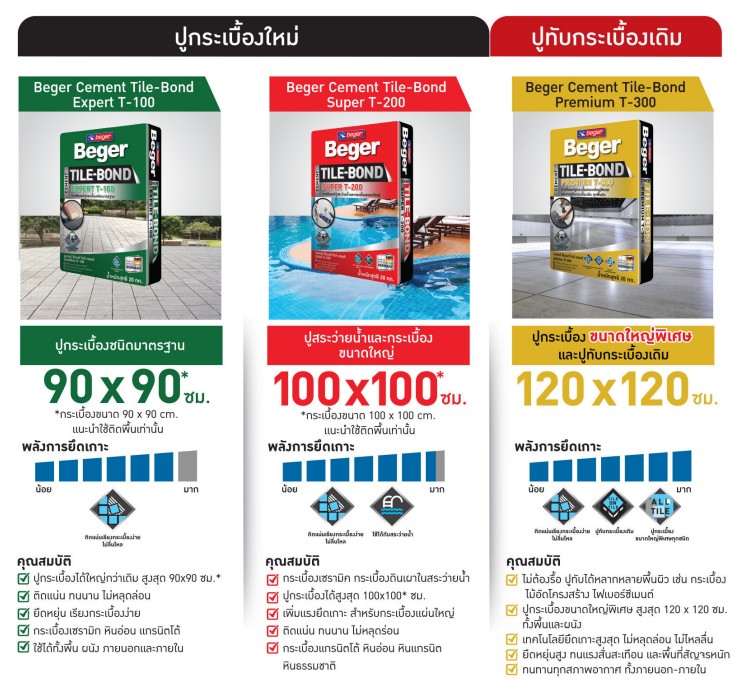
–Beger Cement Tile-Bond Expert T-100 (green bag) suitable for general tiles.
–Beger Cement Tile-Bond Super T-200 (red bag) suitable for swimming pool tiles and large sizes.
–Beger Cement Tile-Bond Premium T-300 (gold bag) premium formula, suitable for both floor and wall, with a maximum size of 120×120 cm, and can be laid over existing tiles.
4. Repair Mortar– For repairing cracks and structural repairs
|
|
|
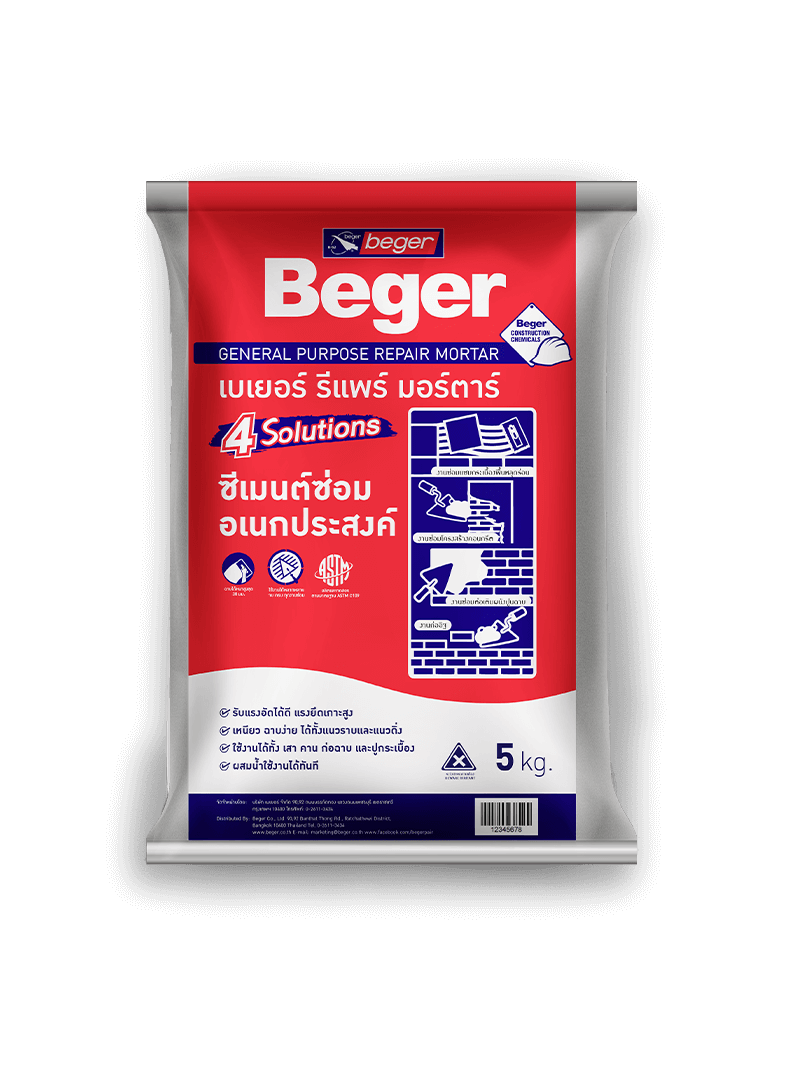
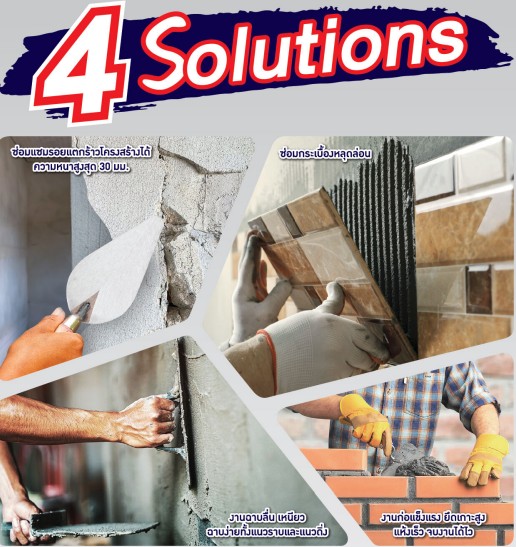
–Beger Repair Mortar A non-shrink multipurpose repair mortar suitable for repairing structures, columns, beams, finishing concrete surfaces, repairing damaged masonry and plaster, fixing loose tiles, and repairing cracks, chips, and deep holes.
5. Tile Grout
Used for grouting tile joints to prevent water and dirt infiltration, helping floors and walls look beautiful.
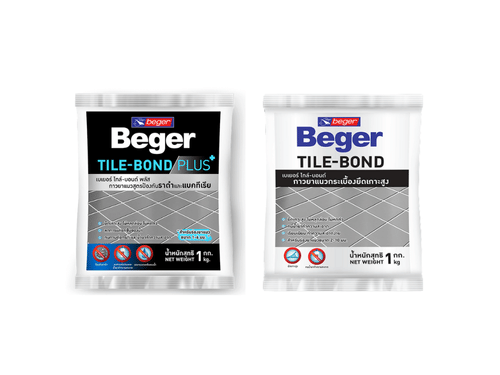
– Beger Tile-Bond Plus A grout formula that inhibits mold and bacteria for joints sized 1-6 mm. Available in over 12 colors, it offers high adhesion, reduces stain accumulation, and is resistant to acids and cleaning agents.
– Beger Tile-Bond High-quality tile grout for joints sized 2-10 mm. Available in over 12 colors, it has good adhesion, does not shrink, and reduces water infiltration.
💡 Tip: Choose the grout suitable for the size of the tile joints and select a color that complements the tiles for aesthetic appeal.
What is Concrete?
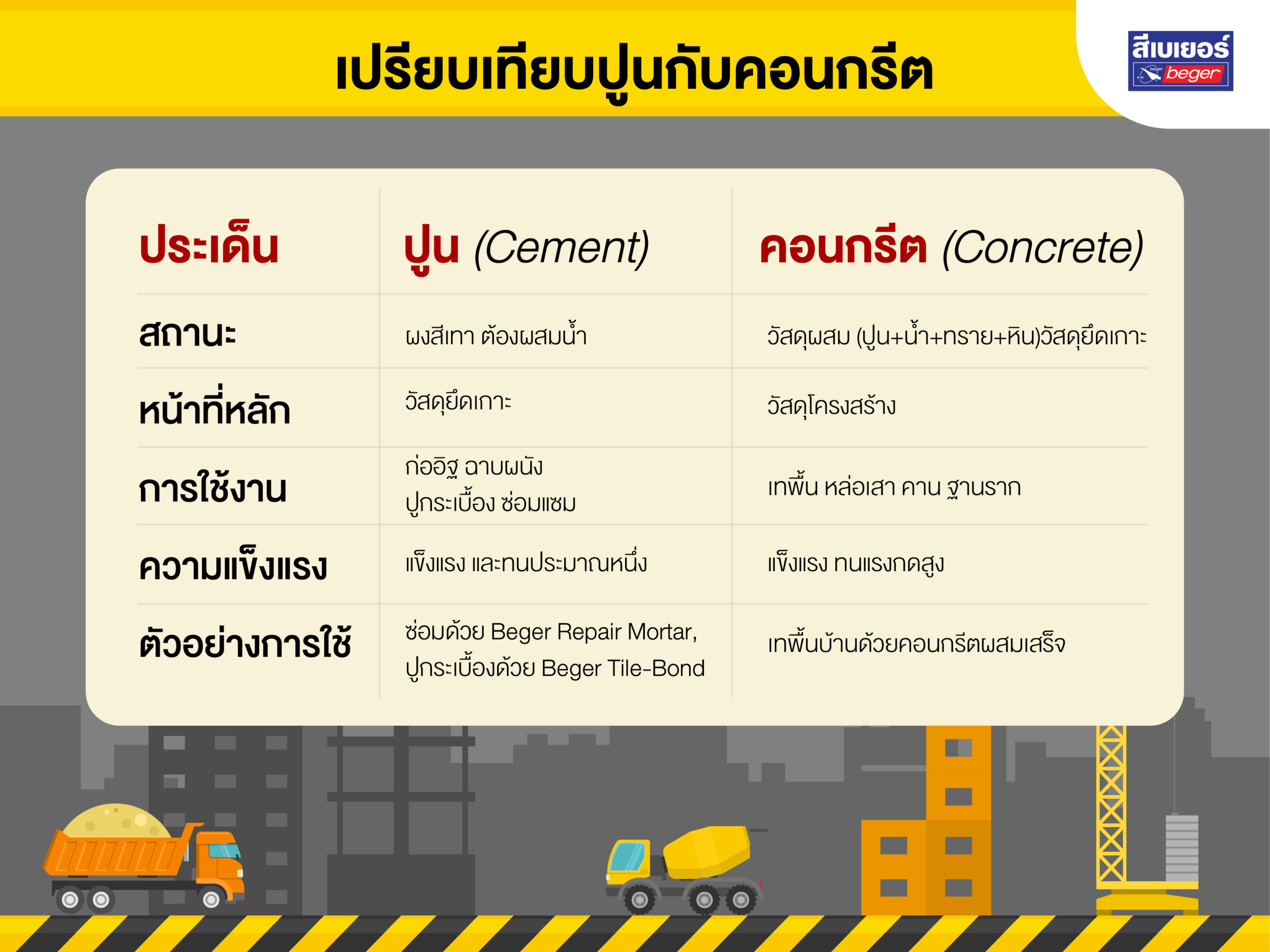
Concrete is a construction material made from the mixture of Cement + Water + Sand + Gravel (referred to as aggregates). Once mixed, concrete can be poured into molds, and when it hardens, it has very high strength.
Main Components of Concrete
- Cement – The binder
- Water – Initiates the chemical reaction (Hydration)
- Sand – Fine aggregate that helps make the concrete dense
- Gravel – Coarse aggregate that increases strength
Types of Concrete
- Ready-mix Concrete – Mixed at the factory, ensuring consistent quality
- Prestressed Concrete – Suitable for structures requiring high strength, such as bridges.
- Precast Concrete – Cast as finished pieces in the factory and then installed on-site
Why you need to understand the differences
Understanding the difference between cement and concrete helps you choose the right materials:
- If you need strength → Choose concrete
- If you need minor repairs or plastering → Choose the appropriate cement
- If laying tiles → Use tile adhesive instead of sand cement to prevent tile detachment
Tips
- Cement is a binding powder used for masonry, plastering, repairs, and is a main ingredient of concrete
- Concrete is a composite material made from cement + water + sand + gravel, strong for structural work
- Choose cement suitable for the job, such as Beger Repair Mortar for repairs, Beger Tile-Bond for tiling
FAQ about cement and concrete
Q1: Can I use only cement to pour a floor?
A: It is not advisable because pure cement will harden but be brittle and break easily. It should be mixed into concrete and reinforced with rebar in a grid (Wire Mesh) as well. The thickness of the floor and the size of the reinforcement depend on the usage for strength
Q2: What type of cement should I use to repair a cracked beam?
A: Use repair cement, such as Beger Repair Mortar, which does not shrink and has good adhesion, suitable for repairing columns, beams, and walls
Q3: What type of adhesive should I use for large tiles?
A: For large tiles or swimming pools, you should use Beger T-200 or T-300 for strong adhesion and to prevent detachment