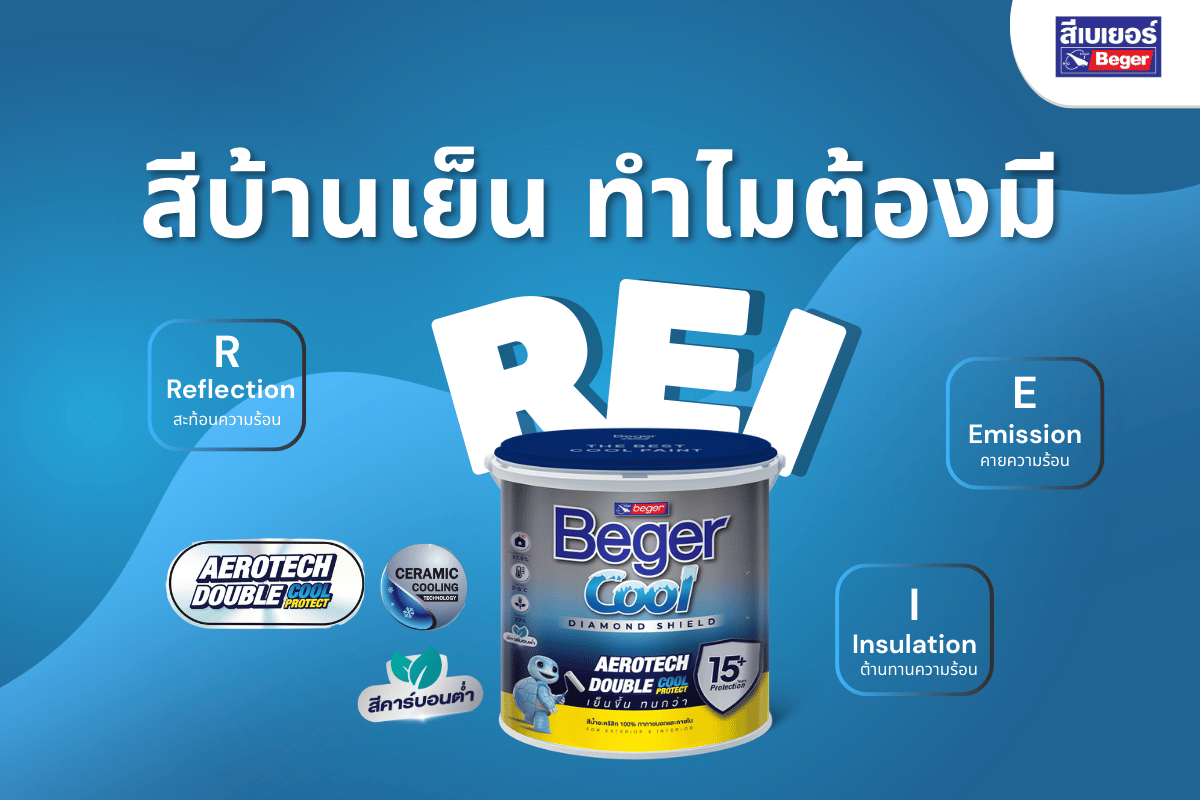
When it comes to heat-reflective colors or cool house colors, many people may understand that colors that help keep a house cool must only reflect sunlight well. However, the truth is that managing the heat of surfaces also involves heat emission and heat transfer into the building itself.
This leads to the concept of REI (Reflection, Emission, Insulation) which describes the three key mechanisms in managing heat through paint systems. So, what is REI? How do each of the mechanisms work differently, and how are they related to cool house paint technology? Let’s understand it together.
What is REI? Why is it important for heat-reflective paint?
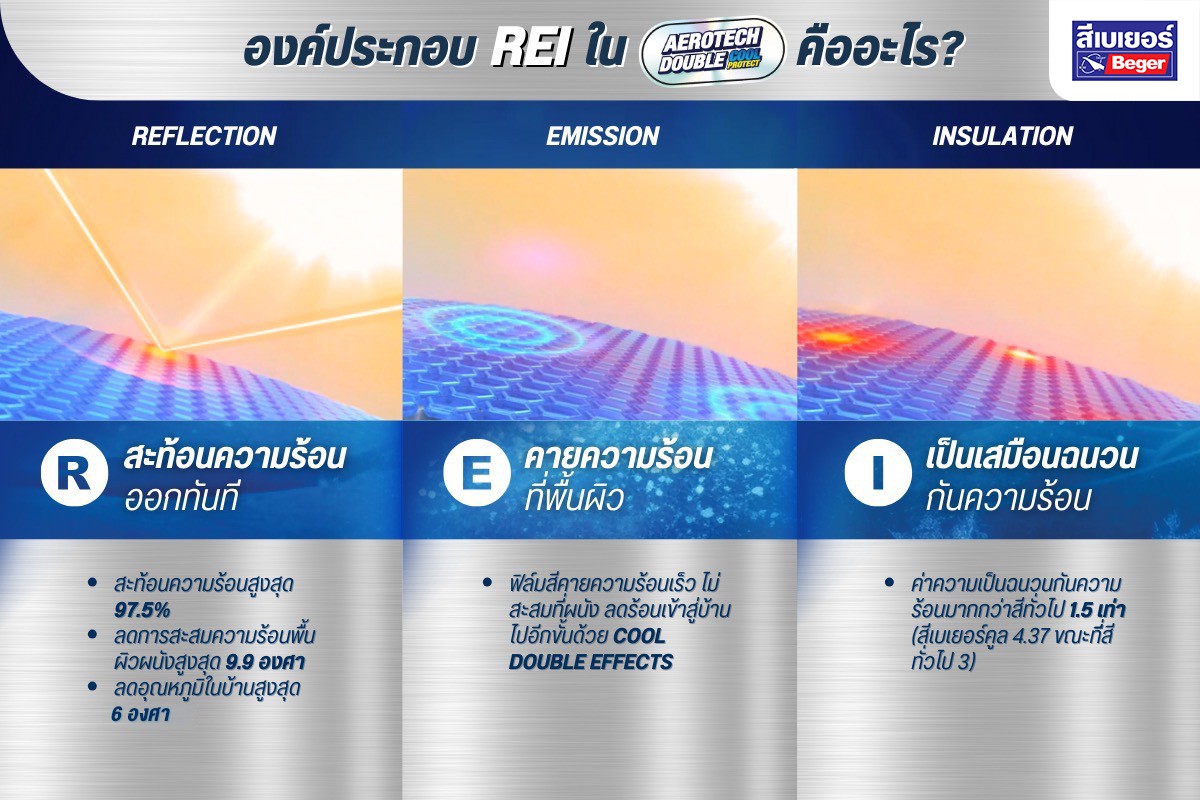
REI is a heat management concept consisting of three mechanisms: Reflection (reflecting radiation), Emission (emitting thermal radiation), and Insulation (resisting heat transfer). These are related to the absorption and transfer of thermal energy of building surfaces.
- R – Reflection: Reflecting energy from sunlight to reduce the heat absorbed by the surface.
- E – Emission: Emitting thermal energy from the surface in the form of thermal radiation.
- I – Insulation: Resisting or slowing down heat transfer through materials.
All three mechanisms help explain how paint systems and building materials are involved with heat. However, the effectiveness of each aspect depends on the properties of the products and test results; not all types of paint will yield the same results.
Delving into how the three REI mechanisms work differently:
1. R – Reflection: Reflecting sunlight radiation.
Reflection is the ability of a surface to reflect radiation from sunlight. The radiation reflected away is not absorbed as thermal energy in that surface. When sunlight hits the walls of a house, some energy is reflected away while another portion is absorbed. If the paint film has a high solar reflectance value, it can help reduce heat accumulation on the walls.
For building paints, the value to consider is Total Solar Reflectance (TSR), which indicates the proportion of solar energy that the surface can reflect back. This must be considered alongside the shade and testing conditions. Some heat-reflective paint products may have high reflectance values, but that does not mean that all shades will reflect equally or reduce indoor temperatures at the same rate.
2. E – Emission: Emitting thermal radiation from the surface.
Emission is the ability of a surface to radiate thermal energy into the environment. Generally, this is considered based on Thermal Emittance or Emissivity. Even if a surface reflects sunlight well, it may still absorb some energy and generate heat accumulation. Thus, emitting thermal radiation is another mechanism that plays a role in the thermal balance of the surface.
For building surfaces, having a high solar reflectance value combined with an appropriate thermal emission value may help reduce surface temperatures under favorable conditions.
How do Reflection and Emission differ?
Reflection is the reflection of solar energy that strikes the surface, while Emission is the radiation of thermal energy from the surface itself. Both are different processes but contribute to determining the surface temperature of buildings.
3. I – Insulation: Resisting heat transfer.
Insulation is the property of resisting or slowing down heat transfer through materials. Materials with high thermal resistance help reduce heat transfer between two sides under the same conditions. In building paint systems, the components of certain types of paint films may contribute to thermal transfer properties, but it should be clearly distinguished that heat-reflective paint does not always function equivalently to thick insulation. The effectiveness of Insulation should be considered based on test results that specify thermal conductivity or thermal resistance along with measurement units for accurate assessment.
Why must heat management consider Reflection, Emission, and Insulation?
When considering REI together, it can be seen that all three mechanisms relate to heat at different stages, namely:
- Reflection reduces the solar energy absorbed in the first place.
- Emission is related to the surface’s release of thermal energy.
- Insulation is related to the resistance to heat transfer through materials.
However, it is not necessary for every paint product to possess all three properties at a high level to help reduce heat, as effectiveness depends on the paint formula, surface materials, and the overall building system. For those deciding on building paint colors, further study on which cool house colors to choose and what properties to look for can help select the most suitable option for the house’s condition and usage.
How is REI related to AeroTech and Ceramic Cooling technology?
In the BegerCool paint system, technology and ingredients designed for heat management are utilized, which can be explained through the REI concept.
Examples of related technologies include:
- AeroTech an innovative material that Beger uses to enhance the heat management properties of the paint system.
- Ceramic Cooling Technology micro-ceramic microsphere technology, which is part of the BegerCool heat-reflective paint formula.
Additionally, one can study AeroTech technology with the properties of cool house paint and durability to better understand the technology in product terms. It is important to use test results of each paint variant to confirm effectiveness and not to interpret the values of technology or ingredients alone as the results of the entire paint system.
How is heat-reflective paint related to energy consumption reduction?
When walls or roofs absorb less solar energy, it may help reduce the heat that transfers into the building, which could lead to a decrease in energy demand for cooling in certain usage scenarios. However, the energy-saving results also depend on various factors such as the house’s orientation, insulation, ventilation, and air conditioning usage behavior.
Reducing energy consumption may also help decrease indirect greenhouse gas emissions, considering the actual amount of energy reduced and the emission factors of that energy source. For those wanting to study the impact on electricity bills specifically, you can read whether heat-reflective paint really helps reduce air conditioning load and save electricity.
FAQ Frequently Asked Questions about REI.
Q1: What is REI in house paint?
A1: REI is a concept that describes heat management in three aspects: Reflection, which is the reflection of solar radiation; Emission, which is the release of thermal radiation; and Insulation, which is the resistance to heat transfer. Each aspect has different principles and measurement methods.
Q2: How do Reflection and Emission differ?
A2: Reflection involves the reflection of energy that strikes a surface, while Emission is the emission of thermal energy from the surface. Both are important for the temperature of walls and roofs.
Q3: Are heat-reflective paint and thermal insulation paint the same?
A3: They are not the same. Heat-reflective paint focuses on reducing the absorption of solar radiation, while insulation properties focus on resisting heat transfer through materials. Some formulas may have multiple properties combined, but it is important to look at test results based on specific properties.
Q4: How many degrees can paint with REI help keep a house cool?
A4: It is not possible to specify a single number that applies to all products and all houses, as the temperature reduction results depend on the paint formula, color shade, surface, and environmental conditions. Therefore, it is advisable to check whether the numbers from the manufacturer refer to surface temperature or indoor temperature.
Q5: Is REI a standard for testing heat-reflective paint?
A5: REI is a concept used to communicate the mechanisms of heat management, not a single testing standard used to evaluate all three properties comprehensively. Performance verification should refer to standards and testing methods that correspond to those specific properties.
Summary: How does REI help understand the principles of heat management in house paint?
REI consists of Reflection, Emission, and Insulation, which explain the principles of reflecting solar radiation, emitting thermal radiation, and resisting heat transfer, respectively. Understanding all three mechanisms allows for a rational comparison of heat-reflective paint technologies, considering test data and product limitations. If you want to apply the knowledge of REI to choose paint for your home, you can read more at “Cool House Paint: What Kind of Paint to Choose? Reduce Heat, Resist Sunlight with Surface Lock” to help make the right decision for your home.