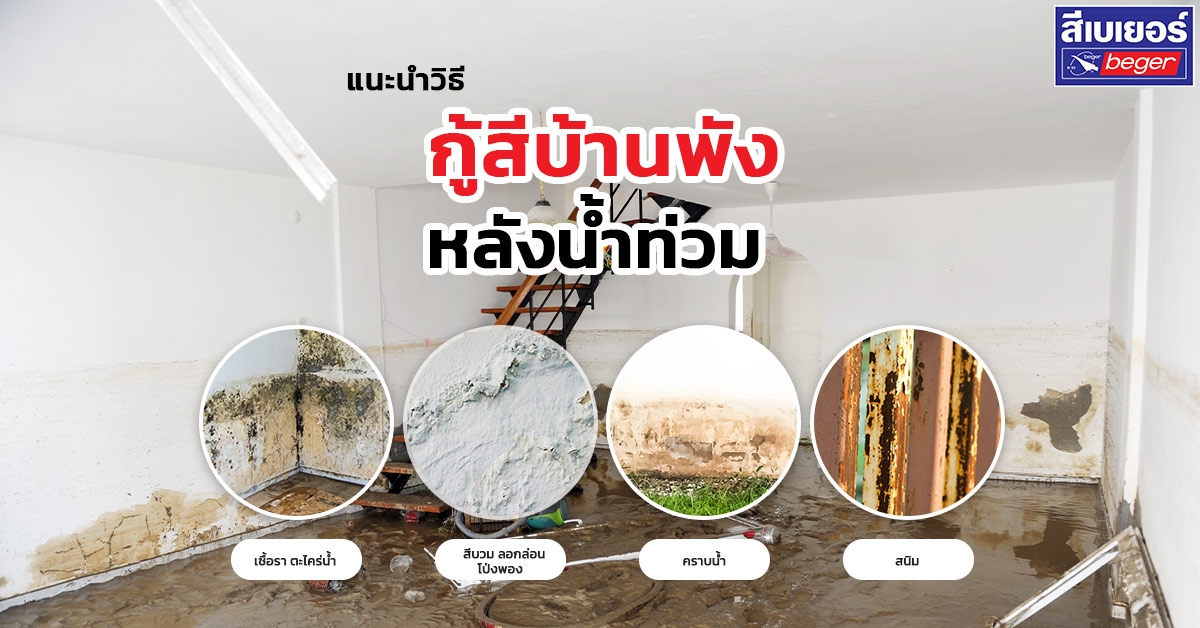
As the flooding situation begins to ease, along with the prolonged heavy rainfall that caused sudden increases in water levels, the first priority for homeowners should be “Restoring homes after the water recedes and after heavy rain.” This is because the walls, floors, and various parts of the house are often affected by high moisture that continuously seeps into the concrete. This moisture can lead to dirty stains, mud stains, mold, algae, and paint peeling issues, and may also cause some structural components to deteriorate faster than normal. If left unaddressed for too long, it could result in higher repair costs in the future.
Additionally, the continuous rain creates an environment conducive to the growth of mold and bacteria, which can affect the health of residents, especially those with allergies or respiratory issues. Therefore, it is crucial to restore the walls of the house to be dry, clean, and safe before problems escalate. Thus, repairing homes after flooding or heavy rain should be done properly, using appropriate materials and paints that suit the specific issues, to ensure that the walls are beautiful, strong, and prevent recurring moisture problems in the future.
Below are important steps to know, along with expert advice and products suitable for addressing various issues that arise after flooding and heavy rain.
Choose to read by topic
How to protect your home before flooding
- Apply moisture-resistant primer before painting
- Use a high-moisture-resistant primer
How to repair and address paint issues after flooding
- How to fix water stains and mud stains
- How to fix peeling and blistering paint
- How to fix mold and algae issues
- How to fix rust issues
Summary
How to protect your home’s paint before flooding to minimize impact
Once we understand how much the walls and paint of the house are affected by both flooding and heavy rain, repairing after the event becomes important. However, what can effectively reduce future damage is “preventive measures.” If the walls of the house are properly prepared before the flood season, the paint will be more durable, less prone to moisture absorption, and significantly reduce the chances of stains, mold, or blistering.
Therefore, to help your home and walls better withstand heavy rain and flooding events, let’s look at ways to protect the paint in advance that will minimize the impact on the house and allow for quick recovery when the water recedes.
1. Apply moisture-resistant primer before applying the paint
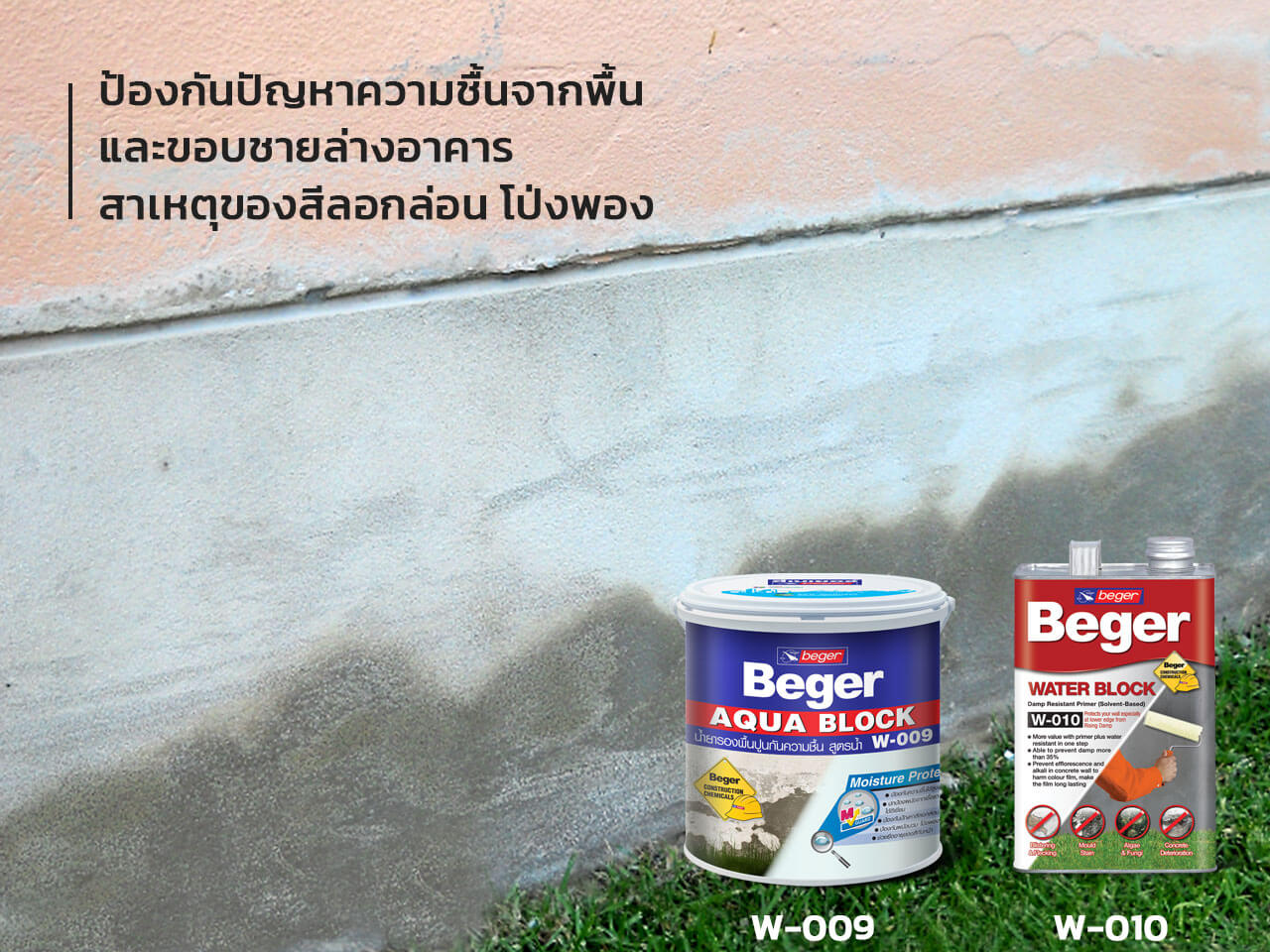
Applying a moisture-resistant primer is the best way to prevent paint issues caused by moisture, especially moisture issues at the lower edges of buildings from rising damp, which is moisture coming from the ground. This is the root cause of paint peeling and blistering.
It is recommended to use a water-based moisture barrier Beger Aqua Block W-009 or an oil-based moisture barrier Beger Water Block W-010. After finishing the application, apply a coat of primer again to enhance adhesion and make the topcoat more vivid.
2. Apply a primer with high moisture resistance.
Primer Generally, both new and old cement primers have a moisture resistance level of about 14%. However, there are now primers known as multipurpose cement primers that can withstand high moisture levels of 25-75%, including:
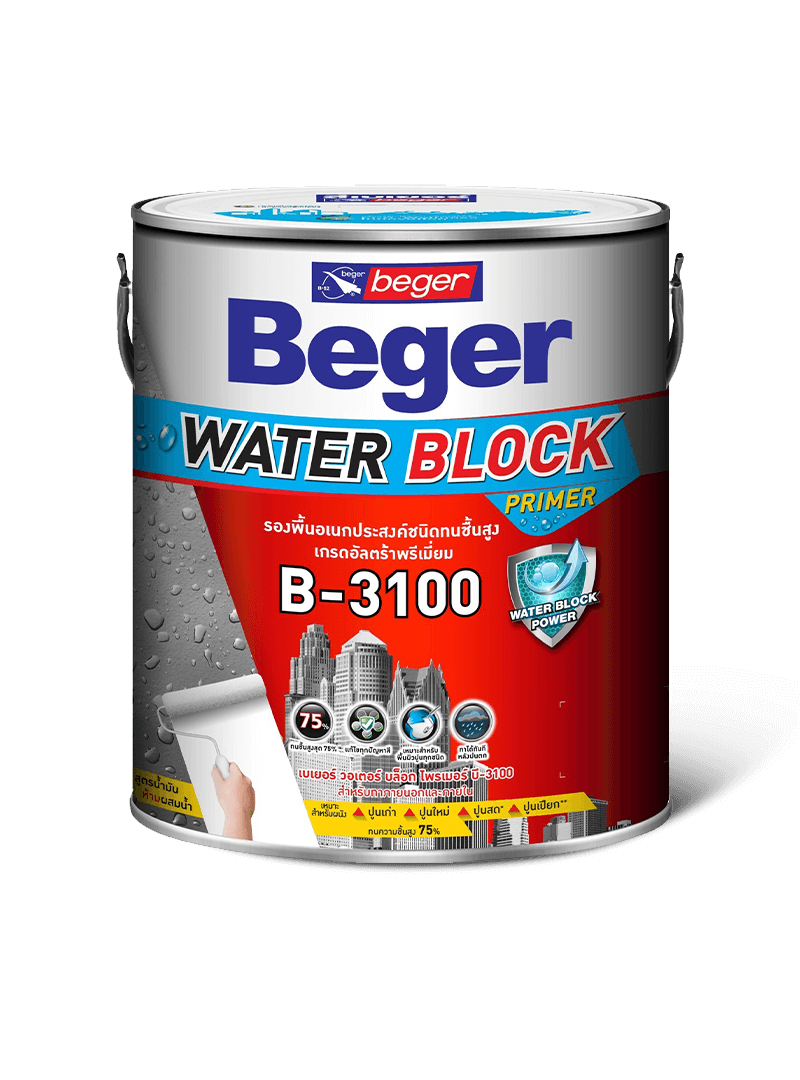
- Beger Water Block B-3100All types of cement primers, oil-based formula, high moisture resistance 75%.
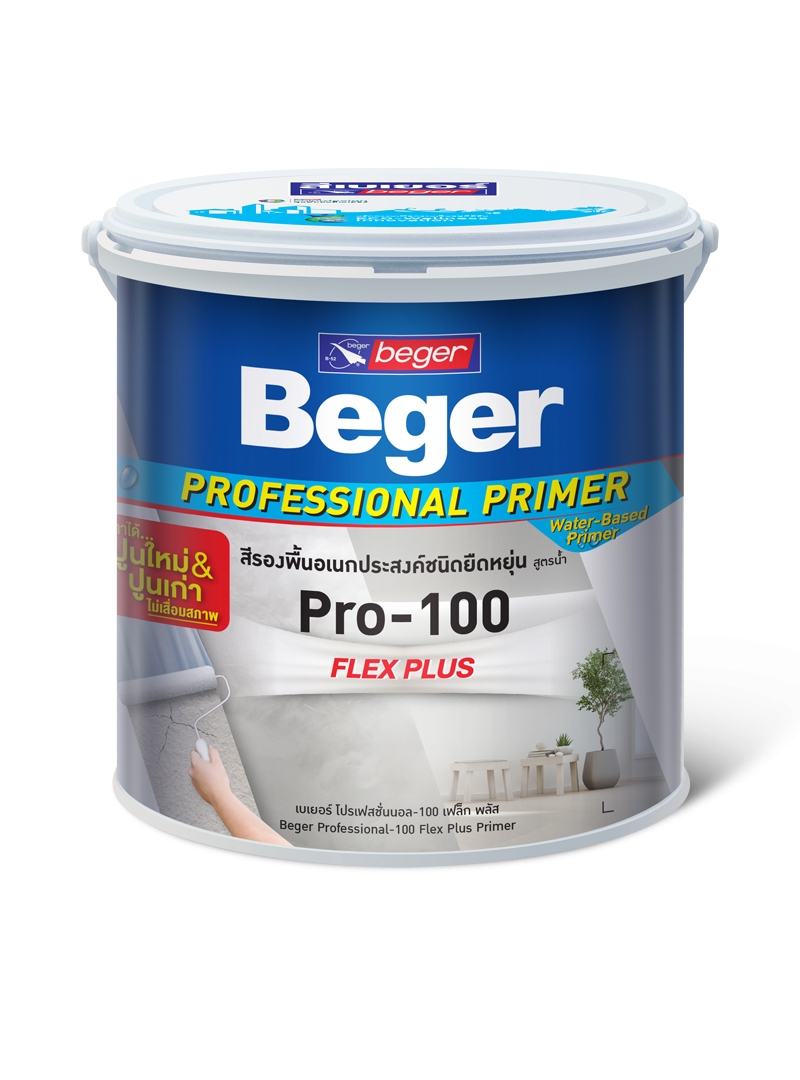
- Beger Pro-100 FLEX PLUSA primer for small hairline cracks, covers and flexibly follows small cracks (not exceeding 0.3 mm).
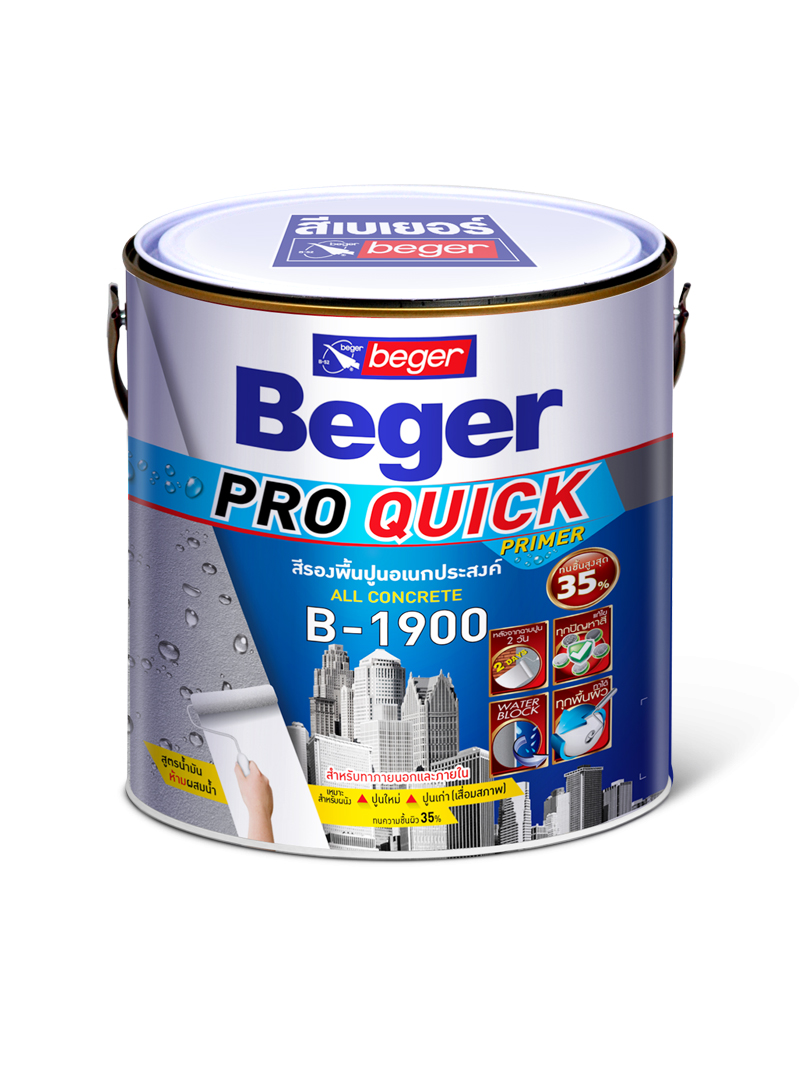
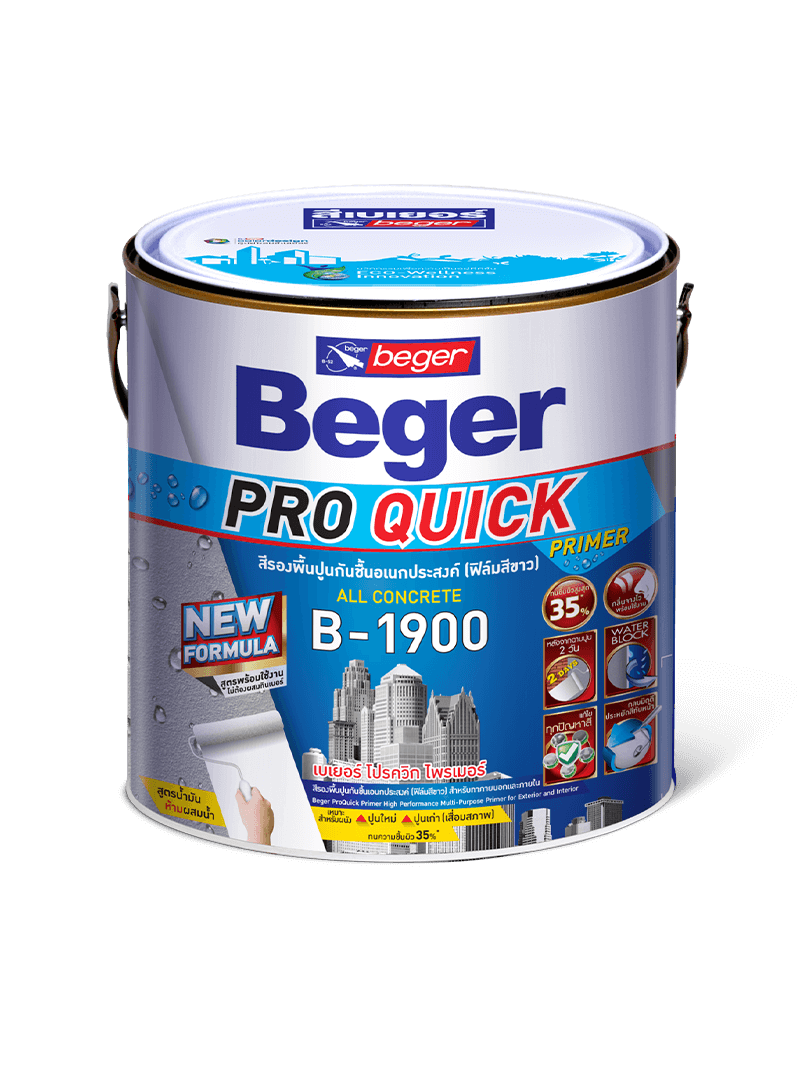
- Beger Pro Quick Primer B-1900A primer for deteriorated old cement, oil-based formula, moisture resistance 40%.
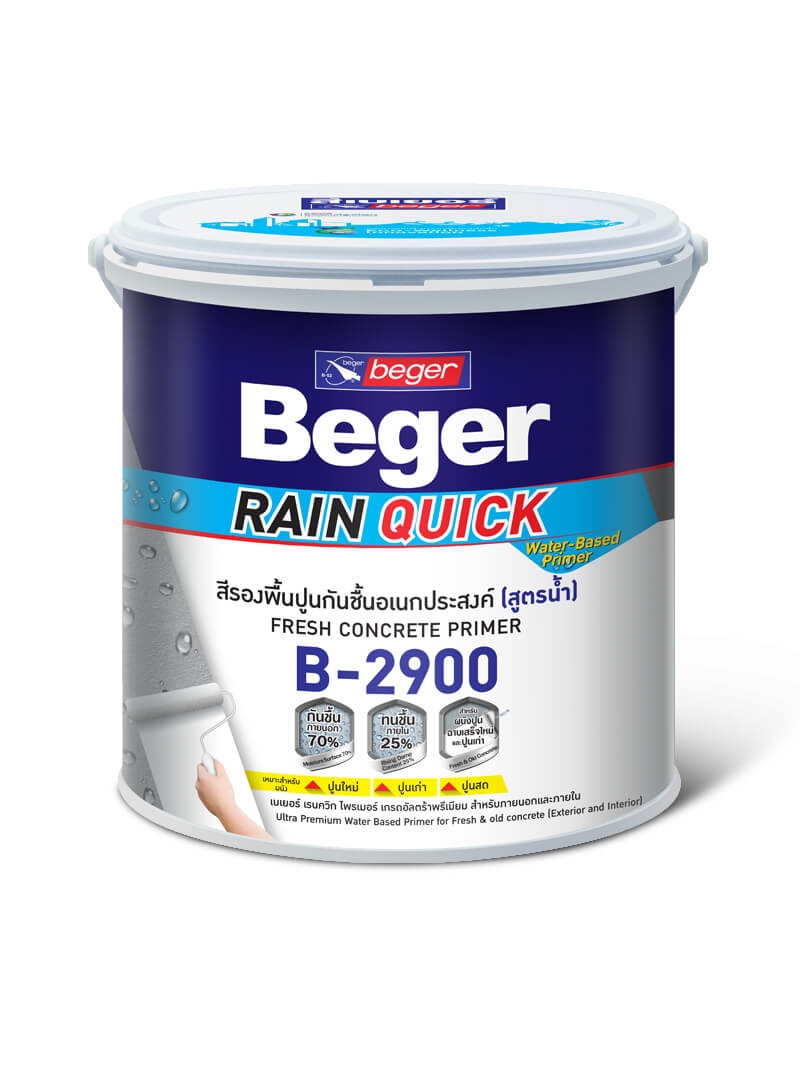
- Beger Rain Quick Primer B-2900A primer for old cement, new cement, fresh cement, water-based formula, moisture resistance outside 70% and inside 25%.
This will help prevent moisture problems more effectively. The special feature of the B-3100 cement primer is that it can be applied on wet cement surfaces that have just been rained on immediately.
|
|
|
|
|
Helpful Tip: To measure moisture levels, we can use a moisture meter, but if you don’t have one, you can check moisture using tape and plastic sheets. Stick them on the cement surface and leave them for one night, then check the amount of condensation. If there is still condensation, painting cannot be done because it indicates moisture exceeds 14%. However, if you want to paint right away, you can use the high moisture-resistant multipurpose cement primer like Beger B-3100.
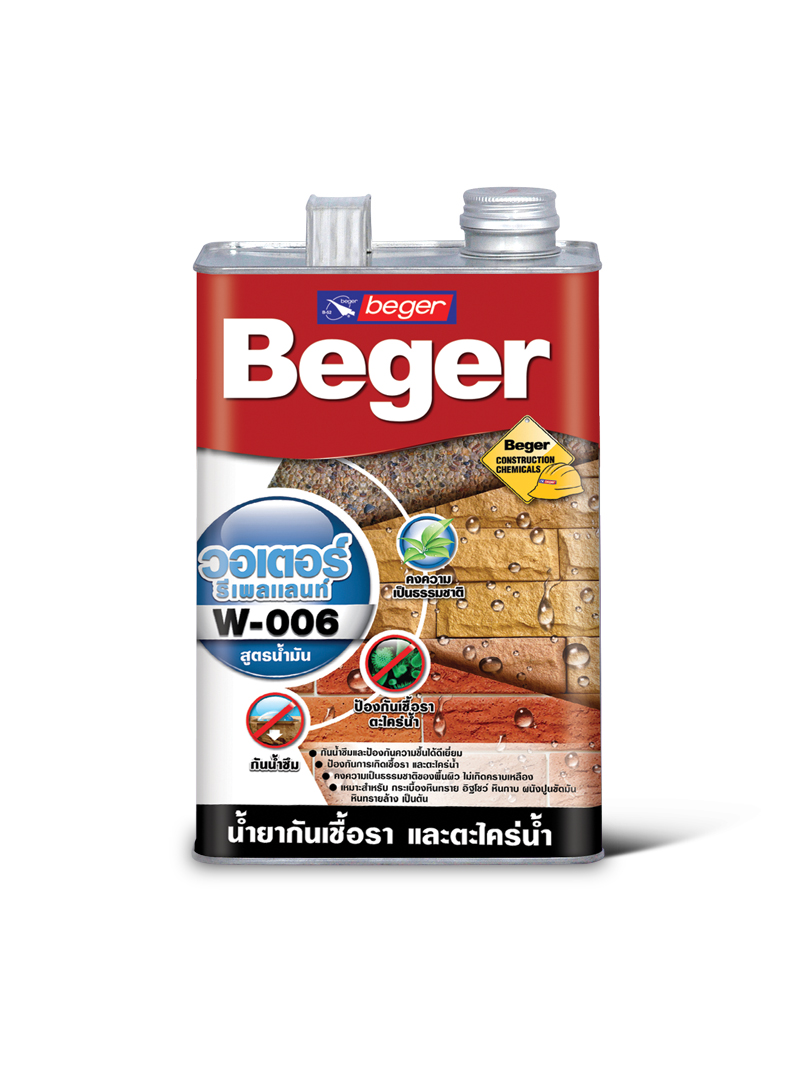
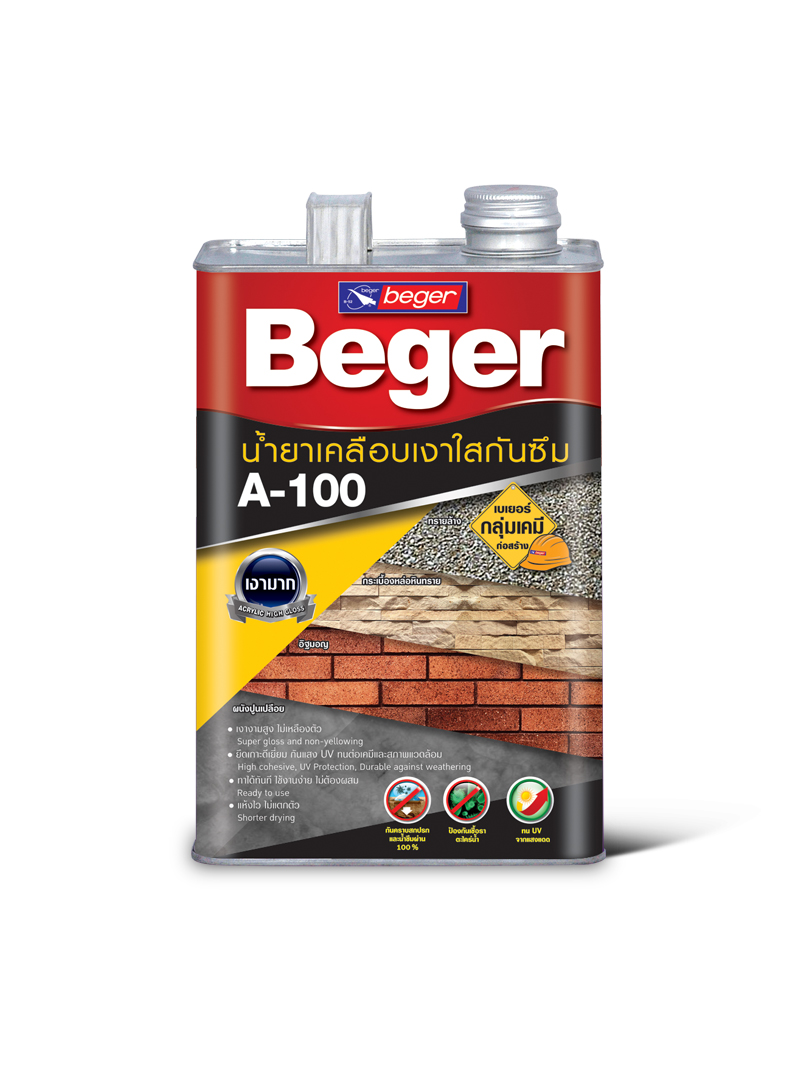
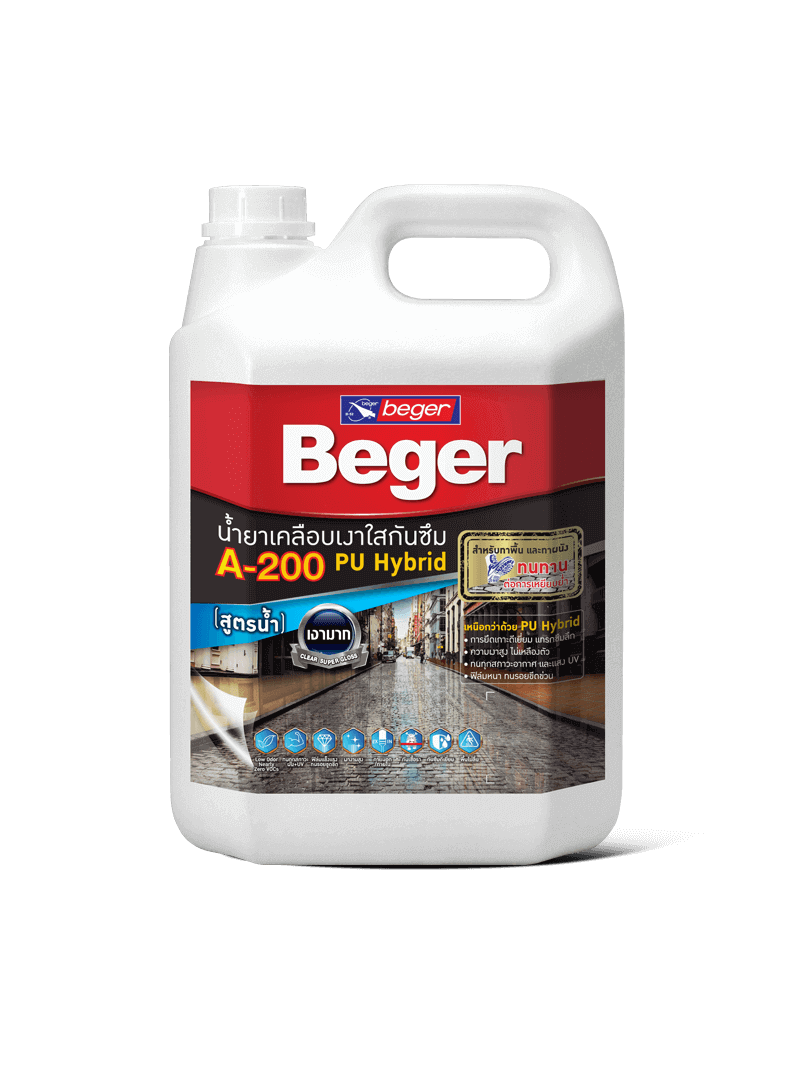
For surfaces made of sandstone tiles, exposed bricks, slate, polished cement walls, or washed sandstone, you can coat them with a clear anti-fungal and algae-resistant solution such as Beger Water Repellent W-006 or a clear waterproofing solution such as Beger A-100 and Beger A-200 to provide maximum protective armor instead of using moisture-resistant primer.
|
|
|
|
What are the methods for repairing a house after floodwaters recede?
Walls that have been exposed to water and moisture will inevitably face paint problems because, generally, house paints are not designed to withstand immersion in water. Most can only resist rain, sun, and weather conditions. Other issues that follow flooding include dirt stains and marks that may become breeding grounds. Germs It’s important to address issues promptly, as neglecting them may lead to illness among household members. Therefore, repairs should be made immediately and not left for long. The methods for dealing with paint problems after flooding are as follows:
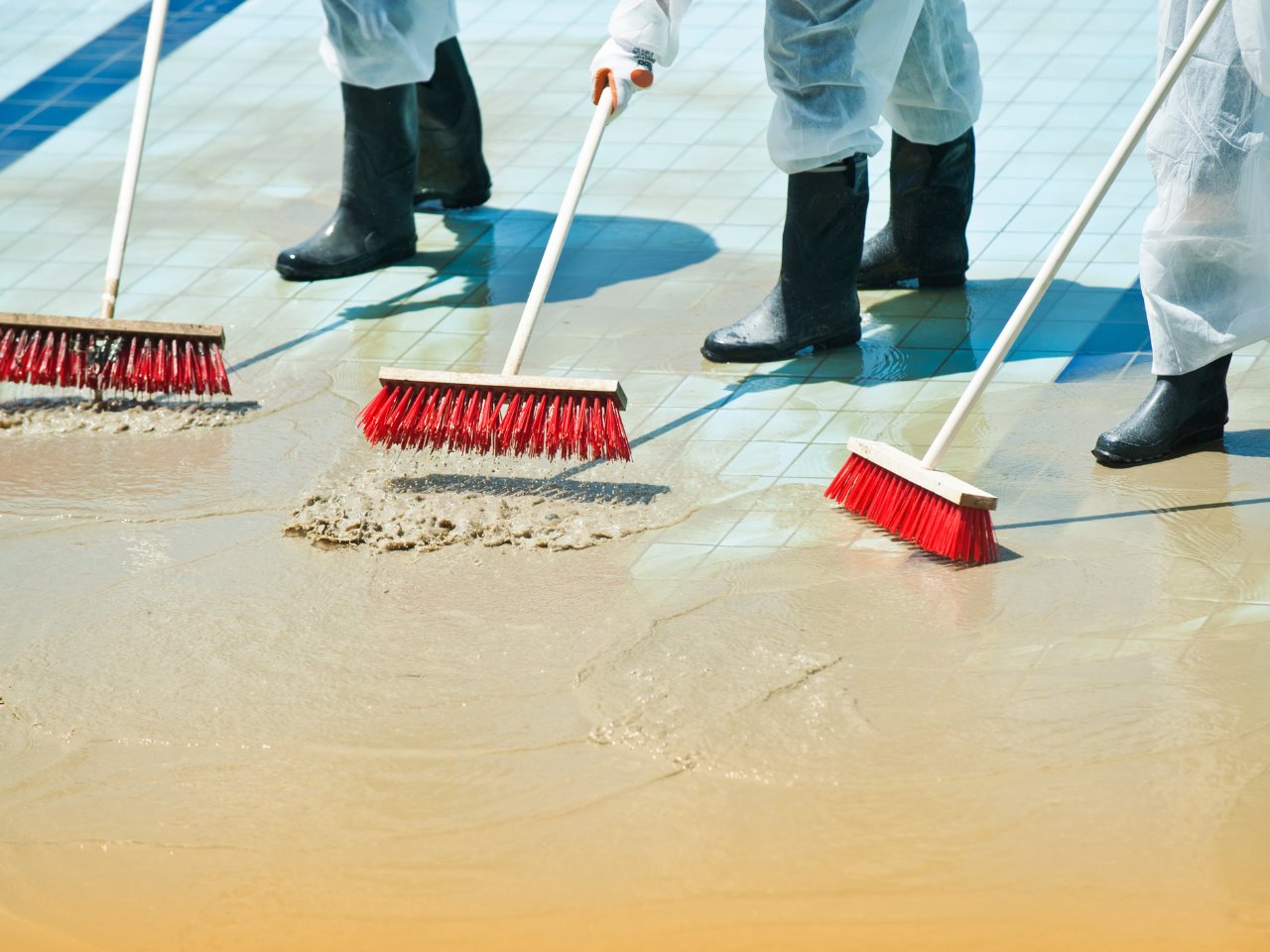
The first thing to do before starting repairs is to Surveying issues and assessing damage Identify the areas that need to be addressed and then proceed to tackle each issue. Every time before entering the house, it is essential to prepare both yourself and the house beforehand for your own safety.
- Wear personal protective equipment such as gloves, rubber boots, safety glasses, and fitted clothing.
- Turn off the circuit breaker to prevent electric shock and leakage before inspecting various points.
- After the flood, explore the house while being cautious of dangerous animals that may have come in with the water, such as centipedes, rats, or snakes.
- Remove waste from the drainage pipes and water catchment areas around the house.
The next step will be to recommend cleaning the surface before starting home repairs because dirt, dust, or grease can reduce the effectiveness of the products or paint applied, leading to the problem of the paint reappearing.
Water stains, mud stains, and marks after flooding.
The issue of water stains after flooding is a clear and common problem. These stains may be dirt, mud, or debris that mixed in during the flood. It is even more noticeable on light-colored walls. If you try spraying water to clean it and it still doesn’t go away, the only solution to this problem is to Repaint
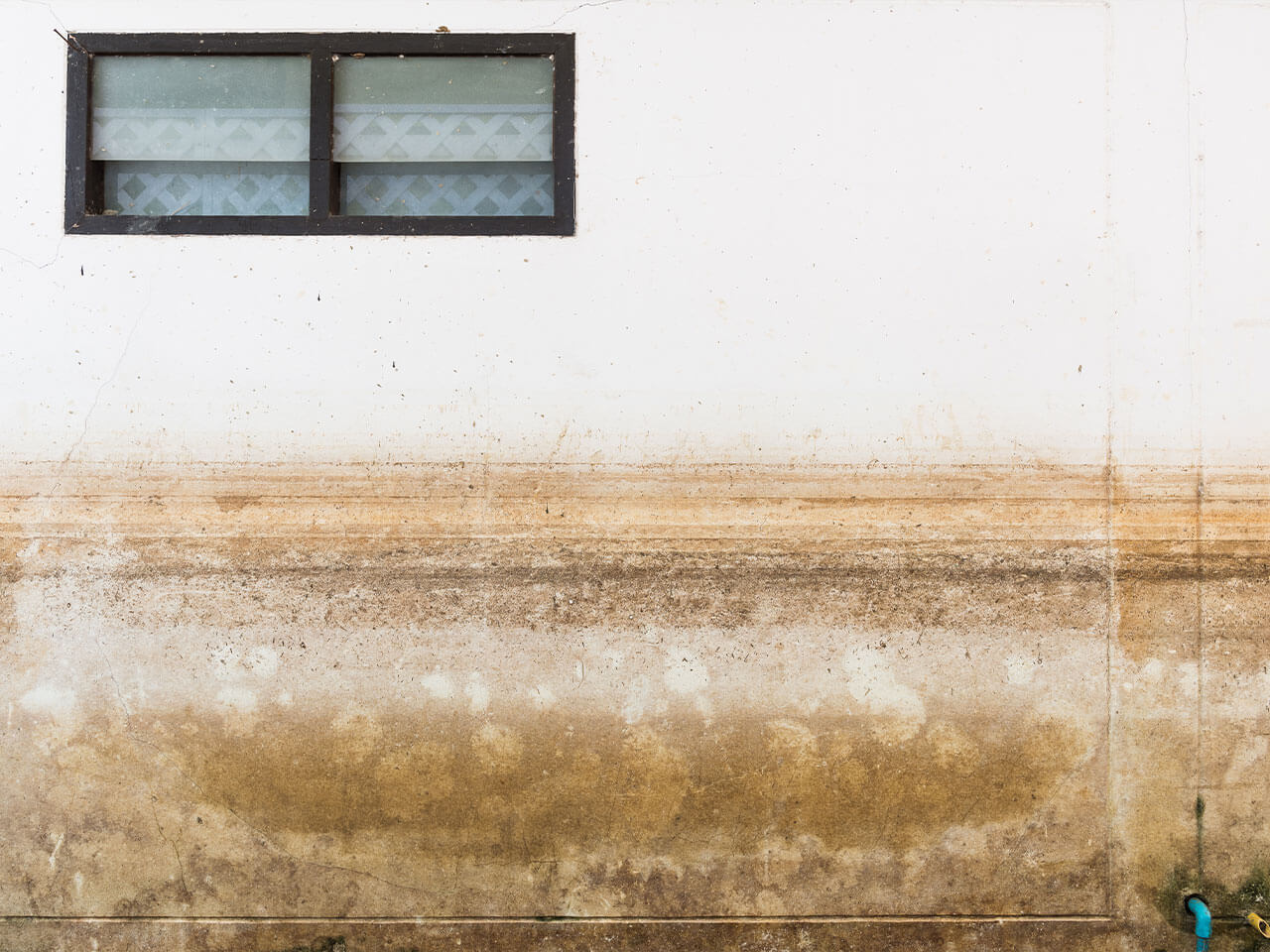
the action Repaint After experiencing flooding, you should paint according to the system: apply 1 coat of primer and 2 coats of topcoat. This can be done following the steps below:
- Prepare the surface Clean the surface to remove as much dust, dirt, and stains as possible. In case of mold, use a mold removal solution first. If there are cracks, repair and fill them before proceeding.
- Apply primer once. We recommend using an old cement primer or a multipurpose cement primer, which is a white film type that will help with better coverage.
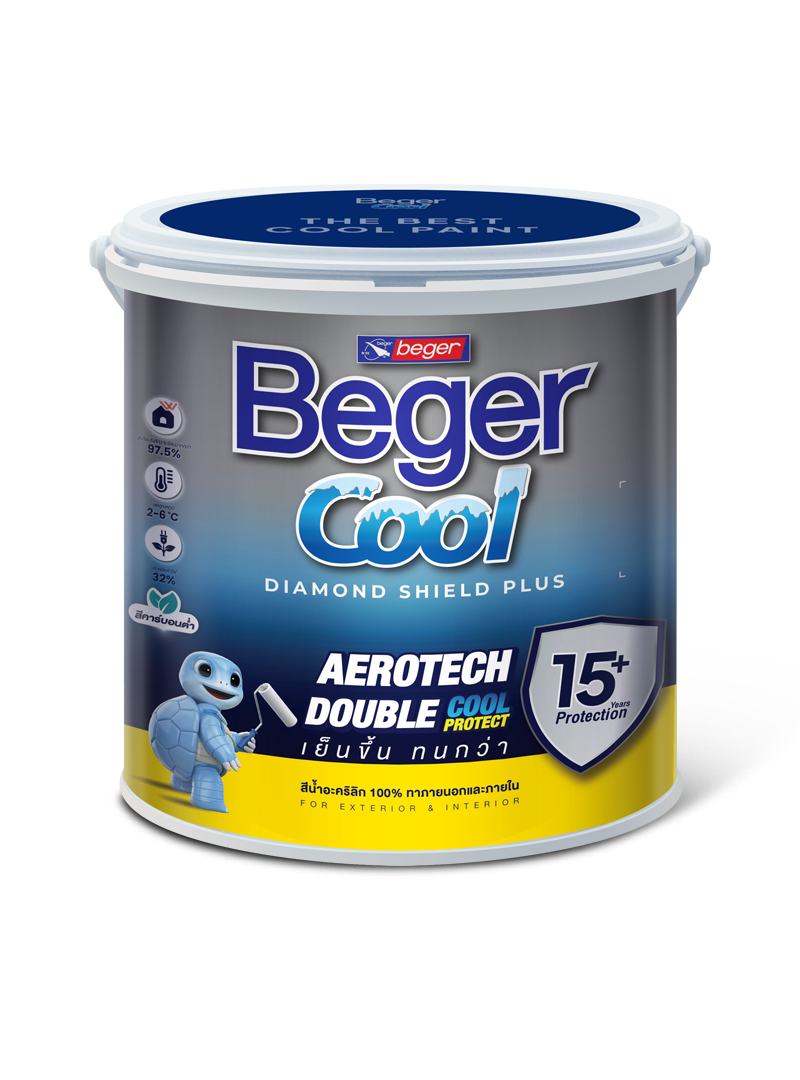
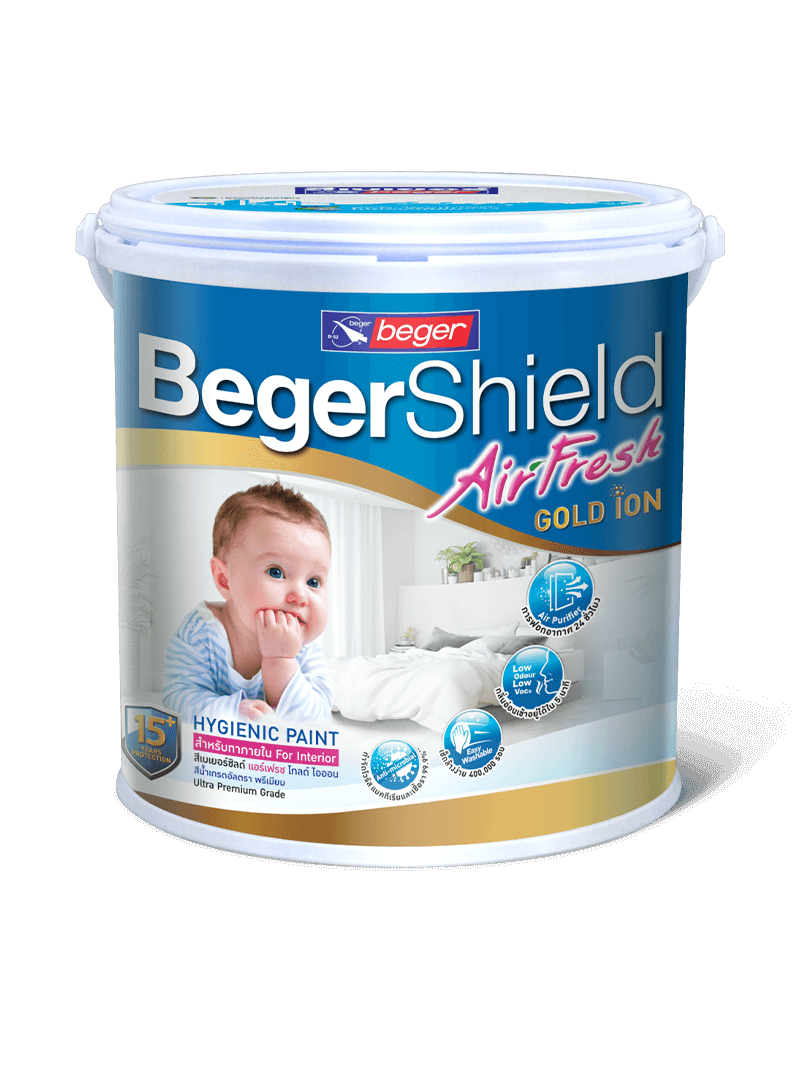
- Apply your favorite shade in 2 coats. We recommend quick-drying acrylic paints with a mild scent, such as exterior and interior paints. BegerCool DiamondShield 15 or BegerShield AirFresh Gold iON interior paint
Peeling and Blistering Paint Problems After Flooding
The number one paint problem caused by moisture from the ground and internal humidity is due to water seeping into the walls, causing the paint film to blister and peel off in sheets.
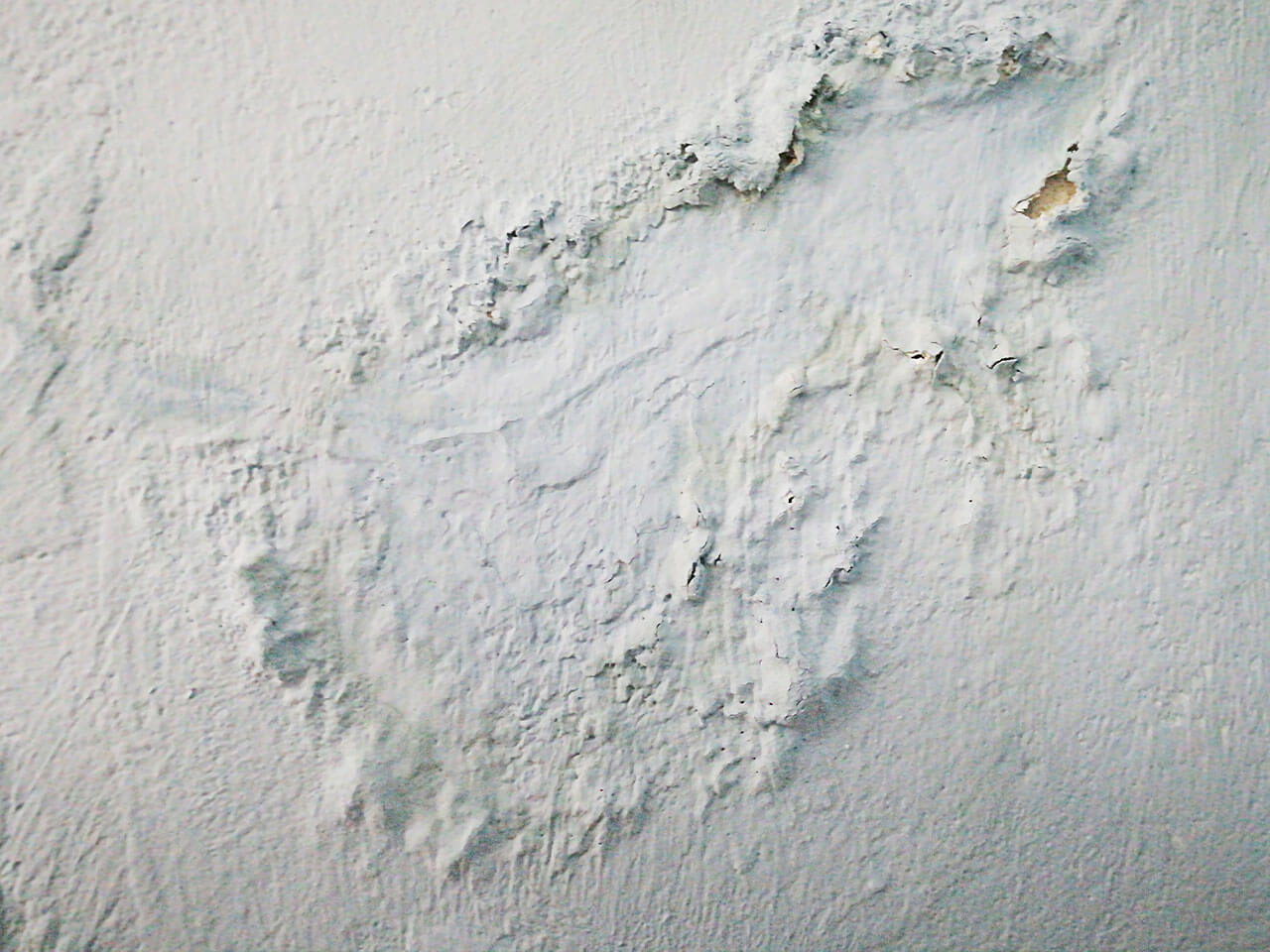
Solutions for peeling and blistering paint after the water recedes are as follows:
- Clear the surface thoroughly by scraping off the old paint that has peeled away. If scraping with a putty knife or floor sander is not possible, especially in large areas, use a paint stripper. Beger Unisoft will help make the removal easier.
- Apply a moisture-proofing solution, water-based Beger Aqua Block W-009, 1-2 coats.
- Then apply a high moisture-resistant primer, such as Beger Super Quick Primer B-3100, 1 coat.
- Next, apply a water-based topcoat in 2-3 coats. For interior walls, it is recommended to use BegerShield Anti-Virus Gold Ion, which can eliminate coronavirus, viruses, fungi, and various strains of bacteria on the walls. For exterior surfaces, it is recommended to use BegerCool, which can resist heat, reflect UV rays, and help save on electricity costs.
|
|
|
|
Mold and Algae Problems After Flooding
This problem not only makes the house look unattractive but can also make you sick because mold and algae are considered breeding grounds for germs that should be dealt with promptly, especially if they occur inside the home, which is more dangerous.
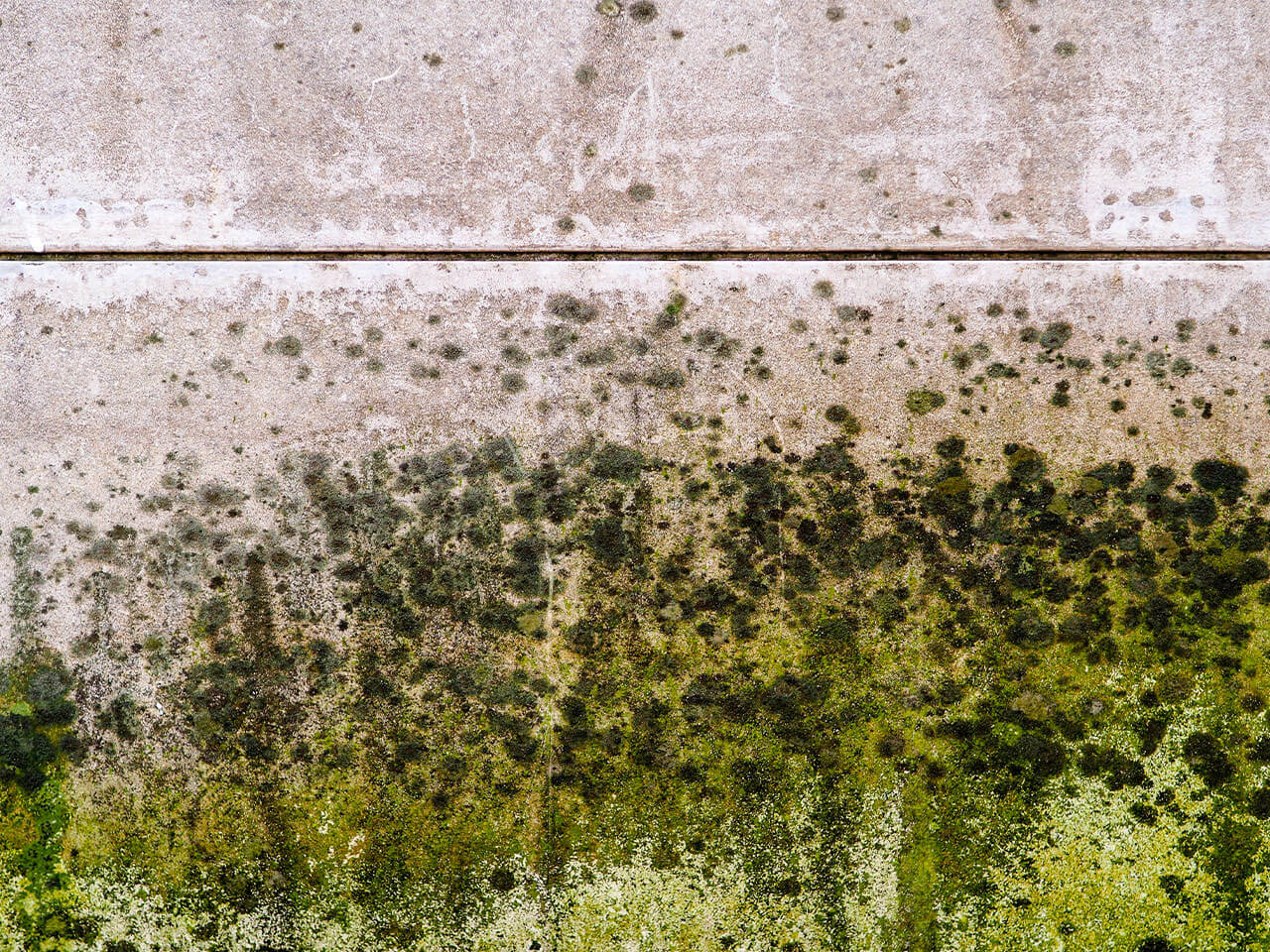
The method for eliminating mold and algae after flooding is as follows:
- Scrub the mold and algae off the surface as much as possible, or you may use a high-pressure washer to help clean it. Then allow the surface to dry for at least 1 day.
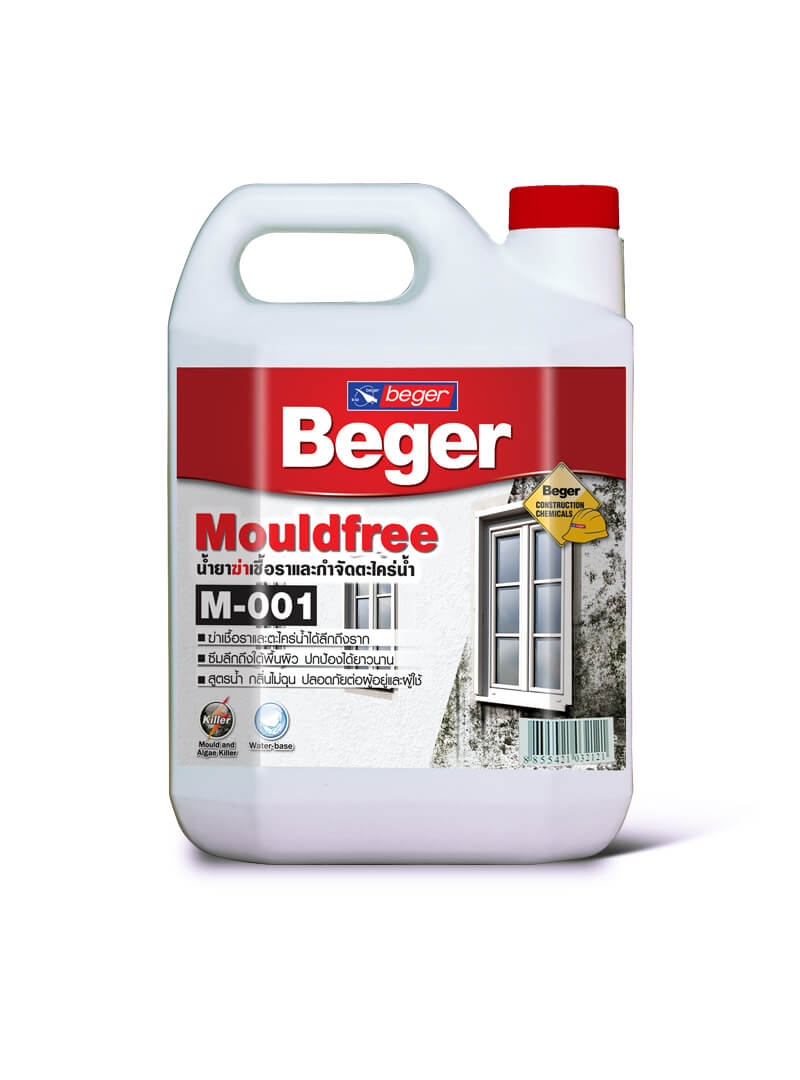
- Apply a mold and algae remover such as Beger MouldFree M-001 to thoroughly saturate the surface area in one application. Leave it for about 2-3 hours without rinsing, and then proceed to paint according to the system.
- Paint according to the system by recommending one coat of primer and then 2-3 coats of the topcoat as desired.
The problem of rust on steel after the water recedes
Water and steel are already enemies. When flooding occurs, all metal parts inside the house, such as steel fences, steel doors, steel railings, and steel pipes, are affected and rust problems arise. If the steel is still in good condition and not corroded, we can easily repaint and stop rust formation with rust-resistant paint products.
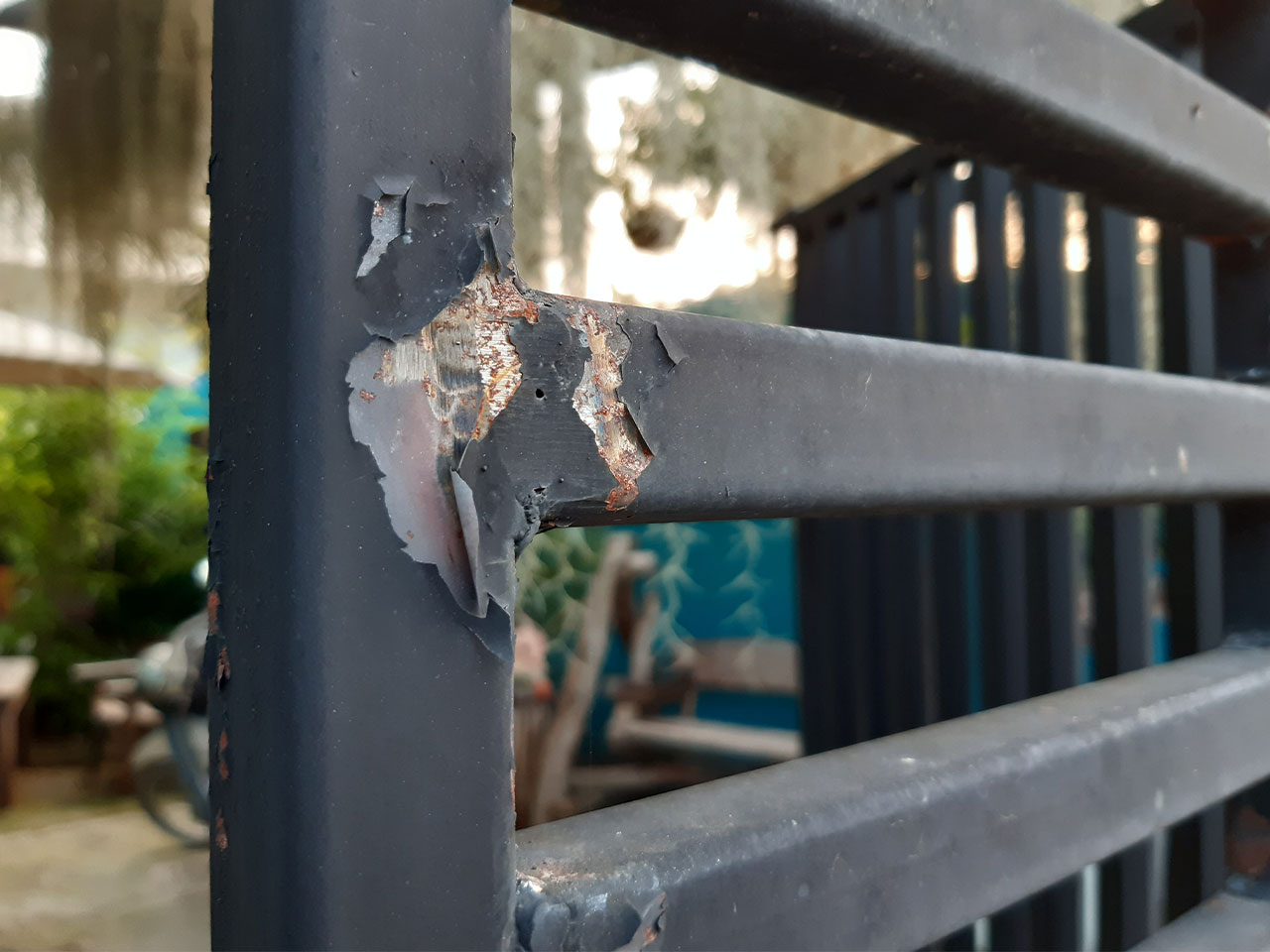
The steps to remove rust from steel are as follows:
- Sand the steel surface using fine sandpaper or a grinding machine to remove as much rust or rust dust as possible, then clean off any dirt, dust, and rust particles thoroughly.
- Remove the old paint film If the old paint is peeling, it is recommended to scrape off all the loose paint first.
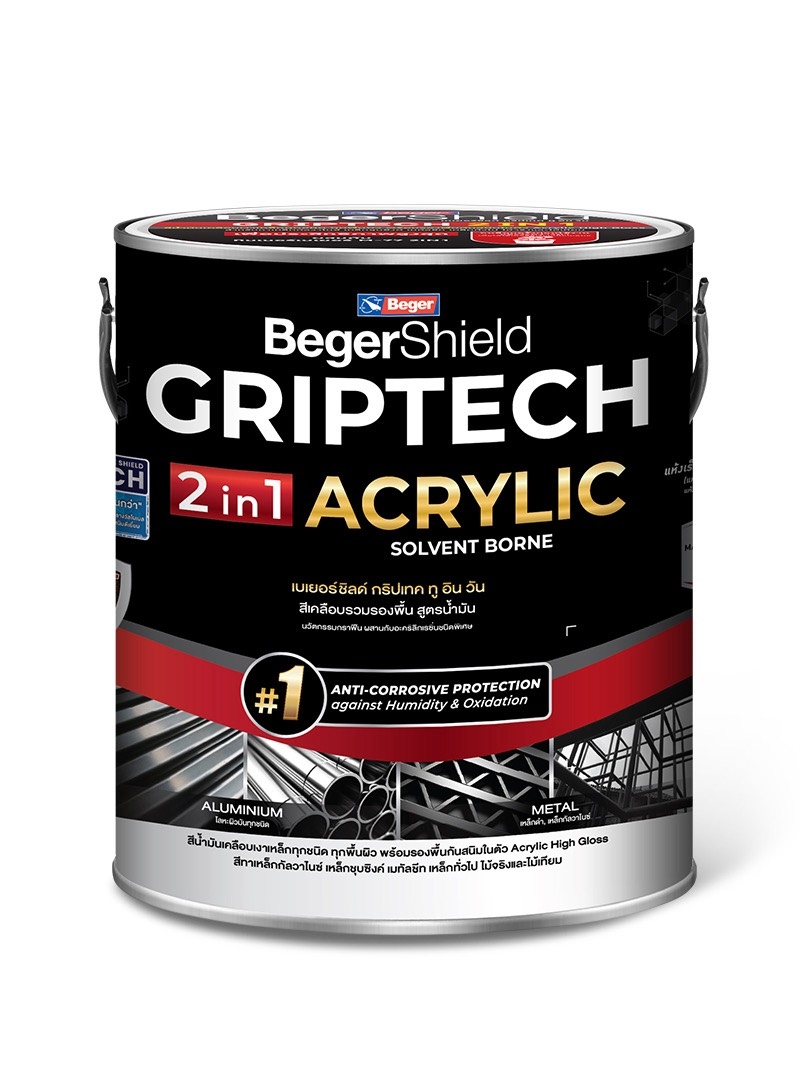
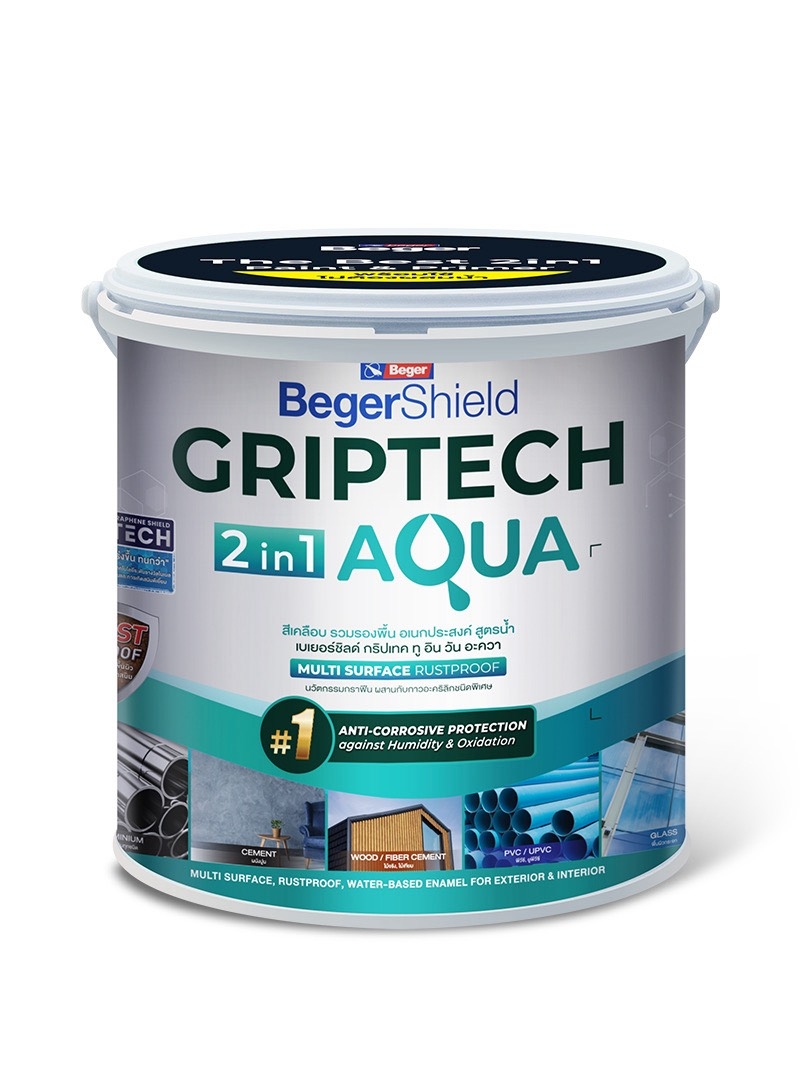
- Apply 2 coats of 2IN1 steel paint You can choose an oil-based formula such as BegerShield Griptech 2IN1 and
Bull Rust Tech 2IN1, or a water-based formula like BegerShield GRIPTECH 2in1 AQUA (allow about 30 minutes between each coat).
|
|
|
Summary
The method for repainting a house after flooding consists of 2 steps:
- assessing the problems and evaluating the damage.
- Choose the right products to solve problems appropriately
FAQ: Frequently Asked Questions about repairing homes after flooding and during the rainy season
Q1: After flooding, how many days should I wait for the walls to dry before repainting?
A1: Generally, you should wait 3–7 days or until the moisture content of the walls is below 14%. If you rush to repaint while the walls are still wet, it may cause the paint to blister or peel, or lead to mold growth later.
Q2: If the house is still damp but I need to repair it quickly, what should I do?
A2: You can use fast-drying primer such as a primer that helps the walls be ready for painting in a shorter time. This is suitable for homes that need urgent renovation after rain or after the water recedes.
Q3: Why do walls get moldy quickly after rain or flooding?
A3: Because high humidity prevents the walls from drying quickly, mold and mildew can grow rapidly, especially in enclosed, poorly ventilated areas or places with little light.
Q4: What should I do to fix walls that have black or green mold?
A4: Follow these steps: 1. Spray with a mold killer 2. Scrub it off 3. Rinse with clean water 4. Let it dry 5. Paint with mold-resistant paint to prevent recurrence.
Ordering Products
You can purchase products online at these authorized dealers of Beger paint or find a nearby paint store that is convenient for you from Find a Beger paint store near youhere
|
|
|
|



|
|
|
|