In recent years, Thai people have faced continuously worsening air quality, whether it be the increasing levels of PM2.5 dust each season, as well as viruses, bacteria, and air pollutants that accumulate in enclosed spaces. These factors have clearly led to an increase in respiratory, skin, and allergy-related health issues.
One aspect that is often overlooked is the “walls of the house” and “house paint” that are closest to us. Home is the place where we breathe in and out tens of thousands of times a day. If the surfaces inside the house are not safe, they can unknowingly become a source of irritants and pathogens. This article aims to help you understand why choosing safe paint can have a greater impact on health than you might think, and how modern interior paint technology can help protect our bodies.
1. Home walls are a greater source of dirt than you think
Environmental health research indicates that indoor surfaces can accumulate bacteria, viruses, mold spores, and pollutants from cooking or external smoke more than we realize. Contact with walls or even the circulation of air within a room can cause these particles to re-enter our respiratory system.
During times of heavy smoke or when viruses are rampant in the community, the home can be “as safe as we choose to make it.” However, it must start with selecting body-friendly interior materials.
2. Hidden dangers in common house paint
Many people think that all house paints are the same, but in reality, a significant number of paints may continuously release certain volatile compounds. In particular, formaldehyde is an irritant classified as a Group 1 carcinogen when exposed to high levels or for prolonged periods.
The main effects that may occur include:
- Coughing, sneezing, and nasal irritation
- Allergic rashes or skin sensitivity to chemicals
- Eye irritation
- Easily exacerbating allergies in children
- Increased risk of chronic respiratory diseases
In homes with children, the elderly, or those with weakened immune systems, choosing interior paint is therefore extremely important.
3. Modern paint technology: Not just for aesthetics, but for health
In this era, house paint serves not only to coat surfaces but has been developed to be a true “protective material for living spaces.” Many brands have thus developed eco-friendly paint that reduces harmful chemicals, helps purify the air, and effectively inhibits pathogens.
One of the interesting innovations is the Gold Ion technology. This is a micro-level active ingredient that destroys the cell walls of viruses and bacteria, not just coating but also reducing the survival chances of pathogens on surfaces. Applying this technology to interior paint helps reduce the risk of pathogens that can spread through touch.
Especially in homes with poor air circulation, having walls that continuously destroy pathogens creates a “surface-level defense” that effectively enhances safety for household members.
4. Examples of health-oriented paint innovations that incorporate Gold Ion technology
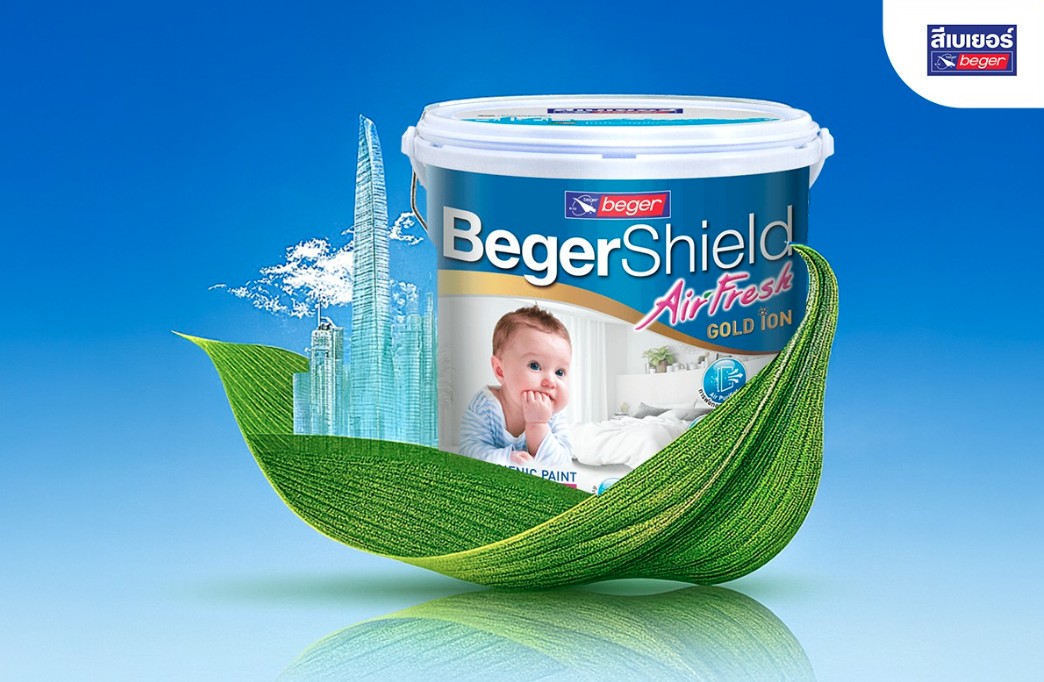
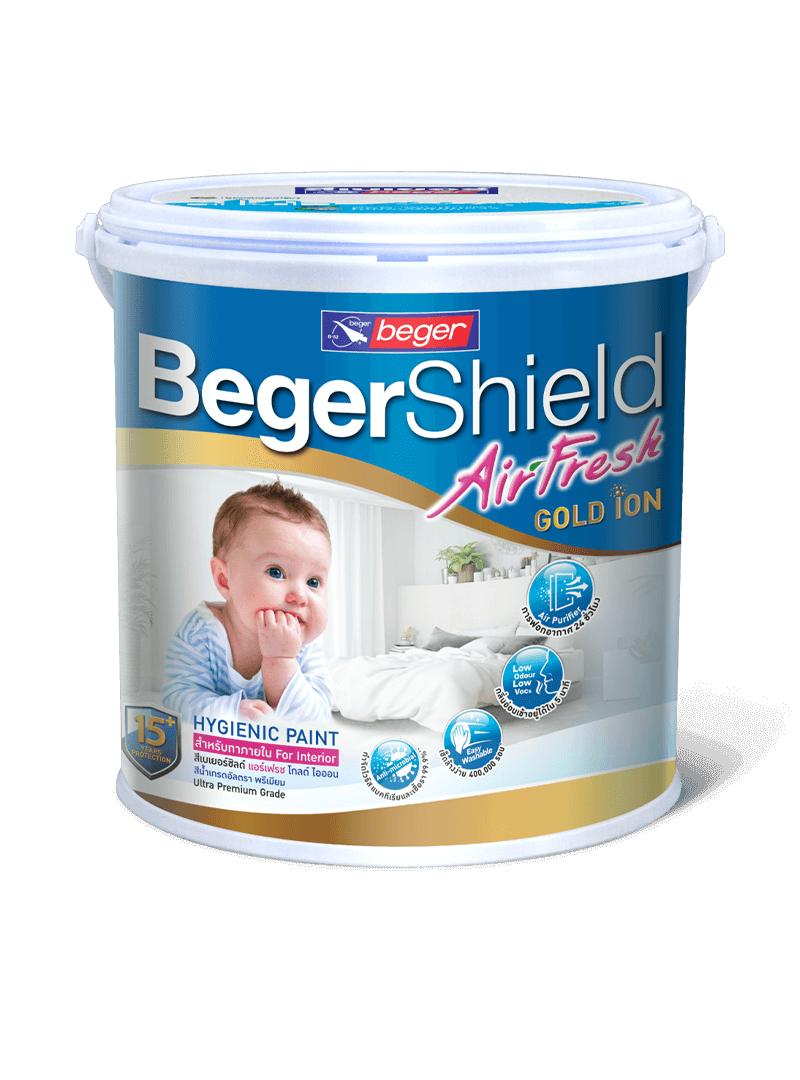
In the Thai interior paint market, there are currently innovations developed specifically for health, such as paints that help reduce musty odors, inhibit mold, and reduce the accumulation of pollutants on wall surfaces. One of the products that has garnered attention is BegerShield AirFresh Gold Ion which emphasizes increasing safety in personal spaces.
Although this article does not aim to sell products, it must be acknowledged that the concept of “paint that inhibits viruses and purifies the air” is a significant step for living in Thailand, where dust and pathogens increase every year. This type of paint can meet the needs of those looking to create a safe home environment, reduce odors from walls, decrease pollutant accumulation, and is particularly suitable for homes with children or the elderly.
|
|
5. How to choose paint for a family’s health
To confidently select interior paint, consider these criteria together:
1. Choose paint with low volatile organic compounds (Low-VOCs) to help reduce the accumulation of chemicals in the air.
2. Free from formaldehyde to reduce the risk of chronic diseases and allergic reactions.
3. Has properties that inhibit pathogens or purify the air suitable for an era where Thai people spend more time indoors and outdoor air quality is worsening.
4. Suitable for homes that require special safety such as homes with children, the elderly, allergy sufferers, or pets.
5. Choose eco-friendly paint safe for both residents and the environment.
Amidst the current polluted air conditions, the home is the space we can control the most. Choosing safe house paint is thus one of the most worthwhile health investments, as it helps reduce airborne chemicals, inhibit pathogens, and enhance the quality of life for everyone in the family. The walls of a house may not just be ordinary surfaces but are the “first line of defense” that can unexpectedly protect our health. Good health starts at home, and a good home begins with choosing materials that truly care for you.
FAQ Frequently Asked Questions about house paint and health
Q1: Does house paint really affect health?
A1: It has a significant impact, especially low-quality interior paints that may release volatile substances and chemicals, such as formaldehyde, which can trigger allergic reactions, irritate the eyes and nose, and cause respiratory issues. Therefore, choosing safe paint with low emissions is crucial for the health of residents.
Q2: What type of paint is considered “safe for health”?
A2: Safe paint should have the following properties: 1. Very low volatile organic compounds (VOCs) 2. Free from formaldehyde 3. No pungent odor after application 4. Has properties that inhibit bacteria, fungi, or viruses 5. Is an eco-friendly paint that is safe for both humans and pets. Products with enhanced technology, such as Gold Ion in the new interior paint line, will further increase the safety level of the home.
Q3: How does PM2.5 dust from outside relate to interior paint?
A3: Although it is interior paint, the walls of the home are surfaces that “receive and accumulate” pollutants as well, especially fine dust, bacteria, or pathogens that float in from the outside air. Using paint with properties that inhibit germs or help purify the air can effectively reduce the chances of contamination in enclosed spaces.
Q4: Do paints that help eliminate viruses or bacteria really exist?
A4: They do exist, using chemical methods such as ion particles that destroy the cell walls of microorganisms, helping to reduce the survival of pathogens on wall surfaces. For example, Gold Ion technology used in premium interior paints helps continuously reduce the accumulation of viruses and bacteria in rooms.
Q5: Can interior paint really help reduce musty odors or pollution in the home?
A5: It depends on the properties of the paint. If it is a standard paint, it may not have a noticeable effect, but if it is a paint developed for health, such as those that help absorb pollutants, break down chemicals, or purify the air, then improvements in indoor air quality can be observed.