

Using multi-purpose spray paint may seem like an easy task, but the truth is that “the steps and basic understanding” are what make the paint film come out beautiful, smooth, and long-lasting, especially when sprayed on different surfaces such as metal, wood, and plastic, which have varying adhesion properties. If the surface is not prepared or sprayed correctly, the paint may easily peel, become blotchy, or run. From experience in coating materials and spray painting, the expert team has compiled important questions that most spray paint users do not know but should know before starting their work to ensure that every spray job is of professional quality.
What surfaces can spray paint be used on?
Before choosing to use multi-purpose spray paint, the first important thing is “understanding the surface” because the type of material directly affects the adhesion of the paint film, such as glossiness, porosity, smoothness, or the presence of coatings that make it easier or harder for the paint to adhere.
For example,
- plastic is glossy, making it harder for paint to adhere compared to wood.
- Steel may have rust stains, causing the paint not to adhere.
- Wood absorbs paint a lot, requiring multiple coats.
Knowing the surface you want to spray is therefore the key to high-quality spray painting, reducing problems of peeling paint, poor adhesion, and running paint, and helping the work turn out as perfectly as possible.
Surfaces suitable for multi-purpose spray paint and preparation tips
|
Type of surface |
Level of suitability |
Difficulty of adhesion
|
Correct surface preparation methods | Additional recommendations from experts |
| Steel / Metal | ⭐⭐⭐⭐⭐ | Easy | – Remove all rust – Wipe off grease/dust – Ensure it is completely dry |
If used outdoors, it is recommended to spray “rust-inhibiting primer” to extend the lifespan. |
| Wood | ⭐⭐⭐⭐ | Medium | – Smooth the surface – Wipe off dust – If it is wood, spray thinly several times |
Wood tends to absorb color; it should be sprayed thinly both times for a smooth finish |
| Plastic | ⭐⭐⭐ | Difficult to adhere | – Wash off grease with detergent – Lightly sand the surface to reduce slickness – Wipe dry |
For projects requiring high durability, use “Plastic Primer” |
| Aluminum / Stainless Steel | ⭐⭐ | Quite difficult | – Sand the surface with fine sandpaper – Clean to remove any residue |
Spraying thinly several times will help reduce peeling |
| Ceramic / Glazed Surface | ⭐⭐ | Very difficult | – Clean – Sand the surface to reduce the smoothness of the glaze |
Recommended for decorative spraying, not suitable for heavy-duty work. |
| General DIY work | ⭐⭐⭐⭐⭐ | Easy | – Clean – Let dry |
Very suitable for decorative work, art, and renovation projects. |
| Cardboard / Art paper | ⭐⭐⭐ | Easy | – Use thick paper – Test spray first as it may absorb paint quickly |
Be careful not to spray too heavily as it may cause the paper to warp. |

Why does spray paint sometimes not adhere to surfaces?
Many people mistakenly think the paint is bad, but in reality, 80% of the problem comes from “improper surface preparation,” such as
- Having grease, dust, or wax residues
- Not cleaning thoroughly
- Smooth surfaces, such as plastic or coated surfaces
- Spraying too close, causing the paint to run
- Wood surfaces absorb paint a lot, but spraying too thickly makes it uneven
Experts recommend:
- Always clean the surface
- Sand the surface to open it up for better paint adhesion
- Test spray on a small piece first
Do I need to shake the can before use?
Yes, shake it.
Shaking for 1–2 minutes is a very important step because it helps the color particles and binding agents to disperse evenly. If not shaken enough, the paint may spray out unevenly or blotchy.
Correct shaking method:
- Shake until you can clearly hear the mixing ball hitting the inside.
- Shake in an up-and-down motion.
- Shake before spraying every time, even if you have just used it recently.
What is the appropriate spraying distance?
“Spraying too close = paint runs.”
“Spraying too far = rough surface, uneven color.”
Experts recommend that
the best distance is about 1 foot (30 cm).
Tips for a smoother finish:
- Hold the can upright.
- Move your hand left to right continuously.
- Do not stay on one spot.
How many coats should I spray for a smooth and durable finish?
The correct way to spray paint is “not to spray thick in one go” but to spray thin coats multiple times.
Professional formula:
- Coat 1: Spray a light coat evenly over the surface.
- Wait 5–10 minutes.
- Coat 2: Spray to cover completely.
- If not yet consistent → Add a third coat
- Leave it for the color to set for 20–30 minutes
How long does spray paint take to dry?
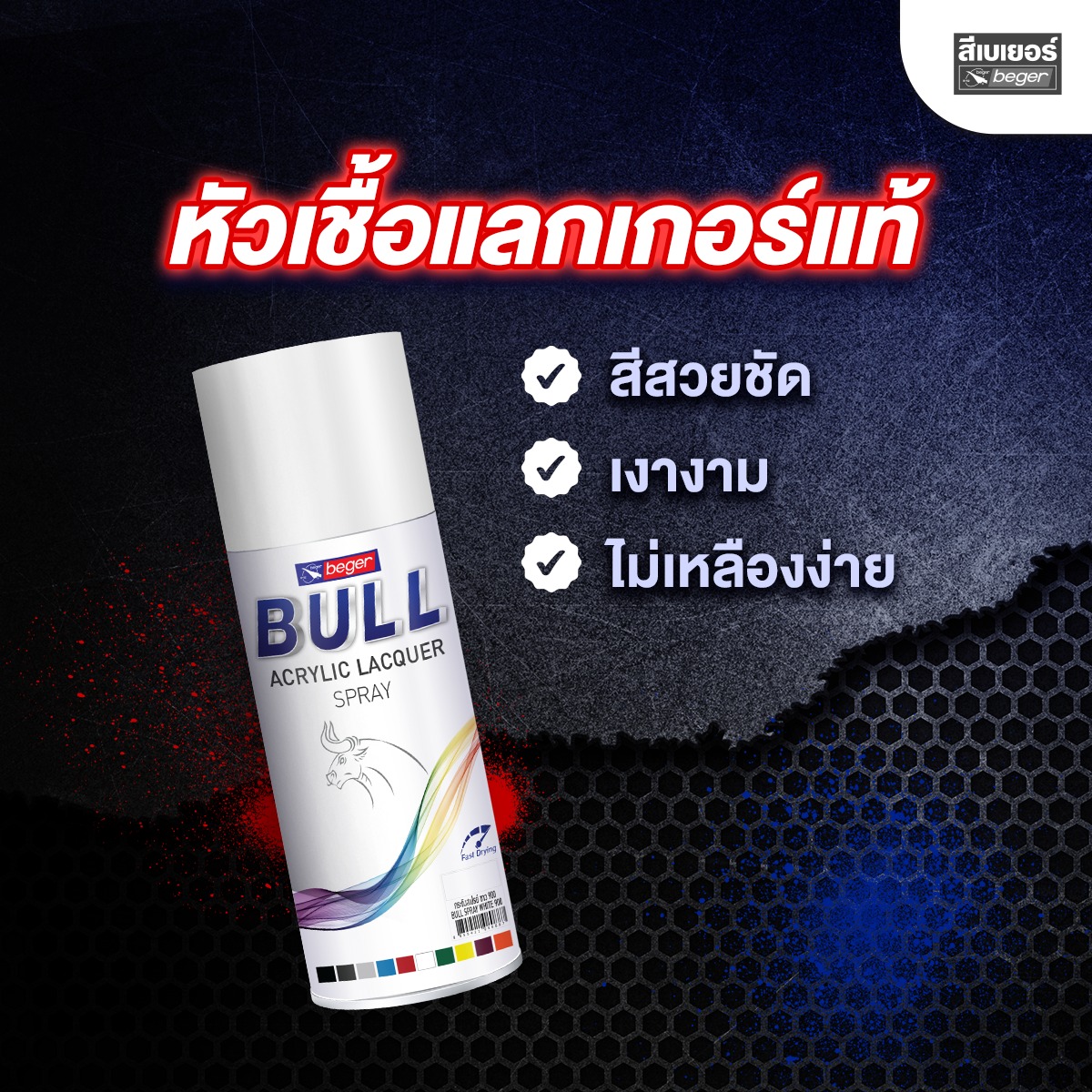
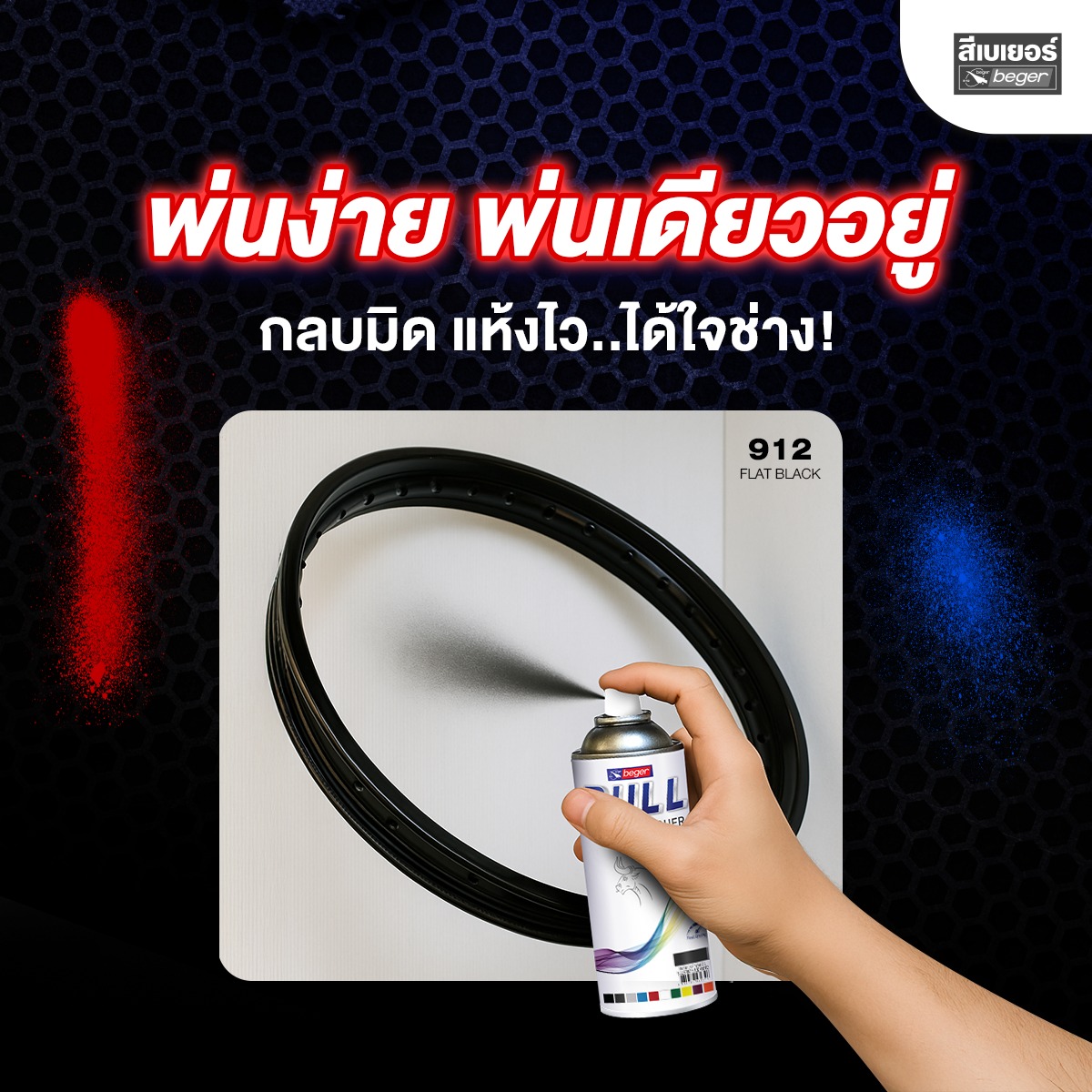
It depends on the weather conditions and the paint formula, but for high-quality spray paint like Beger BULL Spray
- Surface dry: 10 minutes
- Ready to work on: 20–30 minutes
- Ready for lacquer coating: After 30 minutes
If the weather is cool or humid, it is advisable to add a little more time
 |
 |
Is it necessary to use a primer before spraying?
It depends on the surface and the durability required
- Steel/Metal: It is recommended to use a rust-resistant primer
- Plastic: Using a plastic primer helps it adhere better
- Wood: Not always necessary, but it is advisable to spray in several light coats
- Aluminum/Stainless Steel: Sanding the surface before spraying is best
Using the appropriate primer helps extend the lifespan and makes the paint adhere much better
Recommended product: Bull Acrylic Lacquer Spray (Multipurpose spray paint, Bull)
|
|
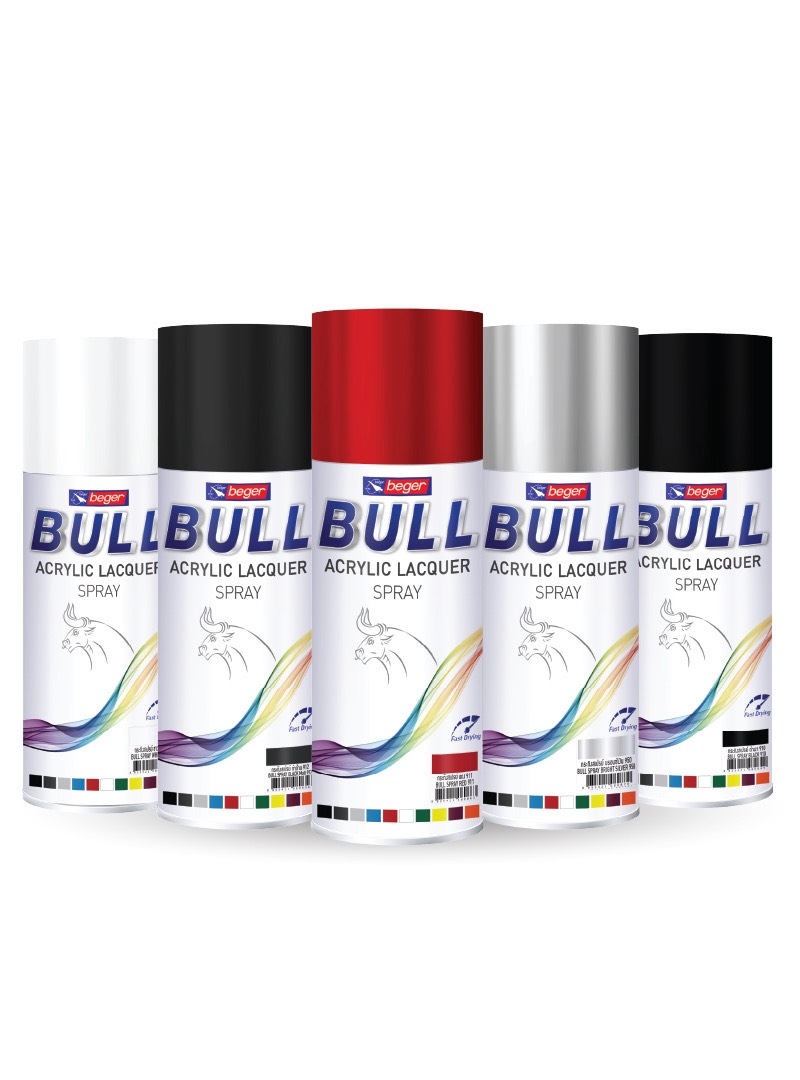
Multipurpose spray paint, Bull Bull Acrylic Lacquer Spray
Summary: To achieve long-lasting paint adhesion, you must start by understanding the surface.
Achieving durable spray paint results is not just about using good paint; it involves understanding the surface, choosing the correct spraying method, and always preparing the surface beforehand. Whether it’s DIY projects, repairs, or decorating items, achieving a professional-looking result is not difficult if you want a spray paint that works on all surfaces, is easy to spray, dries quickly, and is durable. Beger BULL Spray is one of the options that meets the needs of users at all levels.
FAQ Spray Paint Multi-Purpose Spray Paint
Q1: Can spray paint be used on plastic?
Yes, it can be sprayed, but plastic is a surface that paint adheres to more difficultly than others. It is recommended to clean off grease, lightly sand the surface, and if high durability is desired, a plastic primer should be used before applying the actual paint.
Q2: Why does the spray paint run, and how can it be fixed?
A2: The main cause is spraying too close or applying too thick in one go. The solution is to spray lightly from about 30 cm away, moving your hand back and forth evenly, and then apply several thin coats instead of one thick coat.
Q3: How long does it take for spray paint to dry?
A3: Generally, spray paint dries to the touch within 10 minutes and sets for further work within 20–30 minutes. If a glossy finish or lacquer is desired, it is advisable to wait about 30 minutes to ensure the paint film is fully ready.