Currently, heat is no longer just a phenomenon during the summer. Many areas of Thailand are experiencing prolonged high temperatures more than ever before. This situation is a consequence of global warming that has intensified to the point of being referred to as “Global Boiling,” combined with the El Niño phenomenon, which has resulted in droughts and abnormally high temperatures in many regions.
Thailand is likely to face more days when temperatures reach or exceed 40 degrees Celsius, and some provinces have recorded temperatures above 44 degrees Celsius, such as Tak, Uttaradit, Sukhothai, Mae Hong Son, and Udon Thani. However, the reported temperature figures may not reflect the “heat that the body actually feels,” which is often higher than the measured values. This phenomenon is explained bythe Heat Index
What is the Heat Index?
The Heat Index is a value used to assess the level of heat that the human body actually feels, calculated from two main factors:
- Air Temperature
- Relative Humidity
When humidity is high, sweat evaporates more slowly, making it less effective for the body to dissipate heat, resulting in a feeling of being hotter than the actual measured temperature.
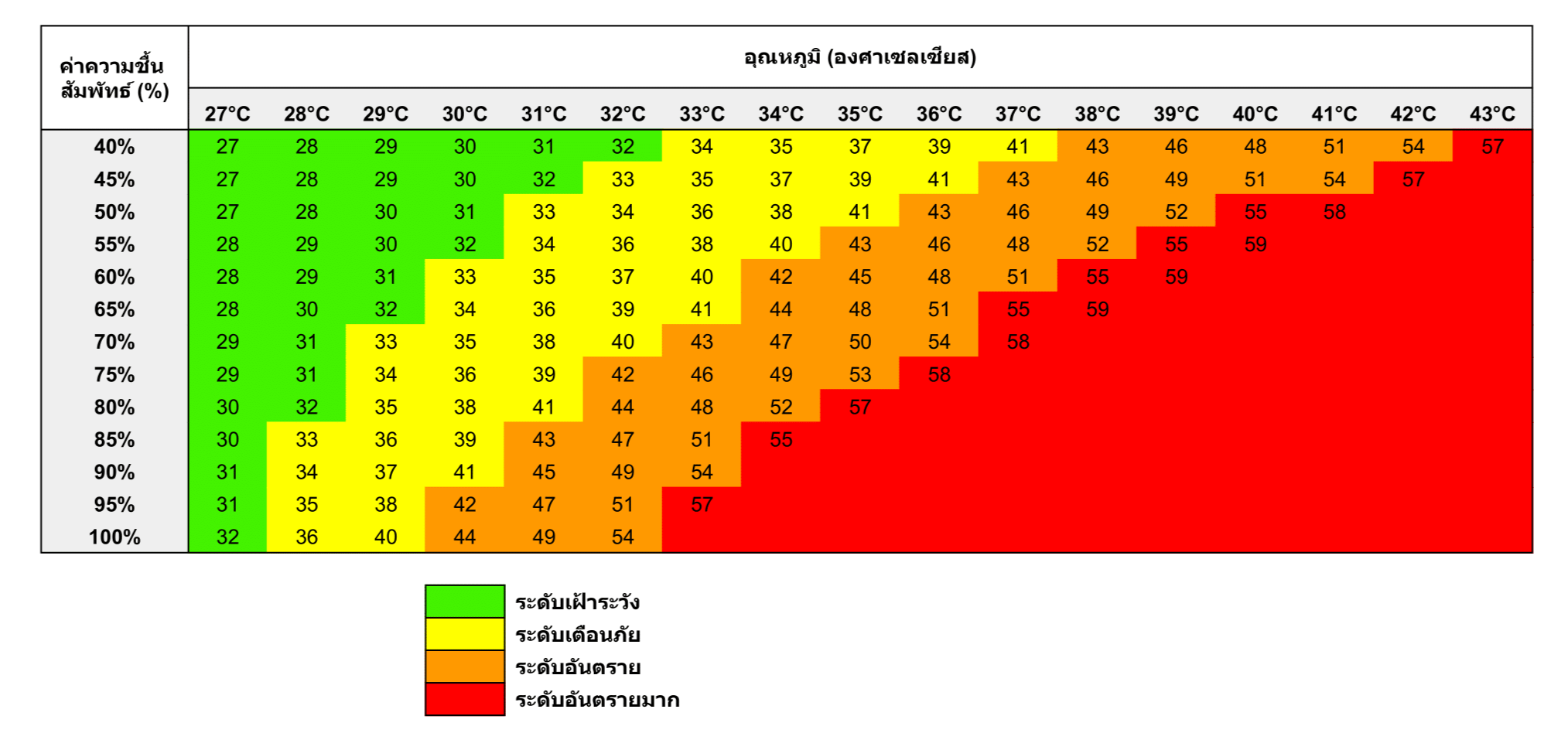
It is the relative humidity in the air that directly contributes to the Heat Index being higher than the actual temperature, calculated simply as follows:
Assuming that the relative humidity in the air =50%
at a temperature of28degrees Celsius, the Heat Index will be28degrees Celsius, close to the actual temperature.
At a temperature of41degrees Celsius, the Heat Index will be58degrees Celsius, higher than the actual temperature, resulting in us feeling hotter than usual.
Impacts of the Heat Index
The impacts of the Heat Index, or the heat during the summer, affect many aspects. Today, we will mainly discuss the impacts on people’s health and the effects on homes or buildings.
1. Health Effects
High heat and increased humidity can lead to
- dehydration
- heat rash
- sun cramps
- heat exhaustion
- heatstroke
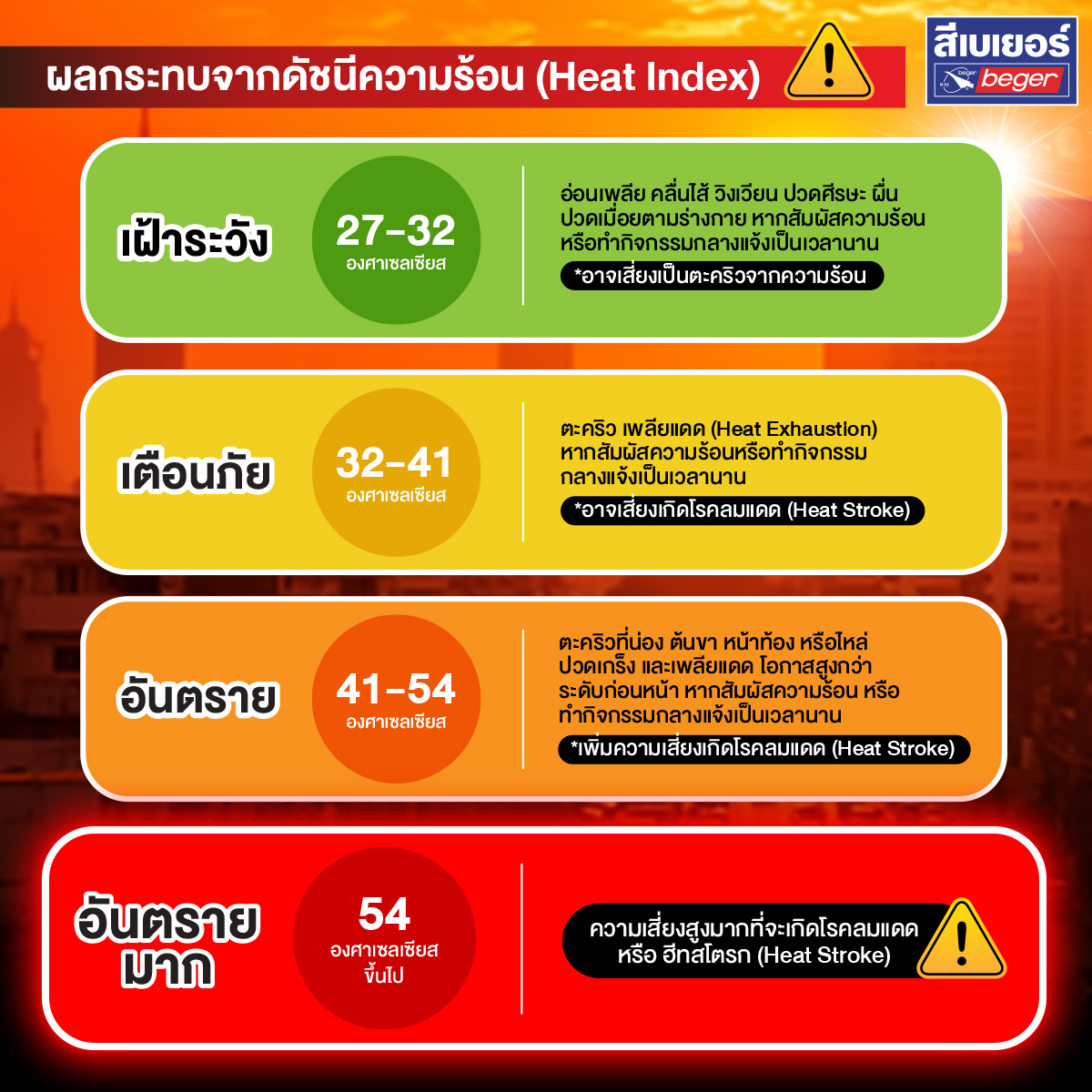
Additionally, it increases the risk of heart disease, kidney disease, respiratory diseases, and mental health issues, especially in groups such as children, the elderly, outdoor workers, and those with pre-existing conditions. The impact of the heat index is categorized into 4 levels of severity as follows:
Moreover, heat may also increase the risk of health problems such as heart disease, kidney disease, respiratory diseases, as well as mental health issues, particularly for children, the elderly, outdoor workers, and those with pre-existing conditions or who are on prescribed medications.
2. Effects on Homes and Buildings
The rising heat index affects not only the human body but also buildings and residences, such as:
- walls and roofs accumulating more heat
- air conditioners working harder
- increased electricity bills
- faded wall paint from UV rays
- colored films deteriorating quickly if using non-standard products
Choosing materials and products that can reflect or block heat is therefore important for long-term living.
Ways to Reduce Heat and Mitigate Heat Index Effects
Take care of your body
- drink clean water regularly
- wear breathable clothing
- avoid outdoor activities during peak sunlight
- stay in well-ventilated areas or in air-conditioned spaces that are properly maintained
reduce energy consumption
- Unplug electrical appliances when not in use
- Choose electrical appliances with energy-saving labels
- Adjust the air conditioning temperature appropriately
Improve the home to reduce heat accumulation
- Add thermal insulation
- Plant trees for additional shade
- Choose house paint with heat-reflective properties
For example, house paint developed with heat-reflective technology can help reduce heat accumulation on the walls of the house, resulting in cooler indoor temperatures and long-term energy savings. Additionally, products that carry a carbon footprint reduction label reflect a commitment to environmental care and reducing greenhouse gas emissions.
The Heat Index is the answer to why we feel hotter than the reported temperature. Understanding the principle of the Heat Index helps assess health risks and plan appropriate adaptations. As global temperatures continue to rise, taking care of health, reducing energy use, and designing homes to effectively cope with heat are key strategies that help mitigate impacts at both individual and environmental levels sustainably.
Summary: The Heat Index and coping with hot homes in the era of extreme heat
The Heat Index is a value that explains why we feel hotter than the actual air temperature, calculated from a combination of temperature and relative humidity. When humidity is high, the body has difficulty sweating, leading to heat stress and an increased risk of heatstroke.
In addition to health impacts, a high Heat Index also causes homes to accumulate more heat, resulting in increased workload for air conditioning and higher electricity bills. Coping should encompass both body care and home improvements, such as adding thermal insulation, ensuring proper ventilation, and choosing heat-reflective paint. Paint developed with heat-reflective technology can help reduce heat absorption into building walls. For example,BegerCool paintsuch as BegerCool Diamond Shield 15, which has heat-reflective and heat-blocking properties, helps keep homes cooler, reduces energy consumption, and is certified with a carbon footprint reduction label from the Greenhouse Gas Management Organization.
Once the principles of the Heat Index are understood, planning to reduce heat in the home is not just about comfort but is an investment in health, energy savings, and creating a residence that is prepared to cope with extreme heat in the long term.