
What causes a house to be hot all day (the real reason)? Many people think that a hot house is due to hot weather, but in reality, “the house itself” is storing heat without us realizing it. It’s not just the strong sunlight; it’s the “walls accumulating heat.” Houses exposed to direct sunlight, especially during the daytime, can have walls that accumulate heat up to about 35–40°C, like walls being scorched all day. This heat doesn’t dissipate immediately but gradually seeps into the house. By nighttime, the walls start to release heat back inside, making the house feel stuffy even when the air conditioning is on, and it doesn’t cool down adequately. This is why many homes “run the air conditioning all night but still feel uncomfortable.”
How to effectively solve the hot house problem, where to start?
If you’ve added air conditioning but your house is still hot, it means you’re addressing the symptoms rather than the root cause. Tackling the root cause is better than addressing the symptoms. Many people try to solve the problem by adding air conditioning or running it all the time, but the real issue lies in “the walls of the house absorbing and retaining heat.” An effective method is to reduce heat from the exterior wall surface, similar to blocking sunlight before entering the house, rather than trying to expel heat afterward, which will help keep the house cooler from the start.
What is Cool Zone? How does it really help cool down the house?
Once you understand the cause, the next question is, “Is there a sustainable solution?” The technology of paint that helps reflect heat Cool Zone is the concept of house paint designed to reflect heat energy from sunlight instead of absorbing it like regular paint. Imagine that instead of the walls absorbing heat, the paint helps “push the heat away” from the start. The result is that the house does not accumulate heat and can genuinely stay cool in daily life.
How much cooler does it really get when using heat-reducing paint?
Many may wonder, “Does it really get cooler, or is it just a feeling?” When the walls of the house accumulate less heat, the indoor temperature will noticeably drop, especially in the afternoon to evening when it is usually the hottest. The clear change is that the room cools down faster, the time the air conditioning needs to run is shorter, and the feeling of “stuffy, accumulated heat” disappears. The house will feel much more comfortable without relying heavily on air conditioning as before.
Reducing daytime heat and not being hot at night
The problem that most people don’t realize is that “nighttime heat comes from daytime heat.” The key point of Cool Zone is to “break the heat cycle” starting from daytime. When the walls are not excessively hot, there will be no heat accumulation to release at night, allowing the house to stay cool longer. This is why some homes “are still hot at night even without sunlight,” because the heat was stored during the day.
Why do regular paints keep the house hot?
Many people have painted their homes hoping it would be cooler, but in the end, it doesn’t change much. Regular paint is not designed to manage heat; it absorbs energy from sunlight and transmits it into the walls, like a sponge soaking up water. That is why even if the house looks new, “the heat remains the same” unless a paint with heat-reducing properties is chosen.
What type of house should use heat-reducing paint the most?
Not every house faces the same problems, but some houses “need it more.” Houses exposed to strong sunlight, such as single-family homes, townhomes, or houses facing west, receive direct heat throughout the afternoon. These types of homes often accumulate the most heat and will feel a noticeable difference when choosing paint that helps reflect heat.
Renovating an old house, changing the color equals changing the feel of the entire house
Many old houses have the problem of “chronic heat accumulation,” which the homeowners have become accustomed to. Changing the exterior color to one that helps reflect heat is an easy yet effective method that doesn’t require tearing down the house or making structural changes. What changes is not just the color but the “feeling of being at home” that becomes noticeably more comfortable.
Examples of paint technology that truly helps cool down the house
Today, house paints have evolved beyond aesthetics and have become “tools to solve the hot house problem,” such as the BegerCool DiamondShield 15 paint group, which integrates heat-reflecting technology with nano ceramic cooling and aerotech to reduce heat accumulation on walls, making the house genuinely cooler in daily life without relying on additional air conditioning or other complex devices.
Product recommendations
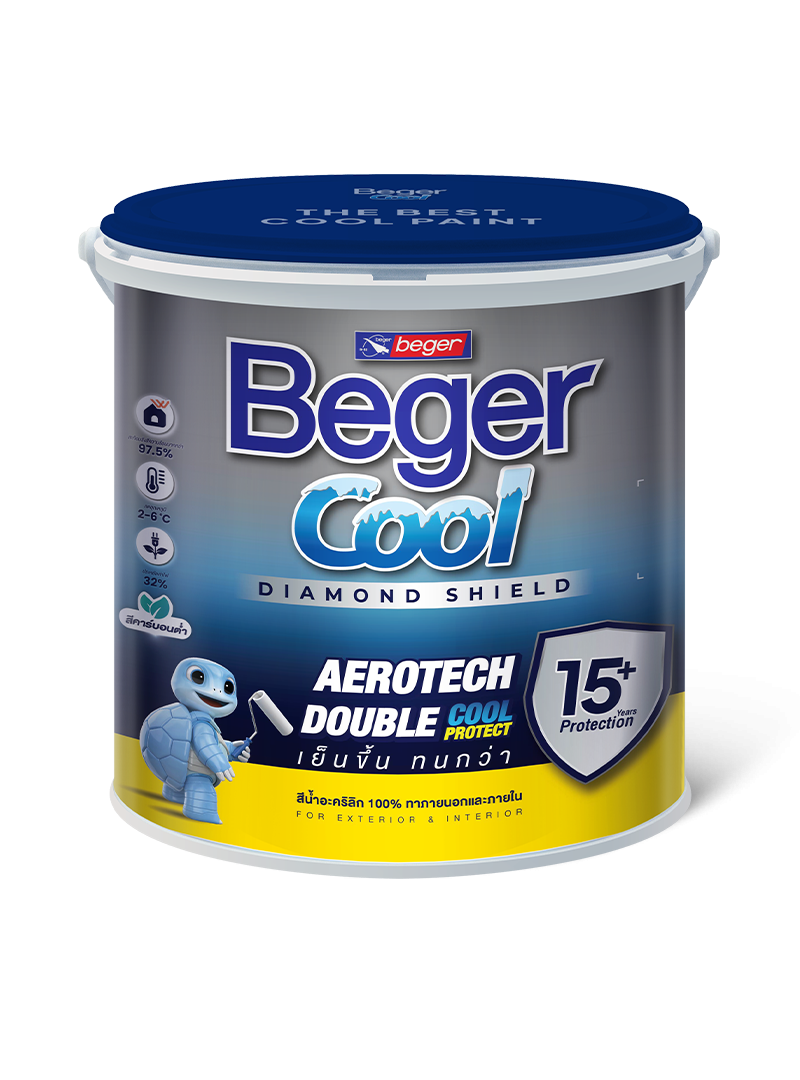
This article helps understand that the “problem of a hot house all day” primarily stems from heat accumulation in the walls, which occurs continuously from daytime and affects nighttime, being a factor that many overlook. Effective solutions should start from reducing heat at the source, such as choosing materials or house paints with properties that help reflect heat to reduce accumulation in the house structure and help make the interior more comfortable. The concept of Cool Zone is therefore another option that helps clarify the “management of house heat,” allowing homeowners to decide on the best approach for their living situation, whether building a new house or renovating an old one. Overall, this content helps both homeowners and advisors, such as retailers or contractors, understand the problems and solutions more accurately and can be applied to the real situations of each home.
FAQ Frequently asked questions about solving hot house problems with Cool Zone.
Q1: How can I quickly solve the problem of a hot house all day?
A1: You should start by reducing the heat on the exterior walls, such as using heat-reflective paint.
Q2: Does heat-reducing paint really help cool down the house?
A2: It does help because it reduces heat accumulation in the walls.
Q3: What is Cool Zone?
A3: It is a paint technology that helps reflect heat, making the house cooler from the outset.
Q4: Should it be applied on the exterior or interior?
A4: The exterior is the most important because it receives direct sunlight.
Q5: What type of house should use it the most?
A5: Houses that are exposed to strong sunlight or face the afternoon sun.
Q6: Can it help reduce electricity bills?
A6: It helps reduce the load on the air conditioning, leading to lower energy consumption.