
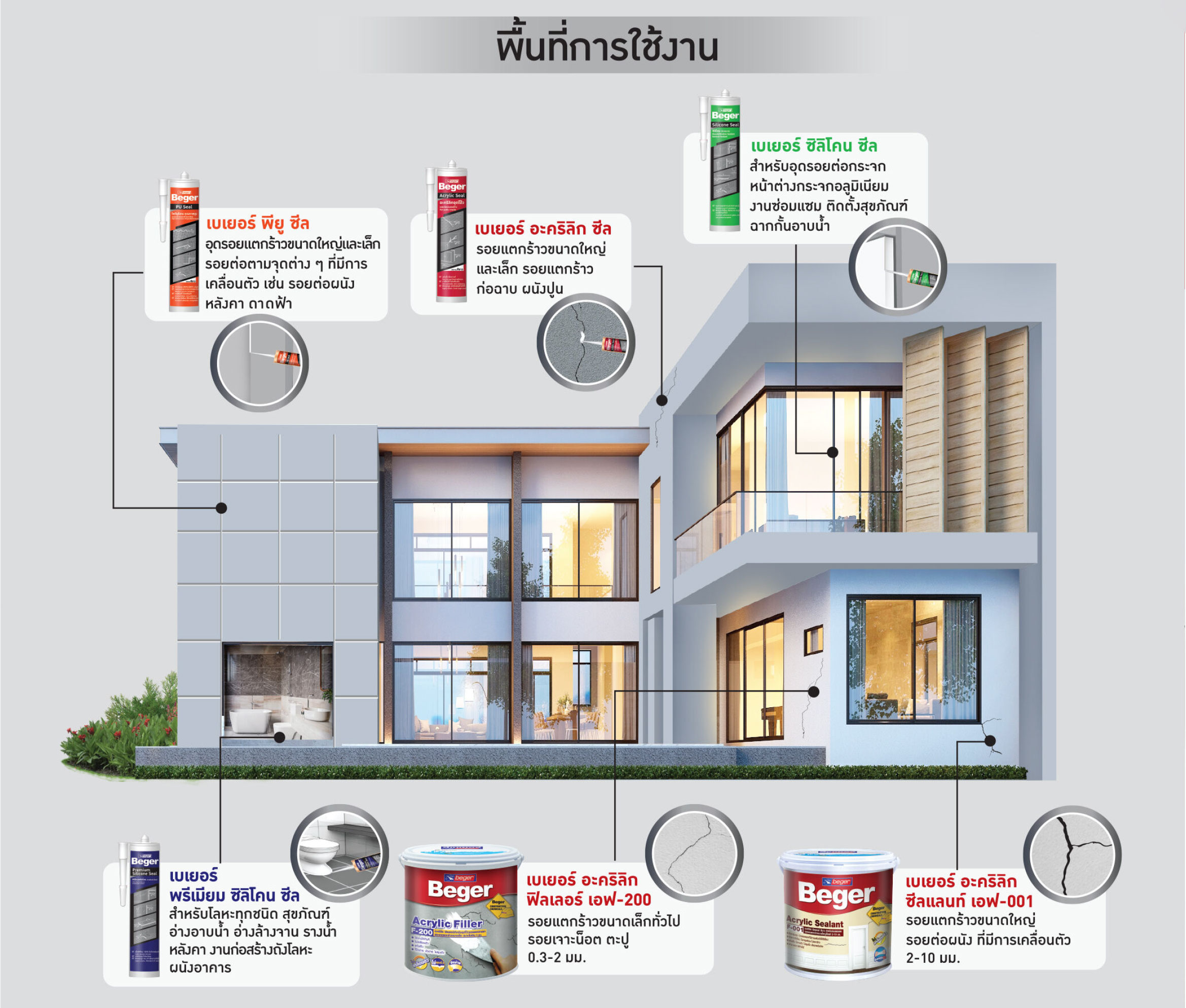
Sealant in a tube comes in 4 types. The main rule can be summarized in one simple guideline: “Is the joint wet and does it move?” For interior dry work that needs to be painted over, use acrylic. For wet areas like bathrooms and glass, use silicone. For applications that are in contact with metal or marble, use acid-free silicone. For exterior work that experiences significant movement, such as roof joints or precast walls, use PU. The key difference is flexibility, ranging from 100% for acrylic to 800% for PU, and whether it can be painted over or not—both acrylic and PU can be painted, but silicone cannot. This article compares all types, along with a selection table based on actual job sites, tips for precise application, and how to calculate how many meters can be covered by one tube.
What is tube sealant and how does it differ from tile adhesive?
Sealant in a tube, or caulk, is a flexible joint filler material packaged in a tube of approximately 300 milliliters. It is applied using a caulking gun to fill cracks, joints between materials, and gaps between structures to prevent water, wind, dust, and sound. As for tile adhesive, It is a cement powder mixed with water that is used to fill the gaps between tiles specifically. Both are collectively referred to as “grout,” but they cannot be used interchangeably.
The point where people are most often confused: If you are going to repair the black or loose grout in your bathroom tiles, what you need is Tile grout Not a sealant in a tube, but if you want to seal the edges of the cement where the tiles meet the wall, around the sink, or around the door frame, that is Sealant work in tube form
| Topic | Sealant in tube form | Grouting tiles |
|---|---|---|
| Format | Ready-to-use cartridge for use with a glue gun. | Mixing powder with water, spread with a rubber trowel. |
| Main duties | Seal joints that have movement to prevent leakage. | Seal the gaps between the tiles. |
| Flexibility | High, approximately 100–800% | Low solidification into a single mass. |
| Usage area | Corner edges, door frames, cracks, sanitary ware, and roofs | Grout lines for floors and walls |
| Examples of Beger products | Beger Acrylic Seal / Silicone Seal / PU Seal | Beger Tile Bond Plus |
What types of tube sealants are there?
Tube sealants can be categorized into 3 main groups based on their main components: acrylic, silicone, and polyurethane (PU). The silicone group can be further divided into 2 types based on the drying system, resulting in 4 options to be familiar with.
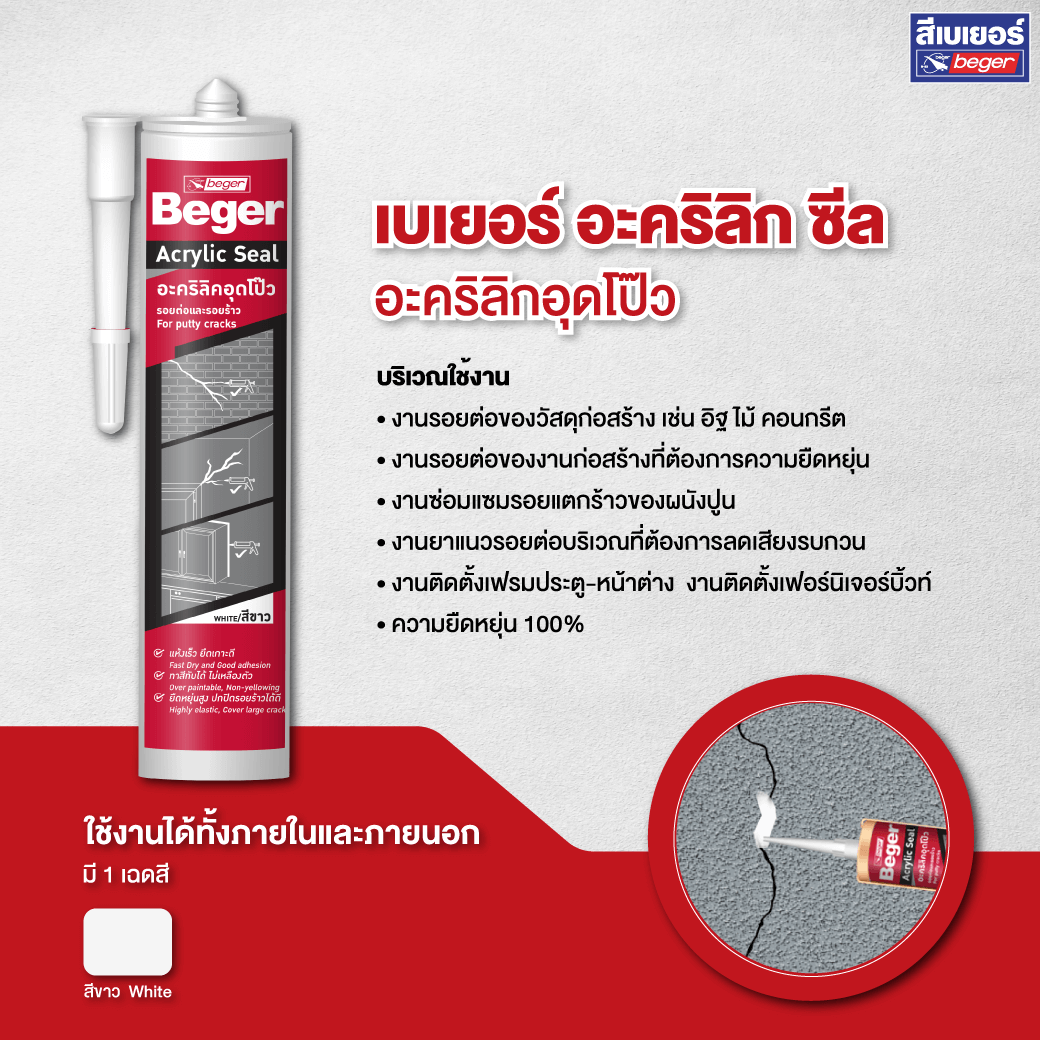
1. Acrylic Sealant (DAP)
Acrylic sealant, or acrylic sealant commonly referred to as “DAP,” is considered the most popular grout due to its versatility with various materials such as cement, concrete, bricks, or precast panels, and it is the cheapest among all tube sealants. The advantage of DAP is that it can be painted over well without leaving stains on porous materials. Recommended: Beger Acrylic Seal
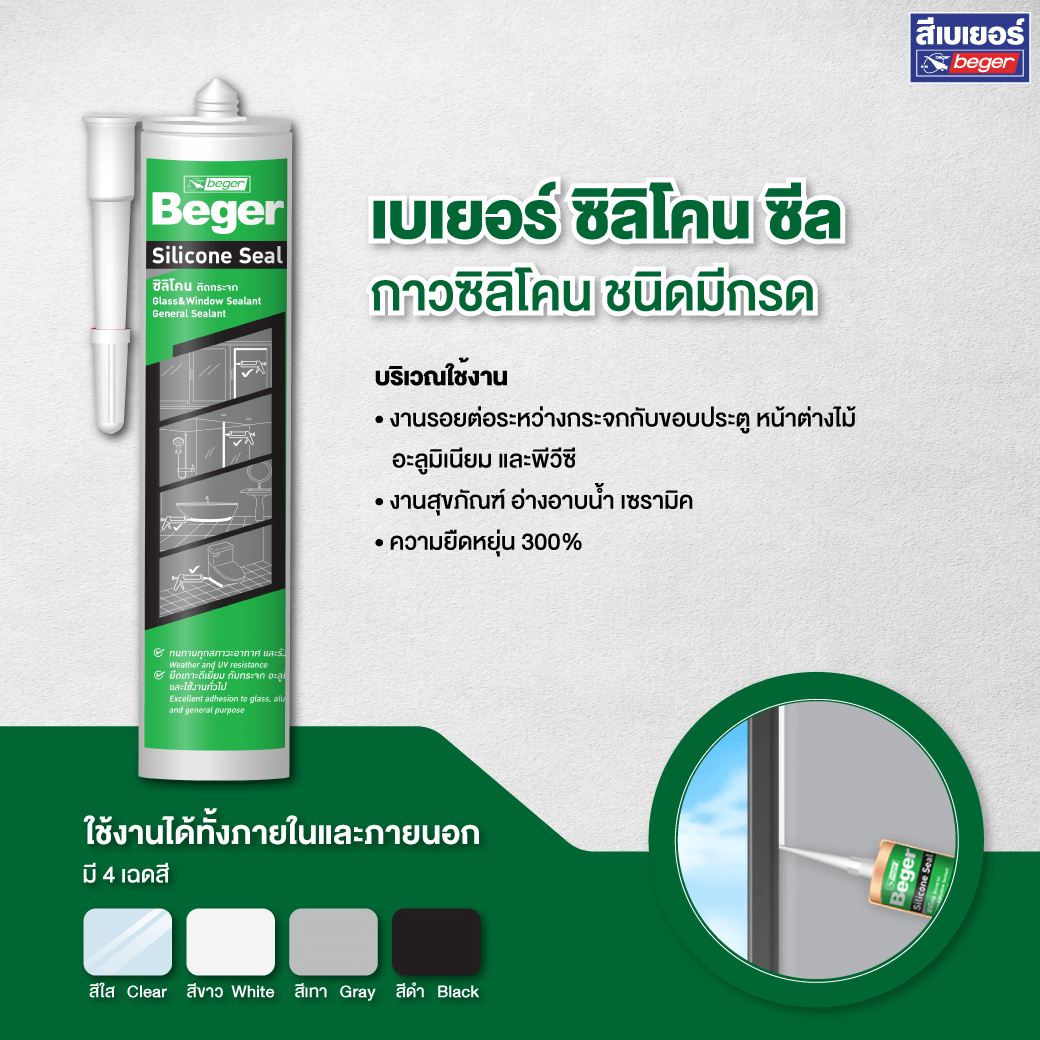
2. Acidic Silicone Sealant, fast-drying, strong adhesion, but corrosive to metals
- Acidic silicone (Acetic Cure Silicone) is silicone that uses acetic acid as a drying agent, thus having a sour smell similar to vinegar, in exchange for fast drying and higher adhesion than non-acidic types. It is the easiest to find and the most affordable in the silicone group. When using, it is advisable to wear rubber gloves, a mask, and goggles for safety. Acidic silicone is quite popular due to its availability and low cost. Recommended: Beger Silicone Seal
Suitable for: Glass installation, sanitary ware, bathtubs, ceramics, and securing wooden, aluminum, or PVC door and window frames.
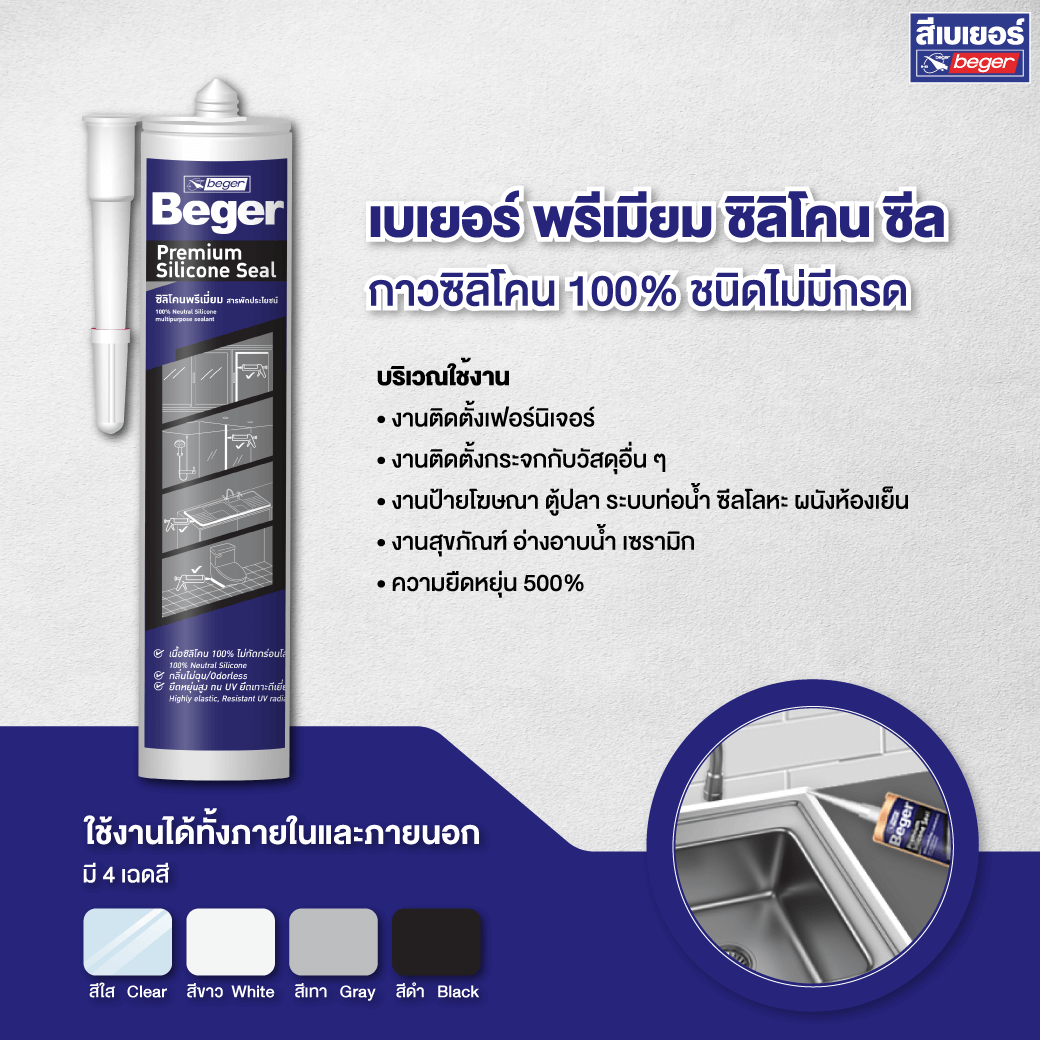
3. Non-Acidic Silicone Sealant, suitable for metals and marble
Non-acidic silicone (Neutral Cure Silicone) is 100% silicone that does not use acid for drying, making it non-corrosive and usable with almost all types of materials, including metals and marble, with flexibility over 500%. It is the most versatile option in the silicone group, but the acidic type excels in durability and fast drying, such as Beger Premium Silicone Seal.
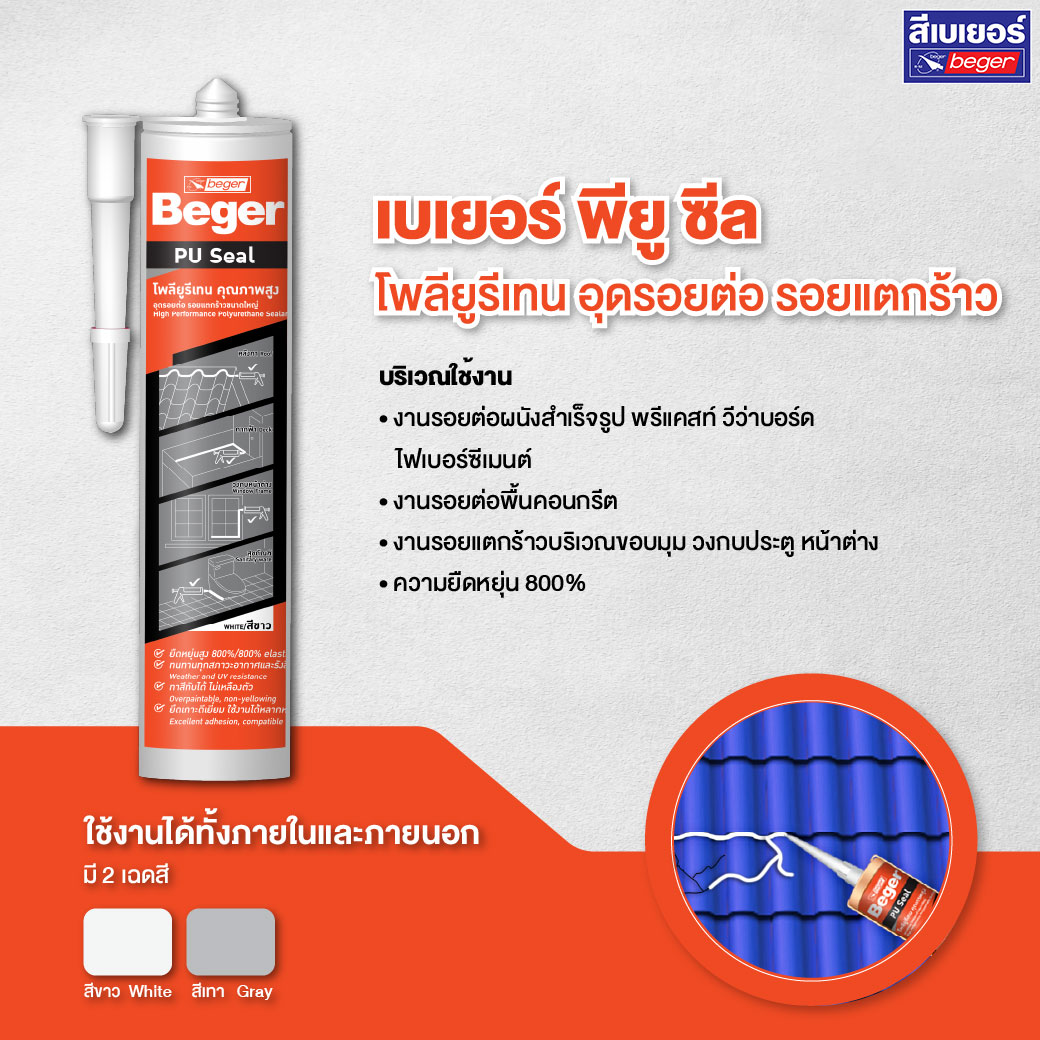
4. PU Sealant, the most durable, the most flexible, paintable
PU sealant (Polyurethane Sealant) is the most durable and flexible grout among tube sealants. Recommended: Beger PU Seal, which can stretch up to 800% and is the only type besides acrylic that can be painted over. It is the choice of professionals for outdoor work that bears heavy loads. It can be used with almost all types of materials, including concrete, steel, wood, fiber cement, ceramics, stone, or other porous materials. Therefore, it is often seen that professionals prefer to use it to seal cracks and joints of roofs that frequently leak during the rainy season or to seal joints between precast walls, as well as for joints in concrete flooring.
Suitable for: Leaking roof joints during the rainy season, precast wall joints, V-board, fiber cement, concrete floor joints, stone, plaster, metal panels, solar panels, moving cracks, and EIFS systems.
How do acrylic, silicone, and PU sealants differ?
In summary: Acrylic is cheap and paintable but not water-resistant. Silicone is the best for water resistance and UV resistance but cannot be painted over. PU is durable, flexible, and paintable but is more expensive.
| Properties | Acrylic | Silicone (Acidic) |
Silicone (No acid) |
PU |
|---|---|---|---|---|
| Paintable | ✓Yes | ×No | ×No | ✓Yes |
| Flexibility | 100% | 300% | 500% | 800% |
| Tensile strength | Medium | High | Very high | Highest |
| Curing time* | Medium | Fast | Very fast | Fast |
| Creep | Low | Very low | Very low | Very low |
| Durability | Medium | Good | Good | Excellent |
| UV resistance | Medium | Excellent | Excellent | Excellent |
| Compatible with metal or marble | Yes | ×No | ✓Yes | ✓can |
| Use in humid areas. | ×Not recommended | ✓can | ✓can | ✓can |
| Lifespan | 3–5 years | 5–10 years | 5–10 years | 5–10 years |
| Beger model | Beger Acrylic Seal | Beger Silicone Seal | Beger Premium Silicone Seal | Beger PU Seal |
| Shades | White | White, black, gray | Bright, White, Black, Gray | White, Gray |
* The drying speed depends on weather conditions. Prices may vary by store. Please check with local stores or dealers.
**For BEGER PU Seal, this will be available in sausage form, size 600 ml.
Choose the sealant according to the job site, which one should be used
The fastest way to choose is to look at the actual job site Instead of reading the specifications one by one, this table summarizes the selection based on the most common areas
| Your job site | Should use | Short reason |
|---|---|---|
| Your job site Cracks in interior plaster walls that will be painted over | Should use Acrylic | Short reason Cost-effective, paintable, and does not leave stains on the plaster surface |
| Your job site Corners of doors and windows inside the house | Should use Acrylic | Short reason Joint movement is minimal and often requires painting afterward |
| Your work surface edges of sinks, bathtubs, and kitchen sinks | should use acidic silicone | short reason waterproof, dries quickly, and adheres well to ceramics |
| Your work surface joints between glass and aluminum | should use acidic silicone | short reason adheres well to glass and aluminum, with a cost-effective price |
| Your work surface work involving steel, stainless steel, or marble | should use non-acidic silicone | short reason acid-free formula reduces the risk of metal corrosion and does not cause marble to stain |
| Your work surface aquariums, advertising signs, and cold room walls | should use non-acidic silicone | short reason non-corrosive, non-pungent odor, and highly flexible |
| Your work site Roof joints leaking, metal panels, and solar cells | Should use PU | Short reason UV resistant, high strength, and highly flexible |
| Your work site Precast wall and fiber cement joints | Should use PU | Short reason Effectively accommodates movement of precast panels |
| Your work site Outdoor concrete floor joints | Should use PU | Short reason Resistant to foot traffic, vibration, and floor expansion |
| Your work site Black tile joints, loose or deteriorated | Should use Not sealant | Short reason Should use tile adhesive, such as Beger Tile Bond Plus |
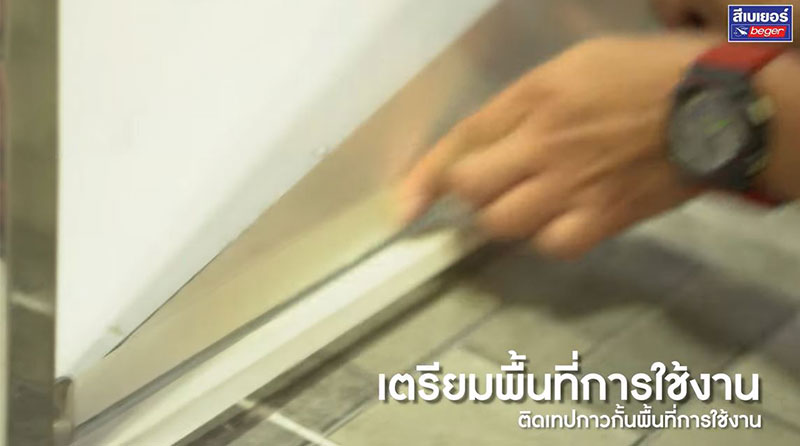
How to use grout
Step 1 Prepare the surface Clean the area where you want to apply
Clean the area that needs to be filled, such as cracks or joints, to be free from dirt, including oil stains and old adhesive residues, for maximum efficiency.
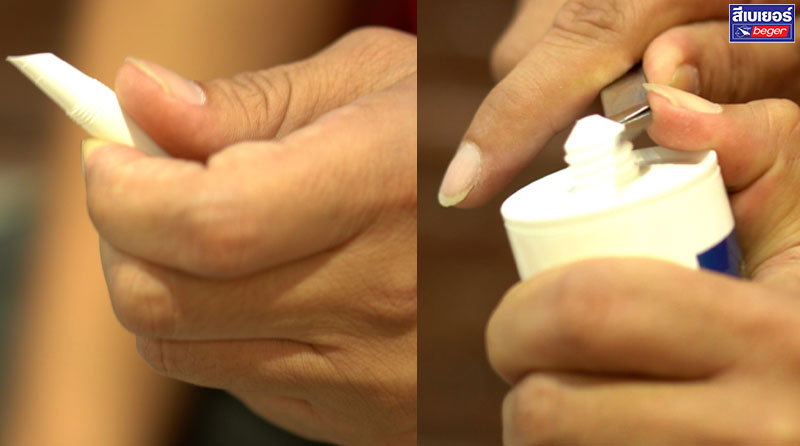
Step 2 Assemble the grout
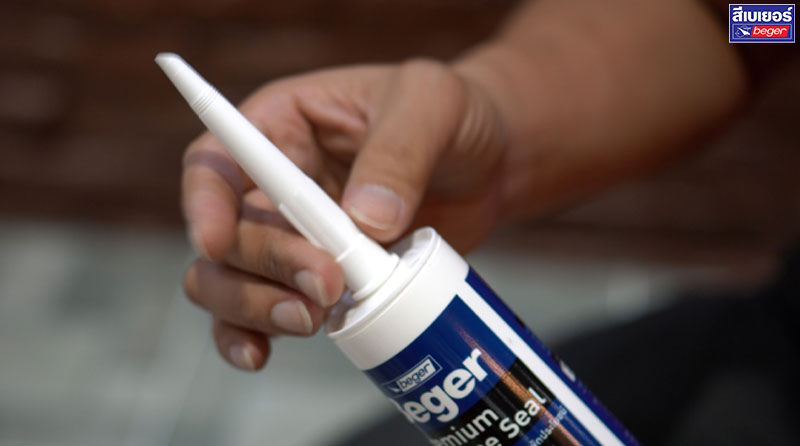
Cut the plastic nozzle at an angle, then cut off the end of the grout tube.
Screw the plastic nozzle tightly onto the tube and then attach it to the caulking gun.
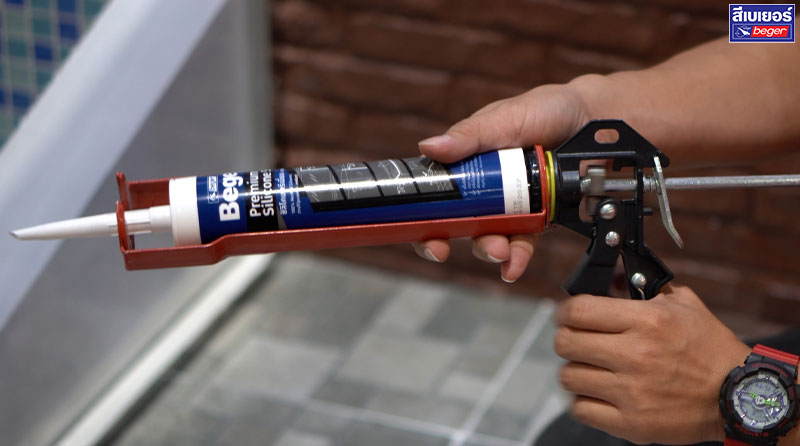
Step 3 Apply the grout in the desired area
Use the tip of the tube to touch the joint or crack you want to repair. Apply the product to fill the gap, joint, or crack in the desired area, then smooth it out with your hand. For safety, it is recommended to wear rubber gloves, goggles, and a mask while working.
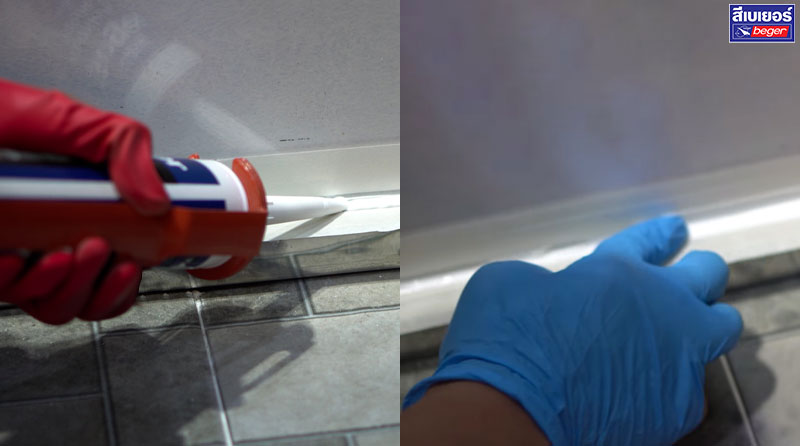
Step 4 Clean up and prepare for painting
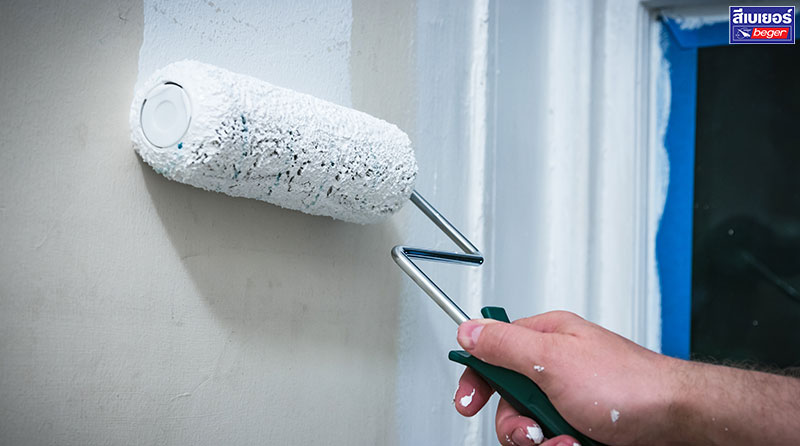
Wipe away any excess product from the repaired joint with a damp sponge or cloth. If you want to paint over it, allow the grout to dry completely for at least 24 – 48 hours before applying paint according to the system, which includes one coat of primer and two coats of topcoat.
FAQ Frequently Asked Questions about grout
Q1: Can tube grout replace tile grout?
A1: It is not recommended to use them interchangeably because tile grout like Beger Tile Bond Plus has properties that are more suitable for tile joints, including strength, dust resistance, mold prevention, and resistance to cleaning agents. Additionally, when comparing the area of use to price, using tube grout is much more wasteful.
Q2: Which types of grout can be painted over?
A2: Only acrylic and PU grouts can be painted over. Silicone grouts, both acid and non-acid types, cannot be painted over because the silicone surface does not allow the paint film to adhere.
Q3: What is the difference between acid and non-acid silicone?
A3: Acidic types use acetic acid to accelerate drying, thus they have a sour smell, dry quickly, adhere better, and are cheaper, but they can corrode metal and marble. Non-acidic types have a milder smell, are more flexible (over 500%), and can be used with almost all materials, including metal.
Q4: What type of grout should be used in bathrooms?
A4: Silicone should be used because it is much better at waterproofing and moisture resistance than acrylic. For general sanitary ware and ceramics, acidic silicone can be used, but if the area is adjacent to stainless steel, iron, or marble, switch to non-acidic silicone.
In summary, choose tube grout based on two questions: “Is this joint wet?” and “Does it need to be painted over?” If it is dry and needs painting, use acrylic. If it is wet and does not need painting, use silicone, avoiding the acidic type when dealing with metal or marble. If the joint is outside, under stress, or moves a lot, invest in PU, which is flexible up to 800% and can be painted over.