

Choosing the color of your home is not just about aesthetics; it also relates to feelings, functionality, and the long-term climate of the house. This article will introduce you to techniques and principles for selecting home colors and color tones that are both beautiful and suitable, along with methods to help reduce heat in the home, so you can have a comfortable living space all day long.
1. Start with “the color you truly like”
No matter what experts or architects say is the best color, if you don’t like it, the home color will not make you feel good in the long run.
Example: If you like pastel tones try choosing pastel-colored walls and use dark-colored wooden furniture or curtains to add dimension.
Caution: Avoid choosing colors solely based on fashion trends, as trends can change every year.
2. Neutral home tones are not always the answer
White, gray, or beige are easy to match and look elegant, but if you get bored easily, you may feel monotonous.
Solution:
- Create a two-tone wall (top and bottom in different colors)
- Add colored trims around doors/windows to contrast with the walls
- Use bright decorative items, such as cushions and vases, to add interest.
3. Choose home colors that help with heat
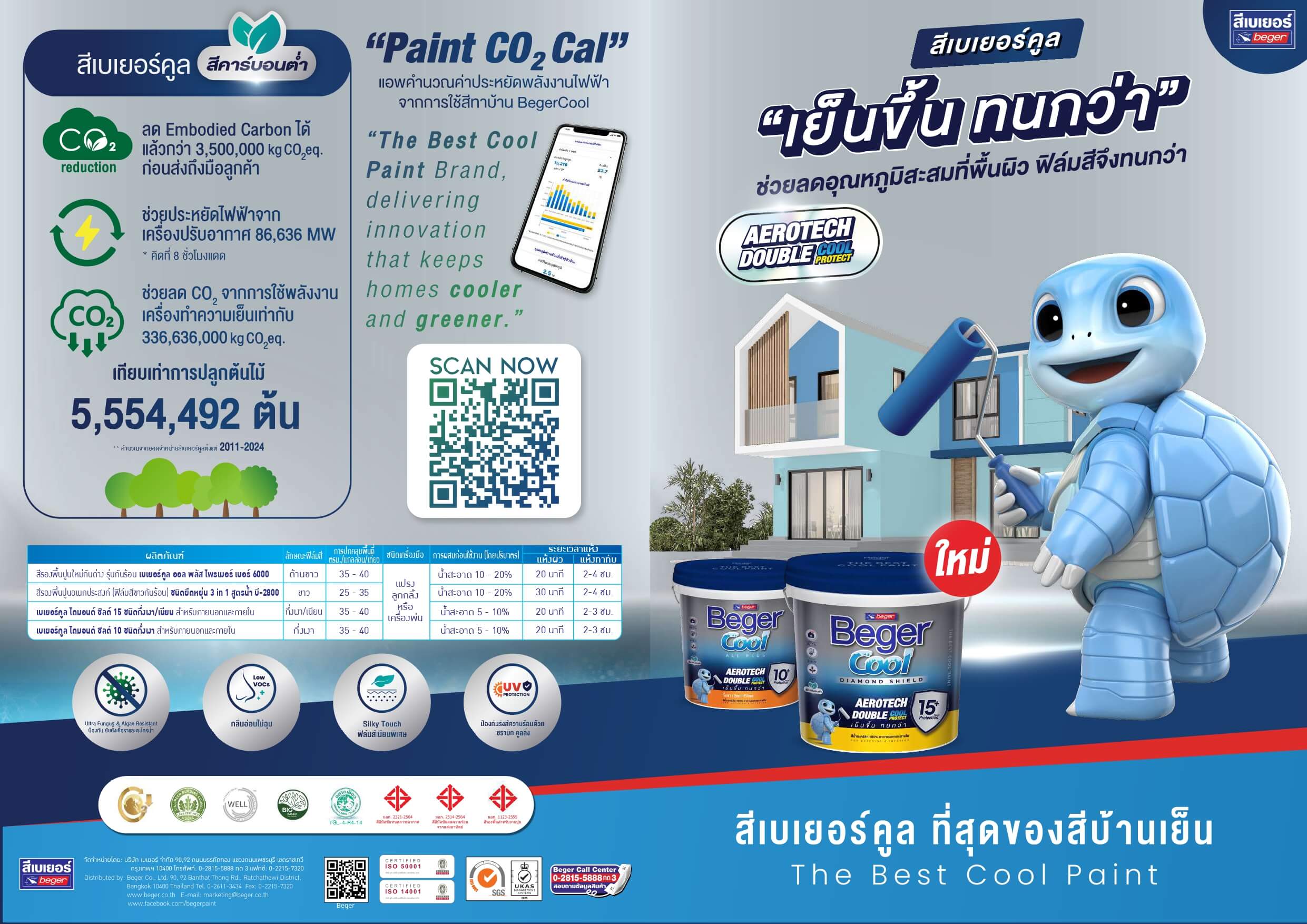
Some paint colors have properties that reflect heat radiation, making the house cooler, commonly referred to as cool house colors like BegerCool DiamondShield 15 Low carbon color (eco-friendly) energy-saving water-based formula semi-gloss, smooth matte
- Why it’s important: Cool house = lower electricity bills
- Should choose: Colors with UV reflection value > 95%
- Examples: Light tone colors like white, cream, light gray reflect light better than dark colors
4. Match with the surrounding environment
The house color should match the fence, roof, and trees to make the house look harmonious
Tips:
- Take a photo of the house and try applying colors in a simulation app
- Check colors in the morning and evening, as light affects visibility
5. Test before actual purchase
Colors on the computer screen may differ from the actual product
Testing method:
- Buy that color and apply it to a small area
- Leave it for 2-3 days and observe both day and night
- If satisfied, then order the whole set
6. Consider durability and maintenance
Don’t just look at aesthetics
- Choose colors that are easy to clean
- Colors that withstand sun and rain are suitable for the Thai climate
FAQ: Frequently asked questions about “house colors” and “house color tones”
Q1: Should you choose house colors based on feng shui?
A: If you believe in feng shui, it can be used as a guideline. For example, houses facing east often prefer green to enhance health, but you should also choose colors that match your home’s style.
Q2: What color tones should a small house use?
A: A small house should use light colors, such as white, cream, or light blue, to create a sense of spaciousness and brightness.
Q3: How often should you repaint your house?
A: On average, every 5-7 years, depending on the quality of the paint and weather conditions.
Q4: Is there a connection between house color and electricity bills?
A: Definitely. Colors that reflect heat help keep the house cooler, which means the air conditioning works less, thus reducing electricity bills.