

Understanding Primer Paint: The Key to Beautiful and Durable Walls in the Long Run
Whether building a new house or renovating existing walls, one step that many overlook is “primer paint” because they think it’s unnecessary. However, in reality, this is a crucial step that should not be neglected if you want the paint job to look beautiful, smooth, and last long. Not using primer can lead to various problems such as peeling paint, bubbling, discoloration, mold, or salt stains on the walls, as well as chalk dust that makes the walls look old and deteriorate faster than they should. These issues often stem from the surface not being properly prepared from the start. Primer paint is not only responsible for making the walls look neat, but it also helps the topcoat adhere better, reduces the alkalinity from new plaster, and prevents moisture from seeping into the walls, which is a primary cause of paint deterioration over time. However, there are many types of primer paint available today, including new plaster primer, old plaster primer, as well as water-based and oil-based formulas, which can confuse many people about how to choose the right one for their project. In this article, we will help you understand the different types of primer paint, along with tips on how to choose the right one for your surface, so your paint job turns out beautiful, durable, and doesn’t require rework later.
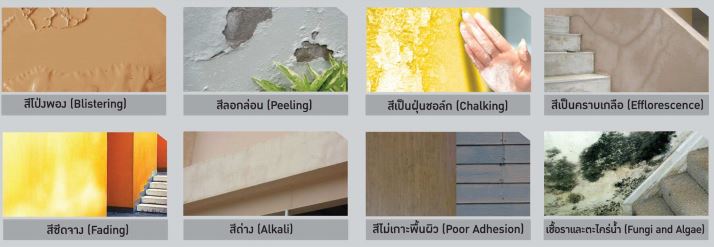
How to Choose Primer Paint Suitable for Wall Work: Start by Understanding the Surface
Once you understand that “primer paint” is an important step that helps make walls beautiful and durable while reducing potential long-term problems, the next question is what type of primer should we choose for our work? The simple answer is “choose according to the type of surface” that will be painted, as different materials have different properties. Using the correct type of primer will help maximize the effectiveness of the paint job.
Examples of Choosing Primer Paint Based on Surface
- Concrete / Cement Walls You should choose “primer for cement surfaces” to enhance adhesion and reduce moisture or alkalinity issues from the plaster.
- Wood Surfaces (e.g., furniture or wooden doors) You should use “primer for wood” to help seal the pores of the wood and make the paint smoother.
- Metal or Steel Surfaces You should specifically choose “primer for steel” to prevent rust and enhance the durability of the paint.
Types of Primer Paint You Should Know Before Choosing to Use
In this article, we will focus on “primer paint” which is the type used directly on house walls. It can be divided into 3 main types based on the condition of the surface and the nature of use, including
1. New Plaster Primer
Suitable for newly constructed plaster walls, it helps reduce alkalinity and improve adhesion of the topcoat.
2. Old Plaster Primer
Suitable for walls that have been previously painted, it helps the new paint adhere well to the wall and reduces issues of peeling or discoloration.
3. Multipurpose Plaster Primer (Fresh Plaster Primer)
Can be used on both new and old plaster, suitable for projects that require convenience and flexibility in use.
1. New Plaster Primer: An essential aid for new home walls that require durability from the start.
For those who are building a house or have newly plastered walls, do not rush to paint without properly preparing the surface. Because new plaster surfaces often have residual moisture and may contain alkali from the curing process, which are significant contributors to efflorescence, fading, peeling paint, or salt deposits on the walls
To avoid these problems, it is advisable to use new plaster primer that is designed to protect plaster surfaces with moisture content not exceeding 14% or walls that have been left to dry for about 1 month (3 – 4 weeks).
New plaster primer has specific properties that help:
–prevent alkali and salt from new plaster walls
–enhance the adhesion of the topcoat to bond tightly with the surface, preventing easy peeling
–make it easier for the topcoat to cover completely since the primer usually has a high whiteness
Sometimes, new plaster primer may also be referred to as alkali-resistant primer which is not incorrect, as its main purpose is to address the common alkali issues found in new plaster.
Examples of recommended new plaster primers from Beger:
- Beger Professional Primer Pro-100 alkali-resistant new plaster primer
- Beger Alkali Resisting Primer B-11050 new plaster primer
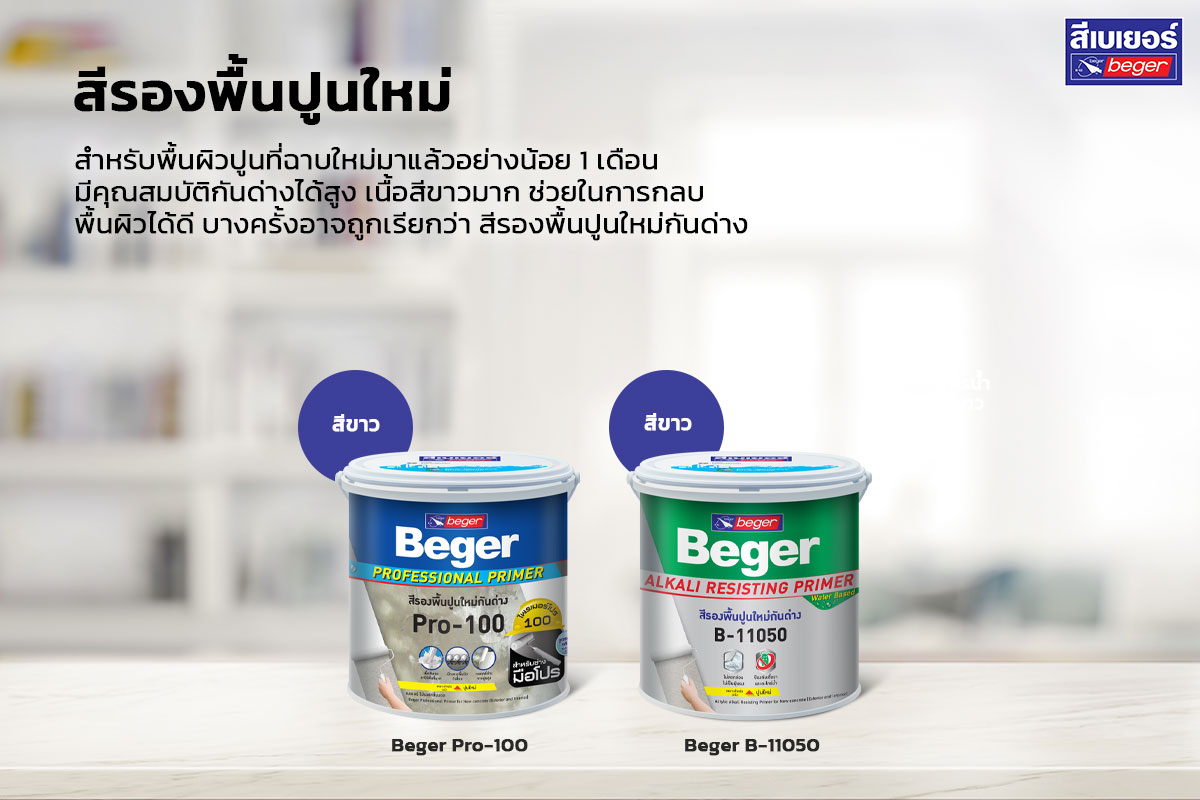
2. Old Cement Primer: The Solution for Old Walls with Peeling Paint and Uneven Surfaces
When your cement wall has been painted for several years or has experienced issues like peeling, fading, or a buildup of chalk dust, that is a sign that the surface has become “old cement” and should receive special care before repainting.
Old Cement Primer plays a crucial role in the restoration process of walls that have been in use, with properties designed to:
–Enhance the adhesion of the topcoat to firmly bond with the old wall that may have issues with dust or roughness.
–Cover the deteriorated original surface to ensure the actual paint is smooth and does not settle into grooves.
–Reduce future issues of peeling, fading, or cracking.
Surfaces that should use Old Cement Primer include:
– Walls that have been painted and in use for more than 6 months.
– Cement surfaces that have been rubbed to dust or have chalk powder coming off.
– Old walls with slight cracks or unevenness due to weather and time.
In the market, Old Cement Primer is available in both “Clear” and “Pigmented” types, or what some may refer to as Old Cement Primer Solution. each type is suitable for different tasks, such as
– Clear color is suitable for walls that want to maintain the original color
– The colored type helps cover up marks and reduces the number of coats needed for actual painting
Examples of recommended old cement primers from Beger:
- Beger Clear Contact Primer B-1500 (Clear)
- Beger Clear Contact Primer B-2500 (Clear Water-Based)
- Beger White Contact Primer B-1700 (White)
- Beger Water Contact Primer B-2090 (White)
These primers are suitable for both interior and exterior painting, especially in areas that require a smooth finish, strong adhesion, and good weather resistance
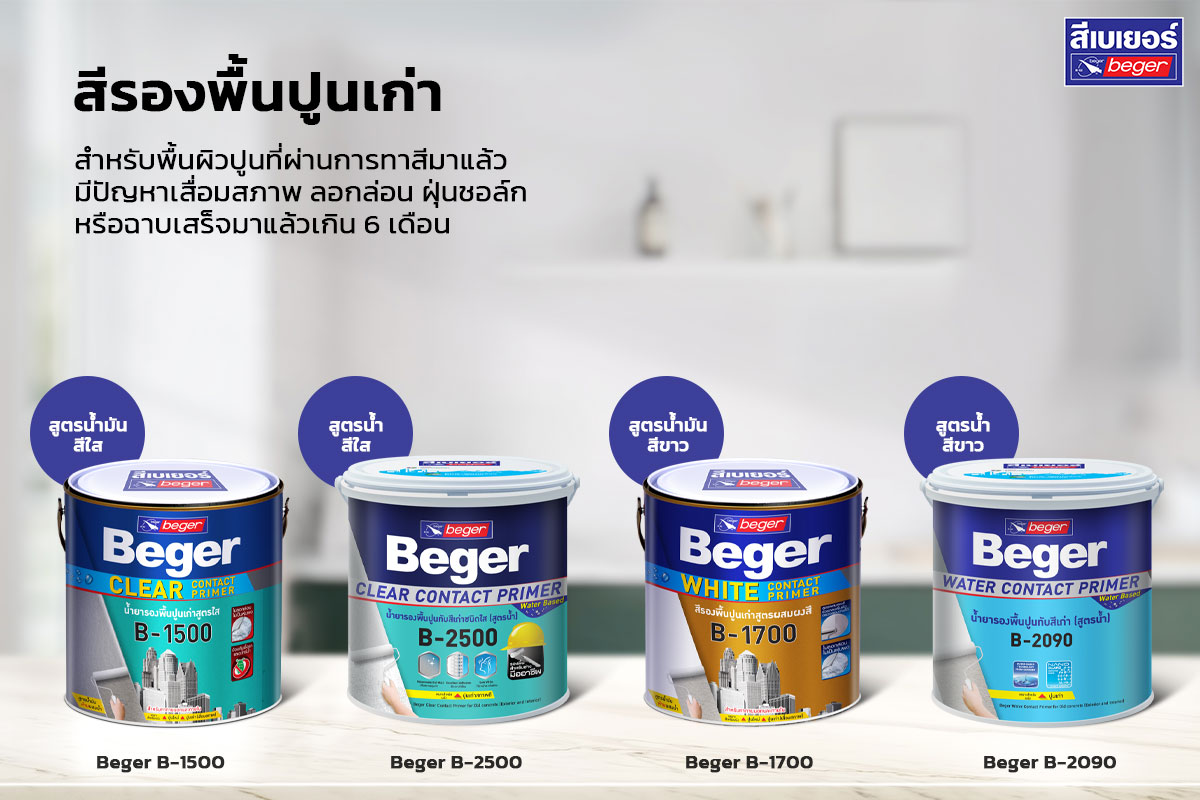
What you should know before choosing an old cement primer: Oil-based vs Water-based, which is right for you?
In addition to selecting “old cement primer” that matches the type of surface, there is another question that many people often wonder about, which is… Should you choose a water-based or oil-based formula??
In reality, cement primers are divided into 2 main formulas, which are:
– Oil-based (Solvent-based Primer)
has the property of penetrating deeply into the cement very well, suitable for surfaces with serious issues, such as walls with a lot of chalk dust or deep-rooted peeling paint
However, precautions are needed. Strong smell, dries slower than water-based formula Therefore, it should be used in open areas or well-ventilated spaces
– Water-based Primer
is a popular choice for projects that require convenience, safety, and a mild scent, suitable for indoor areas or buildings with regular occupancy
Although it may not penetrate as deeply as oil-based formulas, in terms of durability and adhesion performance, it is considered quite comparable
Summary: If you want to focus on quick, safe, low-odor work →choose the water-based formula/ If you need to restore heavily damaged walls →the oil-based formula may be more suitable
Therefore, whether choosing which brand of old cement primer is best or which formula, the important thing is to choose one that is appropriate for the surface condition and the environment of the work area to ensure that the paint job is complete, durable, and does not require rework in the future
2. Multi-purpose cement primer (also known as “fresh cement primer”): an essential aid for urgent jobs and painting during the rainy season
For those who want to paint their house without waiting for the walls to dry completely the multi-purpose cement primer is the answer that helps make work quick and efficient, especially during the rainy season or in urgent delivery jobs where time is of the essence
This type of primer can be used on freshly plastered cement surfaces from 2 days onwards with moisture not exceeding 35%, which is considered to have higher moisture resistance than regular primers. Additionally, it has the special feature of being usable on new cement, old cement, and even some types of “fresh cement.” It also supports usage. In addition to its moisture resistance, this group of primers has been developed to penetrate deeply and adhere well, helping to reduce issues such as peeling, discoloration, and bubbles that often occur when painting is rushed or done in unfavorable weather conditions.
Introducing Beger’s multipurpose cement primer:
- High moisture-resistant multipurpose cement primer Beger Super Quick Primer B-2100
- High moisture-resistant multipurpose cement primer Beger Pro Quick Primer B-1900
- High moisture-resistant multipurpose cement primer Beger Rain Quick Primer B-2900
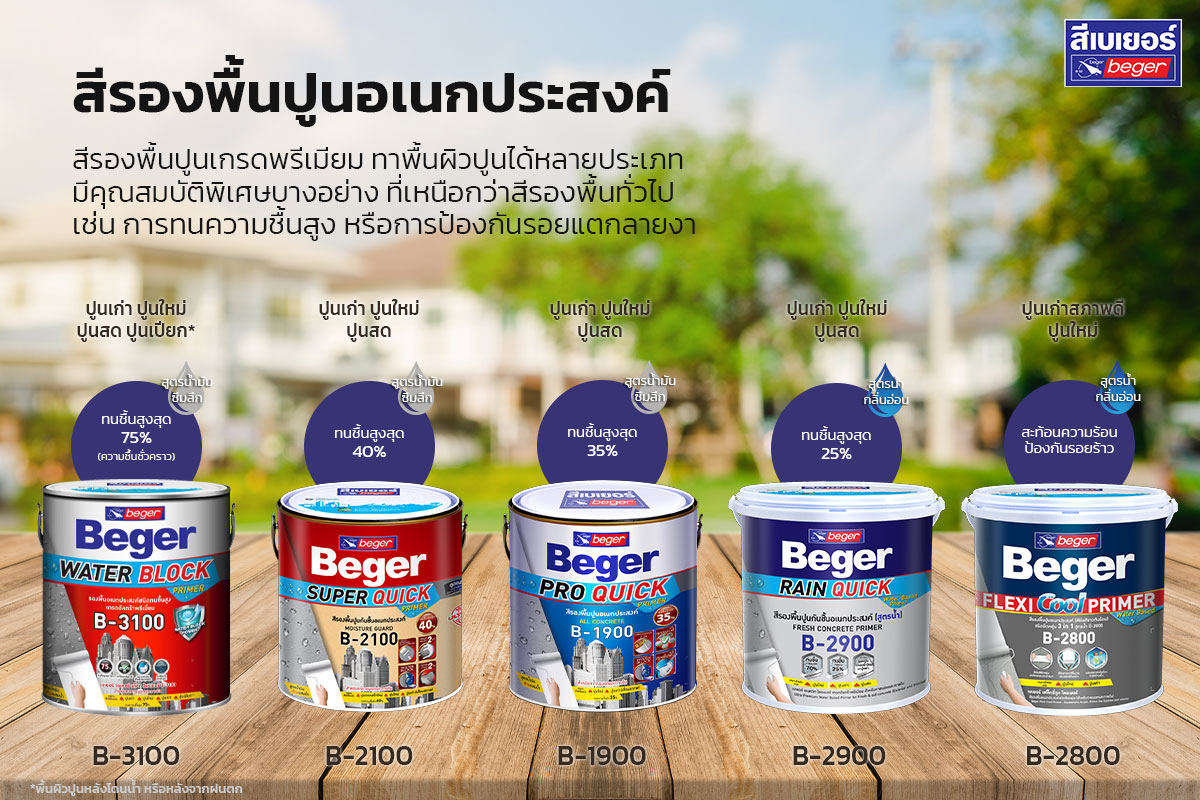
In addition to the previously mentioned multipurpose cement primers, there is also an interesting option like Beger Flexi Cool Primer B-2800, which is a special formula primer with high flexibility that effectively covers small cracks and prevents larger cracks. It is suitable for new cement walls or old cement that is in good condition (but not recommended for surfaces with accumulated chalk dust or that are already peeling). Another highlight is its ability to reflect external heat well, thus helping to keep the house cooler.
And for those looking for a “primer ready to work after the rain” without having to wait for the walls to dry completely, I recommend Beger Water Block Primer B-3100, which is the latest primer from Beger designed specifically to handle painting in high humidity conditions. It is popular for painting houses during the rainy season due to its ability to withstand moisture up to 75%, making it ideal for painting houses during the rainy season or on walls that have just been wet. It also effectively reduces the risk of paint bubbling, peeling, or discoloration later on.
Can you only apply the primer?
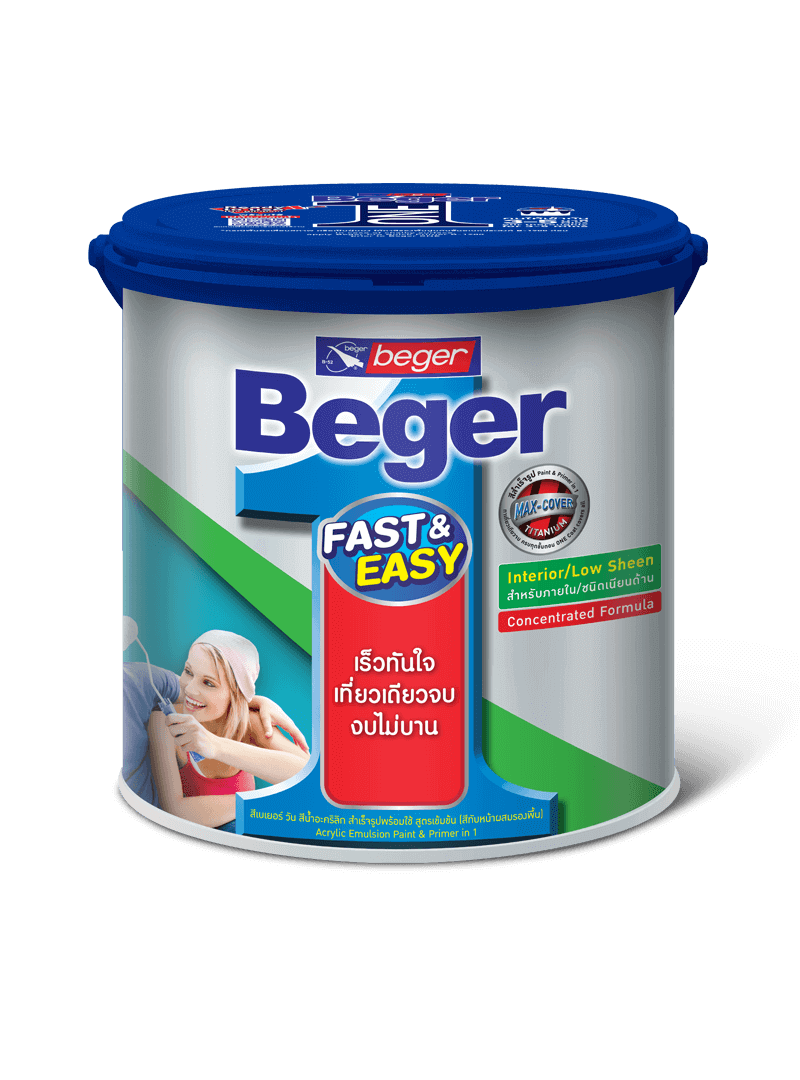
The answer isNobecause primers are not designed to withstand direct weather conditions and do not cover as well as topcoat paints. Therefore, applying only the primer without a topcoat has a high chance of causing subsequent paint problems. It is necessary to follow the system: apply one coat of primer and 2-3 coats of topcoat. Unless you use certain types of house paint that come with primer mixed in, such as Beger One interior paint, which does not require a separate primer.
How to correctly apply primer according to the expert system
- Clean the surface to be free of dust. If the existing surface has issues like peeling, scrape off the old paint first. If there is a mold problem, clean and treat it with Beger Mold Free M-001.
- Use tape to cover areas that should not be painted, such as window edges, door edges, or electrical outlets.
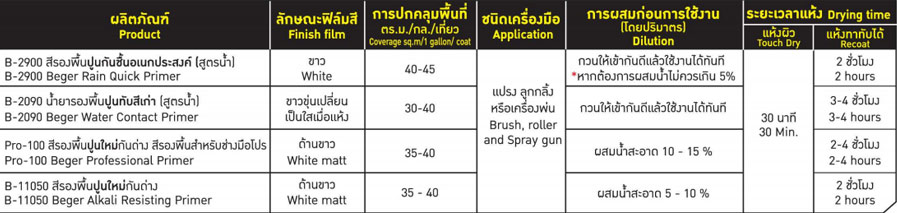
- Mix the primer well and it can be applied immediately in one coat. Before applying, it can be thinned with clean water or thinner.
- Water-based primers can be mixed with clean water before application up to 5-10%.

- Oil-based primers can be mixed with Beger M-15 thinner before application up to 5%.
After applying one coat of primer and allowing it to dry completely, use acrylic water-based house paint to apply two coats (allowing a gap of 1-2 hours between each coat). Recommended house paint during this period:
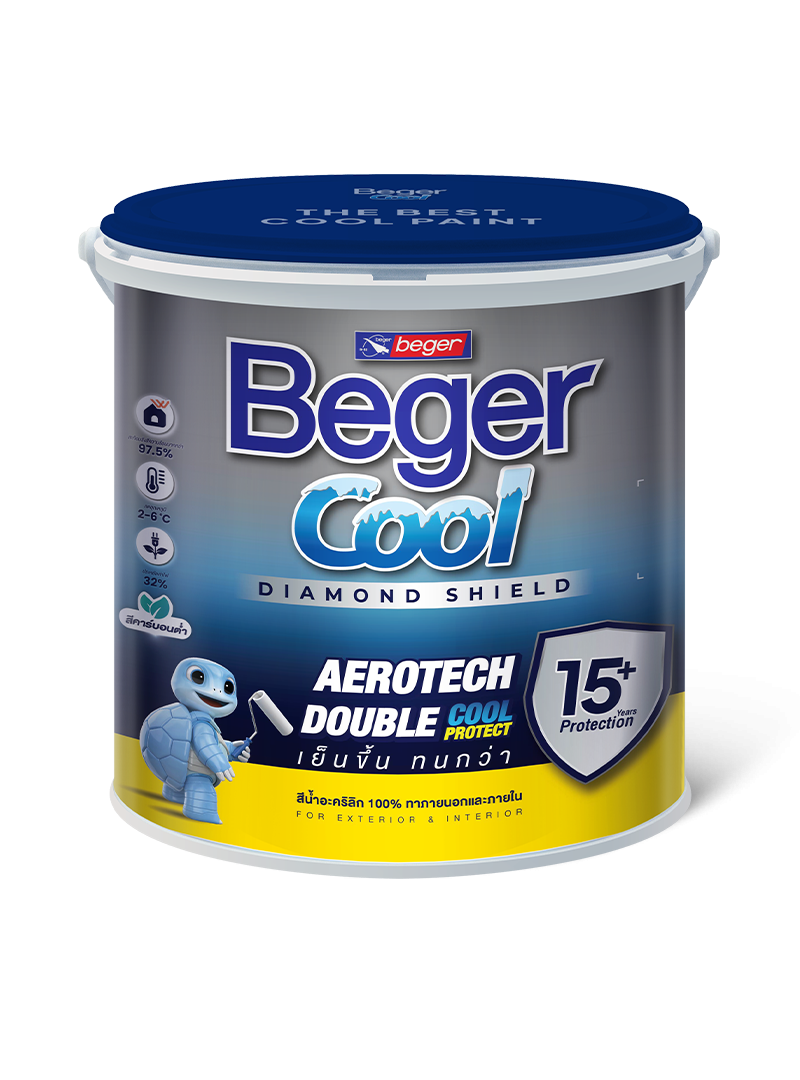
- Exterior paintBegerCool Diamond Shield 15+A cool house paint that helps reflect and block heat in the house, lowering the temperature inside and helping to save electricity even more.
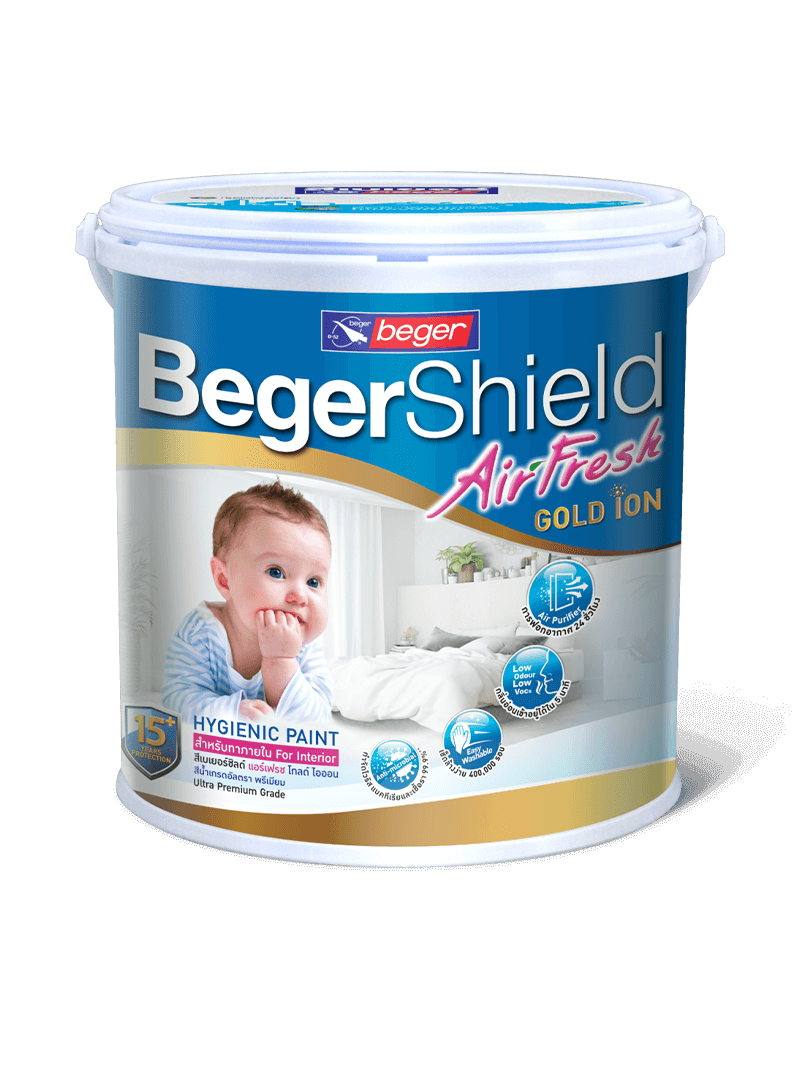
- Interior PaintBegerShield AirFresh Anti-Virus Gold IonAn interior paint that can inhibit the SARS-CoV-2 (COVID-19) coronavirus strain, including the Omicron variant, on walls. Proven by leading global institutions.
|
|
|
Summary of house painting: Is a primer necessary?
If you ask painters and experts about house painting, everyone will respond in unison that it is necessary to use a primer because the primer serves to improve the quality of the plaster surface, making it suitable for the subsequent paint layer, enhancing adhesion while reducing the risk of various problems such as peeling, bubbling, fading, stains, salt efflorescence, mold, or other paint issues that shorten the paint’s lifespan. As mentioned earlier,using a primer is just as important as applying the topcoat, but there are exceptions where a primer is not needed, such as when using oil-based loft paint on new plaster surfaces or using house paint that already contains a built-in primer, like Beger One, which does not require a separate primer.
FAQ: Frequently Asked Questions about Primers
Q1: Is a primer necessary for all painting jobs?
A1: Generally, yes, especially for new plaster walls or walls with existing problems, as it helps the paint adhere better and reduces long-term issues.
Q2: What happens if a primer is not used?
A2: It may cause the paint to peel quickly, develop stains, or become prone to mold, requiring more frequent repairs, leading to higher costs.
Q3: How does a primer differ from a topcoat?
A3: A primer is used to prepare the surface and enhance adhesion, while a topcoat provides aesthetics and protects the surface.
Q4: Can I use 2in1 paint or paint with a built-in primer instead?
A4: It can be used in some cases, but if high durability is desired or if the wall has issues, it is recommended to use a separate primer for better results.
Q5: How many coats of primer should be applied?
A5: Generally, one coat is sufficient, but it depends on the surface condition. If the wall is highly absorbent, additional coats may be needed as appropriate.
{
“@context”: “https://schema.org”,
“@type”: “FAQPage”,
“mainEntity”: [{
“@type”: “Question”,
“name”: “Can I paint my house without using a primer?”,
“acceptedAnswer”: {
“@type”: “Answer”,
“text”: “Actually, you can skip it, but not using a primer may lead to surface problems in the future more easily than using a primer, such as salt stains, peeling, bubbling, mold, and algae. Therefore, it is recommended to apply it.”
}
},{
“@type”: “Question”,
“name”: “Can I use only primer for painting?”,
“acceptedAnswer”: {
“@type”: “Answer”,
“text”: “No, even though primers are white, they cannot cover surfaces as well as topcoats, and importantly, primers are not designed to withstand direct weather conditions, so the paint film may encounter issues from sunlight, water, and moisture.”
}
},{
“@type”: “Question”,
“name”: “What happens if I use the wrong type of primer, and how should I fix it?”,
“acceptedAnswer”: {
“@type”: “Answer”,
“text”: “If you use an old plaster primer on new plaster or a new plaster primer on old plaster, it will reduce the durability and adhesion of the paint. Therefore, it is important to use the correct type or use a multipurpose primer that can be applied to both new and old plaster.”
}
},{
“@type”: “Question”,
“name”: “How long should I wait for the wall to dry before applying primer?”,
“acceptedAnswer”: {
“@type”: “Answer”,
“text”: “Typically, if it is new plaster, you should wait at least 30 days before applying a new plaster primer, or if it is old plaster, it should have a moisture content of no more than 14% before applying an old plaster primer.”
}
}]
}