
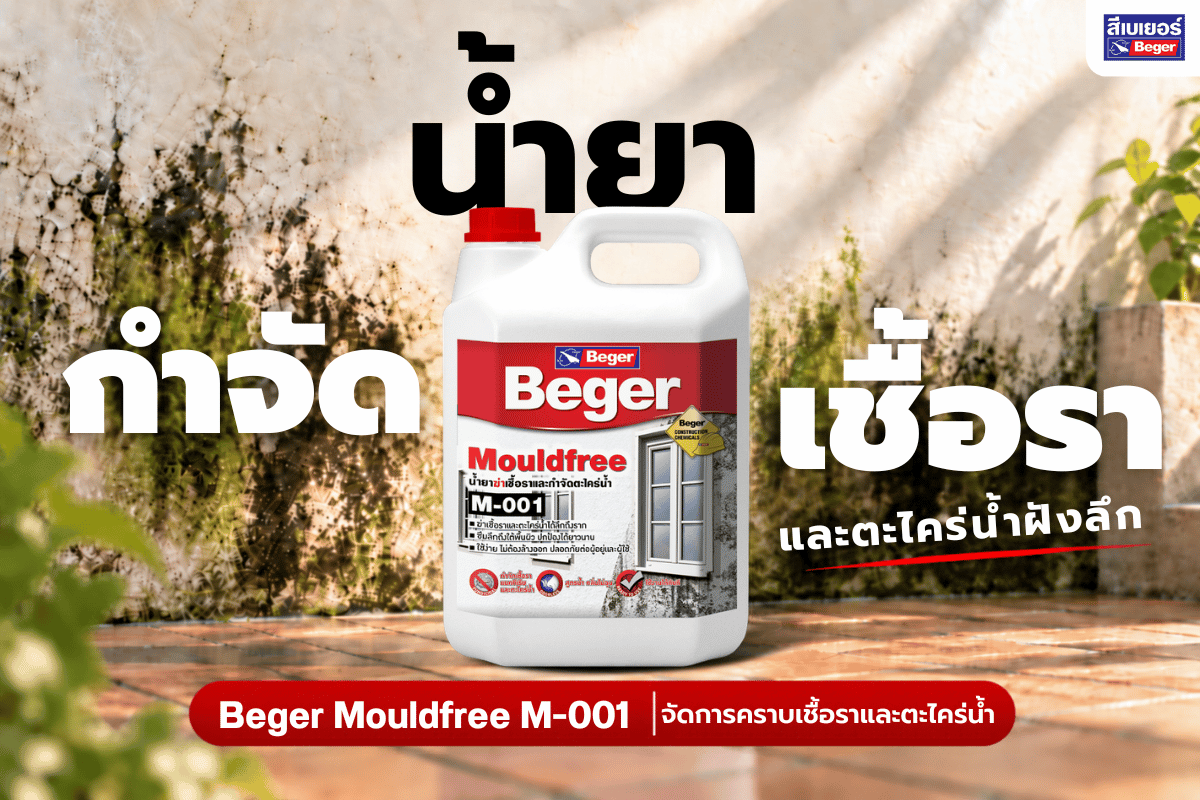
Black stains on walls, mold spots on ceilings, or green stains from algae on floors and exterior walls are not just problems that make a house look old and dirty; they are also signs that the area may have accumulated moisture, which is one of the key factors that promote the growth of mold and algae. Simply wiping or scrubbing the visible stains may not be enough, because if the root cause of the moisture has not been addressed or if any spores remain on the surface, the problem may recur. Proper mold removal should start with eliminating the source of moisture, cleaning the surface, addressing any remaining mold, and preparing the surface before repainting. You can use a mold and algae remover specifically designed for surfaces, such as Beger Mouldfree M-001. If you want to understand the types of mold, their causes, and how to remove them in different areas of the house, read more at How to Remove Mold from Walls, Ceilings, and Floors.
What Causes Mold and Algae, and Why Do They Come Back After Scrubbing?
The main cause of mold and algae is moisture. When surfaces have continuous accumulated moisture, combined with suitable environmental conditions, mold can thrive on various materials and surfaces within the home.
Common sources of moisture include
- rain splash and accumulated rainwater on exterior walls,
- cracks that allow water to seep into walls,
- leaking pipes or plumbing issues,
- moisture at the bottom of walls,
- rooms with poor ventilation,
- areas that remain damp for extended periods,
- homes or walls affected by flooding.
Therefore, if you only remove the visible black or green stains but do not address the root cause of the moisture, the original problem may return, especially in homes that have been flooded. It is important to improve ventilation, reduce moisture, and quickly identify risk areas. For detailed steps, you can read 24–48 Hours After the Water Recedes: What to Do? How to Remove Mold Before It Spreads Throughout the House.
Why Does Mold Removal Require More Than Just Cleaning the Surface Stains?
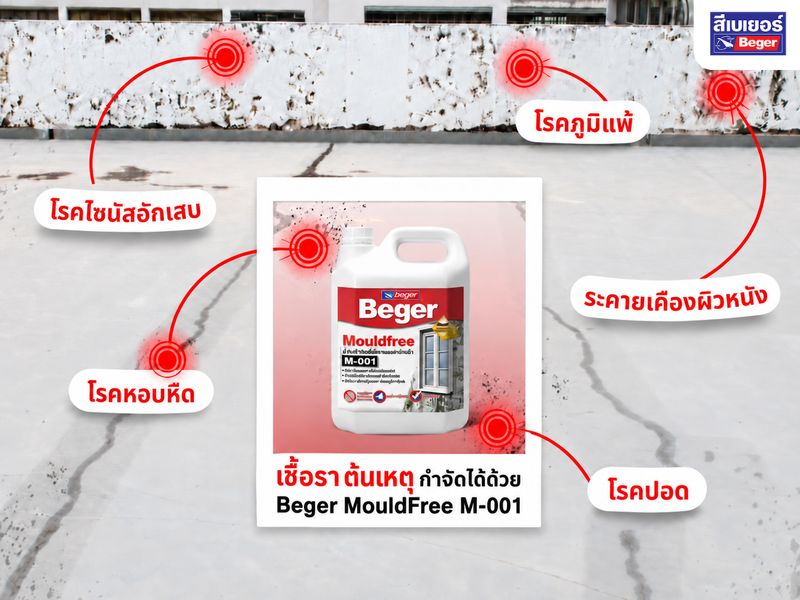
What we see as black spots or patches of mold on walls is only part of the problem. Wiping, scrubbing, or painting over immediately may make the surface look cleaner temporarily, but it does not mean that the problem has been fully addressed. In addition to causing damage to the surface, mold can also affect the health of the occupants, especially when mold spores become airborne and are inhaled into the respiratory system. Those sensitive to mold may experience irritation, nasal congestion, coughing, or allergic reactions. If you want to read more about black mold and its health impacts, you can read at Is Black Mold Dangerous? Along with How to Remove Black Mold from Your Home.
Proper mold removal should be systematic, including
- identifying the source of moisture.
- Repair leaks, cracks, or water seepage
- Clean mold and algae stains
- Allow the surface to dry
- Use a mold and algae remover for surface preparation
- Apply primer and topcoat according to the appropriate system
This approach helps reduce the chances of the original problem recurring after repairs or repainting
What is Beger Mouldfree M-001?
Beger Mouldfree M-001 or Beger Mouldfree M-001 is a mold and algae remover product for managing mold and algae on both interior and exterior surfaces of buildings. The solution can penetrate beneath the surface to help manage remaining mold and algae. It is suitable for use as part of the surface preparation process before repainting.
How does Mouldfree M-001 work with DUO ATTACK technology?
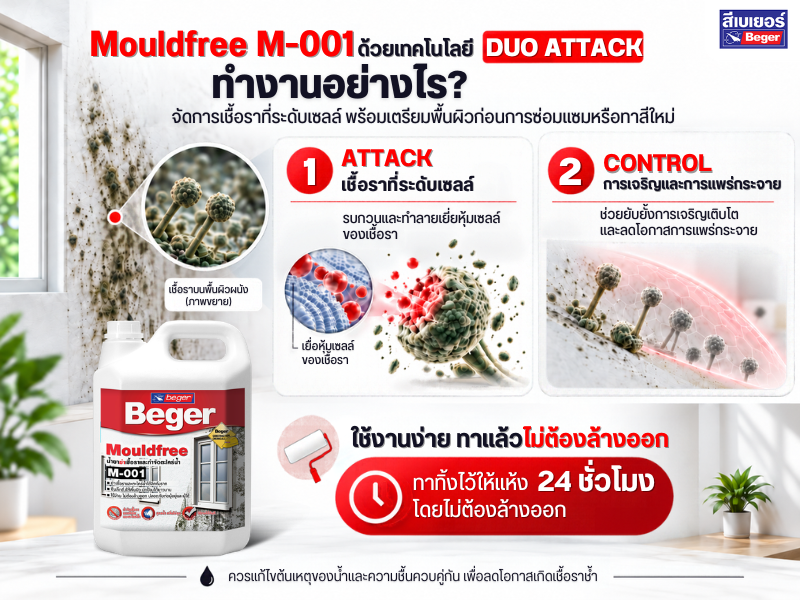
The DUO ATTACK mechanism focuses on managing mold at the cellular level, where the active ingredients disrupt and destroy the cell membrane of the mold, which is crucial for controlling and maintaining the internal balance of the cell. When the cell membrane is disrupted, the mold’s ability to survive and grow decreases, preventing it from thriving and spreading on the surface as usual, thus preparing the surface appropriately before repairs or repainting.
Therefore, the operation of DUO ATTACK can be summarized into 2 key mechanisms:
1. ATTACK mold at the cellular level
Disrupt and destroy the cell membrane of the mold, helping to manage mold that adheres to the surface
2. CONTROL growth and spread
Help inhibit growth and reduce the chances of mold expanding or spreading further in the treated area
Easy to use, no rinsing required after application
After preparing the surface and removing mold stains or loose dirt, apply Beger Mouldfree M-001 to the area where mold needs to be managed. Then let it dry for 24 hours without rinsing. Before proceeding with repairs or following the appropriate painting system. However, using a mold remover is only part of the solution. If the area still has leaks, damp walls, accumulated moisture, or poor ventilation, the underlying causes should also be addressed to help reduce the environment conducive to mold recurrence.
DUO ATTACK It is not just about cleaning visible mold stains, but managing mold at the cellular level while preparing the surface for repair or repainting in a systematic manner.
Highlights of Beger Mouldfree M-001
- Helps eliminate mold and algae that adhere to surfaces.
- The solution can penetrate beneath the surface.
- It is a water-based formula with a non-pungent smell.
- Can be used both indoors and outdoors.
- After application, the solution can be left on the surface without rinsing.
- Used as a preparatory step before applying primer and topcoat.
What surfaces can Beger Mouldfree M-001 be used on?
The mold and algae remover can be used on surfaces that have mold, algae, or moisture stains, such as:
- Concrete walls
- Cement
- Lightweight concrete
- Fiberboard
- Wood
- Sand brick
- Clay brick
- Natural stone
- Marble
- Granite
Before use, check the condition of the surface and address the cause of moisture first to enhance the effectiveness of the subsequent repair steps.
How to eliminate mold with Beger Mouldfree M-001
When using the mold remover, do not start by applying the solution directly onto the stains; instead, prepare the surface properly first by dividing it into 3 main steps.
Step 1: Clean Mold and Algae
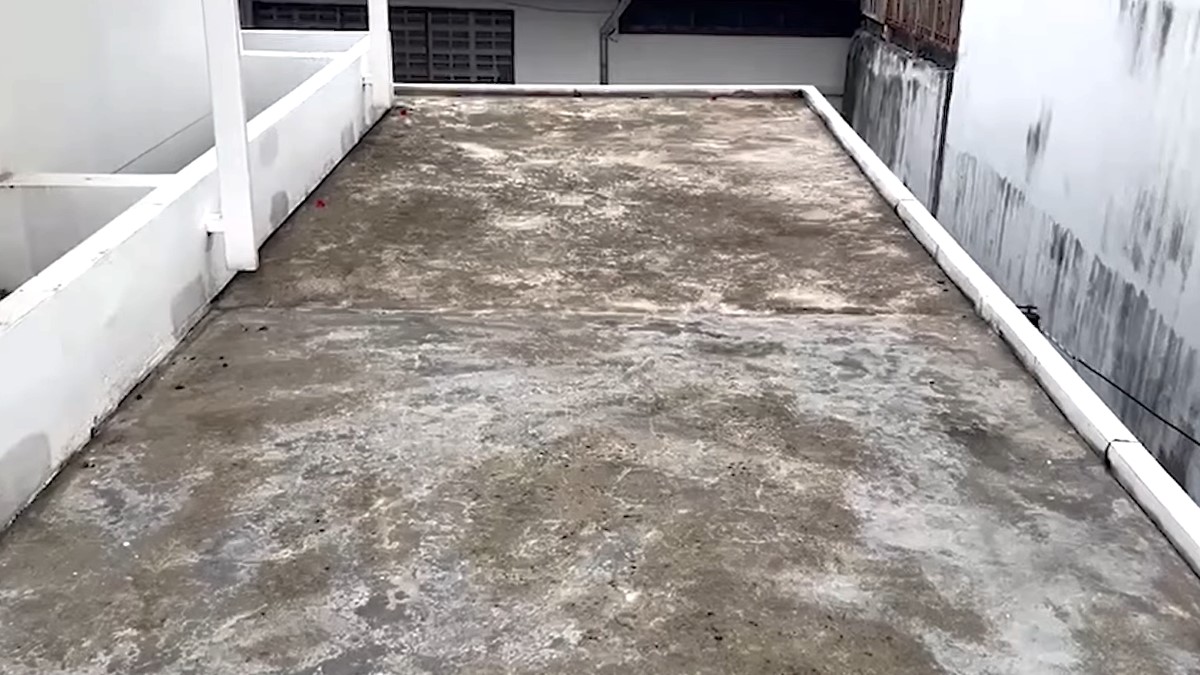
Scrub or spray wash the areas with mold and algae stains with clean water to remove as much of the stains, dirt, and adhering residues from the surface as possible. Then allow the surface to dry completely for at least 24 hours. If there are issues with leaks, cracks, or moisture from other parts of the building, the root cause should be addressed before proceeding to the next step.
Step 2: Apply Beger Mouldfree M-001
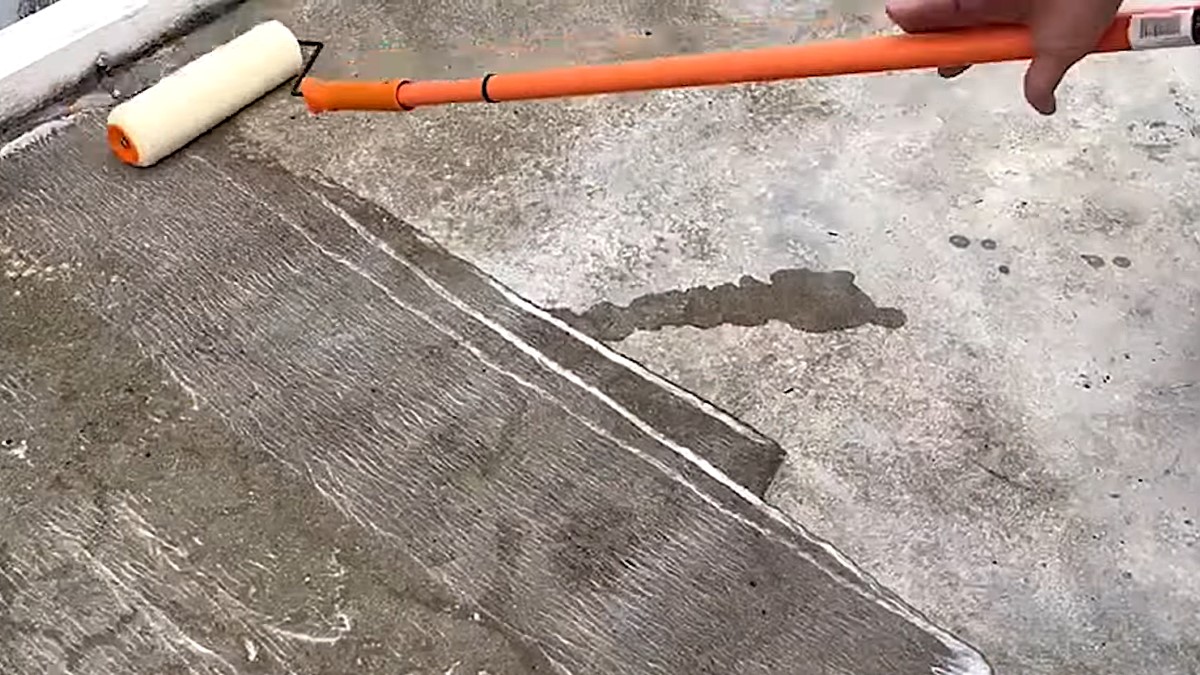
Apply or roll Beger Mouldfree M-001 in one coat to thoroughly saturate the desired area. After application, do not rinse with water and allow the surface to dry for at least 3 hours. This step helps manage any remaining mold and algae on and beneath the surface, while preparing the surface for the paint system in the next step.
Step 3: Apply Primer and Topcoat
- For plaster walls: Apply a multipurpose primerBeger Pro Quick Primer B-1900with exterior paintBegerCool DiamondShield 18orBegerShield AirFresh Gold Ionfor interior paint, and it is recommended to apply the interior topcoat within 7 days.
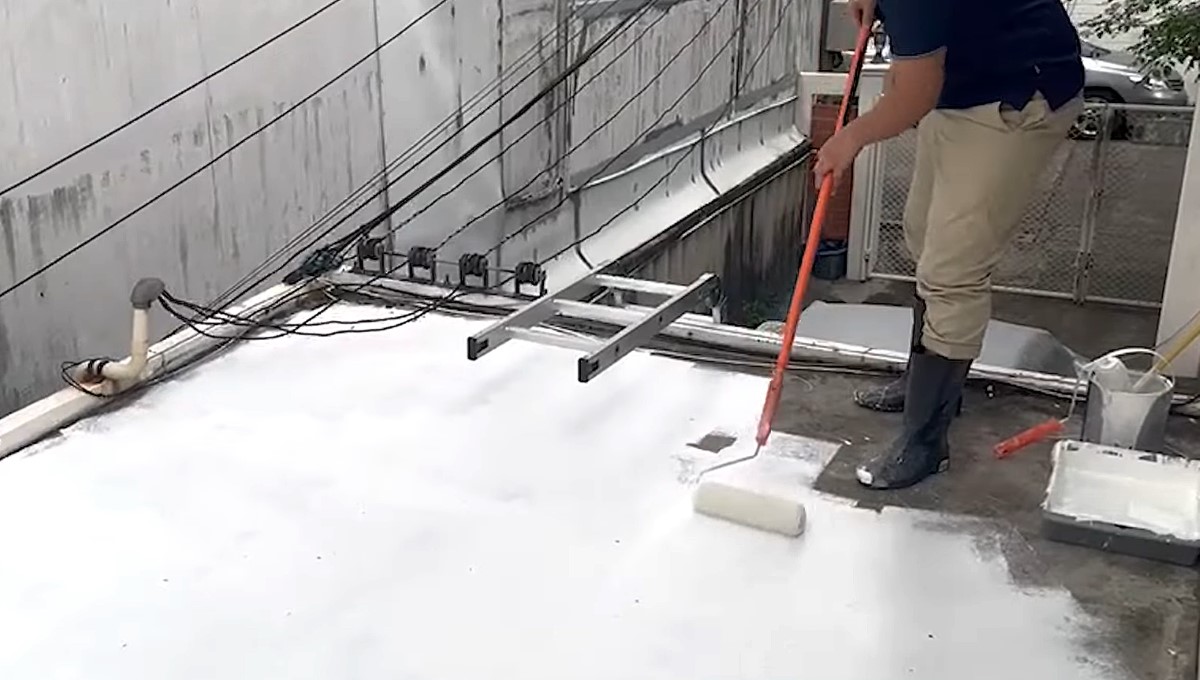
- For rooftops: Apply a primer with multipurpose primer Beger Pro Quick Primer B-1900 and topcoat with Beger ROOFSEAL Cool (apply in 3 coats).
- For steel roofing: Apply a primer withBeger Rust Guardand topcoat withBeger ROOFSEAL Cool(apply 2 coats)
- In the case of double wave tiles or C-PAC Monier: apply a multipurpose primer Beger Pro Quick Primer B-1900 and topcoat with Beger ROOFSEAL Cool (apply 2 coats)
What should be done if there is mold after flooding?
For homes affected by flooding, it is important to not rush to repaint immediately after the water recedes because even though the exterior wall may appear dry, there may still be moisture trapped within the materials. Start by checking the safety of the electrical system, structure, cleaning mud stains, ventilating, reducing humidity, and inspecting for mold before beginning repair work. A post-flood home inspection checklist can be used to systematically survey key areas inside the home before starting restoration. Once moisture and mold issues are addressed, you can proceed with surface repair and repainting. More details can be found at How to Repair a Home After Flooding.
After scrubbing off the mold, is it necessary to use a mold removal solution?
Scrubbing helps remove visible stains and mold on the surface, but if the area has previously had severe mold issues, has accumulated moisture, or is being prepared for repainting, using a mold removal solution suitable for the surface will help ensure a more thorough mold management process, especially before renovation work. You should not choose the method of painting over mold without preparing the surface, because if the source of moisture and mold has not been addressed, problems with stains, mold, or damaged paint film may arise.
How to prevent mold and slime from returning?
After removing the mold, it is equally important to reduce the conditions that allow mold to return. You should
- check and repair leaks in walls and roofs
- repair cracks where water can seep in
- check the plumbing and sanitary fixtures for leaks
- ensure proper ventilation in high-humidity areas
- reduce standing water in floors, rooftops, or around the house
- inspect walls and ceilings periodically, especially during the rainy season
- If mold is found, it should be addressed at the early stage before it spreads widely.
Management Causes of moisture, mold, and paint systems Together, they will help reduce the chances of recurring problems better than just managing visible stains.
Steps for using Beger MouldFree M-001 mold remover
Summary: Deep-seated mold must be addressed from the source, not just by wiping off stains.
The problem of mold and algae does not end with scrubbing black or green stains off walls. If moisture or spores remain, the problem can recur. The appropriate method should start with identifying the source of moisture, cleaning the surface, allowing it to dry, using a mold remover, and then painting according to the correct system. Beger Mouldfree M-001 is a mold and algae remover for both interior and exterior surfaces. It can penetrate beneath the surface, and after application, it does not need to be rinsed off, making it suitable for use as part of the surface preparation process before repairs or repainting.
FAQ: Questions about mold remover
Q1: What is Beger Mouldfree M-001?
A: Beger Mouldfree M-001 is a solution for removing mold and algae from surfaces. It can penetrate beneath the surface and is suitable for both indoor and outdoor use, serving as a surface preparation step before repainting.
Q2: Do I need to rinse off Beger Mouldfree M-001 after application?
A: No rinsing is required. After applying or rolling the solution until the surface is saturated once, allow the surface to dry for at least 3 hours before proceeding to the appropriate painting step.
Q3: Should I scrub off the mold before using the mold remover?
A: It is advisable to scrub and clean off mold, algae, and dirt adhering to the surface first. Then, allow the surface to dry completely for at least 24 hours before using the mold remover.
Q4: Can I paint over mold directly?
A: Not recommended. You should find the cause of moisture, clean and manage the mold, and prepare the surface properly before repainting to reduce the chances of mold or paint film problems later.
Q5: When should I remove mold from a house that has been flooded?
A: You should start reducing moisture and inspecting at-risk areas as soon as possible after the water recedes, especially in the early stages of home recovery, before proceeding to repairs or repainting.
Q6: Can mold come back?
A: It can recur if the environment remains humid, or if there are ongoing leaks, standing water, and poor ventilation. Therefore, the root cause of moisture should be addressed alongside mold removal.