The problem of sticky wood stain is a significant concern for many, especially for those who apply it to wooden floors, where it feels tacky and seems not to dry. Today, Beger has invited woodwork guru “Uncle Law” to help clarify why it becomes sticky and provide good advice on how to fix it. Let’s take a look.
Causes of stickiness after staining
The main reason for the problem of sticky wood stain is usually due to incorrect usage, as follows:

Choosing the wrong type of product
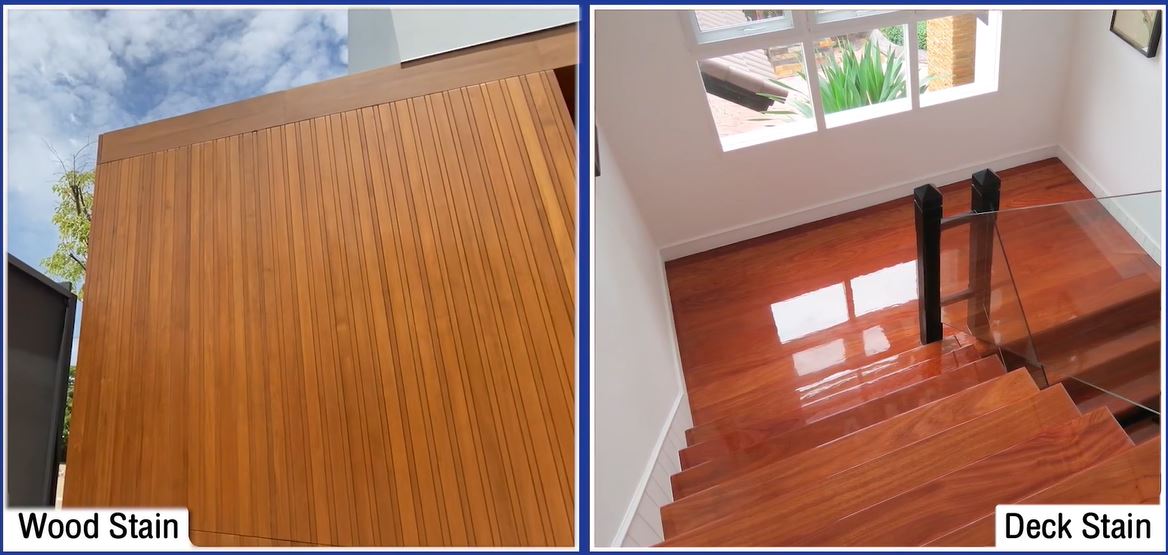
Wood stain or what is referred to in the painting community as Wood Stain is a product used for staining and coating wood. The film is translucent and flexible to help with the expansion and contraction of wood due to weather conditions. It can be used on all vertical wooden parts of the house, including walls, fences, balconies, lattice, moldings, or eaves.

However, it is not suitable for use on wooden floors.If you want to use it on floors, you must use Deck Stain designed to withstand foot traffic specifically. Using wood stain (for vertical applications) on wooden floors (for horizontal applications) is the most common cause of sticky floors.

Applying too thickly or too wet
When applying wood stain, you should try to apply it thinly and in one direction to avoid brush marks. If you apply it too wet or dip the brush too much while applying, the film on the wood may become too thick, preventing it from drying and resulting in stickiness.
Applying a second coat too soon
Generally, when applying a second coat of wood stain, you need to wait for the first coat to dry completely, which takes about 6-8 hours or longer depending on weather conditions. If you apply the second coat too soon while the first coat is still wet, it can also lead to a sticky surface.
Mixing the wrong thinner or incorrect proportions
Before applying wood stain, it is usually necessary to mix it well and for some products, it is necessary to mix in thinner to help with application. Sometimes, when we apply it in hot weather, it can cause the product to become sticky. The thinner must be mixed according to the type and proportions specified in the usage catalog or indicated on the container to avoid subsequent problems, and stickiness is one of those issues.
For thinners, Beger recommends usingBeger M-1199.
How to fix it if applied incorrectly
For friends who are currentlyexperiencing issues with wood staindue to using the wrong type of product by applying vertical wood stain on the floor and want to fix it, you can do so by following these methods
Method one
is the most recommended method as it can solve the problem almost 100%. This involves sanding off the original wood stain to expose a new wood surface and then using the correct type of product to apply over it. If it’s an outdoor floor, it is recommended to use wood floor stains such as Beger DeckStain, Beger SuperDeck, Beger Natural Deck or Beger Aqua Deckstain If it’s an indoor wooden floor, it is recommended to use a group of polyurethane colors that are hard, such asBeger Aqua Polyurethaneand so on.
Method two
is a preliminary fix for urgent work, but it should be noted that the effectiveness of protecting the wood will not be as good as the first method. The principle is to use the same thinner that is mixed in the wood stain to wipe the surface to remove as much stickiness as possible. Then, apply a wood floor stain, such as Beger DeckStain, Beger SuperDeck, which is a clear color, over the surface.
Things to know: Wood stains come in various types, including oil-based, water-based, or polyurethane formulas. If the original stain used is oil-based, you cannot apply water-based or polyurethane formulas over it.
Finally, for those who are about tochoose wood stain colorsit is important to select the correct type; otherwise, you may encounter issues with woodwork, such as sticky wood stains or other problems. If anyone faces issues and needs advice, you can call the technical service department at 02-8155888 or message us on Line. BEGER has a team and experts in woodwork ready to assist you fully.