

Cracks on the walls of a house are a common problem, both in newly built homes and in those that have been lived in for a long time. Some may view it as merely an aesthetic issue, but in reality certain types of cracks may be a sign of structural problems that should not be overlooked. This article will help you understand the causes of cracks,, their characteristics and types, how to inspect, how to repair, as well as FAQs that homeowners often wonder about to equip you with knowledge and enable you to manage it correctly.
What causes wall cracks?
Wall cracks can arise from various factors, with the most common causes being:
-
settlement of the foundation and structure
If the foundation and structure settle or shake, it can lead to cracks in the plaster walls (even if the foundation and structure are not damaged).
-
changes in temperature and humidity
All types of construction materials expand and contract. Plaster is no exception; if there are significant or sudden changes in temperature or humidity, it can lead to cracking.
-
quality of materials and construction
Using substandard plaster or materials mixed incorrectly, it is advisable to use ready-mixed plaster and choose the right type of plaster (masonry plaster is different from lightweight block plaster) or improper application can often lead to cracks appearing more quickly.
-
vibration
For example, construction nearby, heavy truck traffic, or even seismic activity can all contribute to cracking as well.
Characteristics and types of wall cracks, along with their causes.
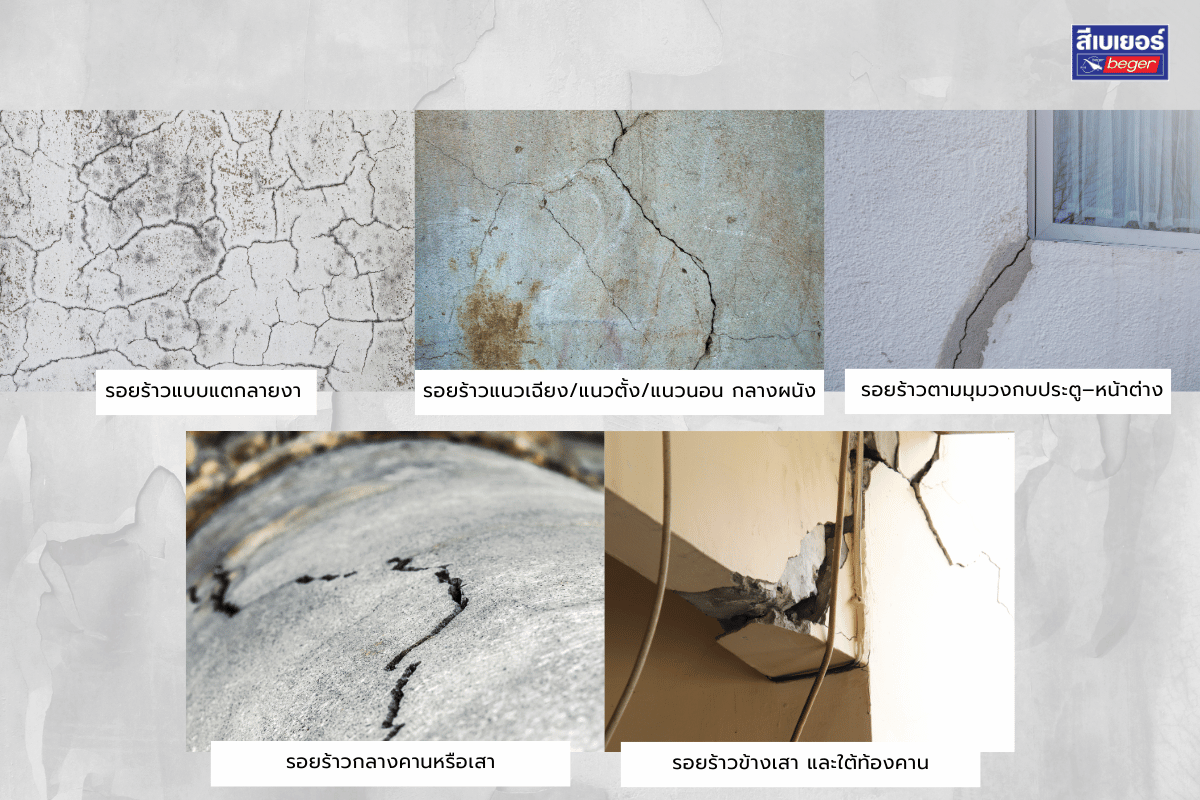
1. Hairline Crack
Characteristics: A small crack resembling a hairline, usually no wider than 1 mm.
Causes: Caused by rapid drying shrinkage of plaster, improper mixing of cement, or rapid temperature changes.
2. Diagonal/Vertical/Horizontal Cracks in the Wall
Characteristics: Continuous long cracks that may slope up or down or be straight in the middle of the wall.
Causes: Uneven foundation settlement, excessive load on the wall, or due to unengineered extensions.
3. Cracks at the Corners of Door-Window Frames
Characteristics: Cracks slanting or breaking away from the corners of the frame.
Causes: Installation of the frame without prior lintel and support post, expansion and contraction of the frame, especially wooden and aluminum frames.
4. Cracks in the Middle of Beams or Columns
Characteristics: Cracks occurring in the middle of beams or columns, usually straight and long.
Causes: Beams or columns designed inadequately, overloaded, or concrete deteriorating over time.
5. Cracks beside the column and under the beam
Characteristics: Cracks that occur at the junction between the column and the beam, usually seen as distinct separation lines
Causes: Deficiencies in construction that did not prepare “stirrup bars” and did not bond the brickwork to the beam using the “fish mouth” method
Preliminary crack inspection methods
- Measure the width of the crack: If it exceeds 2 mm, it is considered at risk
- Monitor: If the crack widens and lengthens continuously within a few weeks, it should be addressed promptly
- Check the location of the crack: Cracks occurring on columns, beams, or floors are usually associated with more serious structural issues than cracks on regular plastered walls (Consult a civil engineer)
Methods for repairing and fixing cracks
|
|
 |
|
|
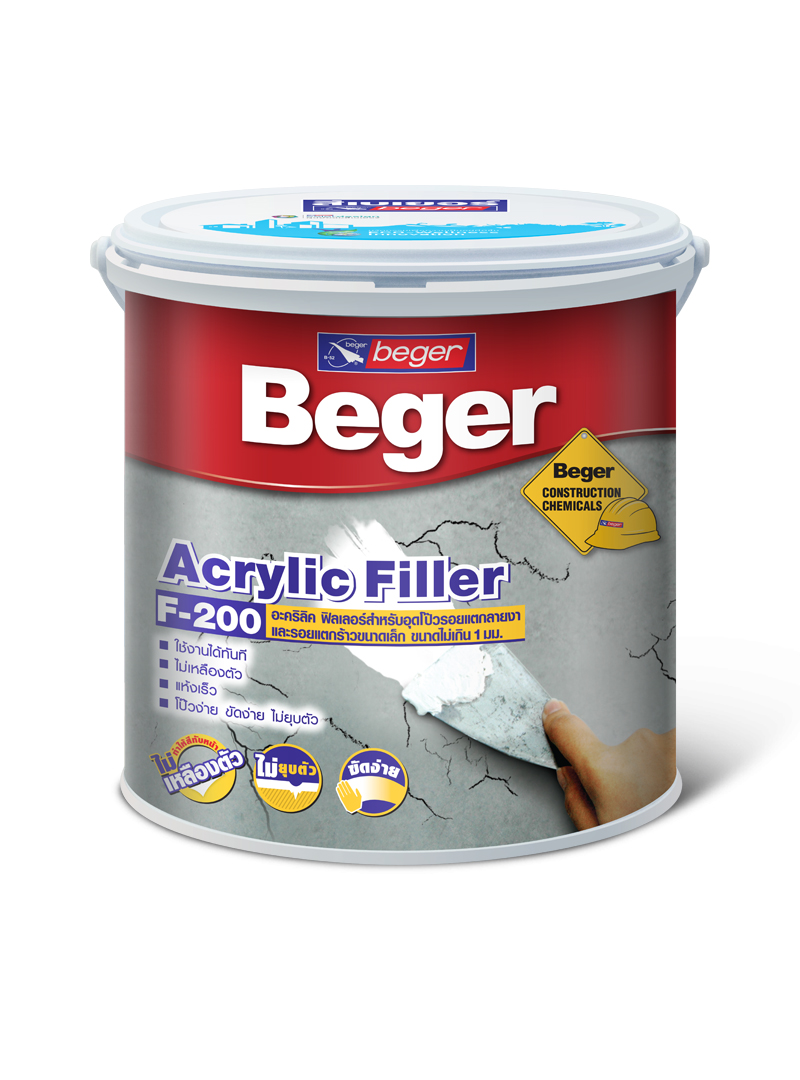
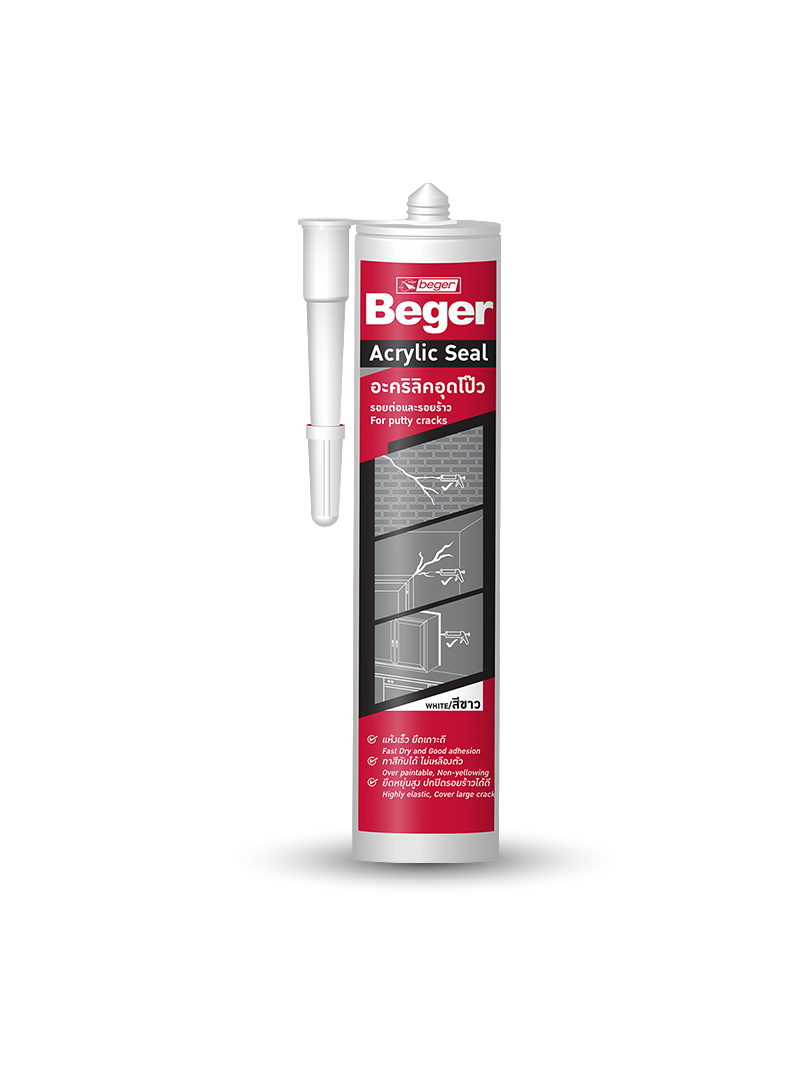
- Small cracks (0.3-2 mm)) Fill with crack filler using Beger Acrylic Filler F-200 when working with a trowel, then smooth and paint
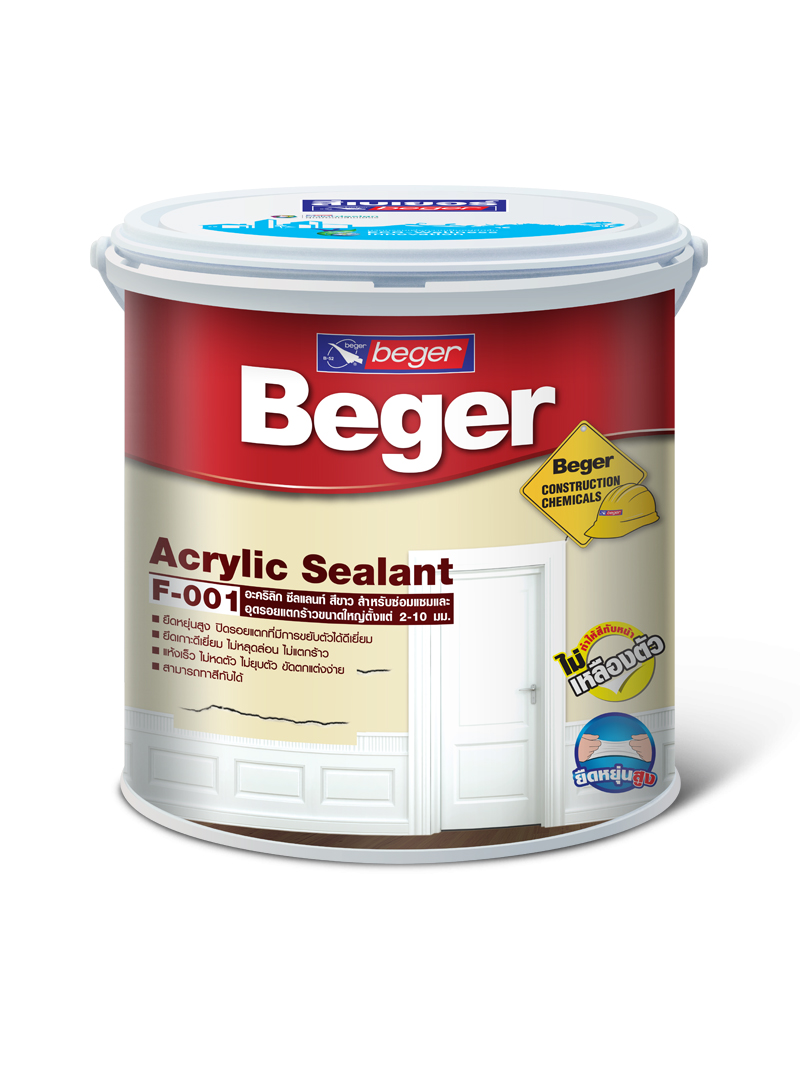
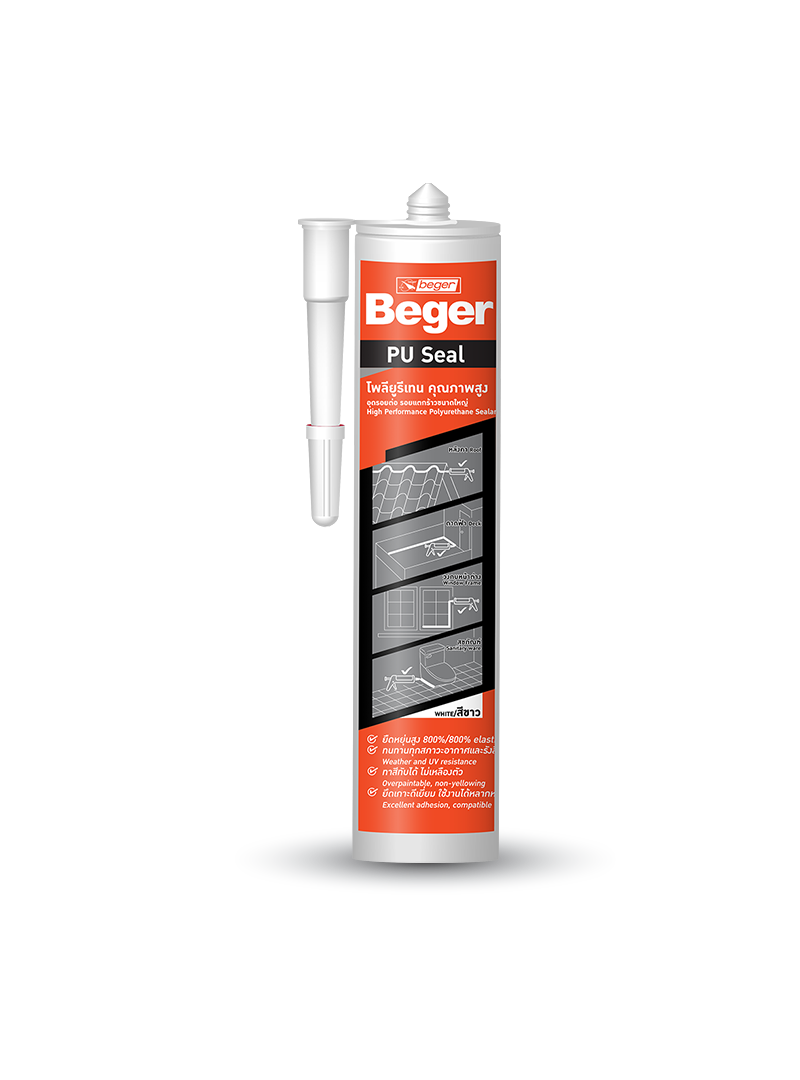
- Medium cracks (2-10 mm) Repair cracks with Beger Acrylic Sealant F-001 when working with a trowel, Beger Acrylic Seal (suitable for indoor work), and Beger PU Seal (suitable for outdoor work) when using a sealant gun
- Large cracks/structural In less severe cases, repairs can be made with non-shrink repair mortar that can withstand compressive loads using Beger Repair Mortar, but in cases of severe cracking, it is recommended to consult a civil engineer for inspection
- It is recommended to use Beger Flexi Cool B-2800 primer, which has a thick and highly flexible color film that can cover repair marks and also prevent new cracks that may occur later on.
Disadvantages – If cracks are left untreated for a long time
- Water seeps into the walls Causing mold, musty odors, and swollen walls
- Structural deterioration Risk of severe and dangerous cracking
- Increased costs Minor repairs will turn into major repairs
Ways to prevent cracks
- Use quality and standard materials
- Closely supervise construction work
- Design structures suitable for use
- Regularly inspect and maintain the house
FAQ Frequently Asked Questions
Q1: Is it normal for new house walls to have cracks?
A: It is common and usually occurs due to the shrinkage of plaster in the early stages, but cracks should be filled to prevent water seepage and further spreading
Q2: What type of cracks are dangerous?
A: Cracks wider than 2–3 mm, continuous and spreading, especially those occurring on beams and columns, are considered risky and should be checked by a civil engineer
Q3: Can I repair cracks myself?
A: Small cracks can be repaired by yourself, but structural cracks should be consulted with an expert for safety
Q4: How often should cracks be checked?
A: At least every 6–12 months, or immediately if cracks are found to be expanding unusually fast.
Q5: Are there ways to prevent cracks in the house?
A: It can be prevented by choosing quality materials, controlling construction work, and regularly maintaining.