
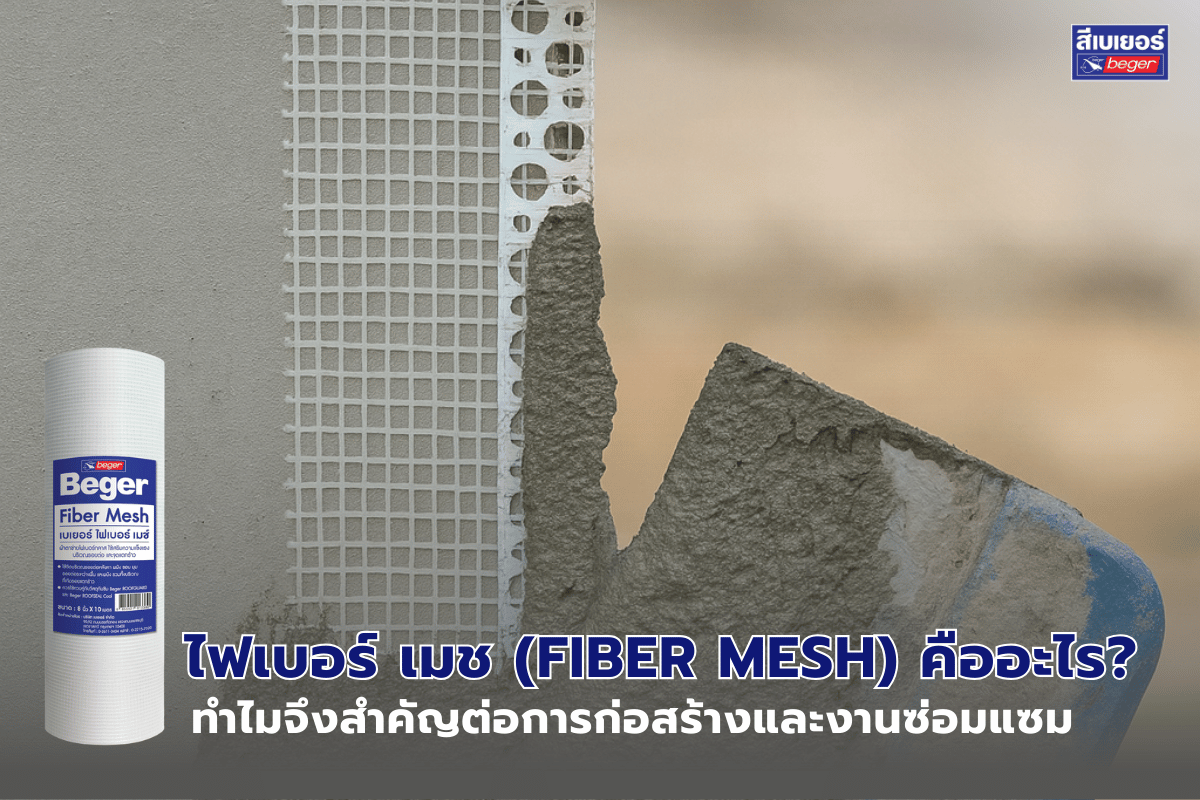
In construction and repair work, common problems include cracks and leaks whether on walls, roofs, terraces, or various surfaces. These cracks may start small, but if left unattended, they can expand and cause long-term damage to the structure. One of the materials that is widely accepted and used to address this issue is Fiber Mesh a reinforcing material known for its excellent properties in enhancing strength, flexibility, and effectively preventing surface cracking.
|
Beger Fiber Mesh |
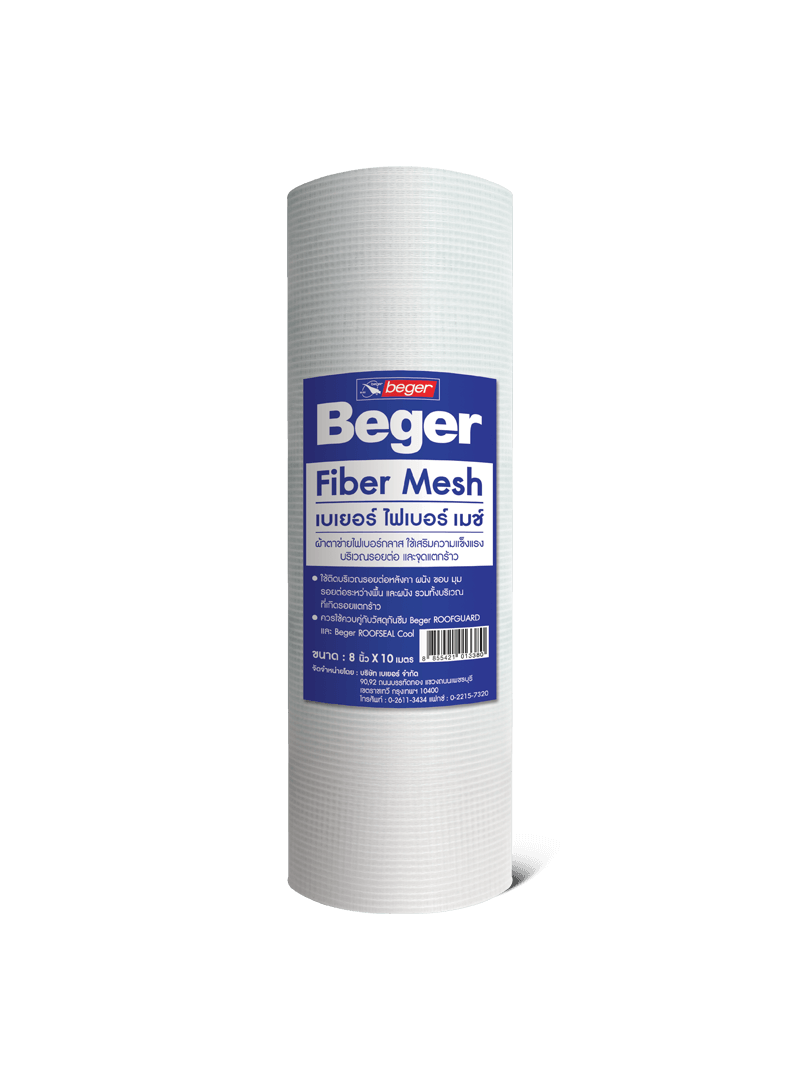
What is Fiber Mesh?
Fiber Mesh, or fiberglass mesh is made from fiberglass woven into a fine mesh, used to reinforce surfaces that are at risk of cracking, such as roof joints, walls, or various leak points. When used in conjunction with waterproofing materials, it helps increase durability, reduces cracking and leaking issues, and extends the lifespan of the structure.
Additionally, Fiber Mesh can replace chicken wire, which was commonly used by craftsmen in the past for plastering work, such as
- preventing plaster cracks at the corners of door frames
- reinforcing plaster at the horizontal joint with brick walls and corner seams with PVC strips
- covering electrical conduit in walls to prevent cracking of the plaster layer.
Why is Fiber Mesh important?
1. Reinforces to prevent cracking
Distributes tensile and compressive forces on the surface, reducing the chances of new cracks forming or existing cracks expanding.
2. Extends the lifespan of waterproofing materials
Helps the waterproofing layer adhere better and become more flexible, preventing easy detachment.
3. Versatile for various applications
Suitable for roofs, walls, joints, corners, or areas at risk of leaking.
4. Easy to install and lightweight
Can be cut to size as needed, convenient to use without adding weight to the structure.
Steps for using Fiber Mesh
1. Prepare the surface– Clean the surface to remove dust and dirt
2. Cut the fiber mesh– To the size that covers the cracks or joints that need repair
3. Lay the fiber mesh– Place it over the cracks, joints, or vulnerable areas and smooth it out
4. Apply a waterproofing material on top– Such as Beger ROOFSEAL Cool or Beger Roof Guard to protect the surface firmly and effectively waterproof
Usage characteristics of Fiber Mesh
- Used to reinforce corners, surrounding edges, or areas prone to cracking while working with flexible waterproofing products such as Crocodile Flex Shield, Crocodile Flex 2K, or Crocodile Roof Shield
- Used to enhance strength to withstand wear from traffic, such as repairing cracks on rooftops
- Used to reinforce joints of waterproof construction materials to prevent cracking
- Used to reinforce joints of cement plaster and fiber cement board, in conjunction with joint finishing materials like gypsum or thin surface polymer
- Used in conjunction with repairing plaster cracks around door frames, joints, and concrete cut joints
Highlights of Beger Fiber Mesh
- Made from high-quality fiberglass, durable and strong
- Has a consistent fiber density that effectively prevents cracking
- Suitable for use with Beger waterproofing products to maximize effectiveness
- Available in 2 width sizes: 20 centimeters and 1 meter, easy to use, covering both construction and repair work
- Can be cut to fit the application more easily than chicken wire and is easier to store for future use
Summary
Fiber Mesh is a material that plays an important role in preventing cracks and leaks in construction and repair work. It helps reinforce, increases strength, and extends the lifespan of surfaces. If you want guaranteed quality, Beger Fiber Mesh is the right choice because it is specifically designed to work with Beger’s waterproofing materials to ensure your work is strong, beautiful, and durable in the long term.
FAQ: Frequently Asked Questions about Fiber Mesh
Q: What is Fiber Mesh?
A: Fiber Mesh is a fiberglass mesh used to reinforce surfaces, helping to prevent cracks and leaks. It is suitable for construction and repair work.
Q: Why is Fiber Mesh important for construction?
A: It helps distribute stress, reduces the occurrence of new cracks, increases strength, and extends the lifespan of surfaces.
Q: What types of work can Fiber Mesh be used for?
A: It can be used for rooftops, walls, joints, corners, gutters, or surfaces at risk of leaks, including as a substitute for chicken wire in plastering around corners of frames and for covering pipes.