

The bedroom colors, besides the commonly chosen white, also include many shades that are currently popular, such as cool tones like blue, navy, green, or warm tones like peach and pink. Some shades can even help enhance sleep quality. If you have trouble sleeping or want to improve your sleep quality, try using these color tones.
Cool Tone Bedroom Ideas
Cool tones are a popular choice for “bedroom colors” because they create a calm, relaxing atmosphere that directly contributes to rest. This is especially true for those who want their bedroom to be a “power charging” space after a tiring day. Popular cool tones include light blue, green, and gray, each providing a different mood.
Light Blue Bedroom, Pastel Blue
Light blue or pastel blue is one of the most popular “cool tone bedroom colors” because it feels light, airy, and easy on the eyes. The blue tones that evoke the feeling of “a clear sky on a sunny day” can help uplift the mood and naturally reduce stress.
Decoration Tips:
- Pair with white, gray, or bluish-white furniture
- Use white bed linens to enhance the feeling of cleanliness and airiness
- Trim the crown molding or window frames in white
Result:
Feels like sleeping on “a fluffy cloud,” making it easier to fall asleep and sleep deeply.
Recommended Shade: Bristol Bay 030-3

Dark Blue Bedroom, Navy, or Azure
If you want your bedroom to look “calm, deep, and luxurious,” dark blue or navy is another option that fits the bill. Blue is a color that enhances “concentration,” making it suitable for those who enjoy reading or spending quiet time before bed.
Highlights:
- Helps calm the mind
- Increases the feeling of safety
- Instantly makes the room look premium
Techniques:
- Use as an Accent Wall (one wall) to avoid making the room too dark
- Pair with gold, gray, or wood tones
Recommended Shade: Intermezzo Blue 025-6

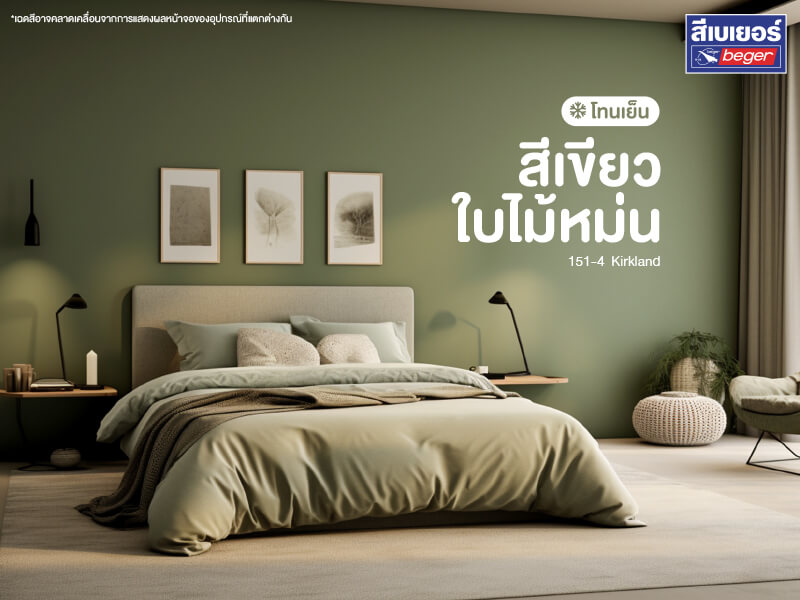
Muted Leaf Green Bedroom
Green is the “color of nature” that directly affects the mind. Several studies confirm that green helps reduce stress and rejuvenates the eyes, making it ideal for those who use computers all day or for those seeking a natural sense of calm.
Recommended tones:
- Grayish Green
- Muted Green
- Smoky Green
Pairing Techniques:
- Use with beige, white, or gray
- Adding real plants will enhance the mood even more
Gives the feeling of relaxing in a natural resort
Recommended shade: Kirkland 151-4
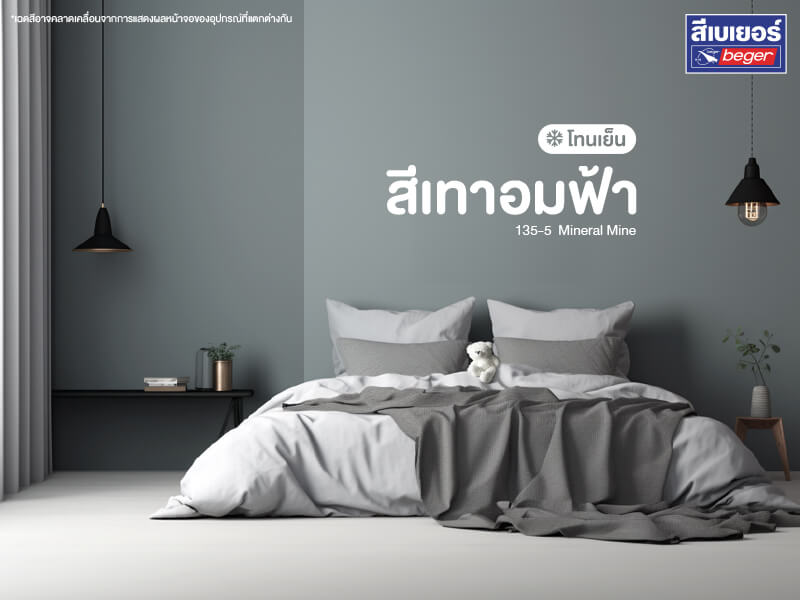
Bluish Gray Bedroom, Dark Gray
Gray is a “neutral color” that is highly versatile, especially bluish gray, which provides both tranquility and modernity at the same time.
The uniqueness of gray:
- Can change the mood of the room depending on the shade
- Works with every style (Minimal / Modern / Luxury)
How to choose:
- Light gray gives a light, airy, and comfortable feeling
- Dark gray gives a calm, composed, and deep feeling
Recommended shades: Mineral Mine 135-3 / Suit of Armor 139-5
Warm Tone Bedroom Ideas
Warm tone bedrooms provide a feeling of “warmth, friendliness, and livability,” ideal for those who want their bedroom to feel cozy and have character.
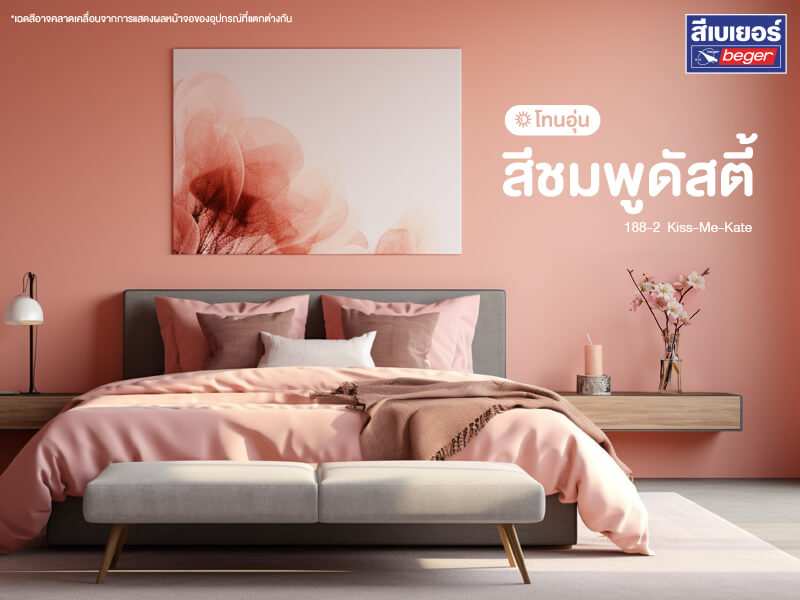
Dusty Pink Bedroom
For those who want a sweet-looking bedroom but not overly so, “dusty pink” is the perfect answer.
It is a slightly muted pink that makes:
- not reflect strong light
- not harsh on the eyes
- look more sophisticated
Technique:
- Use in combination with dark gray or gold
- suitable for creating a two-tone wall
Recommended shade: Kiss-Me-Kate 188-2
Brown earth bedroom
Brown is a color associated with “nature,” such as earth and wood, thus providing a sense of stability, warmth, and safety
Why do hotels like to use it?
- Helps guests feel relaxed
- gives the feeling of truly being on vacation
How to use:
- Use as the main color for a resort mood
- Use as an accent to add depth to the room

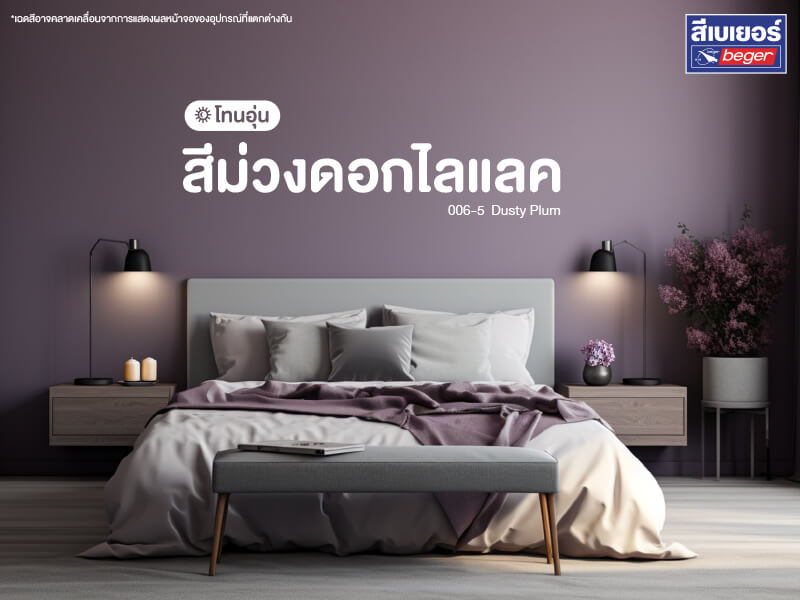
Lilac bedroom
Purple is a color that is “in between warm and cool tones,” thus providing a complex and dimensional feeling
The feelings evoked:
- luxurious
- intriguing
- relaxing
A light purple tone like “lilac” will help:
- reduce stress
- Create a Spa-Like Atmosphere
In addition to choosing bedroom colors that promote relaxation and better sleep, the overall atmosphere of the room is another important factor that should not be overlooked. A good bedroom should have a suitable temperature, not too hot or too cold, adequate lighting that is not too bright, and clean, fresh air that does not irritate the respiratory system, especially regarding “indoor air quality,” which many people may overlook. Therefore, it is crucial to select safe materials and paint colors. It is recommended to use VOCs-free interior paint such as BegerShield AirFresh Anti-Virus Gold Ion to avoid harmful volatile substances. When all elements work together harmoniously, it helps create an environment suitable for relaxation, allowing you to sleep well and wake up refreshed every day.
FAQ Frequently Asked Questions About Choosing Bedroom Colors
Q1: What color is best for the bedroom?
A1: Cool tones such as blue, green, or light gray are the best choices for a bedroom as they help create a relaxing atmosphere, reduce stress, and make it easier to fall asleep.
Q2: What color should be used for a small bedroom?
A2: Small bedrooms should use light tones such as white, pastel blue, or light gray to make the room appear larger, more open, and less cramped.
Q3: Does blue really help with sleep?
A3: Blue is a color that promotes calmness, reduces tension, and helps the brain relax, which contributes to easier and deeper sleep, making it suitable for use in bedrooms.
Q4: Can warm colors be used in the bedroom?
A4: Yes, but it is advisable to choose lighter shades such as beige, dusty pink, or light brown and use them as accent walls to avoid making the room feel too cramped.
Q5: What should I consider when choosing bedroom colors?
A5: You should consider usage behavior, room orientation, room size, and decoration style to achieve a color that is both beautiful and conducive to relaxation.